Support

Bad Mergentheim

About

Bad Mergentheim is a charming resort town nestled in the picturesque Tauber Valley in northern Baden-Württemberg, Germany. Situated near the Bavarian border and the city of Würzburg, it has a population of about 24,000, which gives it an atmosphere of peace and seclusion.
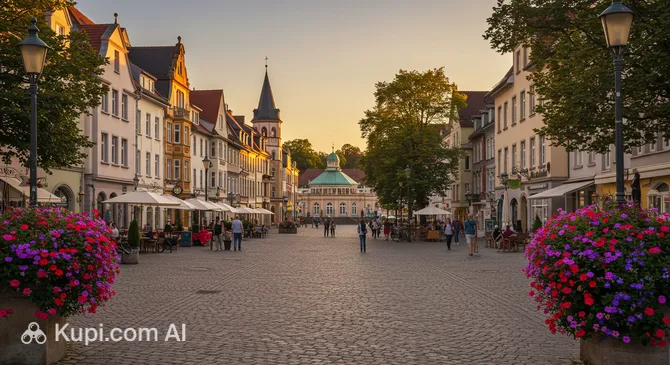
Bad Mergentheim. Illustration.
Source: Kupi.com AI

This town looks as if it has stepped off the pages of a fairytale, adorned with traditional half-timbered houses, manicured parks, and ancient streets that create a unique sense of serenity. Bad Mergentheim has a rich historical past, serving as the former residence of the Teutonic Order, which still lends it a special charm today. Architectural styles from different eras, cultural heritage, and modern resort traditions are harmoniously interwoven here.

The town's main jewels are its healing mineral springs and the magnificent Kurpark, which is popular with visitors year-round. Additionally, Bad Mergentheim holds an important place on famous tourist routes: it is part of the renowned "Romantic Road" and lies at the intersection of the "Swabian Wine Road" and the "Swabian Poets' Road," making it even more attractive to travelers.

A special atmosphere reigns in Bad Mergentheim, where it is easy to feel like the protagonist of an ancient legend. Enjoy leisurely strolls along the green alleys of the Kurpark, visit fascinating museums, discover the town's rich knightly history, and, of course, sample the local cuisine. Bad Mergentheim is an excellent choice for those seeking a peaceful holiday and wishing to immerse themselves in the charm of the authentic German countryside.

You can find more interesting facts on the history of Bad Mergentheim page.
Weather Overview

The weather in Bad Mergentheim is characterized by a temperate climate. Summers here are warm, with average temperatures in July and August around 19-20°C, while maximum values can reach 24-25°C. Winters are cool, with the average temperature in January being around 2°C, and the minimum can drop to 0°C. Precipitation is distributed relatively evenly throughout the year, with a slight increase in the number of rainy days during the winter months. Overall, expect a warm summer with occasional rain and cool winters with moderate precipitation.

For more detailed information on weather conditions by month, you can explore the Bad Mergentheim climate.

Average monthly temperature

Average monthly precipitation

Interesting Facts

Beyond its famous resort traditions, Bad Mergentheim hides many curious stories and unique features. Discover a few surprising facts about this charming town in the state of Baden-Württemberg:

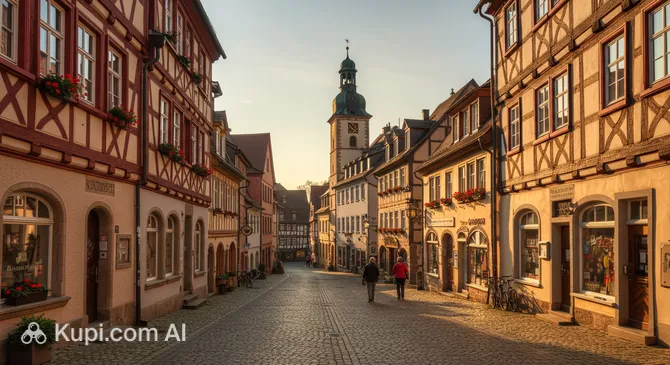
Bad Mergentheim Old Town. Illustration.
Source: Kupi.com AI

Traveler photos:

  • For several centuries, Bad Mergentheim served as the primary residence of the Grand Masters of the Teutonic Order, one of the most influential knightly orders of medieval Europe. Their former grand castle has been transformed today into the Teutonic Order Museum, where visitors can dive into medieval history and see unique artifacts.

  • The town is often called an "open-air museum of half-timbered architecture." Strolling through the Bad Mergentheim Old Town, you can admire dozens of perfectly preserved houses from the 16th to 18th centuries, especially on the Market Square with its impressive Renaissance town hall and ancient fountains.

  • In the outskirts of Bad Mergentheim, in the chapel of St. Mary's Parish Church in the Stuppach district, resides the world-famous "Stuppach Madonna" — a masterpiece by the German Renaissance artist Matthias Grünewald. This artwork is considered one of the greatest treasures of German painting and attracts connoisseurs from all over the world.

  • Bad Mergentheim is famous for its vibrant traditions and festivals. One of the most unusual is the annual parade of historical costumes, during which residents dress in outfits from various eras, staging colorful theatrical processions through the ancient streets.

How to Get There

There are several ways to reach the charming resort town of Bad Mergentheim in Germany, the most convenient of which are flying into one of the nearby international airports followed by a transfer, or traveling by rail from the region's major stations.

Although Bad Mergentheim does not have its own airport, the town is well-connected to several major air hubs. One of the closest options is Nuremberg Airport (NUE), located in Nuremberg about 95 km away. This medium-sized international airport offers many flights. A taxi ride from the airport to Bad Mergentheim takes about 2 hours and 40 minutes, and public transport options are also available. Another major hub is Stuttgart Airport (STR), located in Stuttgart at a distance of about 98 km. This is a significant international airport from which you can reach Bad Mergentheim by taxi in about 2 hours and 45 minutes or use train and bus connections. The largest and one of Europe's busiest airports is Frankfurt Airport (FRA), located in Frankfurt am Main, about 107 km from Bad Mergentheim. From here, the journey by taxi takes about 3 hours, but thanks to excellent transport links, you can easily reach Bad Mergentheim by train or bus.

For clarity, here is summary information on the main airports used to reach Bad Mergentheim:

AirportPassenger trafficDistance
Mannheim Airport40 00091 km
Nuremberg Airport4.0 mln95 km
Frankfurt Egelsbach Airport80 00097 km
Stuttgart Airport9.1 mln98 km
Frankfurt Airport61.6 mln107 km

Traveling by train is also a convenient option. Bad Mergentheim has its own railway station served by regional trains. For international and long-distance travel, you can use major rail hubs nearby. For instance, Stuttgart Main Station (ZWS) in Stuttgart, located about 89 km away, is one of the most important transport hubs in southern Germany. From there, Bad Mergentheim can be reached by regional train, which usually takes 1.5 to 2.5 hours. Another key hub is Frankfurt (Main) Main Station (ZRB) in Frankfurt am Main, situated about 105 km away. This is one of Europe's largest stations with excellent connections throughout Germany and beyond. A train journey from Frankfurt to Bad Mergentheim (possibly with a transfer) will take between 2 and 3 hours.

For your convenience, below is information on some major railway stations in the region:

StationPassenger trafficDistance
Stuttgart Hauptbahnhof80.3 mln89 km
Mannheim Hauptbahnhof36.5 mln94 km
Nuremberg Hauptbahnhof76.7 mln95 km
Bruchsal6.4 mln97 km
Frankfurt (Main) Hauptbahnhof127.8 mln105 km

In addition, Bad Mergentheim can be reached by car, as the town is well-connected to the German autobahn network. Upon arrival in the region, it is also convenient to use local buses and trains to move between towns and attractions.

Main Attractions

Bad Mergentheim, a charming resort town in Germany, offers its guests a variety of attractions that cater to the interests of many different travelers. Here, everyone will find something for themselves, from encounters with wildlife to immersion in the region's rich history.

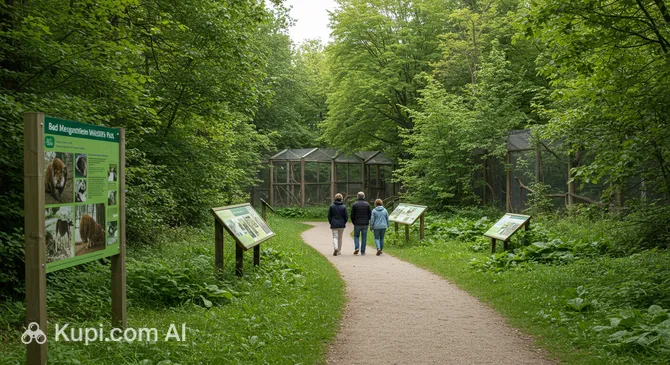
One of the most popular spots is the Wildpark Bad Mergentheim. This is not just a zoo, but a vast territory where animals, including wolves, bears, lynx, and bison, live in conditions as close as possible to their natural habitat. A walk through the park is an exciting adventure for the whole family and a great opportunity to observe wild animals in their environment while learning about European fauna.

Bad Mergentheim Wildlife Park. Illustration.
Source: Kupi.com AI

Traveler photos:

For lovers of history and architecture, a visit to the Bad Mergentheim Old Town is a must. Stroll through its cozy streets, admire the beautifully preserved half-timbered houses, and feel the atmosphere of past centuries. The central Market Square, with its historical buildings and fountains, is the heart of the Old Town and a wonderful place for relaxation and photos.

Bad Mergentheim Old Town. Illustration.
Source: Kupi.com AI

Traveler photos:

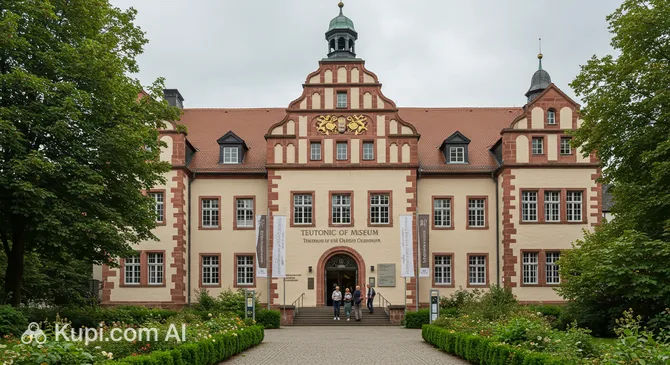
It is impossible to overlook the Teutonic Order Museum, located in the former residence of the Order's Grand Masters — the magnificent Mergentheim Castle. The museum's exhibition details the history of this powerful knightly order, its influence on European history, and the daily life of the knights. Visiting the museum is a unique opportunity to touch the medieval past and see valuable artifacts.

Teutonic Order Museum. Illustration.
Source: Kupi.com AI

Traveler photos:

These attractions are just part of what Bad Mergentheim has to offer. The town is also famous for its thermal springs, picturesque parks, and diverse cultural events, making it an attractive destination for wellness and educational tourism.

Local Cuisine

The gastronomic scene in Bad Mergentheim is a delightful blend of Swabian and Franconian culinary traditions, with special emphasis placed on seasonal products, fresh vegetables, meat, and, of course, the famous German sausages. It is a true paradise for gourmands wishing to experience the authentic flavors of the region.

Be sure to try Swabian Maultaschen — large pasta pockets with a savory filling of meat and herbs, often served in broth or pan-fried. Another iconic dish is delicate Knödel (dumplings), which pair perfectly with thick meat sauces and sauerkraut. Meat lovers should look out for game dishes and various local delicacies. Additionally, menus often feature fresh river fish caught in the Tauber River.

Among the drinks, the region takes special pride in its home-grown wines. The vineyards surrounding the town produce excellent varieties, with white Riesling standing out. Equally popular is the local craft beer, which can be sampled in many establishments. For those who prefer non-alcoholic drinks, there are always freshly squeezed juices and traditional lemonades.

The food culture in Bad Mergentheim encourages leisurely tastings. Locals and tourists alike enjoy meals in cozy restaurants, visit farmers' markets in search of fresh produce, and stop by traditional wine cellars (Weinstuben). Throughout the year, the town hosts various gastronomic festivals, street food fairs, and themed dinners dedicated to regional specialties, making the culinary experience even richer.

And for dessert, do not deny yourself the pleasure of trying a classic German strudel, most often apple, or fragrant fruit tarts, which serve as a perfect conclusion to a meal.

Travel Tips

Welcome to charming Bad Mergentheim! To make your trip to this resort town as comfortable and pleasant as possible, we have prepared some practical tips. They will help you find your way around and enjoy every moment of your stay.

  1. Clothing and Essentials:

    The climate in Bad Mergentheim is temperate. In summer, choose light clothing, but don't forget a sweater or light jacket for evening strolls. In winter, warm clothing, including a hat, gloves, and a scarf, will be needed. In spring and autumn, the weather is changeable, so layering is your best friend; bring an umbrella or raincoat. Be sure to bring comfortable shoes for walking around town, its picturesque parks, and the surroundings. Don't forget a European adapter (Type F) for electronics. For visiting churches, a special dress code is usually not required, but modest clothing is appropriate.

  2. Local Transport:

    Bad Mergentheim is a compact town that is easy to explore on foot. The main form of public transport is the bus. Bicycle rental is also popular for rides around the town and along the Tauber River. Taxis are available but can be expensive. A rental car is not necessary for getting around the town itself, but it can be useful if you plan to explore the Franconia region and the Romantic Road.

  3. Finance:

    The official currency in Bad Mergentheim, as in all of Germany, is the Euro (€). You can exchange currency at banks. Credit and debit cards (Visa, Mastercard) are widely accepted in most hotels, restaurants, and shops. However, it is recommended to always carry some cash for small purchases, especially at markets or in small cafes. ATMs (Geldautomat) are easily accessible. Tipping (Trinkgeld) is welcome but not strictly mandatory; usually, 5-10% of the bill is left in restaurants if the service was good, or the amount is simply rounded up.

  4. Health and Safety:

    Bad Mergentheim is a very safe town. Follow standard precautions: keep an eye on your belongings in crowded places. Pharmacies (Apotheke) are easy to find by the red "A" sign; there are always on-duty pharmacies (Notdienst), information about which is posted on the door of every pharmacy. The emergency number is 112. Be sure to arrange travel medical insurance before your trip.

  5. Communication:

    The official language is German. In tourist spots, hotels, and restaurants, many people speak English, especially the youth. However, knowing a few basic German phrases like "Hallo" (Hello), "Danke" (Thank you), and "Bitte" (Please) will be highly appreciated by the locals. Wi-Fi is available in most hotels and many cafes. For mobile connectivity, you can purchase a local SIM card.

  6. Local Etiquette:

    Germans value punctuality, order, and respect for personal space. It is customary to shake hands when meeting. Try not to make noise in public places. When addressing strangers, especially older ones, use the polite form "Sie" (You). Switching to "du" (the informal you) usually happens at the initiative of the older person or a woman.

  7. What to Avoid:

    Try not to have loud conversations on public transport and in restaurants – Germans value peace and quiet. It is strongly recommended not to start conversations or joke about topics related to Germany's Nazi past, as this is a very sensitive issue. Also, be careful not to walk on bicycle paths; they are intended exclusively for cyclists.

  8. Special Tip for Bad Mergentheim:

    Don't miss the chance to enjoy the town's resort atmosphere! Visit the famous Kurpark, one of the most beautiful in Germany, and if time permits, relax in the Solymar Therme thermal complex. Also, while in Franconia, be sure to try the local wines, especially the whites, which are often bottled in the distinctive flat "Bocksbeutel" bottles.

We hope these tips help you plan an unforgettable trip to Bad Mergentheim. We wish you a pleasant stay and vivid impressions of this cozy German town!

Entertainment & Nightlife

Bad Mergentheim, as a charming resort town in Germany, offers its guests a predominantly peaceful and cozy atmosphere for evening relaxation rather than the vibrant club life typical of large metropolises. Nevertheless, you can find pleasant places to spend an evening.

The main concentration of evening venues, such as traditional restaurants and bars, is found in the historical part of town. An evening stroll through the Bad Mergentheim Old Town will allow you to soak up its special atmosphere and choose a spot that suits your taste. Many restaurants here also function as bars in the evening, offering visitors local beers and Franconian wines. The atmosphere in these establishments is usually relaxed and conducive to leisurely conversation. The crowd is a mix of tourists and locals enjoying the evening.

Bad Mergentheim Old Town. Illustration.
Source: Kupi.com AI

Traveler photos:

While Bad Mergentheim is not famous for large nightclubs with dancing until dawn, the town offers worthy alternatives for those seeking evening entertainment. Look out for small, cozy bars or traditional German wine cellars (Weinstuben), where you can taste regional drinks in an authentic setting. Some hotels may also have their own lounge bars open to non-guests. The best time to visit most establishments is the early evening, as many close before midnight. The dress code is generally casual, though smart-casual may be appropriate for dinner at some of the more refined restaurants.

Regarding practical aspects, the average price level for food and drinks in Bad Mergentheim is comparable to the national average. For getting around the town at night, a taxi is the most convenient option, as public transport schedules may be limited in the late hours. You can call a taxi by phone or find one at designated stands. The town is generally considered safe for evening walks, but as anywhere, basic precautions should be taken, especially if walking alone.

During the day, Bad Mergentheim offers its guests various cultural and active entertainment. You can immerse yourself in history by visiting the Teutonic Order Museum or enjoy nature and fresh air in the picturesque Wildpark Bad Mergentheim. For those who prefer shopping, the doors of stores are open, for example, at the Aktiv-Center Bad Mergentheim.

Parks & Museums

Bad Mergentheim, a charming resort town in Germany, offers its guests not only wellness treatments but also excellent opportunities for outdoor recreation and immersion in the region's rich history through its parks and museums.

One of the city's main green gems is the magnificent Kurpark (Resort Park). This vast space with well-maintained alleys, flower beds, fountains, and ancient trees is an ideal place for leisurely walks and relaxation. It also houses the Japanese Garden, offering a corner of Eastern harmony. For families with children and nature lovers, the Wildpark Bad Mergentheim is a must-visit. Its spacious territory is home to Europe's largest wolf pack, as well as other wild animals that can be observed in conditions as close as possible to their natural habitat.

Bad Mergentheim Wildlife Park. Illustration.
Source: Kupi.com AI

Traveler photos:

A central place in the cultural life of Bad Mergentheim is held by the Teutonic Order Museum (Deutschordensmuseum), located in the majestic castle that was the former residence of the Order's Grand Masters. The museum's exhibition highlights the 800-year history of the Teutonic Order, its role in Europe, and the daily life of the knights. This is a unique opportunity to touch the medieval past. Visitors can see knightly armor, everyday objects, and works of art from that era.

Teutonic Order Museum. Illustration.
Source: Kupi.com AI

Traveler photos:

The historical heart of the town is undoubtedly the Bad Mergentheim Old Town. Strolling through its cobbled streets, past charming half-timbered houses and cozy squares like the Market Square with the Town Hall, will provide many impressions. Here you can feel the spirit of old Germany and admire the well-preserved architecture.

Bad Mergentheim Old Town. Illustration.
Source: Kupi.com AI

Traveler photos:

For an authentic experience, it is worth turning off the beaten tourist paths and exploring lesser-known corners of the Kurpark, such as the Garden of Sounds (Klanggarten), or finding secluded benches with a view of the Tauber River. Also, take note of the numerous small chapels and churches in the town's surroundings, each of which holds its own piece of history.

Getting Around

Public transport in Bad Mergentheim is mainly represented by a bus network that provides connections between various parts of the town and its surroundings. Given the size of the town, buses are a convenient and sufficient means for most travel.

The fare payment system in Bad Mergentheim typically includes the option to buy single tickets directly from the bus driver or at machines at some stops, if available. Day or week passes may also be available, which are cost-effective for frequent travel. It's best to check the tariffs and ticket types locally, for example, at a tourist information center or on the official websites of the local transport operator. Sometimes there are regional transport associations whose tickets may be valid over a wider area.

Tourists are advised to always have a valid ticket and present it upon request. Tickets not purchased from the driver often require validation (activation) in special devices on the bus before starting the journey. Buses usually run on a schedule, which can be found at the stops. During evening hours and on weekends, intervals between services may increase. It's worth planning your trips in advance, especially if heading to more outlying areas.

As an alternative to public transport, taxi services are always available in Bad Mergentheim. You can call a car by phone or find one at designated stands. For short distances and strolls through the picturesque surroundings, bicycle rental is an excellent option – it's a popular way to get around in many German towns, especially resorts. Car-sharing options should be checked locally, as their availability may vary.

Accommodation

In Bad Mergentheim, tourists are offered a wide range of accommodation options capable of satisfying various preferences and budgets. You can find cozy guest houses and pensions as well as comfortable mid-range hotels, many of which specialize in wellness services, typical for a resort town. Apartments and private lodgings are also available for those who prefer more independence during their stay.

The most popular areas for tourists are those located near the Kurpark, thermal springs, and the historical town center. Staying here provides easy access to the main attractions of the Old Town and medical facilities. Many hotels offer beautiful views and a peaceful atmosphere conducive to relaxation and rest.

The price range for accommodation in Bad Mergentheim varies from budget options to more expensive offerings in hotels with high levels of service and spa complexes. You can book accommodation through popular online platforms or directly on the websites of hotels or guest houses. It is recommended to book your stay in advance, especially if your trip coincides with the peak tourist season or large events in the town, to ensure the best choice and prices.

Nearby Cities

For those who wish to explore the surroundings, Bad Mergentheim serves as an excellent starting point for day trips to several interesting nearby locations. The following cities are especially worth noting:

  • Würzburg — located about 36 km away, this major city is famous for its magnificent Würzburg Residence, a UNESCO World Heritage site, the picturesque Marienberg Fortress overlooking the Main River, and the ancient Alte Mainbrücke bridge.
  • Schwäbisch Hall (approx. 42 km) — a charming town with a beautifully preserved medieval center. It attracts tourists with its famous market square, the impressive St. Michael's Church with its monumental staircase, and its atmosphere as an old Imperial City.
  • Wertheim (approx. 35 km) — this town is known for its majestic castle, one of the largest stone castles in southern Germany, which picturesquely towers over the confluence of the Tauber and Main rivers. The cozy old town with its half-timbered houses and glass museum is also of interest.

These and other nearby settlements offer diverse opportunities for cultural enrichment and pleasant walks. Below is a table featuring some of them, including their population and distance from Bad Mergentheim:

CityPopulationDistance
Lauda-Königshofen14 54210 km
Tauberbischofsheim13 23818 km
Giebelstadt4 60022 km
Kunzelsau15 63723 km
Ochsenfurt11 31929 km

Exploring these cities will allow you to gain a deeper understanding of the culture, history, and picturesque landscapes of the Franconia and Baden-Württemberg regions. Each such trip promises new impressions and a closer look at the rich heritage of Germany.

Shopping & Souvenirs

Bad Mergentheim, being a charming resort town, offers its guests pleasant shopping opportunities, mainly focused on health products, regional delicacies, and souvenirs. You won't find huge shopping complexes here as you would in metropolises, but you can enjoy a leisurely atmosphere and find high-quality goods. The town isn't famous for any specific types of products, but the emphasis is on local items and goods reflecting the spirit of the Franconia region.

Major shopping spots are concentrated in the historical heart of the town. The main artery for shopping is the pedestrian zone around the Market Square (Marktplatz) and the adjacent streets in the Bad Mergentheim Old Town. Various boutiques, clothing and shoe stores, jewelry shops, as well as bookstores and souvenir shops where you can find something to remember your trip by, are located here.

If you prefer more concentrated shopping, look out for the Aktiv-Center Bad Mergentheim. This modern shopping center brings together various stores offering clothing, electronics, home goods, and a grocery supermarket under one roof. It is a convenient place to do various types of shopping in one location.

Activ Center Bad Mergentheim. Illustration.
Source: Kupi.com AI

Traveler photos:

In Bad Mergentheim, farmers' markets are held regularly, usually on the Market Square. Here you can buy the freshest local products: vegetables, fruits, cheeses, meat delicacies, and fresh pastries. These markets are a wonderful opportunity not only to buy high-quality products but also to experience the local flavor. It's best to check the days and times for these markets locally, as they may be seasonal or occur on specific days of the week.

For souvenirs from Bad Mergentheim, you can bring back traditional German items: beer steins, wooden items, or ceramics. Given the town's rich history associated with the Teutonic Order, themed souvenirs, perhaps found in the shop at the Teutonic Order Museum, can be interesting. Local Franconian wines, honey, and other regional gastronomic specialties are also popular. Don't forget about products related to the resort's wellness focus.

Most shops in Bad Mergentheim operate from Monday to Friday, generally from 9:00-10:00 to 18:00-19:00. On Saturdays, shops are usually open until 13:00-16:00. On Sundays and public holidays, most retail outlets are closed, except for some souvenir shops or stores at gas stations. Cash (Euro) and bank cards from major payment systems (Visa, Mastercard) are widely accepted. However, in small private shops or at markets, cash payment might be preferred.

Tourists from countries outside the European Union can take advantage of the Value Added Tax (VAT) refund system (Tax Free). To do this, you must make a purchase exceeding 50 euros in a participating store (it's best to clarify current conditions on the spot). When purchasing, ask for a special Tax Free check, which then needs to be presented at customs when leaving Germany or the EU to obtain a stamp and subsequent tax refund.

Reached the end of the page?

That means the route is fully explored