Support

Kitzingen

About

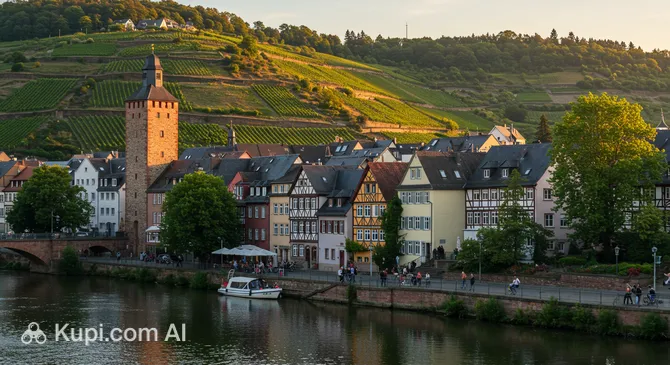
Kitzingen is a charming town nestled on the banks of the Main River in the heart of picturesque Franconia (Bavaria). It is a place where Germany reveals its most romantic side to travelers: lush green vineyards blend seamlessly into ancient streets, and the pace of life encourages relaxation. The town is located just a few kilometers from the major hub of Würzburg, making it an excellent starting point for exploring the region.

Kitzingen. Illustration.
Source: Kupi.com AI

Kitzingen is home to about 22,500 people—an ideal size for those seeking comfort and looking to escape the hustle and bustle of big cities. As the administrative center of the district, it attracts visitors with its welcoming atmosphere and architectural charm. Narrow cobbled streets, colorful half-timbered houses, ancient bridges, and towers create the feeling of stepping into a fairy tale. The centuries-old history of Kitzingen has left a distinct mark on the town's appearance, where ancient monuments stand in harmony with modern cafes and shops.

The town is particularly famous for its winemaking culture. Kitzingen is known for its festivals and traditions associated with wine production, as the surrounding hills are covered with vineyards. Here, you can not only admire the landscapes but also visit local wine bars to appreciate the taste of Franconian wines.

It is worth visiting this Bavarian corner to truly relax, breathe in the atmosphere of old Europe, and enjoy life at its most delicious and beautiful. Walks along the river, the aroma of fresh pastries, and the tart notes of local wine will make your journey unforgettable.

Weather Overview

The climate in Kitzingen can be described as moderately warm, making the town attractive to visit at any time of year. Summer here is generally very comfortable: in July and August, the average temperature stays around 19–20°C, while during daytime hours, the air often warms up to a pleasant 24–25°C. This is the best time for long walks along the Main River and excursions to the surrounding vineyards.

Winters in the region are cool and mild but require appropriate preparation. In January and December, average figures range from +2°C to +3°C. At night, the thermometer often hovers around zero or drops below, so warm clothing and reliable footwear will be necessary. You should also be prepared for precipitation: December is one of the wettest months, when rain can fall for up to 16 days.

The shoulder seasons offer great opportunities for quiet tourism. May pleases with spring warmth (up to +18°C during the day), and September maintains a summer mood with an average temperature of about +15°C. Before your trip, we recommend checking the current weather in Kitzingen to choose the right wardrobe and enjoy your holiday in Bavaria.

Average monthly temperature

Average monthly precipitation

Interesting Facts

Beyond its picturesque views and cozy streets, Kitzingen hides many surprising stories and unique features that make it a truly special place on the map of Bavaria. Here are a few facts that will help you see the town in a new light:

  • The Legend of the "Crooked Tower". One of the most recognizable symbols of the town is the Falterturm, which has a noticeable tilt. Local lore says its roof became twisted because the builders erected the tower in a great hurry to win a bet. Now, this architectural curiosity is often compared to the famous Leaning Tower of Pisa.

  • A Unique Carnival Museum. Kitzingen is home to the Deutsches Fastnachtmuseum—the only museum of its kind in the country entirely dedicated to the traditions of German carnival and masquerade. Here you can see rare historical costumes and masks, and immerse yourself in the atmosphere of the joyful folk festivals the region is famous for.

  • The Vineyard "Necklace". The town is considered one of the oldest centers of winemaking in Germany. Locals are proud that vineyards literally encircle Kitzingen like a green necklace. It is believed that it is here, thanks to the unique microclimate, that Franconia's best white wines are born.

  • A Bridge for Perfect Sunsets. The ancient Alte Mainbrücke over the Main River serves not only as a transport artery but also as a favorite viewpoint for townspeople. It is the best place to take panoramic photos of the old town and enjoy the sunset over the water.

How to Get There

When planning a trip to this picturesque corner of Bavaria, it's worth considering various route options in advance. The town is located away from the major international hubs, but excellent German autobahns and railways make the journey comfortable. You can find out more about how to get to Kitzingen to choose the best way to travel, whether by plane, train, or car.

The most convenient option for many travelers is Nuremberg Airport (IATA: NUE). It is located just 71 km from the town. Thanks to high-quality roads, a trip by taxi or rental car from the terminal takes less than an hour, usually around 50–55 minutes, making this airport a priority choice for those who value their time.

If you are flying on an international flight from further away, it makes sense to consider Frankfurt Airport (IATA: FRA). This is one of the world's largest aviation hubs, located in Frankfurt am Main, about 120.5 km from Kitzingen. Despite the greater distance, the journey along high-speed highways takes only about 1 hour 20 minutes to 1.5 hours, depending on traffic.

Below is summary information on the nearest airports for planning your arrival:

AirportPassenger trafficDistance
Nuremberg Airport4.0 mln71 km
Frankfurt Egelsbach Airport80 000112 km
Frankfurt Airport61.6 mln121 km
Mannheim Airport40 000123 km
Stuttgart Airport9.1 mln137 km

Rail service is another popular way to reach the region. High-speed trains (ICE) usually arrive at the major stations of neighboring metropolises, from where it's easy to transfer to a regional express or rent a car. The nearest major hub is Nuremberg Hauptbahnhof (about 74 km). The drive from the station to the center of Kitzingen takes about 50–60 minutes.

Also, an important transport hub is Frankfurt (Main) Hauptbahnhof. The distance of 115.5 km is covered by car in about 1 hour 20 minutes. This is one of Europe's busiest stations, providing direct connections to almost every major city on the continent.

List of the nearest major railway stations:

StationPassenger trafficDistance
Nuremberg Hauptbahnhof76.7 mln74 km
Frankfurt (Main) Hauptbahnhof127.8 mln115 km
Mannheim Hauptbahnhof36.5 mln126 km
Stuttgart Hauptbahnhof80.3 mln128 km
Bruchsal6.4 mln135 km

Main Attractions

Kitzingen is rich in amazing historical monuments that give it a unique charm. Walking through the town, you will certainly notice how harmoniously medieval architecture and the lively atmosphere of a wine-growing region intertwine here. Here are a few main attractions to include in your itinerary.

The undisputed symbol of the town is the Falterturm. This mighty tower, built in the 15th century as part of the town's fortifications, is famous for its "leaning" roof. Local legend has it that the tilt occurred because the builders mixed the mortar with wine instead of water, as the harvest that year was so abundant. In reality, the cause lies in the subsidence of the wooden structures, but tourists much prefer the wine story. The tower is especially beautiful when illuminated in the evening and serves as an excellent backdrop for photos.

For lovers of unusual cultural experiences, the German Carnival Museum (Deutsches Fastnachtmuseum) is a must-see. It is the only official museum in the country entirely dedicated to the history and traditions of carnival, Fasching, and masquerade. The modern interactive exhibition is located in the town center and allows you not just to see ancient costumes and masks, but also to immerse yourself in the holiday atmosphere through multimedia shows. This place is interesting for both adults and children.

The heart of walking routes is the Old Main Bridge (Alte Mainbrücke). This stone bridge, whose history dates back to the 14th century, connects the historical center with the Etwashausen district. Today, it is closed to cars, making it an ideal spot for a leisurely promenade. From here, you get the best panoramic views of the river and the town's spires, and in the evenings, you can often find locals enjoying the sunset with a glass of Franconian wine.

On the other side of the Main, in the Etwashausen district, lies a true Baroque gem—the Kreuzkapelle. This elegant chapel was designed by the famous architect Balthasar Neumann. The building, shaped like a Latin cross, delights with its harmony and proportions. An interesting fact: the plan of this very church was depicted on the old German 50-mark banknote, highlighting its architectural significance for the entire country.

Local Cuisine

Kitzingen's local cuisine is the embodiment of Bavarian hospitality and classic Franconian traditions. People here love hearty, simple, but incredibly tasty food made from seasonal products. The main gastronomic hit that every tourist must try is Schäufele. This is a furnace-roasted pork shoulder; the meat is so tender it easily separates from the bone, and it is topped with a delicious crispy crackling. Traditionally, this dish is served with potato dumplings (Knödel) and sauerkraut, creating a perfect balance of flavors.

It's impossible to imagine a meal in this region without a glass of local wine. Kitzingen is proud of its vineyards, and wine is considered part of the cultural code here. Special attention should be paid to white varieties such as Silvaner and Müller-Thurgau. They are characterized by freshness and light fruity notes, perfectly complementing local dishes. Tourists are encouraged to visit cozy wine cellars or tasting rooms to learn winemaking secrets firsthand.

The food culture in the town is closely linked to seasonality and freshness. Locals often visit farmers' markets where you can buy homemade cheeses, sausages, and fragrant pastries. For a quick snack on the streets, traditional fried sausages in a bun or fresh pretzels are excellent. If your trip falls during the summer months, be sure to visit one of the wine festivals: these are noisy and fun open-air celebrations where wine flows like water and tables are laden with treats.

Travel Tips

A trip to Kitzingen promises to be peaceful and filled with the spirit of old Franconia, but a little preparation will make your holiday even more comfortable. We've gathered some proven recommendations to help you easily navigate local customs and feel confident in this cozy Bavarian town.

  1. Clothing and Essentials: The weather here can be changeable, so stick to the layering principle. Even in summer, take a light jacket or sweater for evening walks along the Main. Most importantly—comfortable flat shoes, as the historical center is paved with old cobblestones that are difficult to walk on in heels. Don't forget an adapter for European-type sockets (Type F).
  2. Transport: Kitzingen is a compact town, and its historical part is best explored on foot. Public transport consists of buses connecting the center with the outskirts and neighboring villages, but they may run infrequently on weekends. Trains are ideal for trips around the region (e.g., to Würzburg). It's better to call a taxi by phone or via an app; hailing a car on the street is difficult here.
  3. Finances: The official currency is the Euro (€). While cards are accepted everywhere in supermarkets and hotels, Kitzingen retains the spirit of a traditional town: small bakeries, souvenir shops, and markets often require cash (Bargeld). We recommend always carrying 20–50 euros in small bills. It is customary to leave a tip of 5–10% of the bill in cafes or simply round up the amount when paying.
  4. Health and Safety: The town is very safe, and you can walk without fear even after dark. Pharmacies are easily recognized by the red letter "A" (Apotheke). If a pharmacy is closed, the address of the nearest 24-hour duty point is always posted on the door. Tap water is safe to drink and of high quality.
  5. Communication: The primary language is German. Many in the tourism sector speak English, but locals, especially the older generation, will appreciate it if you learn a few phrases. Instead of the standard "Guten Tag," the Bavarian greeting "Grüß Gott" is often used here. Free Wi-Fi is available in many cafes and on central squares, and a SIM card for internet can be bought in supermarkets (passport registration required).
  6. Local Etiquette: Franconians value politeness and calm. When entering a small shop or cafe, it is customary to greet the staff and other customers. Sunday (Sonntag) is a sacred day of silence and rest: most shops are closed, and making noise on the street is considered extremely impolite.
  7. What to Avoid: It is strongly recommended not to walk on bicycle paths. In Germany, cyclists are full participants in traffic; they ride fast and expect pedestrians not to occupy their lane. Also, do not cross the road on a red light, even if the street is empty—this can draw disapproval from locals, especially if children are nearby.
  8. Wine Advice: Kitzingen is a wine town, and it's best to buy wine directly from the producers (Winzer) rather than in a supermarket. Look for "Weinverkauf" signs or visit local wine shops (vinotheques). Be sure to look for wines in the flattened-shaped bottles—Bocksbeutel. This is a guarantee that the wine was produced specifically in Franconia and meets high quality standards.

By following these simple tips, you can avoid minor hassles and fully focus on the beauty of the half-timbered houses and the taste of Franconian wine. May your journey to Kitzingen be a source of warm memories and bright impressions!

Entertainment & Nightlife

Nightlife in Kitzingen perfectly reflects the character of this cozy Franconian town: you won't find noisy mega-clubs with neon signs open until dawn here. Instead, evening leisure is permeated with an atmosphere of Gemütlichkeit (coziness), where wine, heartfelt conversations, and high-quality gastronomy take center stage. Most after-dark activity centers in the historic district (Altstadt) and along the picturesque Main promenade.

A magnet for evening strolls is the Market Square (Marktplatz) area and its adjacent streets, such as Kaiserstraße. Here, you'll find traditional German Kneipen (pubs) and wine bars. In the warmer months, the promenade turns into one continuous terrace: locals and tourists enjoy the sunset with a glass of Silvaner. The crowd is mixed, but groups of friends and couples looking for a relaxed break predominate. The dress code in most establishments is casual; there are no strict requirements for evening attire.

If you are looking for specific evening spots, consider these local favorites. One is the Roxy cinema—it's not just a place to watch movies, but a true cultural spot with retro charm for a great evening out. For those seeking more active yet relaxing leisure, the Aqua-Sole complex is ideal. This popular water center with saunas often stays open late, offering a unique opportunity to relax in the thermal zone with a view of the river.

Practical tips for night owls in Germany, and specifically in this region, have their quirks. Most bars and restaurants close their kitchens around 9:00 PM–10:00 PM, while the establishments themselves may stay open until midnight or 1:00 AM, especially on weekdays. On Fridays and Saturdays, the fun lasts longer. Prices are moderate: a glass of wine or beer costs on average 4–6 euros. Since the town is compact, it is best to move between venues on foot.

In terms of safety, Kitzingen is an exceptionally peaceful place. You can walk through the night town, including the promenade and the center, without worry. The streets are well-lit, and the crime rate is very low. If you do need to reach a distant hotel or a neighboring village, it is better to book a taxi in advance by phone or through an app, as "catching" a car on the street at night is almost impossible.

As for daytime and early evening entertainment, the town offers a steady pace of cultural leisure. You can visit local museums or go for a bike ride along the vineyards. And if your visit coincides with one of the summer wine festivals (Weinfest), be prepared for the concept of "nightlife" to change: during these days, the town celebrates, sings, and dances in the squares until late into the night.

Parks & Museums

Kitzingen offers travelers a harmonious blend of well-kept green oases and rich cultural heritage. The town, stretching along the Main River, cleverly uses its riverside location to create picturesque walking areas, while its museums house unique collections rarely found elsewhere in the country.

One of the town's main natural attractions is the site of the former Garden Show (Gartenschaugelände). Since hosting the event in 2011, this area has become a favorite recreation spot for locals and tourists. The Bleichwasen area on the riverbank deserves special attention. It features spacious lawns for picnics, flower beds, and the famous "Town Balcony" (Stadtbalkon)—a wooden terrace hanging over the water, offering a magnificent view of the historic center and passing ships.

For those seeking privacy and romance, the Rose Garden (Rosengarten) is perfect. This small but incredibly picturesque park is located right next to the famous Falterturm. During blooming season, the air is filled with the sweet scent of hundreds of roses, and the view of the tower's leaning roof through floral arches creates an ideal setting for memorable photos. It is a quiet corner where you can escape the hustle and bustle and enjoy beautiful landscape design.

Start your cultural program with the German Carnival Museum (Deutsches Fastnachtmuseum). This is not just a costume exhibition, but a real research center dedicated to the traditions of the festival. The renovated building displays ancient masks, fool's outfits, and interactive exhibits telling the story of how Germany has celebrated the "fifth season" for centuries. The museum will be interesting for those who want to understand the deep roots of German folklore and humor.

Another unique gem is the Pastry Museum (Conditorei-Museum). It is located in the historical "House with the Unicorn" on the Market Square. The exhibition immerses visitors in the sweet history of the craft: you can see old baking molds, tools for working with chocolate and marzipan, and learn the secrets of past masters. It is an atmospheric place permeated with nostalgia and the aesthetics of old Europe.

Among architectural monuments, besides the already mentioned symbols of the town, the Old Synagogue (Alte Synagoge) stands out. The restored 19th-century building now serves as an important cultural center hosting concerts and exhibitions. Also worth noting is the Baroque masterpiece—the Kreuzkapelle, located on the opposite bank of the Main. Its harmonious forms, created by the brilliant architect Balthasar Neumann, are considered a benchmark of church architecture of that time.

If you find yourself in Kitzingen on a hot summer day, we recommend heading to Lake Mondsee. This is a recreation park located a few kilometers from the center, where you can not only swim but also walk along nature trails, enjoying the silence of the Franconian forest.

Getting Around

Kitzingen's transport system is characterized by German punctuality and simplicity, although it has its own quirks typical of small Bavarian towns. Since the town is quite compact, there is no metro, tram, or trolleybus. The backbone of public transport consists of buses and regional trains, which allow for comfortable movement both within the town and travel throughout the picturesque Franconian surroundings.

The bus network (Stadtbus) connects the historical center with outlying districts like Etwashausen or Siedlung, as well as with the railway station. The buses are modern and comfortable; however, it is important for tourists to check the schedule: on weekdays, transport runs regularly, but in the evenings and on weekends, intervals can increase significantly. For trips to neighboring large cities like Würzburg or Nuremberg, regional trains (RE/RB) departing from the main station are ideal.

Kitzingen is part of the VVM (Verkehrsunternehmens-Verbund Mainfranken) transport association, making the payment system unified and convenient. Tickets are valid for both buses and trains within the paid zones. The most popular option for tourists is a single ticket (Einzelfahrkarte) or a day pass (Tageskarte), which is beneficial if you plan to make more than two trips a day. For groups of travelers, there are special group tickets that allow for significant savings.

Tickets can be purchased at machines at the railway station (accepting cards and cash), via the DB Navigator or VVM mobile app, or directly from the bus driver. An important nuance: when buying from the driver, it's better to have cash, preferably small bills or coins, as card payment is not always available on the bus itself. If you bought a paper ticket at a machine without a timestamp, don't forget to stamp it in a special validator (usually orange or blue) before starting your trip, otherwise it will be considered invalid.

Given the town's riverside location and flat terrain, a bicycle is an excellent alternative to public transport. Bike rental is very popular here, as the famous Main river cycle path passes through the town. You can rent a two-wheeled vehicle at specialized shops or hotels. This will give you freedom of movement and the opportunity to see the vineyards from the best angles.

Taxis in Kitzingen operate reliably but have their own specifics: cars are rarely waiting on the streets except at the station. It is best to book a ride in advance by phone or ask the hotel reception or a restaurant to call a car. Car sharing is less prevalent than in metropolises, but cars from local rental services are often available at the station.

If you plan active trips around the region, look into the "Bavaria Ticket" (Bayern-Ticket). It allows you to use all regional trains and buses in Bavaria for a day. This is an ideal solution for day trips, saving you the need to understand the zones and fares of each individual journey.

Accommodation

Accommodation in Kitzingen is primarily about coziness and immersion in local color rather than faceless chain complexes. The town's hotel stock consists mainly of small family-run hotels, traditional Bavarian inns (Gasthöfe), and modern apartments. You are unlikely to find massive luxury resorts here, but you can stay in carefully restored half-timbered houses where history meets modern comfort.

When choosing a location, consider the Historical Center (Altstadt). Staying here will put you in the thick of things, just steps away from the Market Square and the main architectural monuments. This is the best choice for those who don't want to rely on transport. An alternative is the Etwashausen district on the right bank of the Main. This is a quieter and greener part of town, historically inhabited by gardeners. It offers the most beautiful panoramic views of the old town, and a walk to the center via the Old Bridge takes no more than 10–15 minutes.

The price range in the town can be described as budget and mid-range, which advantageously distinguishes it from neighboring large Würzburg. The cost of living here is democratic, while the level of service remains high, meeting German standards of cleanliness and hospitality. Booking is available through all major international online platforms; however, for very small guesthouses, it sometimes makes sense to check their own websites—they may have special offers.

An important planning tip: Kitzingen is a popular destination for wine tourism. During festival periods (especially in summer and early autumn) or major holidays, available rooms run out very quickly. We recommend booking accommodation at least 1–2 months before your trip to guarantee the best view and a convenient location.

Nearby Cities

For those who want to vary their holiday and explore the surroundings, Kitzingen serves as an excellent strategic base. Thanks to its favorable location in Franconia, many interesting places can be easily reached with very little travel time.

The closest and perhaps most famous neighbor is the majestic Würzburg. Located just 15–20 minutes away, this city is famous for its luxurious Baroque architecture. Must-see items here include the Bishops' Residence, a UNESCO World Heritage site, and the mighty Marienberg Fortress, which offers breathtaking views of the vineyards and the Main River.

If you prefer a combination of wellness and history, we recommend heading to Bad Mergentheim. This spa town is known for its healing springs and the magnificent castle of the Teutonic Order. No less picturesque is Wertheim, lying at the confluence of the Main and Tauber rivers. Its historical center with half-timbered houses and the ruins of an ancient castle on the hill seems straight out of a Brothers Grimm fairy tale.

CityPopulationDistance
Ochsenfurt11 31911 km
Volkach8 85714 km
Würzburg130 00016 km
Giebelstadt4 60019 km
Hochberg9 37921 km

These trips will allow you to dive deeper into the culture of Bavaria and Baden-Württemberg, enjoy the variety of landscapes, and make your journey truly fulfilling.

Shopping & Souvenirs

Shopping in Kitzingen is not a chase after global brands in huge malls, but rather a relaxed stroll with elements of gastronomic discovery. The town offers a cozy atmosphere where commerce is harmoniously integrated into historical settings. Small family-run shops, clothing boutiques, and handmade goods stores predominate here, where the owners often stand behind the counter themselves and are ready to give attention to every customer. It is an ideal place for those looking for authentic items and wanting to enjoy the selection process without the bustle of big cities.

The heart of the town's commercial life is the historical center (Altstadt). The main routes for shopping enthusiasts lead through the Market Square (Marktplatz) and adjacent streets such as Kaiserstraße and Marktstraße. Most shops are concentrated in this pedestrian zone: from bookstores and perfumeries to clothing and shoe stores. While walking here, you can combine shopping with viewing half-timbered architecture, stopping periodically at outdoor cafes.

There are no large shopping centers in the conventional sense (malls with entertainment and food courts) in the historical center of Kitzingen. For large-scale shopping and mass-market brands, locals usually head to neighboring Würzburg or visit commercial parks (Gewerbegebiet) on the outskirts of the town, which house large electronics supermarkets, hardware stores, and discounters. Tourists, however, will find it more interesting to focus on the offerings in the town center, which provides a more unique selection.

Local markets deserve special attention. The traditional weekly market (Wochenmarkt) regularly takes place on the Market Square. Here, farmers from neighboring villages offer the freshest seasonal vegetables, fruits, homemade cheeses, honey, and meat delicacies. It is the best place to get a taste of the region and buy products for a picnic on the banks of the Main. In the pre-Christmas period, the town is transformed by the Christmas market, where you can buy unique ornaments and artisan crafts.

When choosing souvenirs, first and foremost look at the local wine. Kitzingen is the wine capital of the region, so a bottle of Franconian wine in its characteristic flat "Bocksbeutel" bottle makes the best gift. Also popular are sweets, especially gingerbread (Lebkuchen), and souvenirs related to carnival themes, given the presence of the famous museum. In small shops, you can find high-quality ceramics and textiles produced locally.

When planning your purchases, it is important to consider opening hours. Most shops in the center are open from 9:00 AM or 10:00 AM to 6:00 PM on weekdays. On Saturdays, the working day is often shortened to 2:00 PM or 4:00 PM. Sunday in Germany is a day of rest (Ruhetag), when all shops are closed except for emergency pharmacies and bakeries (in the morning). Regarding payment, despite the widespread introduction of terminals, small private shops, bakeries, and markets still prefer cash (Bargeld). It is recommended to always have a small amount in euros with you.

Tourists who permanently reside outside the European Union can take advantage of the Tax Free system. If a shop supports this service (usually there is a Global Blue or Tax Free sticker on the window), you can issue a special check for a refund of part of the VAT when leaving the country for purchases over 50 euros. Be sure to clarify the availability of this option with the seller before paying.
Reached the end of the page?

That means the route is fully explored