Support

Ansbach

About

Ansbach is a charming city in the heart of Bavaria, situated on the picturesque banks of the Rednitz River. Located just 40 kilometers from bustling Nuremberg, it attracts travelers with its coziness and convenient location. Despite its compact size and population of about 42,000, the city holds the high status of the capital of Middle Franconia, serving as an important administrative center in Germany.

Ansbach. Illustration.
Source: Kupi.com AI

The city literally breathes the past, and the rich history of Ansbach dates back to the 8th century with the founding of St. Gumbertus Monastery. A unique feature of this place is that it was practically undamaged during World War II. Thanks to this, the unique atmosphere of antiquity has been preserved here: medieval streets, majestic princely residences, and ancient buildings appear before tourists in their original form.

Ansbach is ideal for those who are tired of the hustle and bustle of metropolises and are looking for the real, unembellished spirit of the region. After five in the evening, life here slows down, giving way to quiet family evenings and leisurely strolls. This is a wonderful destination for getting to know the culture of Franconia, making gastronomic discoveries, and immersing yourself in the fairytale atmosphere of old Europe.

Weather Overview

The climate in this Bavarian city can be described as moderately warm, without extreme temperature changes, which makes traveling pleasant in almost any season. Summer here is usually mild and comfortable: in July and August, the average temperature is about 19.5°C, and during the day the air often warms up to 24°C. This is the best time for a leisurely exploration of architectural monuments and walks in the parks.

Winters in the region are cool, but severe frosts occur rarely. The coldest month is considered January with an average temperature of 1.8°C and a minimum of around -0.4°C. Expect a warm summer with occasional precipitation and cool, damp winters, as rains occur quite regularly here — from 11 to 16 days per month depending on the season. Before your trip, be sure to check the detailed weather forecast in Ansbach to choose the right wardrobe and not forget an umbrella.

Average monthly temperature

Average monthly precipitation

Interesting Facts

In addition to its main attractions, Ansbach holds many fascinating secrets and amazing stories that reveal themselves only to inquisitive travelers.
Ansbach Residence. Illustration.
Source: Kupi.com AI

Traveler photos:

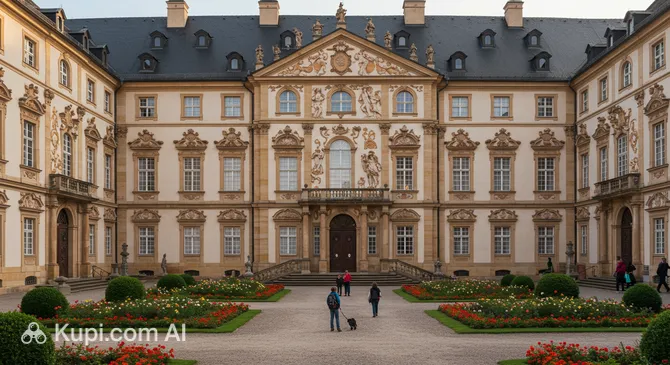
  • The city's history is rooted in deep antiquity: it began to grow around a Benedictine monastery founded back in 748. Later, the city became home to the Franconian Margraves, and this heritage is clearly reflected in the local architecture. The main symbol of that era is the magnificent Ansbach Residence — a Baroque palace with luxurious halls where you can see unique collections of artworks today.

  • One of the most intriguing mysteries of the 19th century is connected with Ansbach — the story of Kaspar Hauser. This mysterious foundling youth, whose origin remained unsolved, spent the last years of his life here. His fate still inspires writers and filmmakers, and the city itself preserves the memory of this legendary personality.

  • The city is home to an unusual institution — the Raubtier- und Exotenasyl, a sanctuary for predators and exotic animals. This place has become a real home for tigers, lions, and other rare animals that for various reasons cannot live in the wild, and here tourists can get to know them closer.

  • Ansbach is distinguished by a special atmosphere of hospitality that has developed historically. After World War II, the city welcomed more than 8,000 displaced persons from various regions. This event enriched the city's cultural life and formed the open, friendly character of the local residents, which is so valued by guests of the city.

How to Get There

When planning a trip to Middle Franconia, it is worth thinking through the logistics in advance, as the city does not have its own airport. You can find out more about how to get to Ansbach by studying various routes, but most often tourists choose a flight to one of the neighboring major cities followed by a transfer by train or car.

The nearest air hub is Nuremberg Airport (IATA: NUE), located just 42.5 km from Ansbach. This is the most convenient option: a trip by car or taxi will take about 40–50 minutes, which significantly saves travel time. The airport receives many flights from different parts of Europe and serves as an excellent starting point for traveling around the region.

For those flying from afar or looking for more connection options, Munich Airport (IATA: MUC) is suitable. It is one of the largest aviation hubs in Europe, located 137.9 km from Ansbach. The journey by car on the autobahn will take approximately 1.5–2 hours. You can also consider Stuttgart Airport (IATA: STR), located 121.5 km away; the journey from there to the city by car will take about 1 hour 30 minutes.

Below is a summary of the main airports convenient for a trip to Ansbach:

AirportPassenger trafficDistance
Nuremberg Airport4.0 mln43 km
Stuttgart Airport9.1 mln121 km
Franz Josef Strauss Airport39.8 mln138 km
Memmingen Allgäu Airport3.2 mln148 km
Mannheim Airport40 000151 km

Railway communication in Germany is famous for its punctuality and comfort, so the train is an excellent alternative to the car. The nearest major hub station is Nuremberg Hauptbahnhof (IATA: ZAQ), located about 40.4 km from the center of Ansbach. Regional trains (S-Bahn and RE) run regularly from here, reaching the destination in 30–50 minutes.

If your route lies through the south of the country, Munich Central Station (IATA: ZMU) will be an important transit point. It is located 148 km from Ansbach and serves a huge passenger flow, connecting Bavaria with all of Europe. Stuttgart Central Station (IATA: ZWS), located 116.8 km away, is also convenient.

List of the nearest major railway stations:

StationPassenger trafficDistance
Nuremberg Hauptbahnhof76.7 mln40 km
Augsburg Hauptbahnhof18.3 mln106 km
Stuttgart Hauptbahnhof80.3 mln117 km
Munich Hauptbahnhof164.3 mln148 km
Bruchsal6.4 mln148 km

Main Attractions

Ansbach is a city where history is harmoniously intertwined with modernity, offering travelers a rich cultural program. The main attractions are located compactly, allowing for a comfortable exploration during a walking tour. The hallmark of the city is its rich heritage of the Margrave era, which is carefully preserved to this day.

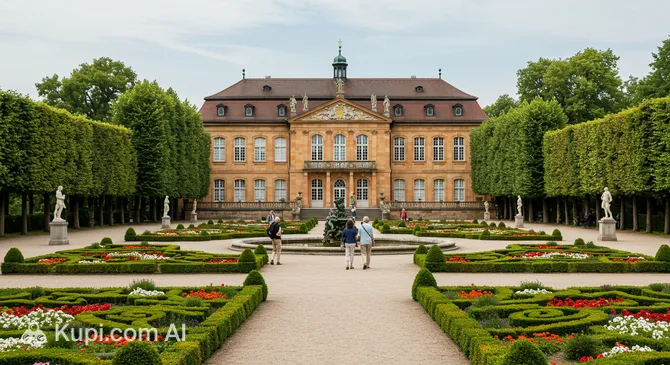
The absolute dominant feature of the historical center is the majestic Ansbach Residence. This palace is considered one of the most significant Baroque monuments in Franconia. Visitors are fascinated by the luxurious interiors: 27 state rooms, the Mirror Cabinet, and a unique hall lined with thousands of faience tiles. Today, it houses a museum where you can immerse yourself in the atmosphere of 18th-century court life and see collections of porcelain and paintings.

Ansbach Court Garden. Illustration.
Source: Kupi.com AI

Traveler photos:

Right across from the palace lies the magnificent Ansbach Court Garden. This is a green oasis in the city center, created in the Baroque style, with wide linden alleys, well-kept flower beds, and an impressive Orangerie building. The park is interesting not only for its landscape architecture but also for its historical significance: it is here that the monument to the mysterious Kaspar Hauser stands, whose fate is closely linked to this place. The garden is ideal for leisurely walks and a break from the city bustle.

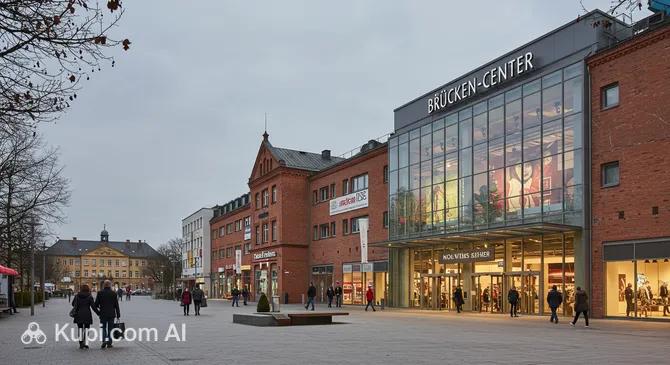
For those who want to swap historical settings for the rhythm of modern life, the Brücken-Center Ansbach will be a point of attraction. This large shopping complex, successfully integrated into the urban environment, offers excellent opportunities for shopping and entertainment. Here you can find both popular brand stores and cozy cafes, making it a popular meeting place for both locals and tourists looking to purchase memorable souvenirs.

Local Cuisine

Ansbach's cuisine is a real feast for lovers of hearty meat dishes and centuries-old culinary traditions. The city is located in the Franconia region, which is famous for its gastronomic patriotism and love for simple but incredibly delicious food. The main hit of the local menu is undoubtedly Schäufele — roasted pork shoulder. The meat is cooked in the oven until it is so tender that it easily separates from the bone, and it is covered with an appetizing golden crispy crust. Usually, this impressive portion is served with potato dumplings and sauerkraut — an ideal choice for a hearty lunch after a walk. It is impossible to imagine a trip to this region without tasting the famous Franconian sausages. Local masters prepare them according to old recipes, using selected pork and beef with the addition of marjoram and other spices. The sausages are grilled until golden brown or served in a fresh crispy bun right on the street — this is the most popular snack option for tourists and citizens alike. Local bakeries will certainly offer fresh pretzels sprinkled with coarse salt and a variety of pastries to go with them. The drinking culture in Ansbach is inextricably linked with the rich brewing traditions of Franconia. Here, local beer brewed in small regional breweries, which is distinguished by its rich taste and quality, is served with pride. For those who prefer wine, it is worth trying drinks from the vineyards surrounding the city. You can try all these delicacies in the cozy restaurants and gastropubs of the Old Town, where a warm atmosphere reigns, or at seasonal gastronomic festivals, where farmers offer the freshest cheeses, vegetables, and fruits.

Travel Tips

Ansbach warmly welcomes guests with its Baroque charm and peaceful atmosphere, but as with any trip, a little preparation will make your journey much more comfortable. We have gathered a list of practical recommendations that will help you feel confident in this cozy corner of Germany and avoid typical tourist mistakes.

  1. Clothing and belongings. The weather in Bavaria can be changeable, so dress in layers to easily adapt to temperature changes. Be sure to bring comfortable flat-soled shoes: the historical center is paved with cobblestones, and walking in heels here will be difficult. Even in summer, a compact umbrella or raincoat in your backpack won't hurt.
  2. Transport. The historical center of Ansbach is very compact, and it is best to explore it on foot — the main attractions are within walking distance of each other. For trips to remote areas, you can use the buses of the local VGN network. It is better to order a taxi by phone or find it at stands (for example, at the station), as hailing a car by hand is not common here, and apps like Uber may be unstable.
  3. Finances. The official currency is the euro (€). Although cards are accepted in supermarkets and hotels, Germany, and especially small towns like Ansbach, still love cash. Always have small denomination banknotes and coins with you to pay in bakeries, kiosks, and small cafes. Tipping (Trinkgeld) is welcome: usually the bill amount is rounded up or 5–10% is left.
  4. Health and safety. Ansbach is a safe and quiet city where you can walk even late in the evening. Pharmacies are easily recognized by the large red letter "A" (Apotheke). Please note that on Sundays and holidays, only on-call pharmacies work, the address of which is usually posted on the door of any closed pharmacy. The single emergency number is 112.
  5. Communication. The main language is German. In tourist places, hotels, and museums, staff often speak English, but the older generation of locals may not speak it. Learn a couple of phrases, for example, "Grüß Gott" (a traditional Bavarian greeting) and "Danke" (Thank you) — this will instantly win over your interlocutors. Free Wi-Fi (BayernWLAN) is available in many parts of the city center.
  6. Local etiquette. Bavarians value politeness and following rules. When entering a small shop or restaurant, it is common to greet the staff. Remember that Sunday (Sonntag) is a day of silence and rest: almost all shops, including grocery stores, will be closed, so plan your purchases in advance.
  7. What to avoid. Never walk on bicycle paths — this is a high-danger zone and a source of irritation for local cyclists, who ride quite fast. Also, it is strictly not recommended to cross the road on a red light, even if there are no cars: this is considered bad form and can result in a fine, especially if there are children nearby.
  8. Event tourism. If you are planning a trip in summer, check the dates of the "Rococo" festival (Ansbacher Rokoko-Festspiele). During these days, the city is transformed: costumed festivities, musical performances, and 18th-century style dances take place in the Court Garden. This is a unique chance to see the "living history" of Ansbach.

We hope these tips help you easily plan the perfect vacation. Ansbach is a city that opens up to those who respect its traditions and slow pace of life, promising in return warm memories and true Franconian hospitality.

Entertainment & Nightlife

Ansbach's nightlife differs from that of noisy metropolises: here you won't find huge rave venues, but you will discover the comfort of true Franconian Gemütlichkeit (coziness). Evenings in this city are spent in a relaxed atmosphere, where locals and students gather in small bars, pubs, and restaurants in the historical center. The main activity after sunset is concentrated in the Old Town (Altstadt) area, especially on the streets around Martin-Luther-Platz and Uzstraße.

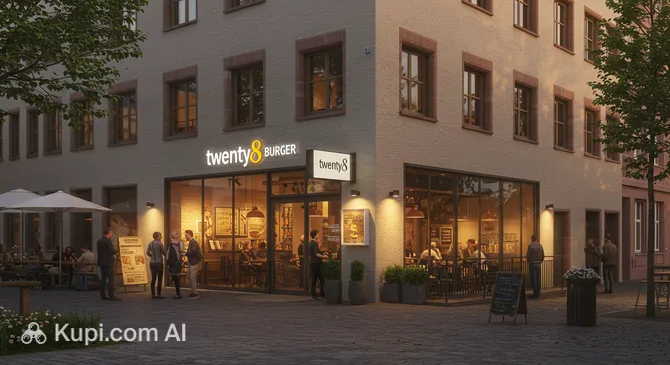
For the start of the evening, a gastronomic route is perfect. If you are looking for a place with a modern atmosphere and hearty cuisine, it's worth checking out twenty8 burger. This popular establishment attracts young people and tourists with its burgers and casual atmosphere, ideal for friendly gatherings before continuing the night.

twenty8 burger. Illustration.
Source: Kupi.com AI

Traveler photos:

Lovers of a calmer dinner with exotic notes can be recommended the Maharaja Restaurant. A pleasant atmosphere reigns here, conducive to long conversations over a glass of wine or a traditional Indian lassi drink. Overall, Ansbach's establishments are democratic: there is practically no strict dress code, the style of clothing is casual. The average check for dinner with drinks will be about 20–30 euros per person.

As for safety, Ansbach is a very quiet city, and night walks here pose no threat. However, public transport runs rarely at night, so if you stay out late, it's better to call a taxi by phone, as "hailing" a car on the street is not common. The city center is compact, and most hotels can be reached on foot.

During the day, the city offers more traditional cultural entertainment. Art lovers should visit the Theater Ansbach, which stages both classical plays and modern productions. In good weather, it is pleasant to stroll through picturesque parks or visit museums to learn more about the rich heritage of the margraves before the city sinks back into its cozy twilight.

Parks & Museums

Ansbach harmoniously combines natural beauty and a rich cultural heritage, offering guests not only majestic architectural monuments but also well-kept green areas for quiet relaxation. The city carefully preserves its history in museum halls, while its parks serve as the perfect place to catch your breath after a busy excursion program.

The main green gem of the city is rightly considered the Ansbach Court Garden. This magnificent Baroque park, located right across from the Residence, impresses with its geometric precision and variety of flora. Here you can stroll along wide linden alleys, admire bright flower beds, and see the historical Orangerie building. Of particular note is the medicinal herb garden dedicated to the famous botanist Leonhart Fuchs, who lived in Ansbach. This place is ideal for leisurely walks and enjoying the silence in the very heart of the city.

For lovers of wilder nature, the surroundings of Lake Scheerweiher, located near the city, are of interest. This is a nature reserve where you can observe rare bird species and enjoy the landscapes of Franconia. Although it is not a city park in the classical sense, the area is excellent for hiking and connecting with nature away from the city bustle.

The cultural life of the city is centered around its museums. The central place is occupied by the Ansbach Residence. Inside the palace, a museum is open where visitors can see luxurious state rooms, including the famous Mirror Cabinet and the Great Hall with frescoes. The collection of the State Gallery presented here introduces Baroque and Rococo painting, as well as rare examples of Ansbach faience and porcelain.

No less important for understanding the spirit of the city is the Markgrafenmuseum (Margrave Museum). The exhibition tells in detail about the history of the Margraviate of Brandenburg-Ansbach, covering the period from the early Middle Ages to the 19th century. A separate and quite intriguing section is dedicated to the mystery of Kaspar Hauser — the famous foundling whose mysterious fate is inextricably linked with the city. Here you can see personal belongings and documents that shed light on this historical detective story.

Among the architectural monuments, the two main churches of the city stand out. St. Gumbertus Church impresses with its mixture of styles and houses the sarcophagi of the margraves in its crypt. Opposite it rises St. Johannis Church, built in the Gothic style, which is an important symbol of the religious history of the region.

As an unusual cultural experience, the Predator and Exotic Animal Asylum (Raubtier- und Exotenasyl Ansbach) is worth mentioning. This is not a zoo in the usual sense, but a rescue center for tigers, cougars, and other exotic animals. Visiting this place allows you to not only see rare animals but also support the noble cause of their protection.

Insider tip: Be sure to look into the medicinal plant garden in the Court Garden in summer. Many tourists pass by without knowing that the plants there are planted in accordance with 16th-century botanical works, and each bed is a living illustration of the history of medicine.

Getting Around

The transport system of Ansbach is characterized by German punctuality and convenience, although it is arranged quite simply due to the small size of the city. There are no subway or tram lines here; the main means of transport within the city limits are buses. The route network covers both the historical center and remote residential areas, connecting them with key points — the railway station and the central square. The buses are modern, low-floor, and comfortable, making travel convenient even with luggage.

The city is part of the VGN (Verkehrsverbund Großraum Nürnberg) transport association. This is a huge plus for tourists: a single ticket system applies to all types of transport, including city buses and regional trains. To move around Ansbach itself, you will need a price category F ticket (for short trips) or a city fare. You can buy tickets at machines at stations (they have a menu in English), from the bus driver (often cash only), or through the VGN Fahrplan & Tickets mobile app, which is the most convenient option.

Ansbach railway station serves as an important transport hub. S-Bahn trains (line S4) depart from here, linking the city with Nuremberg and other major hubs in the region. This is an ideal option for day trips to the surroundings. It is important to remember the validation rules: if you bought a paper ticket at a machine and it does not indicate the validity time, it must be stamped in a special orange or blue validator before boarding or on the platform. Fines for fare evasion in the region are quite substantial.

As an alternative to public transport, bicycles are popular. Ansbach is a very "green" city with a developed network of cycle paths, and two-wheeled transport is often faster than a car here. Rental points can be found in the center or at the station. Taxis in the city are also available, but unlike in metropolises, catching a car with a wave of your hand on the street is practically impossible. A car must be sought at special stands (for example, at the station or Brücken-Center) or called by phone in advance.

Tourists should take into account the transport operation schedule. On weekdays, buses run regularly, but after 20:00 the intervals significantly increase, and some routes stop operating. On weekends, especially on Sunday, there are much fewer trips, so it is better to plan trips in advance, checking the schedule in the app or at stops. For late returns, an "Anruf-Sammel-Taxi" (AST) system operates in the city — a collective taxi that runs according to the schedule but requires pre-ordering by phone at least an hour before the trip.

Accommodation

Ansbach offers tourists a cozy and authentic choice of accommodation that perfectly complements the atmosphere of an old Franconian city. You are unlikely to find huge chain resorts or luxury skyscrapers here. The basis of the hotel fund consists of traditional German guesthouses (Gasthof), family pensions, and small boutique hotels located in historical buildings. Also, in recent years, the popularity of apartment rentals has been growing, which is convenient for families and long stays.

When choosing an area to stay, most travelers prefer the Old Town (Altstadt). This is an ideal location for those who want to feel the pulse of the city: all the main attractions, including the majestic Ansbach Residence, are within walking distance. Living here means waking up to the sound of bells and having access to the best cafes and restaurants right on your doorstep.

Another convenient option is the railway station area. This is a strategically advantageous place for those who plan to use Ansbach as a base for traveling around Bavaria, for example, for trips to Nuremberg. It is also worth considering accommodation options near the Brücken-Center Ansbach shopping complex. This area combines proximity to the historical center with modern infrastructure and convenient shopping.

Brücken-Center Ansbach. Illustration.
Source: Kupi.com AI

Traveler photos:

Booking tip: Ansbach is a small city, and the number of good hotels here is limited. It is strongly recommended to book accommodation in advance, especially if your trip falls in the summer months or during the famous "Rococo" festival (July). During these periods, demand increases sharply, and finding a free room upon arrival can be practically impossible.

The pricing policy in the city is quite democratic compared to the large tourist centers of Germany.

  • Budget segment: Simple guesthouses and hostels offer overnight stays at an affordable price, often with breakfast included.
  • Middle class: Most of the city's hotels fall into the 3–4 star category, offering comfortable rooms and quality service at reasonable prices.
For booking, you can use both popular international online platforms and the websites of the hotels themselves — in many family Gasthofs, direct booking can be even more profitable.

Nearby Cities

For those who want to explore the surroundings, Ansbach serves as an excellent starting point for day trips to several interesting nearby places:

Just a 40-minute drive away is Nuremberg — the second-largest city in Bavaria. This is a real treasure trove of history, where you can walk along the walls of a medieval fortress, visit the majestic Imperial Castle (Kaiserburg), and look into the Albrecht Dürer House. Nuremberg is ideal for a rich cultural day, offering many museums and the lively atmosphere of an ancient metropolis.

Very close is Fürth, which is often called the "city of monuments" because of the incredible concentration of historical buildings per square meter. Unlike its bustling neighbor Nuremberg, Fürth offers a calmer and cozier setting for walks. Here it's worth seeing the Italian-style Town Hall and enjoying the Gründerzeit architecture, which has been perfectly preserved to this day.

Also noteworthy is Schwabach, known worldwide as the "city of gold leaf." The traditions of making the finest gold sheets have been alive here for more than 500 years, and their traces can be found everywhere — from the gilded roofs of the Town Hall to special exhibitions in the city museum. This is a charming old town with a beautiful market square, ideal for a leisurely visit.

CityPopulationDistance
Heilsbronn9 82517 km
Feuchtwangen12 59923 km
Gunzenhausen16 86024 km
Illesheim1 30024 km
Rosstal10 07025 km

These nearby destinations provide an insight into the diverse culture and landscapes of the region.

Shopping & Souvenirs

Shopping in Ansbach is not just a trip to the stores, but a pleasant walk where modern windows sit alongside Baroque facades. The city does not strive to compete with metropolises in the number of boutiques, but offers a high-quality and cozy format of commerce. Here you can find everything you need: from fashionable clothes of famous brands to unique products of local craftsmen, while avoiding the tiring bustle and queues characteristic of large tourist centers.

The heart of commercial life is the Old Town (Altstadt). The main pedestrian routes for shopping enthusiasts run through Uzstraße and the area around Martin-Luther-Platz. This area is home to many small family stores, bookstores, and boutiques with clothing and accessories. Strolling along the cobblestones past historical buildings, tourists can look into specialized shops offering home goods, jewelry, and perfumes.

For those who prefer "all-in-one" shopping, the Brücken-Center Ansbach is an ideal choice. This modern shopping complex, located in the immediate vicinity of the historical center, is considered one of the most popular points of attraction in the region. Under one roof, several dozen electronics, fashion, sportswear, and cosmetics stores are collected here, as well as various cafes where you can take a break between purchases.

Local markets, which reflect the gastronomic traditions of Franconia, deserve special attention. Twice a week, on Wednesdays and Saturdays, a traditional Weekly Market (Wochenmarkt) unfolds on Martin-Luther-Platz. Here, local producers offer the freshest vegetables, fruits, homemade cheeses, honey, and meat delicacies. During the pre-Christmas period, the city is transformed thanks to the famous Christmas Market, where you can buy Christmas decorations and handmade items.

As souvenirs from Ansbach, it is worth bringing local products. A great gift would be the famous Franconian wine in characteristic flat Bocksbeutel bottles or a set of local beer. Also popular are traditional gingerbread (Lebkuchen) and porcelain or ceramic products, reminiscent of the rich heritage of Ansbach manufactories. Those with a sweet tooth should pay attention to handmade chocolate from local confectioneries.

Shops in the city are usually open from Monday to Saturday from 09:00 or 10:00 to 18:00–20:00. Large shopping centers and supermarkets may stay open longer, until 20:00. It is important to remember that Sunday in Germany is a day off (Ruhetag), and practically all shops are closed. Regarding payment, despite the widespread introduction of terminals, small shops, bakeries, and the market often only accept cash, so it is always useful to have euros with you.

Tourists permanently residing outside the European Union can use the Tax Free system. When purchasing goods for an amount over a certain minimum (usually 50 euros) in stores marked with a special sign (for example, Global Blue), you can issue a check for a VAT refund. Don't forget to ask for the Tax Free form at the checkout and present your passport.
Reached the end of the page?

That means the route is fully explored