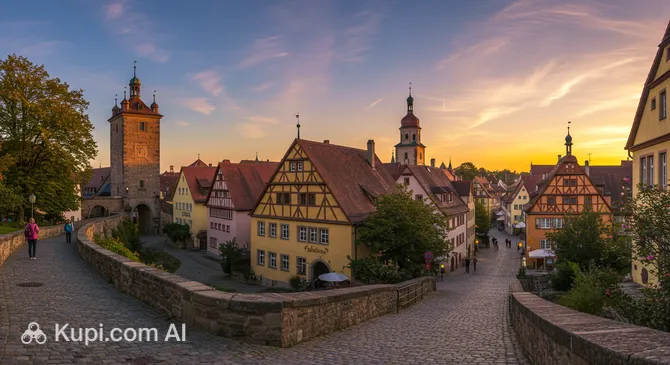
Rothenburg ob der Tauber is not just a city, but a true living fairy tale, as if straight from the pages of old German legends. It is nestled on a picturesque plateau above the Tauber River valley in the heart of Bavaria, roughly halfway between Frankfurt and Munich. This city is one of the crown jewels of Germany's famous Romantic Road, where time seems to have stood still, inviting every guest on an amazing journey into the past.
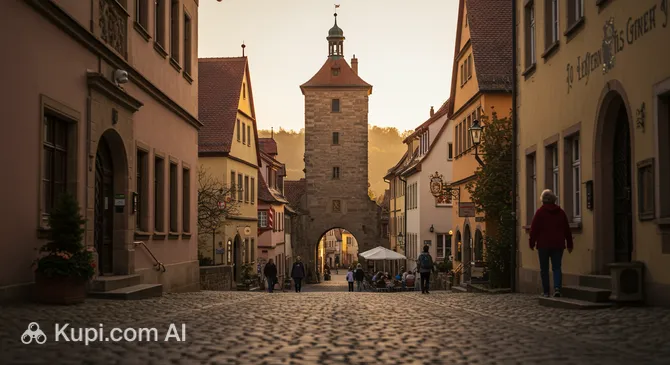
Rothenburg ob der Tauber. Illustration.
Source: Kupi.com AI
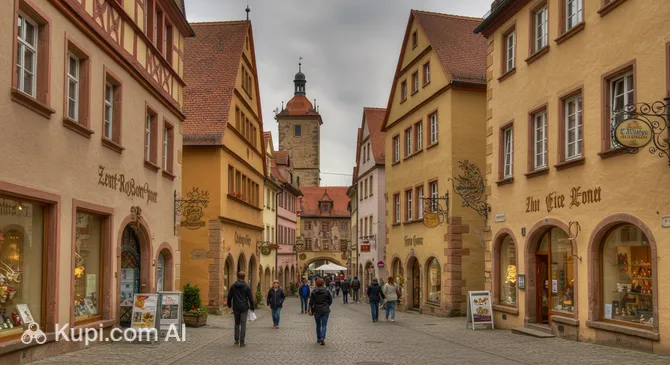
With a population of about 11,243 people, Rothenburg ob der Tauber preserves a unique atmosphere of intimacy and medieval charm. Within its beautifully preserved fortress walls, life seems to have paused centuries ago. A walk through the cobbled streets, past colorful half-timbered houses with their characteristic turrets, becomes a real journey through time. Every house and every alley here breathes history, while the city offers cozy cafes and authentic souvenir shops that complement the fairy-tale atmosphere.
The main appeal of Rothenburg ob der Tauber lies in its amazing authenticity and the feeling of a genuine German fairy tale that is hard to experience anywhere else. It is a place where you can admire perfectly preserved medieval architecture and simply enjoy the unique atmosphere. If you dream of seeing history come to life and feeling the spirit of old Europe, then Rothenburg ob der Tauber is definitely a city worth visiting.
The weather in Rothenburg ob der Tauber is characterized by a moderate climate. Summers are warm, with average temperatures in July and August around 19-20°C, while maximum values can reach 23-24°C. Winters are cool, with an average temperature in January and December of about 2-3°C, and minimum temperatures dropping to zero or slightly below. Precipitation is distributed relatively evenly throughout the year, averaging 2 to 3 mm per month, with the number of rainy days ranging from 11 to 16 per month. Expect a warm summer with occasional rain and cool, damp winters.
In addition to its world-famous views that look as if they’ve jumped off the pages of fairy tales, Rothenburg ob der Tauber holds many surprising stories and facts that make it even more alluring for curious travelers.
Plönlein. Illustration.
Source: Kupi.com AI
Traveler photos:
The first settlements at the site of the modern city appeared as early as the 10th century, and in 1274, Rothenburg was granted the status of a Free Imperial City. This made it one of the most important political and economic centers of the region for many centuries.
In the 15th century, the population of Rothenburg exceeded 6,000 people! This was significantly more than, for example, Frankfurt or Munich at the time. The city reached the peak of its prosperity under the famous mayor Heinrich Toppler.
One of the most famous city legends is the "Master Draught" (Meistertrunk). According to legend, during the Thirty Years' War, the city's mayor saved Rothenburg from destruction by drinking a huge tankard of Franconian wine (over 3 liters!) in one go. This feat is reenacted annually during a city festival and is often associated with the historic Rothenburg Town Hall.
Rothenburg's Old Town has almost completely preserved its medieval layout and architecture. Its massive fortress walls, numerous towers, and gates, such as the famous Röder Gate, are among the best-preserved in Germany. It is no surprise that the city's fairy-tale atmosphere inspired Disney studio artists and has repeatedly served as a film set.
How to Get There
There are several ways to reach the charming medieval town of Rothenburg ob der Tauber, primarily through the major transport hubs of neighboring cities, as Rothenburg itself is a small town. The most popular options are flying into one of the nearest international airports followed by a transfer, or traveling by train.
Since Rothenburg ob der Tauber does not have its own airport, travelers usually fly to one of the airports in nearby major cities in Germany. The most convenient options include:
Nuremberg Airport (NUE) is located in the city of Nuremberg, approximately 66 km from Rothenburg ob der Tauber. It is a major international airport offering good connections. A trip by car or taxi from the airport to Rothenburg ob der Tauber takes roughly 1 hour to 1 hour 30 minutes. You can also use public transport by combining a train and a bus.
Frankfurt Airport (FRA), located in Frankfurt am Main, is one of Europe's largest transport hubs (huge in passenger traffic) and is situated about 139 km away. It offers a vast number of international and domestic flights. The road to Rothenburg ob der Tauber from here by car takes approximately 1 hour 45 minutes to 2 hours 15 minutes. It is also convenient to get there from the airport by train with a transfer.
Another significant option is Stuttgart Airport (STR) in the city of Stuttgart, located about 106 km from Rothenburg ob der Tauber. This is a very large international airport. The journey by car or taxi will take about 1 hour 30 minutes to 2 hours.
For clarity, here is a summary of the main airports from which you can reach Rothenburg ob der Tauber:
Railway connection is also a convenient way to reach the region. Although Rothenburg ob der Tauber has a small train station serving mainly local lines (e.g., to Steinach), it is more convenient to arrive at major stations in neighboring cities for most long-distance travel.
The nearest major railway hub is Nuremberg Hauptbahnhof (ZAQ), located in Nuremberg, about 65 km from Rothenburg ob der Tauber. This is a massive station with excellent connections throughout Germany and Europe. From here, Rothenburg ob der Tauber can be reached by regional train (usually with one transfer in Steinach) or bus; the trip takes about 1 hour 20 minutes to 1 hour 45 minutes.
Another important transport hub is Frankfurt (Main) Hauptbahnhof (ZRB) in Frankfurt am Main, located approximately 136 km away. It is one of Germany's largest and busiest stations (huge in passenger traffic). From here, you can also reach Rothenburg ob der Tauber by train, usually with one or two transfers, with a total travel time of about 2 hours 15 minutes to 3 hours.
Main railway stations through which you can plan a route to Rothenburg ob der Tauber:
Additionally, Rothenburg ob der Tauber can be reached by car; the city is conveniently located relative to the German autobahn network. If you are traveling by car, use a navigator to plan the optimal route.
Main Attractions
Rothenburg ob der Tauber, the gem of Germany's Romantic Road, is famous for its magnificently preserved medieval architecture. Every street in this city breathes history, and its landmarks transport visitors into a fairy-tale past. Here are just a few of the iconic places you shouldn't miss.
Plönlein. Illustration.
Source: Kupi.com AI
Traveler photos:
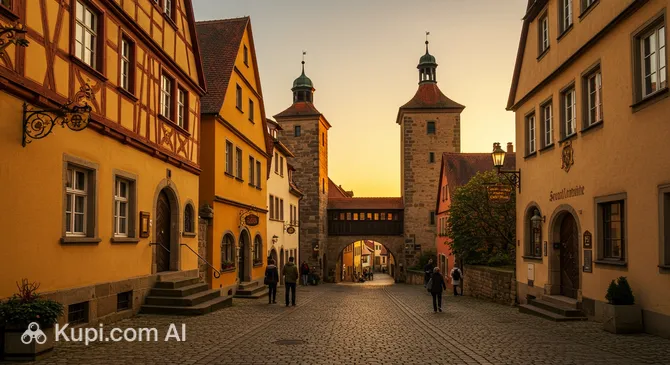
One of the most photographed and recognizable symbols of Rothenburg is the Plönlein. This picturesque corner features a small square with a characteristic yellow half-timbered house wedged between two towers – the tall Siebersturm and the Kobolzeller Gate, which leads into the Tauber Valley. This spot perfectly captures the charm of an old German town and is a must-visit.
Rothenburg Town Hall. Illustration.
Source: Kupi.com AI
Traveler photos:
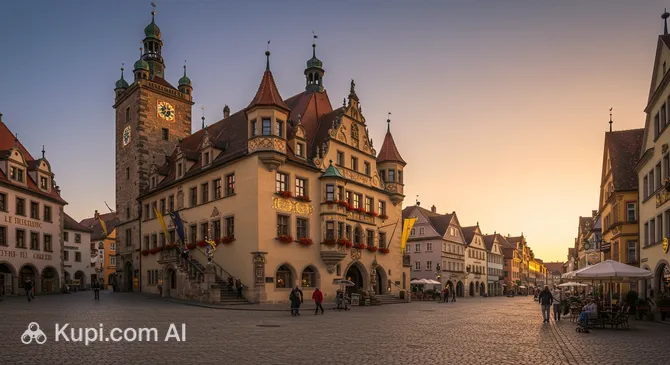
In the heart of the city, at the Market Square, stands the majestic Rothenburg Town Hall. It consists of two parts: a Gothic section built in the 13th-14th centuries and a Renaissance part added in the 16th century. Tourists can climb the 60-meter Town Hall tower, which offers a breathtaking panoramic view of the entire city with its red-tiled roofs and the surrounding countryside. This is a great opportunity to appreciate the scale and beauty of Rothenburg from a bird's-eye view.
Medieval Crime Museum. Illustration.
Source: Kupi.com AI
Traveler photos:
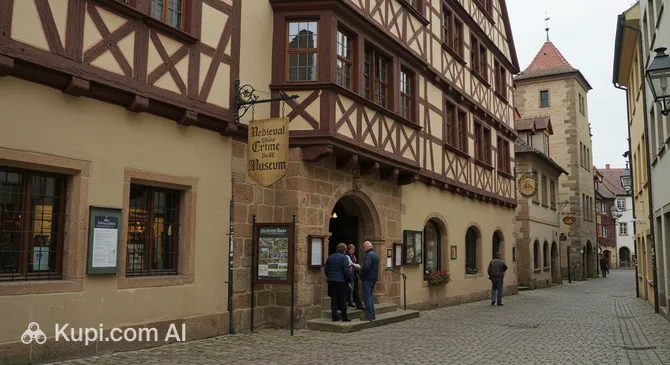
For those interested in the more unusual aspects of history, the Medieval Crime and Justice Museum is a must-see. Located in a building of a former Johanniter monastery, the museum presents an extensive collection of torture instruments, shame masks, and other artifacts related to justice and punishment in the Middle Ages and later. The exhibition sheds light on the darker pages of European history and invites reflection on the customs of past eras.
St. James's Church. Illustration.
Source: Kupi.com AI
Traveler photos:
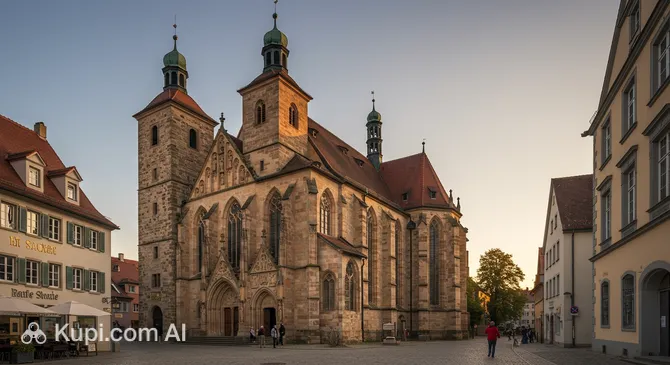
The city's main religious building is St. James's Church (St.-Jakobs-Kirche). This impressive Gothic church was built over nearly two centuries, from 1311 to 1485. Inside, it houses the world-famous Holy Blood Altar, a masterpiece by woodcarver Tilman Riemenschneider created in the early 16th century. The church is also famous for its stained glass windows and majestic architecture, attracting pilgrims and art lovers alike.
Local Cuisine
Rothenburg ob der Tauber is not only a living medieval fairy tale but also a true paradise for foodies. The city's gastronomic scene is steeped in Franconian traditions, offering travelers unique taste experiences. The hallmark of the local cuisine is undoubtedly the "Schneeballen" (Snowball) — a crispy ball of pastry reminiscent of a snowball, traditionally dusted with powdered sugar, but also available covered in chocolate or nuts. This dessert, with a history spanning several centuries, is a Franconian exclusive and is a must-try.
In addition to sweets, Franconian cuisine is famous for hearty main dishes. In Rothenburg's traditional restaurants, you will be offered aromatic roast pork with knödel (potato or bread dumplings), various local sausages (such as bratwurst), and classic sauerkraut. It is also worth trying the traditional onion tart (Zwiebelkuchen), which is especially popular in the fall. Local drinks are the perfect accompaniment to such substantial dishes: the famous Franconian wine, especially from the Tauber Valley, considered one of the best in the region, and, of course, freshly brewed local beer.
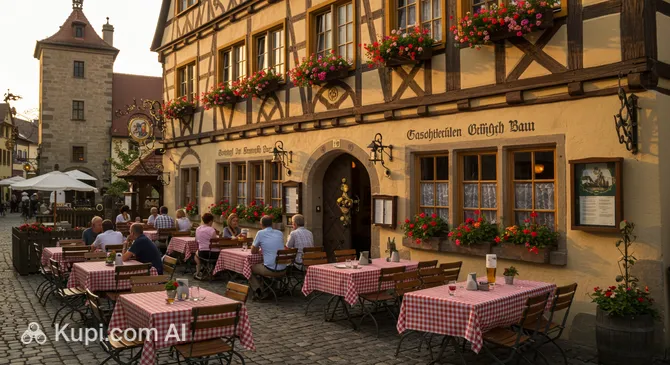
The dining culture in Rothenburg ob der Tauber is diverse and atmospheric. Locals and tourists love to gather in cozy Gaststätten (inns) and restaurants where a spirit of hospitality prevails and authentic dishes can be enjoyed. One such place where you can taste traditional cuisine is Gasthof zum Grünen Baum. Besides restaurants, street food is also popular: you can always find aromatic grilled sausages, fresh pastries, and homemade cheeses at the city markets. This is a great way to have a quick and tasty snack while enjoying the atmosphere of the old city.
Gasthof Zum Grünen Baum. Illustration.
Source: Kupi.com AI
Traveler photos:
A special gastronomic atmosphere reigns in the city during Christmas markets, when the air is filled with the aromas of mulled wine (Glühwein), roasted nuts, and gingerbread (Lebkuchen). Rothenburg is also known for its food festivals and wine celebrations held throughout the year. Participating in such events is a wonderful opportunity to get to know Franconian culinary traditions more deeply, try dishes based on old recipes, and discover new flavors in this charming region of Germany.
Travel Tips
Planning a trip to the fairy-tale Rothenburg ob der Tauber? To ensure your journey through this gem of the Romantic Road goes smoothly and leaves only the warmest memories, we have prepared some practical tips to help you feel more confident in this medieval city.
Clothing and Essentials: Rothenburg ob der Tauber is a city with cobbled streets, so comfortable flat shoes are absolutely essential. The weather in Germany is changeable, so dress in layers. Light clothing is useful in summer, but don't forget a sweater or light jacket for evening walks. In winter, you will need warm clothes and boots. Bring a power adapter (type F) and an umbrella or raincoat. When visiting churches, such as St. James's Church, choose clothing that covers your shoulders and knees.
Transport: The historical center of Rothenburg ob der Tauber is best explored on foot – it is compact and incredibly picturesque. Public transport consists of buses, which can be useful for trips to the train station or more distant areas. Taxis are available but can be an expensive luxury. A rental car is not necessary for getting around the city itself but might be handy if you plan to explore the surroundings and other towns on the Romantic Road. Note that parking in the center is limited.
Finances: The official currency is the Euro (EUR). You can exchange money at banks. Credit and debit cards (Visa, Mastercard) are widely accepted in most hotels, restaurants, and shops. However, it is always useful to have some cash on hand for small purchases, markets, or places where cards might not be accepted. ATMs (Geldautomat) are easy to find. Tipping in restaurants and cafes is usually 5-10% of the bill if you are satisfied with the service; it can either be added to the bill when paying by card or left on the table.
Health and Safety: Rothenburg ob der Tauber is a very safe city. Pharmacies (Apotheke) are easy to find by the red letter "A"; check the schedule for duty pharmacies (Notdienst) if needed at night or on weekends. Travel medical insurance is highly recommended. Observe usual precautions: watch your belongings in crowded places, especially on popular tourist routes.
Communication: The official language is German. In tourist spots, hotels, and restaurants, many people speak English, especially the youth. Learning a few basic phrases in German, such as "Hallo" (Hello), "Guten Tag" (Good day), "Danke" (Thank you), "Bitte" (Please/You're welcome), and "Entschuldigung" (Excuse me), is a polite gesture. A local SIM card can be purchased in supermarkets or specialized stores. Wi-Fi is available in most hotels and many cafes.
Local Etiquette: Germans value punctuality. It is customary to greet with a handshake while maintaining eye contact. Try not to be loud in public places. In Germany, it is customary to sort trash; pay attention to the corresponding containers.
What to Avoid: Try not to make noise in residential neighborhoods late in the evening and especially on Sundays – this is a time for rest (Sonntagsruhe). Do not walk on bicycle paths; they are intended exclusively for cyclists. Excessive familiarity with strangers is also not welcomed.
Special Tip: Be sure to try the local delicacy – "Schneeballen" (snowballs), a crispy ball-shaped cookie covered in powdered sugar or chocolate. Also, don't miss the chance to join a tour with the Night Watchman (Nachtwächter) – it's a fascinating immersion into the history and legends of Rothenburg. Remember that most shops in Germany, including Rothenburg, are closed on Sundays, so plan your shopping in advance.
We hope these tips help you better prepare for your trip and fully enjoy every moment in this truly magical city. Rothenburg ob der Tauber is waiting for you to provide unforgettable impressions and the atmosphere of a medieval fairy tale!
Entertainment & Nightlife
In the evening, Rothenburg ob der Tauber is enveloped in a medieval fairy-tale atmosphere. Although the city is not known for noisy nightclubs or massive parties, it offers cozy and authentic ways to spend the evening. The nightlife here is more suited for leisurely conversations over a glass of local wine or beer in a traditional setting rather than dancing until dawn.
Main evening activities are concentrated within the Old Town, especially around the Market Square (Marktplatz) and its adjacent streets. Instead of modern nightclubs, you will find traditional German pubs (Kneipe), wine taverns (Weinstube), and restaurants, many of which are located in historical buildings with centuries of history. The atmosphere in such establishments is usually very welcoming and relaxed, attracting both locals and tourists. The dress code is generally casual.
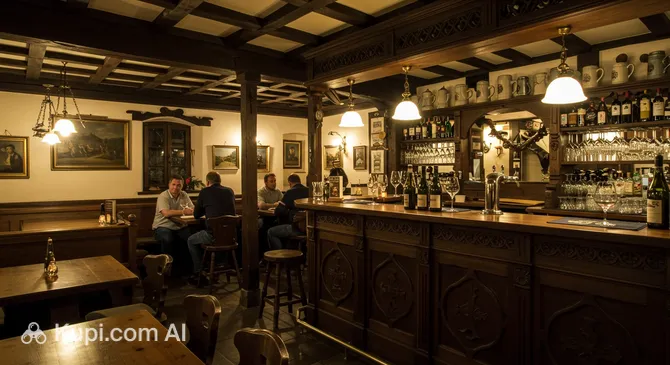
Most places stay open until late evening, though not until early morning as in large metropolises. Activity peaks after dinner and lasts until around midnight. Among popular spots to feel the spirit of Rothenburg, it is worth noting the traditional wine cellar Altfraenkische Weinstube, which offers local Franconian wines in a historical interior. Another pleasant place is Cafe Lebenslust, where you can enjoy drinks in a cozy environment. If you are looking for a dinner spot that stays open late, check out restaurants like Gästehaus Linden and Hotel Wildbad, which serve regional cuisine.
Altfraenkische Weinstube. Illustration.
Source: Kupi.com AI
Traveler photos:
Regarding practical tips, the most convenient way to move around the Old Town at night is on foot, as the distances are short. If your accommodation is outside the city walls, you can use taxi services; ranks are usually located at the main gates, or they can be called by phone. Average prices in bars and restaurants are moderate. Rothenburg ob der Tauber is considered a very safe city, and nighttime walks through its lit streets are a pleasure. However, as elsewhere, it is worth observing basic precautions.
While Rothenburg's nightlife has its own special, quiet charm, the city also offers many interesting activities during the day. You can visit the famous Medieval Crime and Justice Museum, look into the German Christmas Museum, or simply stroll through the picturesque streets, admiring landmarks such as Plönlein or the majestic Town Hall. Theaters and large concert venues are not the city's hallmark, but local festivals or musical evenings in small venues are held here from time to time.
Parks & Museums
Rothenburg ob der Tauber, this fairy-tale medieval city, offers guests not only a journey through time along its streets but also the opportunity to enjoy charming green spots and immerse themselves in rich history through unique museums. Here, everyone will find something for themselves, whether it's a quiet break in nature or a fascinating introduction to culture and the past.
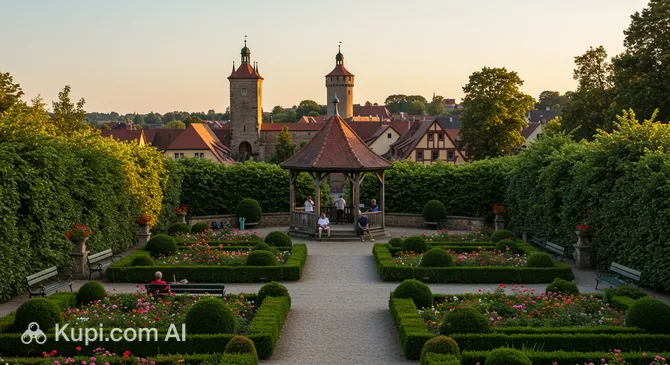
The main oasis of tranquility in the city is the Castle Garden (Burggarten). Located on the site of a former imperial castle, it offers magnificent views of the Tauber Valley and the southern part of the city. It is the perfect place for a leisurely stroll, relaxing on a bench, or a picnic during the warmer months. The garden is decorated with geometric flower beds and the old Burgtor gate, creating a serene atmosphere. Nature lovers can also explore the picturesque hiking trails along the Tauber River surrounding the city, enjoying fresh air and beautiful scenery.
Castle Garden. Illustration.
Source: Kupi.com AI
Traveler photos:
Among the museums of Rothenburg ob der Tauber, the Medieval Crime and Justice Museum (Mittelalterliches Kriminalmuseum) stands out in particular. It is one of the most significant law museums in Europe, presenting a thousand-year history of justice with an emphasis on the Middle Ages. The exposition includes torture instruments, shame masks, documents, and objects related to legal proceedings and punishments of those times. A visit to the museum offers a deep, if sometimes eerie, immersion into the social and legal aspects of the past, prompting reflection on the development of humanism.
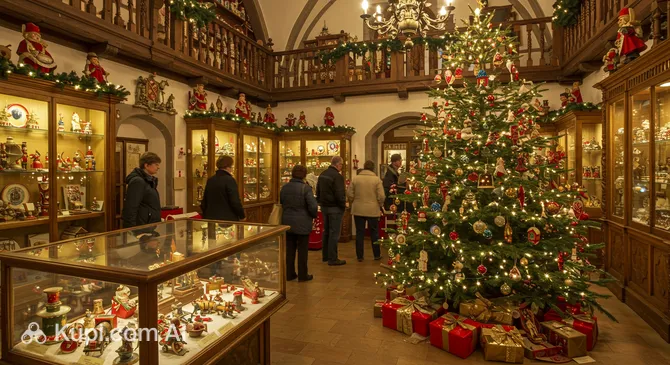
For a lighter and more festive mood, be sure to visit the German Christmas Museum (Deutsches Weihnachtsmuseum). This charming museum maintains the atmosphere of the most magical holiday year-round, showcasing the history of German Christmas traditions, old tree decorations, nutcrackers, nativity scenes, and other attributes. This is a place where you can feel like a child again, learn many interesting things about Germany's holiday culture, and perhaps find unique souvenirs.
German Christmas Museum. Illustration.
Source: Kupi.com AI
Traveler photos:
In addition to these themed museums, Rothenburg ob der Tauber itself is a true open-air museum. A walk along its well-preserved fortress walls, which offer breathtaking views of the old town's tiled roofs, will allow you to see iconic structures like the famous Plönlein, the picturesque Röder Gate, or the historic Galgen Gate. Don't miss the majestic St. James's Church with its famous Holy Blood Altar by Tilman Riemenschneider, as well as the lively Market Square with the impressive Rothenburg Town Hall, whose tower you can climb for a panoramic view.
For an authentic experience and deeper immersion into the city's atmosphere, turn off the main tourist routes into the quiet side streets. There, you can discover charming courtyards, small workshops of local artisans, and feel the leisurely pace of life in this amazing place. Also, a walk along less-known sections of the city wall can offer you solitude and unique angles for photographs.
Getting Around
Rothenburg ob der Tauber is a charming medieval town that is best explored on foot. Its historical center, surrounded by ancient walls, is so compact that most attractions are within walking distance of each other. Walking is precisely what allows you to fully enjoy the atmosphere of narrow streets and old buildings.
The main form of public transport connecting Rothenburg ob der Tauber with the railway station (located slightly outside the Old Town) and surrounding communities is the bus. The city is part of the Nuremberg region's transport network (VGN – Verkehrsverbund Großraum Nürnberg), providing an integrated fare system. Various ticket types exist: single trips, day passes (such as the TagesTicket Plus, which is great for small groups or families), and longer-term tickets. It's best to check the exact costs on-site or on the official VGN website, as they are subject to change.
Bus tickets can usually be purchased directly from the driver upon boarding or at ticket machines, if available at stops. VGN tickets can also be bought via a mobile app. Some types of tickets, especially those bought in advance, may require validation (stamping) in special devices on the bus before starting the journey. Buses run according to a schedule, which is generally more frequent on weekdays and less so in the evenings, on weekends, and on holidays. It is recommended to check the current schedule at stops or online beforehand.
Besides buses, other ways of getting around are available in Rothenburg ob der Tauber. Taxis can be found at designated ranks or called by phone; this is a convenient though more expensive option. For exploring the city's scenic surroundings, such as the Tauber Valley or the Romantic Road, you might consider renting a bicycle – rental points are usually available in town. Car-sharing is less common in such a small town.
Given the historical character and small size of Rothenburg ob der Tauber, there are no transport modes like a metro or trams. Occasionally, especially during high tourist season, you may see horse-drawn carriages offering sightseeing tours of the Old Town, but these are more of a tourist attraction than regular public transport.
Accommodation
Rothenburg ob der Tauber offers tourists a charming selection of accommodation options that fit perfectly into its fairy-tale atmosphere. Here you will find primarily traditional guest houses (Gasthäuser), small family hotels, and apartments located in historical buildings. There are no luxury resorts in the conventional sense; the focus is on authenticity and coziness. Rental housing options are also available, allowing for a deeper immersion into local life.
The most sought-after area to stay is undoubtedly the Old Town (Altstadt), surrounded by medieval walls. Staying here allows you to be within walking distance of all major attractions, such as Market Square, the Town Hall, and the famous Plönlein. Living within the walls is a unique experience in itself, transporting you to another era.
Rothenburg ob der Tauber. Illustration.
Source: Kupi.com AI
Traveler photos:
Although there are no major chain hotels in the provided list, Rothenburg is famous for its hospitable and often themed small hotels and pensions. Many of them offer breakfasts with local products and are characterized by an individual approach to every guest. It is worth looking specifically for such cozy places to fully experience the spirit of the city.
As for prices, you can find options for different budgets: from more economical rooms in guest houses to more expensive rooms in hotels with a rich history. It is highly recommended to book accommodation in Rothenburg ob der Tauber in advance, especially if your trip falls during the peak tourist season (summer, Christmas markets). The most popular booking methods are well-known online platforms, as well as contacting hotels or guest houses directly via their websites.
Nearby Cities
For those who want to explore the surroundings, Rothenburg ob der Tauber serves as an excellent starting point for day trips to several interesting nearby locations:
These nearby destinations offer a glimpse into the diverse culture and landscapes of the Bavaria region. For instance, a trip to Würzburg will reveal the grandeur of the Würzburg Residence, a UNESCO World Heritage site, and the famous Franconian vineyards. Ansbach, the former residence of the Margraves of Brandenburg-Ansbach, attracts visitors with its impressive Residence and the beautiful Orangerie in the palace garden. Schwäbisch Hall will charm you with its picturesque historic center featuring half-timbered houses and its famous market square, as well as the Kunsthalle Würth. Crailsheim, nestled on the Jagst River, is interesting for its town towers, such as the Johanniskirchturm, and its peaceful atmosphere. And the resort town of Bad Mergentheim is famous for its thermal springs, the magnificent Castle of the Teutonic Order, and its scenic spa park. Each of these towns offers its own unique attractions, whether historical treasures, scenic landscapes, or cultural events, making them excellent choices for short trips from Rothenburg ob der Tauber.
Shopping & Souvenirs
Shopping in Rothenburg ob der Tauber is a charming immersion into the atmosphere of a medieval city, where every shop and boutique seems to have come from the pages of a fairy tale. The city is famous for its traditional crafts, unique souvenirs, and, of course, Christmas goods available year-round. You won't find massive modern malls in the center, but instead, you can enjoy hunting for treasures in small family-owned shops where quality and personal touch are valued.
The main shopping arteries of Rothenburg ob der Tauber are concentrated in its historical center. Stroll through picturesque streets such as Herrngasse and Schmiedgasse, which lead off from the central Market Square. Here you will discover many shops offering local delicacies, handmade items, clothing, and, of course, famous Christmas decorations. Every facade and window display contributes to the city's unique atmosphere.
Although Rothenburg ob der Tauber is better known for its boutiques and craft shops, for those seeking a more modern shopping format, retail outlets can be found outside the old city walls. For example, one of the places where you can make various purchases is Centro Rothenburg, which offers a selection of goods under one roof.
ZentRo Rothenburg. Illustration.
Source: Kupi.com AI
Traveler photos:
Markets play an important role in the commercial life of Rothenburg. Weekly markets are held regularly on the Market Square (Marktplatz), where you can buy fresh local products, flowers, and some craft items. Of course, the most famous is the Reiterlesmarkt Christmas market, which transforms the city into a winter fairy tale, but even at other times of the year, local markets offer pleasant opportunities for shopping and discovering regional goods.
What to bring back from Rothenburg ob der Tauber as a memento? The city offers many unique souvenirs. Christmas decorations are particularly popular and can be found year-round, for example, in the shops near the German Christmas Museum. It's also worth looking for the traditional Franconian pastry "Schneeballen" (snowballs), local wines, wood carvings, and ceramics. History buffs will appreciate souvenirs with medieval themes.
German Christmas Museum. Illustration.
Source: Kupi.com AI
Traveler photos:
Shops in Rothenburg ob der Tauber are usually open from Monday to Saturday, roughly from 10:00 to 18:00. Some souvenir shops, especially during the tourist season, may stay open longer and even on Sundays. Major stores accept credit cards (Visa, Mastercard), but in small shops and at markets, it's preferable to have cash (Euros) on hand.
For tourists from countries outside the European Union, there is an option for VAT refunds (Tax Free Shopping) on purchases made in Germany. Look for shops with the corresponding "Tax Free" logo and don't forget to ask the seller for a special receipt to process the tax refund upon leaving the EU. This will make your shopping even more rewarding.