Support

Wurzburg

About

Würzburg is a true gem on the map of Germany, nestled comfortably on the banks of the picturesque Main River in the heart of the historic Franconia region. This charming city, with a population of about 130,000 people, is located roughly halfway between Frankfurt am Main and Nuremberg. Its rolling vineyards surrounding the city create unique landscapes and offer stunning views of ancient quarters, bridges, and majestic palaces.
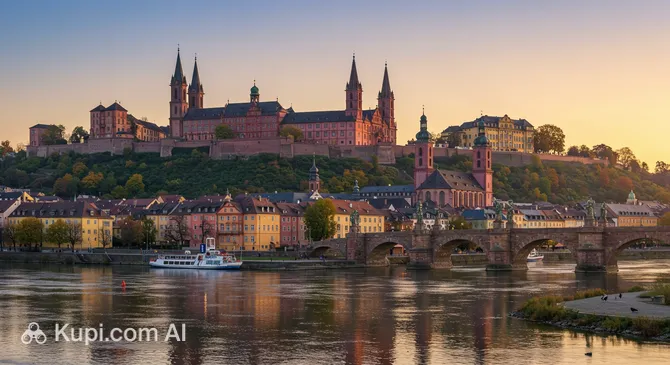
Würzburg. Illustration.
Source: Kupi.com AI

As the administrative center of the Lower Franconia district, Würzburg is also renowned as an important university city. This gives it a special, vibrant and international atmosphere, where centuries-old history harmoniously blends with youth and scientific discovery. Despite its relatively compact size, the city is full of cultural events, cozy cafes, traditional wine cellars, and green parks, while its beautifully preserved historic center looks as if it stepped off the pages of medieval chronicles.

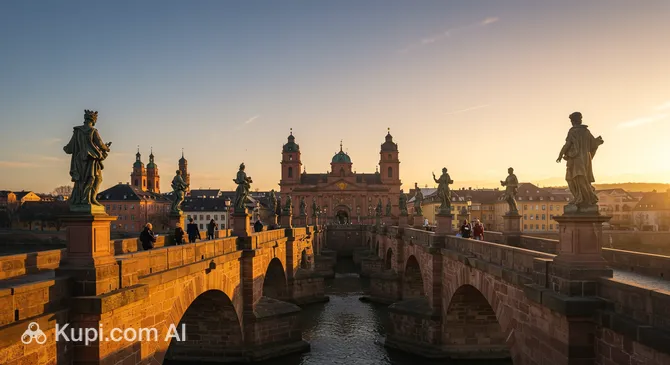
The main reason travelers flock to Würzburg is its incredible architecture and rich cultural heritage. Among the city's main jewels, the famous Würzburg Residence stands out—a magnificent Baroque palace complex included in the UNESCO World Heritage list. No less impressive is the majestic Marienberg Fortress, proudly towering on a hill above the Main, offering breathtaking views of the city. Another iconic landmark is the ancient Alte Mainbrücke bridge, adorned with statues of saints, where locals and tourists love to watch sunsets with a glass of Franconian wine.

Würzburg is a city where the past and present are skillfully woven into a single harmonious mosaic. It is perfect for leisurely walks through narrow streets, tastings of excellent local wines, and a deep dive into authentic German culture and hospitality. This city will surely inspire you, surprise you with its beauty, and leave the warmest memories in your heart.

You can find more interesting facts on the Würzburg city history page.
Weather Overview

The weather in Würzburg is characterized by a moderate climate with distinct seasons. Summers are warm, with average temperatures in July and August around 19-20°C, while maximum values can reach 24-25°C. Winters are quite cool: in January and December, the average temperature stays around 2-3°C, and the minimum can drop to 0°C. Precipitation is relatively evenly distributed throughout the year, but the amounts are small, usually 2-3 mm per month, with the number of rainy days varying from 10 to 16 per month. Expect a warm summer with occasional but light rain and cool winters with little precipitation.

To learn more about the weather conditions, you can check the detailed climate of Würzburg.

Average monthly temperature

Average monthly precipitation

Interesting Facts

Beyond its magnificent Baroque buildings and picturesque vineyards, Würzburg holds many surprising stories and lesser-known details that make it even more alluring for the curious traveler.

Würzburg Residence. Illustration.
Source: Kupi.com AI

Traveler photos:

  • Few know that on March 16, 1945, Würzburg was nearly erased from the earth in just 17 minutes during a bombing raid that destroyed about 90% of the city. However, thanks to the incredible efforts of its residents, the city was meticulously restored, preserving its historic appearance.

  • The symbol of Franconian winemaking, centered in Würzburg, is the unique "Bocksbeutel" bottle—a flat, rounded flask. Its shape is not just a tradition but a legally protected designation; it is believed the shape was convenient for carrying in a saddlebag or on a belt.

  • It was in Würzburg, in the Physical Institute building of the local university, that Wilhelm Conrad Röntgen made one of the greatest discoveries in the history of science in 1895—X-rays. Today, there is a memorial museum in the city dedicated to this event.

  • The majestic Würzburg Residence, a masterpiece by Balthasar Neumann, hides under its roof the world's largest ceiling fresco created by a single artist—Giovanni Battista Tiepolo. This giant work of art covers the vault of the grand staircase and has no additional supports.

How to Get There

Getting to Würzburg, a charming city in Germany, is easy with several convenient options. Primary choices include flying into one of the nearest international airports followed by a train or car transfer, as well as direct rail connections, as Würzburg is a major transport hub.

By Air:

While Würzburg does not have its own passenger airport, the city is conveniently located near several major international and regional airports. The most popular options are:

  • Frankfurt Airport (FRA): This is Germany's largest international airport and one of the busiest in Europe. It is located in Frankfurt am Main, approximately 104 km northwest of Würzburg. Direct high-speed ICE trains run from the airport (Frankfurt Flughafen Fernbahnhof station) to Würzburg's main station (Würzburg Hauptbahnhof), with a travel time of about 1 hour 15 minutes to 1 hour 30 minutes. A car trip takes about 1.5–2 hours.
  • Nuremberg Airport (NUE): This is the closest significant airport to Würzburg, located in Nuremberg, about 88 km to the southeast. From Nuremberg Airport, you must first take the metro (line U2) to Nuremberg Main Station (Nürnberg Hauptbahnhof), which takes about 12–15 minutes. From there, trains to Würzburg take about 1 hour. Total travel time by public transport is approximately 1.5 hours. By car, the journey takes about 1 hour 15 minutes to 1 hour 45 minutes.
  • Stuttgart Airport (STR): Another large international airport located in Stuttgart, about 134 km southwest of Würzburg. You can reach Würzburg by train with a transfer at Stuttgart Main Station (Stuttgart Hauptbahnhof); total travel time is about 2–2.5 hours. A car trip takes approximately 2 hours.

For your convenience, here is a summary of the main airports for reaching Würzburg:

AirportPassenger trafficDistance
Nuremberg Airport4.0 mln87 km
Frankfurt Egelsbach Airport80 00096 km
Frankfurt Airport61.6 mln104 km
Mannheim Airport40 000110 km
Stuttgart Airport9.1 mln134 km

By Train:

Würzburg has its own main railway station — Würzburg Hauptbahnhof. It is a vital transport hub in the German railway system (Deutsche Bahn), serving both regional trains and high-speed InterCityExpress (ICE) trains. As a result, Würzburg can be easily and quickly reached by train from most major cities in Germany and neighboring European countries. Most travelers choosing the train arrive directly at this station, located near the city center.

If your route passes through other major regional rail hubs, the nearest significant stations in other cities are:

  • Nuremberg Hauptbahnhof (ZAQ): This major station is in Nuremberg, about 90 km from Würzburg. Trains run regularly to Würzburg from here, taking about 1 hour.
  • Frankfurt (Main) Hauptbahnhof (ZRB): Located in Frankfurt am Main, about 99 km from Würzburg. As one of Europe's largest and busiest stations, it offers excellent connections to Würzburg, including frequent ICE services taking about 1 hour to 1 hour 20 minutes.

Below is information on major regional railway hubs for reaching Würzburg:

StationPassenger trafficDistance
Nuremberg Hauptbahnhof76.7 mln90 km
Frankfurt (Main) Hauptbahnhof127.8 mln99 km
Mannheim Hauptbahnhof36.5 mln113 km
Bruchsal6.4 mln125 km
Stuttgart Hauptbahnhof80.3 mln125 km

By Car:

Würzburg is easily accessible by car thanks to the extensive network of German autobahns. The city sits at the intersection of important European motorways, including the A3 (Cologne – Frankfurt – Nuremberg – Passau) and the A7 (Flensburg – Hamburg – Kassel – Ulm – Füssen), and is also near the A81 autobahn (Würzburg – Stuttgart – Singen). This makes traveling to Würzburg by car a convenient option from many parts of Germany and Europe.

Main Attractions

Würzburg, located in picturesque Franconia, offers its guests a rich historical heritage and numerous architectural masterpieces. This city on the Main River is famous for its magnificent palaces, ancient churches, and, of course, its renowned Franconian wines.

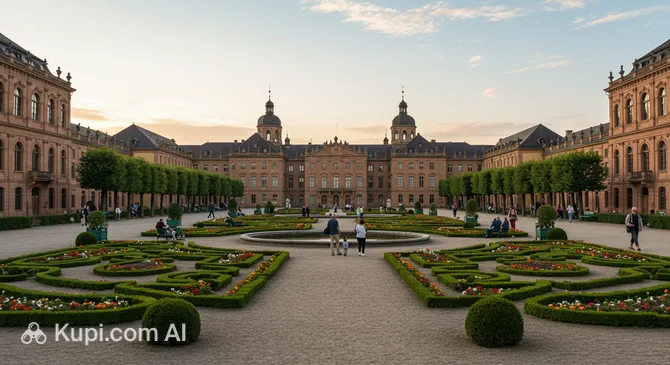
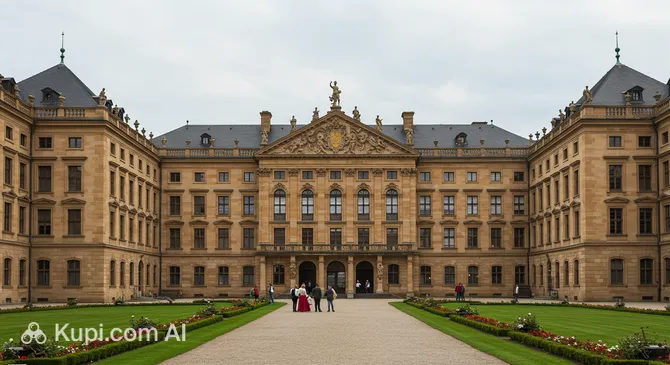
One of the city's main jewels is undoubtedly the Würzburg Residence. This magnificent Baroque palace complex, included in the UNESCO World Heritage list, impresses with its scale and the luxury of its interior decoration. Particularly famous are its Grand Staircase with the world's largest ceiling fresco by Giovanni Battista Tiepolo and the Imperial Hall. A walk through the halls of the residence and the adjacent Court Garden (Hofgarten) will leave an unforgettable impression.

Würzburg Residence. Illustration.
Source: Kupi.com AI

Traveler photos:

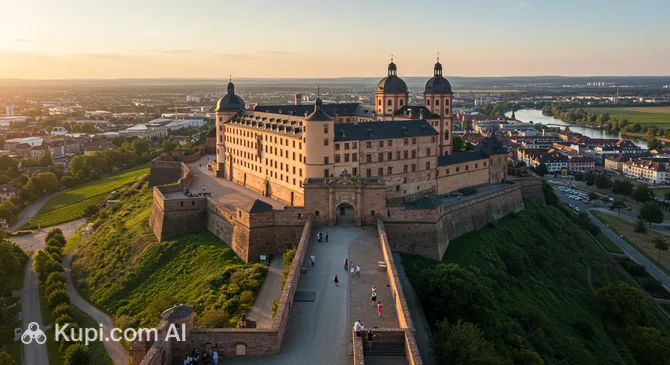
The Marienberg Fortress towers majestically over the city. This ancient citadel, which served as the residence of Würzburg's prince-bishops for centuries, holds a rich history within its walls. Today, the fortress grounds house the Museum of Franconia and the Fürstenbau Museum. From the fortress walls, a breathtaking panoramic view of Würzburg, the Main River, and the surrounding vineyards opens up.

Marienberg Fortress. Illustration.
Source: Kupi.com AI

Traveler photos:

It is impossible to imagine Würzburg without its famous Old Main Bridge (Alte Mainbrücke). This 15th-century stone bridge, adorned with statues of saints and prominent figures, is not only an important transport artery but also a popular spot for strolls. The bridge offers beautiful views of the Marienberg Fortress and the old town, and in the evening, you can enjoy a glass of local wine at one of the cozy wine stands.

Old Main Bridge. Illustration.
Source: Kupi.com AI

Traveler photos:

Among other significant sights, the Würzburg Cathedral of St. Kilian stands out—it is one of Germany's largest Romanesque churches. Its austere forms and majestic interior are impressive in their monumentality. It is also worth visiting the Gothic St. Mary's Chapel (Marienkapelle) on the Market Square, which is a brilliant example of Late Gothic architecture and the resting place of many famous citizens.

Local Cuisine

Würzburg is a true paradise for foodies, where Franconian cuisine reveals itself in all its glory, combining heartiness and refinement. Be sure to try Schäufele—a succulent pork shoulder with an appetizing crispy crust, traditionally served with potato dumplings (Knödel) and braised sauerkraut. No less famous is the local Bratwurst—aromatic grilled sausages, often cooked directly on outdoor grills and served in a fresh bun with spicy mustard. These dishes are hallmarks of regional gastronomy.

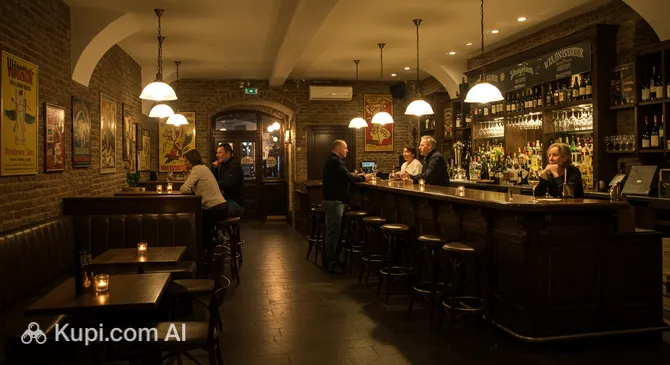
Winemaking is an integral part of Würzburg's culture. The city is famous for its excellent white wines, among which the Silvaner and Müller-Thurgau varieties stand out. Numerous wine cellars and wineries invite guests for tastings, allowing them to dive into the world of Franconian wines. One such authentic place where you can enjoy local wine and traditional cuisine is the Stachel Restaurant and Wine House. During the warmer months, the city comes alive with wine festivals, where you can sample the best examples and chat with the winemakers.

Stachel Restaurant & Wine House. Illustration.
Source: Kupi.com AI

Traveler photos:

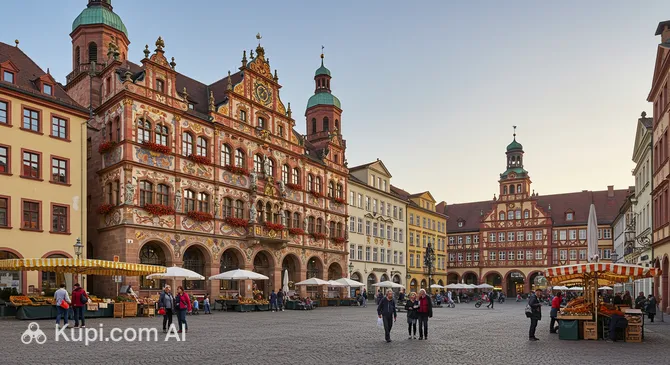
In addition to hearty main courses and magnificent wines, Würzburg will delight those with a sweet tooth. It's worth looking out for the traditional Franconian dessert Zwetschgenbames (dried plums with almonds), as well as various pies with fresh seasonal fruits. To fully experience the city's gastronomic spirit, visit the local farmers' markets, such as the one on the Market Square. Here you will find the freshest cheeses, fragrant bread, natural honey, and homemade sausages, and you can also observe the daily life of the locals and get a true taste of Franconia.

Market Square. Illustration.
Source: Kupi.com AI

Traveler photos:

Travel Tips

Welcome to Würzburg! To make your trip to this charming Bavarian city as comfortable and enjoyable as possible, we have prepared some practical tips. They will help you find your way and enjoy all the beauty Würzburg has to offer.

  1. Clothing and Essentials: The weather in Würzburg, as in all of Germany, can be changeable. In summer, bring light clothes but don't forget a sweater or jacket for evening walks. In autumn and spring, layered clothing and an umbrella will come in handy. In winter, a warm jacket, hat, and gloves are essential. A key point is comfortable shoes, as you will be doing a lot of walking to see sights like the Marienberg Fortress or the Old Main Bridge. Don't forget a European power adapter (type F). When visiting churches, such as the chapel of the Würzburg Residence, choose modest clothing that covers shoulders and knees.
  2. Getting Around the City: Würzburg's center is quite compact and easy to explore on foot. Public transport consists of trams and buses (WVV)—it is a convenient way to reach more distant areas. Tickets can be bought at machines at stops or from the driver. Taxis are available but can be expensive. Renting a car is only advisable if you plan trips around Franconia, as parking can be a problem within the city itself.
  3. Finance: The official currency is the Euro (€). You can exchange money at banks or exchange offices, but it's often better to withdraw cash from ATMs (Geldautomat), which are widespread. Credit and debit cards (Visa, Mastercard) are accepted in most hotels, restaurants, and large shops; however, smaller establishments or markets may prefer cash. It is recommended to always carry some cash. A rough daily budget can range from 50-70 euros for a budget traveler (hostel, self-catering, free attractions) to 150-200 euros and up for a more comfortable stay with restaurants, museums, and tours. Main expenses include accommodation, food, transport, entertainment, and souvenirs. Tips in restaurants are usually 5-10% of the bill if you liked the service, or you can simply round up the amount.
  4. Health and Safety: Würzburg is generally a safe city. Pharmacies (Apotheke) are easy to find by the green cross sign; information on 24-hour pharmacies (Notdienst Apotheke) is usually posted on the doors. For medical care, EU tourists should have a European Health Insurance Card (EHIC). We strongly advise others to take out travel insurance. In emergencies, call 112. Follow standard precautions: keep an eye on your belongings in crowded places.
  5. Communication: The official language is German. In tourist areas, hotels, and restaurants, many people speak English, especially the younger generation. However, knowing a few basic German phrases like "Hallo" (Hello), "Danke" (Thank you), "Bitte" (Please), or "Sprechen Sie Englisch?" (Do you speak English?) will be very useful and appreciated by locals. SIM cards can be purchased at mobile phone shops. Wi-Fi is available in many cafes, hotels, and some public areas. Helpful apps for getting around include WVVmobil for local public transport, DB Navigator for planning train trips across Germany, and popular map services like Google Maps or Maps.me.
  6. Local Etiquette: Germans value punctuality. When entering a shop or small cafe, it is customary to say hello ("Guten Tag" or "Hallo") and goodbye ("Auf Wiedersehen"). Try not to be too loud in public places. If you are invited to a home, a small gift or flowers is appropriate.
  7. What to Avoid:
    • Jaywalking—Germans strictly follow traffic rules, and crossing at the wrong place can lead to disapproval or even a fine.
    • Excessive noise in public places, especially on Sundays and in the evenings, as these are designated rest times.
  8. Insider Tip: Würzburg is the heart of Franconian winemaking! Be sure to try the local white wine, especially Silvaner, which is often bottled in the characteristic flat "Bocksbeutel" bottles. Take a stroll across the Old Main Bridge (Alte Mainbrücke), enjoying a glass of wine and the view of the Marienberg Fortress—it's an unforgettable experience!

We hope these tips make your stay in Würzburg even more pleasant and fulfilling. We wish you an unforgettable journey through this beautiful city!

Entertainment & Nightlife

Würzburg, known for its historical landmarks and winemaking traditions, also offers a variety of options for evening and night leisure. The city comes alive after sunset, offering entertainment for every taste—from cozy wine cellars to lively bars and clubs.

The main center of Würzburg's nightlife can be considered the area around the Market Square (Marktplatz) and its adjacent streets, such as Sanderstraße and Juliuspromenade. A multitude of bars, pubs, and restaurants are concentrated here, where you can enjoy local Franconian wine or beer. The atmosphere in most establishments is quite relaxed and friendly, attracting both students and tourists. Many bars stay open until late at night, especially on weekends. There is usually no specific dress code, but some clubs might require a more dressed-up appearance.

Stachel Restaurant & Wine House. Illustration.
Source: Kupi.com AI

Traveler photos:

Among the popular spots is the Stachel Restaurant and Wine House, where you can immerse yourself in a traditional atmosphere and try local wines. For those who prefer a more lively setting and dancing, venues like the Wohnzimmer Bar, known for its cozy living-room-like atmosphere, or the Waldschänke Dornheim club, which offers various musical nights, are great choices. The best time to visit clubs is after 11:00 PM, while bars start filling up earlier. Average drink prices are quite reasonable, especially compared to Germany's major metropolises.

Wohnzimmer Bar. Illustration.
Source: Kupi.com AI

Traveler photos:

At night, night buses run through the city, but their schedules should be checked in advance. Taxis are also available and can be called by phone or found at designated taxi stands. Würzburg is generally considered a safe city; however, as elsewhere, standard precautions should be taken at night, especially in less-lit areas or when walking alone. The central streets where nightlife is concentrated are usually well-patrolled.

During the day, Würzburg also keeps you entertained. Guests can visit the famous Würzburg Residence, a UNESCO World Heritage site, or climb up to the Marienberg Fortress for a magnificent view of the city and the Main River. A walk across the Old Main Bridge, decorated with statues of saints, is also a must. For nature lovers, there are beautiful parks like the Court Garden or the Botanical Garden of the University of Würzburg.

Parks & Museums

Würzburg, a charming Bavarian city, offers its guests not only a rich historical heritage but also wonderful opportunities for outdoor recreation. Here, well-kept parks, lush gardens, and significant cultural institutions blend harmoniously, each telling its own unique story.

Among the green jewels of Würzburg, the Court Garden (Hofgarten) stands out. This magnificent Baroque garden, adjacent to the famous Würzburg Residence, enchants with its precise lines, sculptures, and fountains, inviting visitors for a leisurely stroll.

Court Garden. Illustration.
Source: Kupi.com AI

Traveler photos:

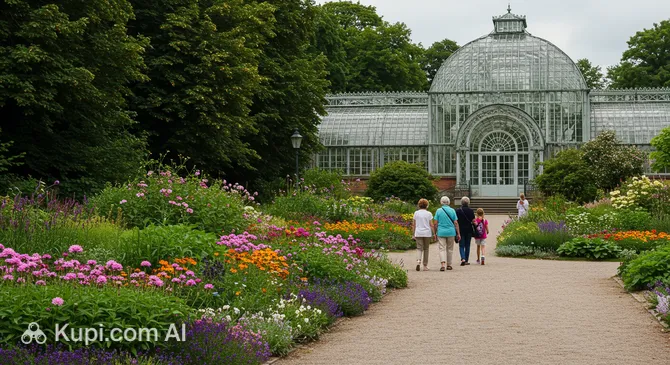
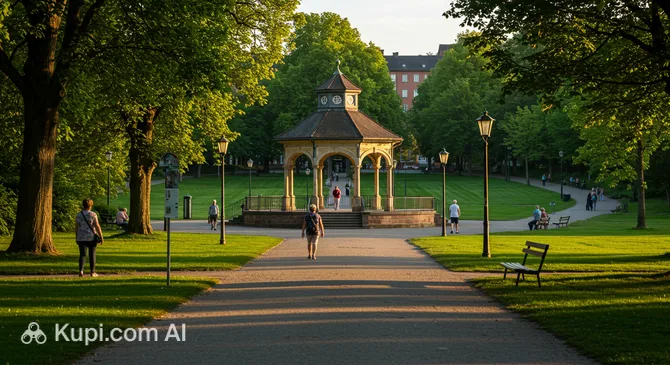
Nature and botany enthusiasts should definitely visit the Botanical Garden of the University of Würzburg. It houses an impressive collection of plants from around the world, including exotic species in greenhouses, making it a wonderful place for educational relaxation. Another popular spot for walking and outdoor activities is the Ringpark, which circles the historic city center like a green necklace, offering shaded alleys and manicured lawns.

Botanical Garden of the University of Würzburg. Illustration.
Source: Kupi.com AI

Traveler photos:

Ring Park. Illustration.
Source: Kupi.com AI

Traveler photos:

The cultural heart of Würzburg beats in its museums. The main magnet for art and history lovers is the Würzburg Residence. This Baroque masterpiece, a UNESCO World Heritage site, impresses not only with the luxury of its rooms, such as the Mirror Cabinet and the Imperial Hall, but also with the State Gallery housed here, featuring paintings by Old Masters.

Würzburg Residence. Illustration.
Source: Kupi.com AI

Traveler photos:

The Marienberg Fortress, the former residence of the prince-bishops, towers majestically over the city. Today, it houses two significant museums: the Museum of Franconia (Mainfränkisches Museum), where you can see world-famous sculptures by Tilman Riemenschneider and regional history artifacts, and the Fürstenbau Museum, which tells the story of the rulers' lives. The fortress grounds also offer stunning views of Würzburg and the Main River.

Marienberg Fortress. Illustration.
Source: Kupi.com AI

Traveler photos:

In addition to parks and museums, Würzburg is famous for its architectural monuments. Be sure to walk across the Old Main Bridge, adorned with statues of saints, offering a magnificent view of the fortress and vineyards. Stop by the Market Square with its Gothic St. Mary's Chapel and the picturesque Four Tubes Fountain. For an authentic experience, head up to the Käppele Sanctuary—a pilgrimage church on a hill that offers breathtaking panoramas of the city, especially at sunset. A lesser-known but charming walk awaits you along the Main River, where you can find quiet corners to relax.

Getting Around

Public transport in Würzburg consists mainly of trams and buses, which provide convenient travel around the city and its surroundings. There is no metro or trolleybus system in Würzburg, but the existing network is well-developed and covers all key areas.

The fare system in Würzburg is integrated into the Mainfranken transport association (VVM). Various types of tickets can be purchased: single tickets (Einzelfahrkarte), day tickets (Tageskarte), which can be economical for multiple trips in one day, as well as weekly or monthly passes for longer stays. Group day tickets are also available. The ticket price depends on the fare zone. For example, a single ticket for a trip within one zone usually costs about 2-3 euros. Tickets can be bought at machines at stops, from bus drivers (though not always, and usually without change for large bills), or via mobile apps of the transport companies.

Tourists should keep a few practical points in mind. Before starting the journey or immediately after boarding (depending on the type of ticket and where it was purchased), the ticket must be stamped in special validators usually found inside trams and buses or on platforms. An unstamped ticket is considered invalid and can result in a fine. Public transport in Würzburg operates from early morning until late evening. Special night routes may run at night and on weekends, though with longer intervals.

In addition to public transport, other ways to get around are available in Würzburg. Taxis can be found at designated stands or called by phone. Bike rental systems are also active in the city, which is an excellent option for sightseeing given the compactness of the center and the presence of bike lanes. For those who prefer more autonomy, car-sharing services may also be available.

Accommodation

Würzburg offers tourists a diverse range of accommodation options to suit every taste and budget. Here you will find everything from cozy guesthouses and affordable hostels to comfortable mid-range hotels and elegant apartments. Regardless of your preferences, you will be able to find a suitable option for an unforgettable stay in this historic city.

For tourists, districts located near the historic center and main attractions, such as the Würzburg Residence or the Marienberg Fortress, will be particularly convenient. Staying in the center allows you to easily reach most points of interest on foot or by public transport. Hotels and apartments along the Main River are also popular, offering picturesque views.

Würzburg Residence. Illustration.
Source: Kupi.com AI

Traveler photos:

When planning a trip to Würzburg, especially during the peak tourist season (usually summer and the Christmas market period), it is recommended to book your accommodation in advance. This will help you not only guarantee availability but also secure better rates. Early booking also provides a wider choice of options that meet your expectations.

The price range for accommodation in Würzburg varies from budget-friendly options to luxury-class offerings. You can book a hotel or apartment through popular online booking platforms, where reviews and photos are often provided. Additionally, many hotels offer the possibility of direct booking via their official websites, which can sometimes include special offers.

Nearby Cities

For those who want to explore the surrounding area, Würzburg serves as an excellent starting point for day trips to several interesting nearby locations:

CityPopulationDistance
Hochberg9 3795 km
Veitshochheim9 6527 km
Giebelstadt4 60015 km
Kitzingen22 42916 km
Ochsenfurt11 31917 km

Each of these towns offers something unique for the curious traveler. Schweinfurt, known for its industrial heritage, will surprise you with the Georg Schäfer Museum, featuring a rich collection of 19th-century German art. Bad Mergentheim is a charming spa town where you can visit the magnificent castle of the Teutonic Order and enjoy the peaceful atmosphere of its parks. Wertheim attracts visitors with its medieval old town and picturesque castle overlooking the confluence of the Main and Tauber rivers. A trip to Bad Kissingen allows you to immerse yourself in the atmosphere of one of Germany's most famous spa resorts with its grand architecture, manicured gardens, and healing springs. And the closest town, Kitzingen, located on the Main, is famous for its winemaking traditions and its iconic leaning tower, the Falterturm.

These nearby destinations provide a great insight into the diverse culture and landscapes of the region.

Shopping & Souvenirs

Würzburg offers pleasant shopping opportunities, combining the charm of historic streets with modern stores. While the city isn't famous for ultra-exclusive goods, you can find high-quality German products, local delicacies, and, of course, the renowned Franconian wine. In the city center, you'll find both large department stores and small specialized boutiques.

The main shopping activity in Würzburg is concentrated in the pedestrian zone. Schönbornstraße and Domstraße, leading to the Market Square, are the main arteries for shoppers. Here you'll find department stores, well-known clothing brands, shoe stores, bookstores, and jewelry shops. A stroll along these streets is a pleasure in itself thanks to the beautiful architecture.

If you prefer shopping in larger malls, Würzburg has a few options. One of them is the Homepark Würzburg, where various stores offering clothing, electronics, home goods, and more are gathered under one roof. It's a convenient place for one-stop shopping, especially in bad weather.

Homepark Würzburg. Illustration.
Source: Kupi.com AI

Traveler photos:

Markets hold a special place in Würzburg's shopping scene. The most important is undoubtedly the daily market on the Market Square (Marktplatz). Here you'll find fresh fruit, vegetables, flowers, local cheeses, sausages, and, of course, Franconian specialties. This is a great place to soak up the local atmosphere and buy edible souvenirs. Themed fairs are also held here occasionally.

Market Square. Illustration.
Source: Kupi.com AI

Traveler photos:

As souvenirs from Würzburg, tourists most often bring home Franconian wine, especially white wine bottled in traditional flat Bocksbeutel bottles. Items featuring the city's main landmarks, such as the Würzburg Residence or the Marienberg Fortress, as well as local handicrafts and confectionery, are also popular.

Shops in Würzburg are generally open from Monday to Saturday, roughly from 10:00 AM to 6:00 PM or 8:00 PM for larger malls and department stores. Small shops might close earlier on Saturdays. Most shops are closed on Sundays and public holidays, except for some souvenir shops in tourist areas and stores at the railway station. You can pay with both cash and bank cards (Visa and Mastercard are widely accepted). However, in markets and small shops, cash may be preferred.

For tourists from non-EU countries, there is the possibility of VAT refunds (Tax-Free Shopping) on goods purchased in Germany. To do this, you need to make a purchase of a certain amount at a store participating in the Tax-Free system (look for the logo) and correctly fill out the documents at the time of purchase and at customs when leaving the EU.

Reached the end of the page?

That means the route is fully explored