Support

Wurzburg Cathedral

About

Towering over the tiled roofs of the old town, Würzburg Cathedral (or St. Kilian's Cathedral) serves as an architectural landmark that is impossible to miss. This monumental site in the city of Würzburg is among the largest Romanesque churches that Germany takes pride in.

The cathedral is dedicated to the Irish missionary St. Kilian, the patron saint of these lands. In its appearance, the austerity of the Romanesque style, the elegance of Gothic, and the splendor of Baroque are surprisingly interwoven, creating a unique ensemble that reflects nearly a thousand years of the region's history.
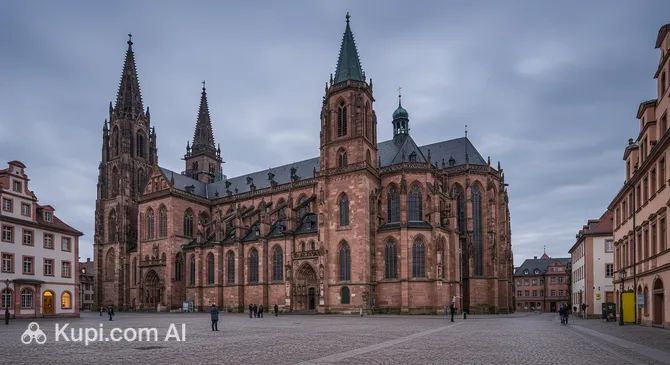
Würzburg Cathedral
Würzburg Cathedral. Иллюстрация. Источник: Kupi.com AI

Today, it is not just the main Catholic church of the diocese, but also a vital cultural space in Bavaria. Tourists and pilgrims are drawn here not only by the ancient relics resting in the crypt but also by the magnificent interior, which turns the building into a true open-air museum.

Contacts

To check current information about events or to plan a group visit, you can use the following contact details for St. Kilian's Cathedral.

How to contactContact
AddressDomstraße 40, 97070 Würzburg, Germany
Phone+49 931 38662900
Websitewww.dom-wuerzburg.de

What to Do

A visit to the cathedral is, first and foremost, a visual journey. Be sure to pay attention to the Schönborn Chapel, which was crafted by the leading masters of its time. Its rich decoration contrasts with the more restrained main space of the church, creating a powerful artistic accent.

Inside, you should set aside time to examine the unique stained glass and sculptures, many of which are masterpieces of medieval art. Descend into the crypt, where a special atmosphere of silence and peace reigns; it is here that the relics of Saint Kilian, deeply revered in these parts, are kept.

If you are lucky, you may hear the sound of the local organ. The cathedral is famous for its concerts, which bring together lovers of sacred and classical music from all over the world. Additionally, temporary exhibitions dedicated to the history of Christian art and the region's architecture are often held on the grounds.

Getting There

Located in the very heart of the historical center, the cathedral is an ideal starting point for a walk. If you are arriving in Würzburg by train, the walk from the central railway station (Würzburg Hauptbahnhof) to the cathedral will take about 15 minutes of pleasant strolling through city streets.

For those who prefer public transport, it is most convenient to use the tram or bus. The Domplatz stop is located in the immediate vicinity of the main entrance, making the site accessible even for travelers with a tight schedule.

Travelers by car can use one of several paid parking lots in the city center, though it should be noted that the zones surrounding the cathedral are pedestrian-only. A taxi from any point in the center will take you to the edge of the pedestrian zone in just a few minutes.

Ближайший город: Würzburg

History & Facts

The history of this majestic structure began as far back as 1040, when Bishop Bruno laid the first stone on the site of previous churches that had been damaged by fire. Construction was completed in 1075, and since then, Würzburg Cathedral has stood as a silent witness to changing eras and architectural fashions.

In the 15th and 16th centuries, the cathedral acquired its recognizable Gothic features: elegant ribbed vaults and large windows were added to let in more light. Later, in the 18th century, the famous architect Balthasar Neumann left his mark by creating the magnificent Schönborn Chapel, which became a jewel of German Baroque.

In the mid-20th century, the building suffered severe damage, and its restoration took nearly two decades. Restorers made a bold decision: they partially removed the later Baroque additions in the central nave to return the church to its original Romanesque appearance. It is thanks to this that today we can see a harmonious combination of austere antiquity and exquisite decoration.

Time Needed

For a thoughtful exploration of the cathedral, including studying the architectural details of the interior, visiting the crypt, and the Schönborn Chapel, you will typically need about 1.5–2 hours. This is enough time to unhurriedly enjoy the silence and grandeur of the ancient vaults.

If you plan to attend an organ concert or a detailed themed tour, it is worth setting aside 2.5–3 hours for your visit. The cathedral possesses unique acoustics, so musical events here are well worth the extra time.

Working Hours

The doors of Würzburg Cathedral are usually open to visitors daily from 9:00 to 18:00. However, it is important to remember that the cathedral is an active church, so tourist access may be limited during regular worship services, weddings, or baptisms.

On Sundays and holidays, the schedule may change significantly. To ensure your trip goes perfectly, we strongly recommend checking the current schedule on the official website before your visit.

Nearby

Würzburg is a city where history literally comes to life at every step, and visiting the cathedral is just one part of a grand journey. A walk through its surroundings will allow you to see magnificent palaces and ancient bridges that create the city's unique character.

Exploring nearby locations will help you better feel the atmosphere of Franconia and complement your cultural program with interesting discoveries.

NameDistance
Falkenhaus0.2 km
St. Mary's Chapel0.2 km
Market Square0.2 km
Four Tubes Fountain0.3 km
Basecoffee Würzburg0.3 km
Stachel Restaurant & Wine House0.3 km
Original Berlin Döner Würzburg0.3 km

Reached the end of the page?

That means the route is fully explored