Support

Bayreuth

About

Bayreuth is a true gem of Upper Franconia, nestled among picturesque hills and green parks in northeastern Bavaria. This city harmoniously combines the intimacy of old Europe with the lively atmosphere of a cultural hub. Walking through its streets, you will feel a special rhythm of life where tradition intertwines with modernity, and art becomes an integral part of everyday life.

Geographically, the city is located on the banks of the Main River, which gives it a special charm and freshness. Situated in Germany, Bayreuth attracts travelers with its mild climate and well-kept landscapes. With a population of about 75,000 people, it maintains a balance between provincial tranquility and the dynamics of an important administrative hub that welcomes guests from all over the world every year.
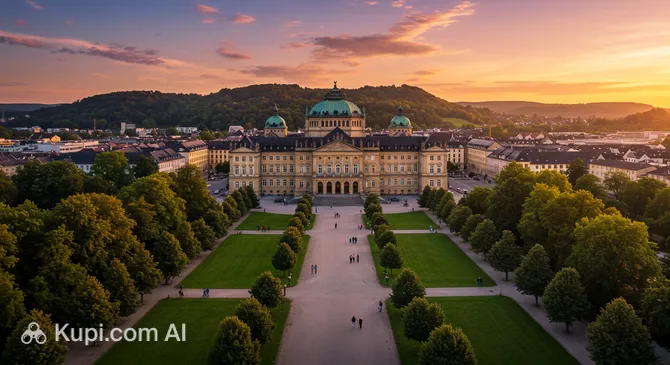
Bayreuth. Illustration.
Source: Kupi.com AI

The city's main calling card is undoubtedly the famous Bayreuth Festival, dedicated to the works of Richard Wagner. During the festival, the city transforms into the world's music capital, attracting opera lovers to the unique theater on the Green Hill. However, life is bustling here at other times of the year too: numerous exhibitions, concerts, and gastronomic festivals reveal the region's rich cultural potential.

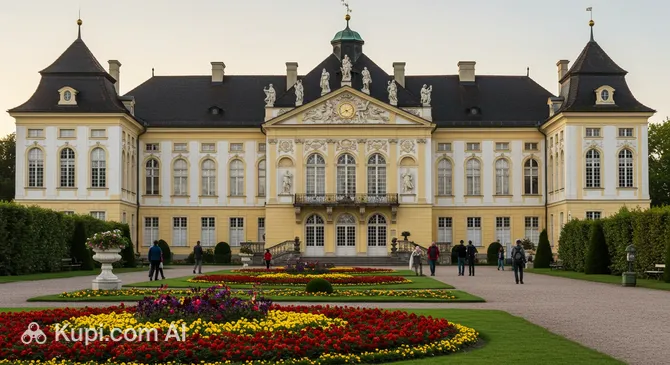
The city's architectural appearance is fascinating: the majestic New Palace, the historic Hermitage park complex, and elegant churches create a unique ensemble. The multifaceted history of Bayreuth is reflected in every stone of the old buildings and cozy alleys. The Margravial Opera House — a Baroque masterpiece included in the UNESCO World Heritage list — deserves special attention.

Bayreuth is a place you'll want to return to for inspiration and warmth. Whether it's a leisurely stroll through palace gardens, a cup of aromatic coffee on a sunny terrace, or an immersion into the world of high music, this Bavarian city is sure to give you vivid impressions and new discoveries.
Weather Overview

When planning your trip, keep in mind that the climate in this region is temperate and quite mild. Summer in Bayreuth is the most popular time to visit: from June to August, the average temperature is a comfortable 17–19°C, and during the day, the air often warms up to 22–23°C. These are ideal conditions for visiting festivals and strolling through parks when the heat doesn't interfere with enjoying the sights.

Winters here are cool but usually without severe frosts. In January and December, average temperatures stay around 0...+2°C, and night frosts rarely drop below -1°C. Spring arrives gradually: while it's still cool in March (around 5°C), by May the city blooms at a pleasant 12–17°C. Autumn brings mild warmth in September, but by November it noticeably cools down to 4°C.

A characteristic feature of the local weather is regular precipitation throughout the year. Even in the summer months, the number of rainy days can reach 12–14, and in winter, up to 17. Expect a comfortably warm summer and a cool winter, but be prepared for occasional rain in any season. To choose the right wardrobe, we recommend checking the detailed weather in Bayreuth before you leave.

Average monthly temperature

Average monthly precipitation

Interesting Facts

In addition to its world-famous attractions, Bayreuth holds many fascinating stories and cultural treasures. This city can surprise travelers with unexpected facts linking great music, exquisite architecture, and literature.

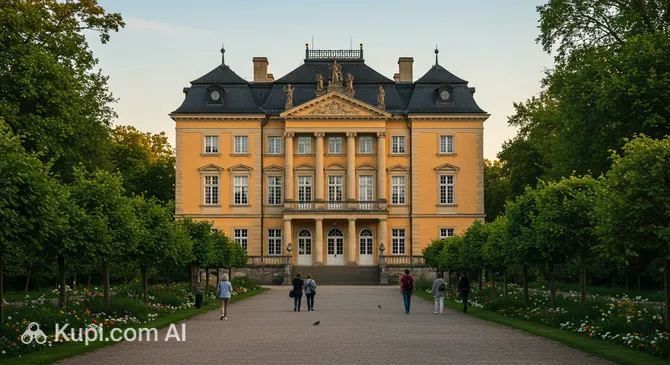
New Palace Bayreuth. Illustration.
Source: Kupi.com AI

Traveler photos:

  • The city is inextricably linked with the name of Richard Wagner, who realized his dream of having his own theater with perfect acoustics here. You can learn more about the genius's life by visiting the Wahnfried House, where the composer lived and created his masterpieces.

  • Margravine Wilhelmine, sister of Frederick the Great, played a key role in turning the city into a cultural capital. Thanks to her refined taste, the New Palace in Bayreuth was built, and magnificent gardens and parks were laid out.

  • The local Margravial Opera House is a UNESCO World Heritage site. This 18th-century Baroque masterpiece has been preserved to this day almost in its original form and is considered one of the most beautiful historic theater halls in Europe.

  • The famous German writer Jean Paul (Johann Paul Friedrich Richter) lived and worked in Bayreuth. The special atmosphere of intellectual freedom and creative pursuit that reigns here has attracted writers, musicians, and thinkers from around the world for centuries.

How to Get There

Planning a trip to this region of Bavaria usually begins with choosing the optimal route. The city has good transport accessibility, and you can choose the most convenient option depending on your starting point. To find out all the details and plan the perfect route, we recommend studying all the ways to get to the city.

Bayreuth does not have its own airport, but you can fly into Nuremberg Airport (NUE), which is only 61.5 km away. This is the nearest air hub, handling both domestic and some international flights. The journey from there by taxi, transfer, or rental car will take approximately 1 hour, making this the fastest option.

For those who prefer major international hubs with a large number of direct flights, a great option is Munich Franz Josef Strauss Airport (MUC). It is located 177.7 km from your destination. The journey from the airport to the city by car will take about 2–2.5 hours. You can also consider flying into the neighboring Czech Republic via Václav Havel Airport Prague (PRG), located 193.4 km away.

For clarity, here is a summary of the main airports:

AirportPassenger trafficDistance
Nuremberg Airport4.0 mln61 km
Karlovy Vary Airport37 900100 km
Erfurt Airport138 002123 km
Leipzig/Halle Airport2.2 mln170 km
Franz Josef Strauss Airport39.8 mln178 km

Traveling by rail is another popular and scenic way to reach the region. The most convenient route is via Nuremberg Hauptbahnhof, which is about 65.8 km from Bayreuth. This is one of Germany's largest railway hubs, from where you can easily reach your final destination by regional train in just 1 hour.

Another convenient transfer point is Erfurt Hauptbahnhof, located 120.3 km away. Thanks to the developed and punctual German railway network, traveling through these hub stations guarantees comfort.

Below is information about the nearest major railway hubs:

StationPassenger trafficDistance
Nuremberg Hauptbahnhof76.7 mln66 km
Erfurt Hauptbahnhof16.8 mln120 km
Eisenach Hauptbahnhof1.8 mln145 km
Leipzig Hauptbahnhof43.8 mln171 km
Augsburg Hauptbahnhof18.3 mln183 km

Main Attractions

The main attractions of Bayreuth are a harmonious blend of palatial luxury, musical heritage, and natural beauty. The city offers routes that will interest both history buffs and those looking for a relaxing break in the fresh air. A stroll through these places will allow you to feel the atmosphere of ancient Franconia more deeply.

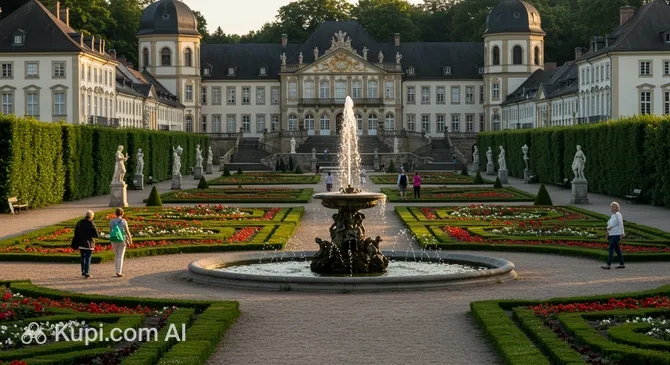
The heart of the central green zone is the Hofgarten Bayreuth. This spacious park, adjacent to the New Palace, was created at the end of the 16th century and has changed its appearance several times since then, transitioning from Baroque to the English landscape style. Today, it is an ideal place for leisurely walks among century-old trees, picturesque canals, and sculptures. Tourists love this spot for its accessibility and peaceful silence right in the city center.

Hofgarten Bayreuth. Illustration.
Source: Kupi.com AI

Traveler photos:

For fans of Richard Wagner's work, the Wahnfried House is a must-visit. It was here that the great composer lived his final years and was buried in the estate's garden. The building now houses a museum with an exhibition telling the story of the maestro's life and work, as well as the history of the famous Bayreuth Festival. This iconic site allows you to touch musical history on a global scale.

Nature lovers should visit the Ecological Botanical Garden at the University of Bayreuth. Thousands of plant species from all continents are gathered here, from high-altitude Alpine flowers to tropical jungles in greenhouses. The garden is interesting because it doesn't just display plants but recreates the natural ecosystems of different climatic zones, making the excursion educational at any time of year.

Another significant green area is the Wilhelminenaue landscape park. Created relatively recently on the site of the former Red Main river floodplain, it has become an example of modern urbanism where nature returns to the city. There are convenient paths for walking and cycling, as well as areas for picnics and children's games. This space is particularly popular among locals and tourists who want to escape the city bustle in a modern and comfortable environment.

Local Cuisine

Bayreuth's cuisine is a true paradise for gourmets, where hearty Bavarian traditions are harmoniously intertwined with the refinement of Franconian culinary arts. The basis of the local menu is meat dishes prepared with special care. The main gastronomic symbol of the city is the signature Bayreuth sausages (Bayreuther Bratwürste). They are typically served in pairs with sauerkraut and fresh bread. It's also worth trying the tender meat — pork or beef braised with onions and spices, often served with various potato side dishes, such as dumplings (Kloße).

The city also has plenty of surprises for those with a sweet tooth. For dessert, people often order aromatic strudels and cakes with fresh fruit. Famous German gingerbread (Lebkuchen), with recipes passed down through generations, occupies a special place. If you want to immerse yourself in the atmosphere of authentic flavors, visit the local farmers' markets: there you can buy homemade cheeses, sausages, and the freshest pastries, which make for a great snack during a walk.

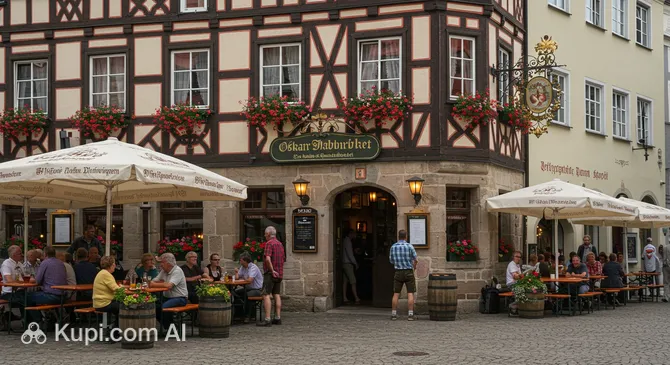
Oskar - The Tavern at the Market. Illustration.
Source: Kupi.com AI

Traveler photos:

It is impossible to imagine a meal in Bayreuth without a glass of beer. Brewing here is a part of the culture, and local lagers are brewed according to ancient recipes. In recent years, the craft beer movement has also been gaining popularity. To appreciate the variety of drinks and soak up the spirit of German hospitality, you can visit Gasthaus De Laus. This place is great for relaxing after a busy day.

The food culture in the city is democratic and diverse: from quick street food at festivals to cozy meals in historic buildings. Locals love to gather at long tables during festivals, enjoying live music and socializing. For those seeking a traditional Bavarian lunch in a colorful setting, Oskar — Die Wirtshaus am Markt is an excellent choice. Here you can not only have a hearty meal but also experience the true taste of Franconia in the very heart of the city.

Travel Tips

Bayreuth is a city with a rich history and special charm, but to ensure your trip goes flawlessly, it's worth knowing a few important nuances. We've gathered some practical recommendations to help you avoid minor difficulties and feel at home in Upper Franconia.

  1. Clothing and Seasonality. The weather in this region can be changeable even in summer, so dress in layers so you can easily add or remove them. Be sure to bring comfortable flat shoes: the historic center is paved with cobblestones, and heels will be out of place here. An umbrella or raincoat is your faithful companion in any season. There is no strict dress code for visiting churches, but a modest style is recommended.

  2. Transport. The city center is compact and best explored on foot. For trips to distant attractions, like the Hermitage Park, it's convenient to use buses from the local VGN network. Tickets can be bought from the driver or at machines. Taxis are easy to find at special ranks or called through apps (like Uber or local services), but renting a car for use within the city is not necessary — many streets are pedestrianized, and parking is paid.

  3. Finance and Payments. Germany, and Bavaria in particular, remains a country where people really love cash (Bargeld). In small cafes, bakeries (Bäckerei), and souvenir shops, cards might not be accepted, so always have small euro bills with you. It is customary to leave a tip of 5–10% of the bill or simply round up the amount when paying.

  4. Health and Safety. Bayreuth is a very peaceful and safe city where you can walk safely in the evening. Pharmacies are marked with a red Gothic letter "A" (Apotheke). On weekends and at night, duty pharmacies are available — their addresses are always posted on the door of any closed pharmacy. The emergency number is 112.

  5. Communication and Language. The official language is German. In tourist areas and hotels, staff speak English well, but older locals might not. Learn a few phrases, like "Grüß Gott" (a local greeting) and "Danke" (Thank you) — this will immediately win over your interlocutor. Free Wi-Fi is available in the city center and many cafes, but for a stable connection, it's better to buy a local SIM card at a supermarket.

  6. Local Etiquette. In Germany, punctuality is highly valued, so arrive on time for tours and meetings. Sunday (Sonntag) is a sacred day of silence and rest: almost all shops, including grocery stores, will be closed. Plan your shopping ahead on Saturday. It is customary to greet the shopkeeper when entering small shops.

  7. What to Avoid. Never walk on bicycle paths (usually highlighted by color or markings on the sidewalk) — this is the territory of cyclists, and they can be very unhappy if you block their way. Also, do not cross the road on a red light, even if there are no cars: this is considered bad manners and a violation of order, especially if children are nearby.

  8. Festival Nuance. If you plan your trip during the famous Bayreuth Festival (July-August), be prepared for accommodation prices to skyrocket, and hotels need to be booked six months or even more in advance. At this time, the city is overcrowded, and a spontaneous trip can be difficult in terms of logistics.

By following these simple tips, you can avoid organizational mishaps and focus entirely on enjoying the music, architecture, and hospitality of Bayreuth. We wish you a smooth and unforgettable journey to the heart of German musical culture!

Entertainment & Nightlife

Bayreuth's nightlife can be a pleasant surprise for travelers. Although the city is famous for its rich history and opera traditions, the presence of a major university injects youthfulness and dynamics into its rhythm. Evenings here are spent less in noisy nightclubs and more in cozy pubs, stylish bars, and on lively terraces where students mingle with tourists and locals.

The epicenter of evening activity is traditionally the area around the central Maximilianstraße and its adjacent alleys. Here you can find establishments for every taste: from traditional Franconian beer halls to modern cocktail bars. In summer, life spills out onto the streets, and finding a free outdoor table can be a challenge. The atmosphere in the city is very democratic and safe; strict dress codes are rare, so casual style is appropriate almost everywhere.

If you're looking for a place with a unique atmosphere for evening hangouts, check out Cafe Kraftraum. This establishment is popular for its creative interior and relaxed vibe. It often attracts creative youth and fans of alternative culture. The menu features excellent coffee and desserts as well as heartier dishes, including vegetarian options, making it a great starting point for a long evening.

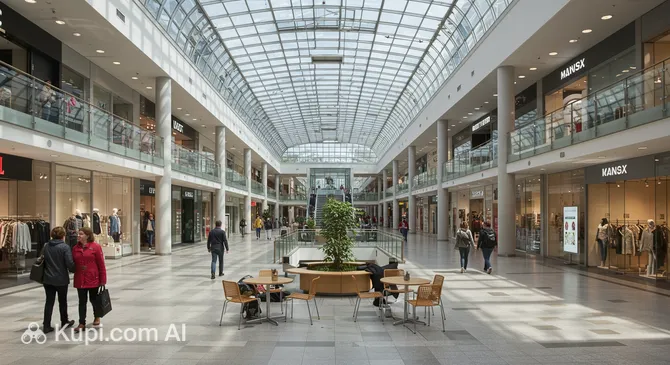
Rotmain Center. Illustration.
Source: Kupi.com AI

Traveler photos:

For those who want to combine an evening stroll with shopping or entertainment under one roof, it's worth visiting the Rotmain-Center. This shopping complex is a magnet not only during the day but also in the evening, offering many shops and relaxation areas. It is a convenient place to spend time in bad weather or to buy everything you need before heading to a bar.

Speaking of entertainment, we must also mention daytime leisure, especially if you are traveling with children or want to spend time actively before sunset. A great option is Chakka Bay Playland — an indoor amusement park where the whole family can have fun for several hours while hiding from the rain or summer heat.

Practical tips for evening walks:

  • Safety: Bayreuth is a very peaceful city. You can safely walk through the center even late at night. The streets are well-lit and patrolled.
  • Transport: Buses run on schedule, but the frequency of trips decreases at night. The most reliable way to get to your hotel after midnight is by taxi. Taxi ranks are available in the center, and cars are easily called by phone.
  • Prices: The cost of drinks and food here is generally lower than in Munich. Many student bars offer special deals and "happy hours."
  • Cash: Remember that small bars and authentic pubs might not accept cards, so always carry some cash in euros.

Parks & Museums

Bayreuth remarkably combines the grandeur of architecture with the comfort of green oases. For tourists, this means that a rich cultural program can easily be balanced with relaxing breaks in nature. The city offers many spaces to catch your breath after excursions, and local museums go far beyond typical exhibitions, offering immersion into worlds ranging from the era of dinosaurs to grand opera.

Among the natural areas, the Röhrensee Zoological Park deserves special attention. This is a favorite relaxation spot for locals, located south of the center. The park is famous for its picturesque lake where you can rent a boat, and its animal enclosures, which are especially popular with children. You can see kangaroos, flamingos, and meerkats in conditions that are as close to natural as possible. Admission to the park is free, making it a great option for budget-friendly family leisure.

If you prefer classic palace landscapes, be sure to walk through the alleys of the Hofgarten. This park, adjacent to the New Palace, is a model of landscape art with its geometrically precise paths and centuries-old trees. For flora lovers, the Ecological Botanical Garden, featuring plants from different climatic zones of the world, will be a real discovery.

Wahnfried House. Illustration.
Source: Kupi.com AI

Traveler photos:

The cultural life of the city is inextricably linked with the name of Richard Wagner, and the Wahnfried House remains the main pilgrimage site for music lovers. Today it is a modern museum complex where you can see the composer's personal belongings, original scores, and immerse yourself in the history of the creation of the famous Festival Theatre. The exhibition is designed to be interesting even for those just starting to explore the world of classical music.

The Urwelt-Museum Oberfranken (Museum of the Ancient World) offers completely different impressions. Here, the history of the region is revealed through the lens of millions of years: from giant dinosaurs to sparkling crystals. Interactive exhibits literally allow you to touch the past of the land on which the city stands. This place is ideal for curious travelers of all ages who want to know what Bavaria looked like in prehistoric times.

For those looking for unconventional experiences, we suggest visiting "Maisel's Beer Experience World" (Maisel's Bier-Erlebnis-Welt). Although it's not on the classic list of art galleries, this site is in the Guinness World Records and offers a fascinating journey through the history of Bavarian brewing with a chance for a tasting. It's a great way to get to know another important facet of local culture.

Getting Around

Public transport in Bayreuth is characterized by German punctuality and convenience, although it doesn't match the scale of a metropolis. Since the city is relatively small, there are no metro or tram lines. The main and only form of municipal transport is the bus. The route network covers not only the historic center but also remote residential areas, the university campus, and main tourist locations such as the Hermitage Park or the Festival Theatre.

The heart of the transport system is the central bus station, which locals call ZOH (Zentrale Omnibus-Haltestelle). It is located in the very center of the city, near the market square. This is where almost all routes intersect, making transfers as simple as possible. Buses run from early morning until evening, usually at intervals of 20–30 minutes, but schedules may be reduced on weekends and holidays. Special lines operate at night, but they run much less frequently.

Bayreuth is part of the Greater Nuremberg Transport Association (VGN), so a zone-based payment system applies. For tourists, the most advantageous option is often the Day Ticket (TagesTicket), which allows unlimited use of transport during the day (there is a "Solo" version for one person and a "Plus" version for a group of up to 6 people). If you plan only one trip, a standard single ticket (Einzelfahrkarte) will suffice. There are also "strip tickets" (Streifenkarte) — a flexible pass for several trips, which is cheaper than buying individual tickets.

Tickets can be purchased in several ways. The most modern and convenient is through the mobile app VGN Fahrplan & Tickets or DB Navigator; this saves you from searching for change and facing language barriers. Tickets are also sold at machines at major stops and directly from the driver upon entry (they usually only accept cash, so keep coins and small bills handy). Don't forget: paper tickets bought in advance without a date must be validated (stamped) in a special device inside the bus immediately after boarding. Without a stamp, the ticket is considered invalid, which can lead to a significant fine.

As an alternative to buses, you can use taxi services. Cars wait for passengers at specially designated ranks (for example, at the railway station or ZOH), but it is not customary to hail them on the street — it is better to call one. Car-sharing is available in the city, but not as widely as in massive cities. However, bicycles are extremely popular. Bayreuth is a very green city with a developed network of cycle paths, so renting a bike is a great way to see the sights at your own pace. Rental points can be found near the station and in some hotels.

It's worth noting that the historic city center is very compact and partially pedestrianized. Most major architectural monuments, museums, and restaurants are within walking distance of each other. Therefore, if you stay in the central part, you may only need public transport for trips to distant parks or for a transfer to the station.

Accommodation

Where to stay:

Bayreuth offers travelers a variety of accommodation options to suit both budget-conscious tourists and those who appreciate comfort. The city's hotel base ranges from cozy family guesthouses (Gasthaus) with traditional Bavarian flavor to modern mid-range hotels and stylish apartments. While there aren't many large luxury global chains, the service level in local hotels is consistently high, characteristic of German hospitality.

For most tourists, the ideal choice is to stay in the historic center (Innenstadt). Living here allows you to be within walking distance of the main attractions and the pedestrian zone. This is especially convenient for those who want to stay near iconic sites like the New Palace in Bayreuth or the picturesque Hofgarten Bayreuth. In the evening, you'll find yourself in the heart of city life with restaurants and cafes, and during the day, you can easily reach the Rotmain-Center for shopping.

Another popular area is the vicinity of the railway station. This is a practical choice for travelers planning active trips around the region by train or bus. Business-class hotels offering functional rooms and quick access to transport links are concentrated here. For those seeking peace and proximity to nature, accommodation options on the outskirts, for example, near the Wilhelminenaue landscape park, are suitable.

Important booking tip: If your trip coincides with the famous Bayreuth Festival (usually July-August), you need to look for accommodation at least 6–12 months in advance. During this period, the city is overcrowded, and room prices can increase several times. At other times of the year, the demand subsides, and you can book a good room a few weeks before your visit.

The price range in Bayreuth can be described as moderate for Bavaria. Budget accommodation in hostels or simple guesthouses will cost around 50–80 euros per night. A comfortable room in a 3-4 star hotel will cost from 90 to 150 euros. It is most convenient to book accommodation through major international online platforms, but many small family hotels also accept direct bookings through their websites, which can sometimes result in a better price or included breakfast.

Nearby Cities

For those who want to explore the surrounding area, Bayreuth serves as an excellent starting point for day trips to several interesting nearby locations. Its location in the heart of Upper Franconia allows tourists to quickly reach cities with rich histories and unique architecture.

One of the most popular destinations is Bamberg, located less than an hour's drive away. This city, often called "Franconian Rome," is a UNESCO World Heritage site thanks to its perfectly preserved medieval center. Be sure to visit the Old Town Hall, standing on an artificial island in the middle of the river, and the picturesque "Little Venice" fishing quarter. In addition, Bamberg is famous for its unique smoked beer (Rauchbier), which can only be tasted here.

Very close by is Kulmbach, known as the "secret capital of beer." The city's main feature is the powerful Plassenburg Fortress — one of Germany's most impressive castle complexes from the Renaissance era. Inside the fortress is the world's largest museum of tin soldiers. It's an ideal place for those who want to combine an immersion in history with gastronomic pleasures.

Also of interest is Lichtenfels, which holds the title of the "German city of baskets." The art of basket weaving has been developed here for centuries, and today tourists can visit a specialized market or a weaving school. The city is located in the scenic Main valley, making it a wonderful place for peaceful walks.

CityPopulationDistance
Kulmbach25 91520 km
Pegnitz13 29822 km
Brand17 28424 km
Muenchberg10 21531 km
Wunsiedel9 25933 km

These nearby destinations provide insight into the diverse culture and landscapes of the region.

Shopping & Souvenirs

Shopping in Bayreuth is a calm and pleasant activity, devoid of the bustle of giant metropolises. The compact city center allows you to harmoniously combine shopping with sightseeing. The main commercial life bustles in the pedestrian zone, the heart of which is Maximilianstraße. Here, among elegant historic facades, you'll find cozy clothing boutiques, bookstores, perfume shops, and family-run confectioneries.

For those who prefer a modern "all under one roof" shopping format, the main draw is the Rotmain-Center. This large shopping complex is just a few minutes' walk from the Market Square. Under its roof are about 80 stores, featuring both popular international mass-market brands and high-quality German labels. It's also a great location to wait out bad weather or find everything you need in one place.

Special attention should be paid to choosing souvenirs that will remind you of the trip. Since the city is inextricably linked with musical heritage, local shops offer a wide range of products dedicated to Richard Wagner: from exquisite busts and books to rare vinyl records. Another pride of the region is porcelain. Upper Franconia is famous for its centuries-old traditions of ceramic production, so you can purchase elegant tableware or figurines of the highest quality here.

To get a real taste of local life, visit the weekly market (Wochenmarkt) in the central square. On market days, farmers from the surrounding area bring the freshest seasonal produce, homemade cheeses, honey, and the famous Franconian sausages. It's an ideal spot for gastronomic shopping, where you can buy delicious gifts for your loved ones.

When planning a shopping trip, it's important to remember the operating hours of German establishments. Most shops are closed on Sundays and public holidays. On weekdays and Saturdays, small shops in the center often close as early as 18:00 or 19:00, although large supermarkets and shopping centers stay open until 20:00. We recommend not putting off important purchases until the last minute of the weekend.

Reached the end of the page?

That means the route is fully explored