Support

Kennedybrücke

About

Connecting the two banks of the great Rhine River, the majestic Kennedybrücke is one of the most recognizable engineering structures that Bonn is proud of. This steel arch bridge, nearly 600 meters long, serves as a vital transport artery linking the Beuel district and the city center. Its elegant spans not only facilitate traffic on the B56 highway but also create a unique architectural silhouette against the river landscape.
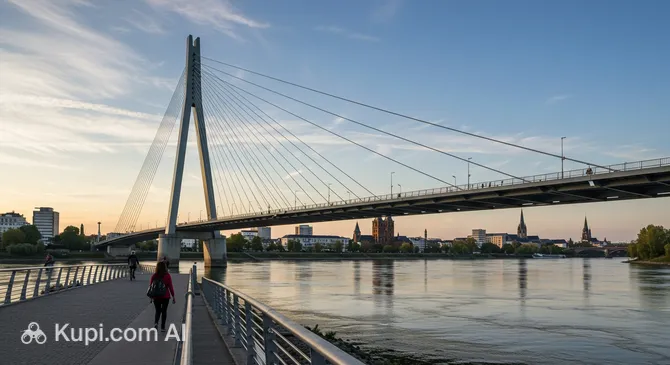
Kennedy Bridge
Kennedy Bridge. Иллюстрация. Источник: Kupi.com AI

For modern Germany, this site has become a symbol of ecological innovation. After a major reconstruction, a solar battery was installed on the south side of the bridge, making it the first structure of its kind in Europe. In addition to high technology, the bridge holds a piece of local folklore: near its supports, you can find a whimsical sculpture called “Bröckemännche”—a little man who, according to legend, ironically greets the residents of the opposite bank.

Today, Kennedybrücke is more than just a bridge; it is a popular spot for walks and photo sessions. From its height, breathtaking panoramas of the Rhine open up, and its 4.5 rating confirms its significance for both locals and the many tourists seeking the best views in the city.

Contacts

When planning a walk across this engineering landmark, it is helpful to have basic contact information for city services on hand. Although the bridge is an open public space, you can use the following details for official inquiries or to clarify information about the city's infrastructure.

Below is the contact information relevant for visitors and residents of the city.

How to contactContact
AddressKennedybrücke, 53111 Bonn, Germany
Phone+49 228 770

What to Do

The main reason to go up onto the bridge is, undoubtedly, the panoramic views. From here, a magnificent perspective of the Rhine River, business districts, and historic buildings unfolds. It is an ideal place for photographers, especially during sunset when the sun reflects beautifully off the steel structures and the water's surface. You can take a leisurely walk through the pedestrian zone, watching the movement of river trams and barges.

Be sure to pay attention to the technological side of the structure: take a look at the solar panels that generate clean energy right above the river. This is a rare opportunity to see such a large-scale application of "green" technologies in a historical urban context. Also, don't forget to find the “Bröckemännche” sculpture—a little man with a big history. Taking a selfie with him is a kind of tradition for guests of the city.

A walk across the bridge can easily be combined with active recreation. After crossing to the Beuel side or to the center of Bonn, you can go down to the embankment for a jog or a bike ride. The proximity to Bonn University and cozy parks makes a visit to the bridge a harmonious part of a busy sightseeing day.

Getting There

Getting to this important transport hub is easy, as it is located in the very heart of the city. If you are traveling by car, your route will take you along the B56 federal highway, which passes directly across the river via the bridge. For those who prefer public transport, tram and bus stops are within walking distance, connecting various districts of the city.

For pedestrians, a walk from the central railway station, Bonn Hauptbahnhof, is an excellent option, taking about 10–15 minutes. You can also walk here from popular tourist spots such as Kaiserplatz or Poppelsdorf Palace, enjoying the views of the city's architecture along the way. In the summer season, the bridge is easily accessible from the embankment where river cruise boats arrive.

Ближайший город: Bonn

History & Facts

The history of this location began at the end of the 19th century when the first permanent Rhine Bridge (Alte Rheinbrücke) was opened here in 1898. Unfortunately, the original structure was destroyed in 1945 due to historical events. However, as early as 1948–1949, a new modern steel arch bridge was built on the surviving pillars, becoming a symbol of the region's post-war recovery.

The structure received its current name in 1963 in memory of the 35th US President, John F. Kennedy. At the beginning of the 21st century, the structure required a major overhaul due to corrosion, and a large-scale reconstruction, completed in 2011, turned it into a unique site. More than 51 million euros were spent on the project, which not only strengthened the bridge but also introduced modern technologies.

One of the most remarkable details of the renovation history was the installation of a powerful solar battery on the south side of the bridge. This made the structure a true pioneer in Europe, demonstrating the possibility of integrating renewable energy sources into urban transport infrastructure. Today, the bridge serves not only as a means of transportation but also as an example of an eco-friendly approach to urban planning.

Time Needed

For a quick look at the landmark and a few memorable photos against the backdrop of the Rhine, 30–60 minutes will be sufficient. This time is enough to leisurely cross the bridge on foot, examine the innovative solar panels, and find the famous "bridge man" sculpture.

If you plan to include the bridge in a more extensive route, including a walk along the scenic Rhine Embankment and relaxation in the Hofgarten park, it is worth setting aside about 1.5–2 hours for this area. The evening hours are especially conducive to a longer stay when the city illumination turns on.

Working Hours

As with any key engineering structure in the city, the Kennedy Bridge is open 24/7. It is accessible to motorists, pedestrians, and cyclists 24 hours a day, 7 days a week, without weekends or holiday breaks.

You can visit it at any convenient time: early in the morning for a quiet sunrise walk, or late in the evening when the city lights reflect beautifully in the dark waters of the Rhine, creating a romantic atmosphere.

Круглосуточно

Nearby

The site's location on the riverbank makes it an ideal starting point for further exploration of the city. A walk through the surroundings will allow you to see both historic fortifications and majestic palaces that shape the unique character of this part of the region.

NameDistance
Old Customs Fortifications0.4 km
Beuel Nightclub0.6 km
Beethoven House Bonn0.7 km
Bonn Minster0.9 km
Bonneria Restaurant Tapas Bar0.9 km
Beethoven Monument0.9 km
Cherry Blossom in Bonn Old Town1 km

Reached the end of the page?

That means the route is fully explored