Support

Poppelsdorf Palace

About

Surrounded by lush greenery and Baroque elegance, Poppelsdorf Palace is one of the most recognizable symbols of the city of Bonn. This magnificent Baroque building, constructed in the 18th century, serves as a reminder of the splendor of the Electors' era.
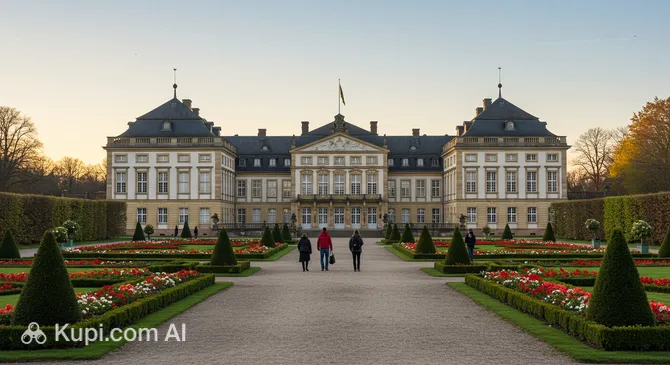
Poppelsdorf Palace
Poppelsdorf Palace. Иллюстрация. Источник: Kupi.com AI
Today, the palace harmoniously combines historical value with modern science, serving as an important part of the University of Bonn.

The palace's architecture, inspired by the Versailles Trianon, draws attention with its strict symmetry and four-wing layout. Located in Germany, this site is carefully preserved as a protected architectural monument. Inside the historical complex, you will find natural science faculties and a rich collection of minerals open to the public.

A particular point of pride for the complex is the adjacent Botanical Garden. It is one of the oldest and most diverse gardens in Europe, home to approximately 8,000 plant species. The palace and its park, featuring a picturesque lake, create an ideal atmosphere for strolls, making it a popular spot for both students and tourists seeking tranquility in the heart of Bonn.

Contacts

To plan your visit to Poppelsdorf Palace in Bonn, use the following contact information:

How to contactContact
AddressMeckenheimer Allee 171, 53115 Bonn, Германия
Websitewww.botgart.uni-bonn.de

What to Do

Start your visit with a leisurely stroll along the facades to appreciate the Baroque architecture and harmony of form. Be sure to visit the Botanical Garden, which stretches right up to the building's walls. You can spend hours here exploring 11 thematic greenhouses with exotic tropical inhabitants or walking along manicured alleys among rare trees. In spring, this place turns into a blooming paradise, while in summer, it offers the cool relief of shaded paths.

For fans of science and geology, the Mineralogical Museum, located directly within the palace building, is a must-see. Its collection is considered one of the most significant in the region. If your visit coincides with the summer season, check the cultural events schedule: open-air concerts are often held on the lawns in front of the palace, including performances by the Bonn Philharmonic Orchestra.

Photographers will appreciate the photogenic nature of the complex: the reflection of the palace wings in the lake and the geometry of the park allow for impressive shots. After exploring, you can relax by the water, watch the swans, or have a small picnic in the park area, enjoying the "mini-Versailles" atmosphere.

Getting There

Reaching this architectural landmark is easy, as it is located just one kilometer from the historical city center. From Bonn Central Station (Hauptbahnhof), you can walk there in about 10–15 minutes along the scenic Meckenheimer Allee.

If you prefer public transport, take tram No. 16 or 63, or buses heading to the Poppelsdorfer Schloss stop. The trip from the station takes no more than 5–10 minutes. For those arriving from Cologne or the Cologne-Bonn Airport, it is most convenient to take a train (S-Bahn or RE) to the central station and then transfer to local transport.

For travelers by car, parking spaces are available around the university and on adjacent streets; however, keep in mind that finding a spot on weekdays can be difficult. A walk or a bike ride is an ideal option to fully experience the atmosphere of the Poppelsdorf district.

Ближайший город: Bonn

History & Facts

The history of this site began long before the Baroque facades appeared. In the Middle Ages, a Gothic moated castle stood here, which was completely destroyed in 1583 during the Cologne War. It wasn't until more than a century later, in 1715, that construction of a new summer residence began at the initiative of Elector Joseph Clemens.

The palace project was designed by the famous French architect Robert de Cotte. Remarkably, he supervised the construction remotely from France, sending detailed drawings and instructions via letters. Construction was completed in 1740 under the successor of Joseph Clemens, Clemens August, turning the building into a magnificent example of Baroque style, inspired by Versailles and Italian villas.

In the 19th century, when the Rhineland passed to Prussia, the building's fate took a sharp turn. In 1818, King Frederick William III gifted the palace and its grounds to the newly founded University of Bonn. Since then, luxurious halls have been replaced by classrooms, and the former park has evolved into a research botanical garden.

World War II left the palace with heavy wounds: the complex was severely damaged during the bombings of 1944–1945. The careful restoration process lasted nearly a decade, concluding in 1955. Today, Poppelsdorf Palace is not just a historical monument but a living center of science, housing natural science faculties and a unique collection of minerals.

Time Needed

To leisurely explore Poppelsdorf Palace and the surrounding areas, it is recommended to set aside 1.5 to 3 hours. This is sufficient time to admire the architecture, take memorable photos, and visit the Mineralogical Museum.

If you plan to explore the Botanical Garden in detail, strolling through thousands of plant species and visiting each greenhouse, you should allow at least half a day for your visit. This is especially relevant during the spring and summer seasons when the garden becomes a true urban oasis.

Working Hours

The palace and its adjacent Botanical Garden are generally open to visitors daily. The standard operating hours are from 10:00 to 18:00, seven days a week.

Please note that some internal exhibits (such as the Mineralogical Museum) may have their own specific schedules. It is recommended to check for current information on the official website before planning your trip.

10:00–18:00

Nearby

Bonn is a city with a rich heritage, and the area surrounding the palace offers many interesting locations. A walk from the university buildings to the banks of the Rhine or the old market square allows you to see the city's key historical sites within a single route.

NameDistance
Botanical Garden Bonn0.1 km
LVR-LandesMuseum Bonn0.8 km
Bonn Minster1.1 km
Beethoven Monument1.1 km
The Fiddlers1.3 km
Old Customs Fortifications1.5 km
Beethoven House Bonn1.5 km

Reached the end of the page?

That means the route is fully explored