Support

Cuxhaven

About

Cuxhaven is a charming port city located on the North Sea coast in Germany, attracting visitors with its unique maritime atmosphere and picturesque landscapes. The city serves as an important fishing port and a popular resort, offering fresh sea air and a wealth of leisure opportunities.

Cuxhaven. Illustration.
Source: Kupi.com AI

Geographically, Cuxhaven occupies a strategic position in the state of Lower Saxony, right at the mouth of the Elbe River where it flows into the North Sea. The city has a population of about 48,000. The climate here is typically maritime, with mild winters and moderately warm summers, making it an attractive destination year-round, especially for those who appreciate a refreshing breeze and proximity to nature.

Among the key landmarks of Cuxhaven, the Kugelbake stands out—a historic wooden navigational aid that has become the symbol of the city, marking the point where the Elbe meets the sea. Equally popular is the "Alte Liebe" (Old Love) observation deck, which offers magnificent views of passing ships and the vast expanse of the sea. Additionally, Cuxhaven is the gateway to the Wadden Sea National Park (Wattenmeer), a UNESCO World Heritage site, where you can take unique walks along the sea floor exposed during low tide.

Cuxhaven offers its guests not only beautiful beaches and boat trips but also cozy streets, fish restaurants with the freshest delicacies, and the relaxing atmosphere of a seaside town. It is an ideal destination for those seeking a peaceful holiday in nature, interesting excursions, and unforgettable impressions of the North Sea.

You can find more interesting facts on the Cuxhaven city history page.

Weather Overview

The weather in Cuxhaven is characterized by a temperate maritime climate, making it attractive to visit at different times of the year, though each season has its own features. In summer, it is usually pleasant and not hot: the average temperature in the warmest months, July and August, hovers around 17-19°C, with highs reaching about 21°C. Winters in the city are mild but windy, with average January and February temperatures around 4°C. Overall, Cuxhaven is typical for its cool summers with regular but not heavy precipitation, and mild, damp winters. Rainfall occurs fairly evenly throughout the year, and the number of rainy days can be significant, especially in the autumn-winter period (from 14 to 19 days per month), although the rain itself is often light. For more detailed planning of your trip and up-to-date information, we recommend checking the Cuxhaven Climate page.

Average monthly temperature

Average monthly precipitation

Interesting Facts

In addition to its famous beaches and sea views, Cuxhaven hides many surprising stories and facts that make it even more interesting for the curious traveler. Here are just a few of them:

Kugelbake. Illustration.
Source: Kupi.com AI

Traveler photos:

  • The name of the famous "Alte Liebe" (Old Love) observation deck doesn't come from a romantic story, but from one of three old ships named "Liebe" (Love) that was sunk in 1733 to reinforce the pier.

  • The island of Neuwerk, located about 13 km off the coast in the Wadden Sea, is administratively part of Cuxhaven. In good weather at low tide, it can be reached not only by ferry but also by horse-drawn carriage directly across the sea floor—a unique adventure!

  • Located near "Alte Liebe" is an active historic wind semaphore. Before modern technology, it transmitted information about wind strength and direction to passing ships using large mechanical "arms," and today it remains one of the few surviving semaphores in Europe.

  • The famous wooden Kugelbake navigation mark is not just a symbol of the city. It officially marks the point where the Elbe River flows into the North Sea, and until 2001, it served as a real lighthouse with a light lit by a keeper every night.

How to Get There

When planning a trip to the North Sea coast, it's important to think about your route in advance. Cuxhaven has good transport accessibility, although there are no direct flights to the city itself. Tourists usually arrive at large nearby transport hubs and then continue their journey by land. You can find all the details and consider all ways to get to the city on our dedicated page.

Since the city does not have its own airport, travelers most often choose to fly into nearby major cities. The most convenient option is Hamburg Airport (HAM). It is located in Hamburg, about 89.5 km from Cuxhaven. This is a major international hub receiving flights from all over the world. The journey from there by rental car or taxi will take approximately 1–1.5 hours, making this route very comfortable.

An alternative option is Bremen Airport (BRE), located in the city of Bremen. The distance to the center of Cuxhaven is about 90.6 km. It is also a popular transport hub, convenient for those traveling within Europe. Travel time by car from here will also be about 1 hour and 15 minutes, depending on traffic.

For clarity, here is a summary of the main airports located in relative proximity:

AirportPassenger trafficDistance
Hamburg Airport13.6 mln89 km
Bremen Airport1.8 mln91 km
Westerland - Sylt Airport125 745119 km
Lübeck Blankensee82 550134 km
Sonderborg Airport74 000142 km

Rail travel is one of the most popular and eco-friendly ways to reach the coast. Cuxhaven has its own railway station, but it is the terminus for regional lines. Tourists often transfer at Hamburg Hauptbahnhof. This station is located about 93.5 km from the resort. Comfortable regional trains (such as the RE5 line) depart regularly from here, taking you directly to the center of Cuxhaven without any extra hassle.

Another important transfer point is Bremen Hauptbahnhof, located at a distance of about 86.8 km. There is also a stable regional train service from here, which is a standard and convenient way to travel around Germany. If you decide to drive from the station, the journey will take just over an hour.

Below is information about the nearest major railway stations:

StationPassenger trafficDistance
Bremen Hauptbahnhof43.8 mln87 km
Hamburg Hauptbahnhof200.8 mln94 km
Messe Bahnhof (Messe-Bf) Station171 km
Hanover Main Station91.3 mln179 km
Osnabrück Hauptbahnhof12.8 mln181 km

Main Attractions

Cuxhaven offers its guests many interesting places to explore the city's history, enjoy maritime landscapes, and learn more about life on the North Sea coast. These include iconic structures, unique museums, and, of course, beautiful beaches.

One of the main symbols of Cuxhaven is undoubtedly the Kugelbake. This impressive wooden navigation tower, standing about 29 meters high, sits at the very edge of the headland, marking the spot where the Elbe River flows into the North Sea. Originally serving as a landmark for ships, today the Kugelbake is a popular spot for walks, offering breathtaking views of busy shipping lanes and endless waters. It is not just a structure but a true landmark of the city.

Kugelbake. Illustration.
Source: Kupi.com AI

Traveler photos:

History buffs should visit Schloss Ritzebüttel (Ritzebüttel Castle). This ancient brick building dates back to the 14th century when it was the residence of the Hamburg governors who ruled this territory. Today, the castle houses a museum detailing the history of the city and the castle itself, while the surrounding picturesque park is a great place for a quiet break. Various cultural events and exhibitions are also held within the walls of Schloss Ritzebüttel.

Ritzebüttel Castle. Illustration.
Source: Kupi.com AI

Traveler photos:

For an unforgettable experience, visit the "Windstärke 10" Wreck and Fishery Museum Cuxhaven. This modern interactive museum immerses visitors in the harsh and fascinating world of the North Sea. Here, you can learn about dramatic shipwreck stories, the hard labor of fishermen, and maritime hazards. The museum's exhibits include impressive ship reconstructions and eyewitness accounts, making the visit truly educational and exciting.

Wind Force 10 Wreck and Fishing Museum. Illustration.
Source: Kupi.com AI

Traveler photos:

Another iconic maritime attraction is the Dicke Bertha Lighthouse, located in the Altenbruch district. This charming historic lighthouse, built in the late 19th century, still functions today. Its bright red and white tower is a popular subject for photography, and the surrounding area offers beautiful views of the Elbe. A visit to the Dicke Bertha Lighthouse allows you to touch the maritime history of the region.

Dicke Berta Lighthouse. Illustration.
Source: Kupi.com AI

Traveler photos:

For those looking for relaxation by the water, Cuxhaven offers wonderful beaches, with one of the most popular being Duhnen Beach (Strand Duhnen). This wide sandy beach, with its characteristic wicker beach chairs (Strandkörbe), is ideal for sunbathing, walking, and active recreation. During low tide, you can take a fascinating walk across the mudflats—the unique shallow waters of the North Sea. Duhnen Beach is also known for its promenade with numerous cafes and shops.

Duhnen Beach. Illustration.
Source: Kupi.com AI

Traveler photos:

Local Cuisine

The gastronomy of Cuxhaven is a true reflection of its seaside location, where the freshest gifts of the North Sea play the leading role. Local cuisine is characterized by simplicity, heartiness, and an emphasis on natural flavors, which will undoubtedly delight every gourmet looking to discover authentic regional dishes.

The first thing to try in Cuxhaven is, of course, fish and seafood. Be sure to taste Krabbenbrötchen—a crispy bun filled with succulent North Sea shrimp. It's a classic local delicacy and a perfect quick snack. Another iconic dish is Matjes, a tender, lightly salted young herring, traditionally served with onion rings, boiled potatoes, or in salads. Various types of fried fish, such as plaice (Scholle) or cod (Dorsch), are also popular, and of course, fragrant smoked fish, which can be bought at local markets or specialized shops.

For those who want to try something more unusual, look for Labskaus—a traditional North German sailor's dish made of corned beef, potatoes, onions, and beetroot, often served with rollmops and a fried egg. This dish has a very specific taste and texture but is an integral part of the region's culinary heritage. Popular drinks include local beers, especially pilsners. You can also try traditional German spirits such as Korn (grain brandy) or Kümmel (caraway liqueur). In cold weather, a cup of strong black tea, sometimes enjoyed here in the Frisian tradition—with "Kluntje" rock sugar and cream—will warm you up. For non-alcoholic drinks, refreshing Apfelschorle (apple juice mixed with mineral water) is always available.

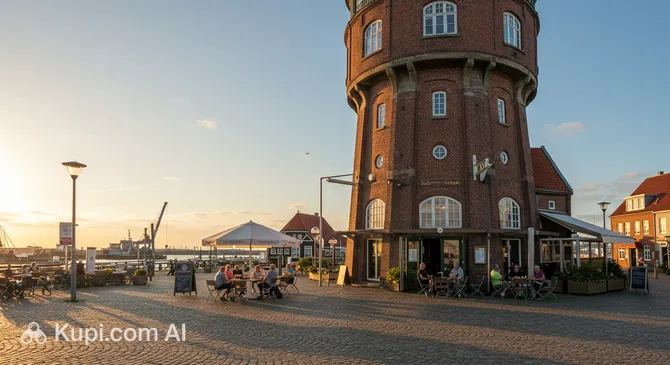
The food culture in Cuxhaven is diverse. Locals and tourists love to visit the many fish restaurants (Fischrestaurants), many of which are located by the harbor or along the promenades, offering not only delicious food but also a beautiful view. For a quick and authentic snack, small kiosks called "Imbiss" or "Fischbuden" are perfect for buying fresh fish sandwiches and other maritime treats. Furthermore, the city has many cozy cafes where you can enjoy a cup of coffee and traditional German pastries. One such notable place is the Cuxhaven Water Tower Cafe, located in a historic building and offering a special atmosphere for relaxation.

Wasserturm Café Cuxhaven. Illustration.
Source: Kupi.com AI

Traveler photos:

Overall, the Cuxhaven gastronomic scene offers an honest and unforgettable taste of the North Sea coast, where everyone will find a dish to their liking—from simple but incredibly delicious fish snacks to hearty traditional meals.

Travel Tips

Planning a trip to charming Cuxhaven? Wonderful! To make your journey through this seaside city in Germany as comfortable as possible and leave you with only pleasant impressions, we've prepared a few practical tips.

  1. What to pack: Cuxhaven's maritime climate is changeable. Be sure to bring a windproof and waterproof jacket, even in summer. Layering your clothes is your best friend. Don't forget comfortable shoes for walking on the beaches and around town, sunscreen, and a hat for sunny days. For electronics, you'll need a Type F adapter (Europlug).

  2. Getting around: Cuxhaven is a compact city, and much can be explored on foot or by bicycle (rentals are available). Public transport consists of buses that connect the main districts. Taxis are available but can be more expensive. Renting a car makes sense if you plan to explore the surroundings of Lower Saxony, but for the city itself, it isn't always necessary, and there can be difficulties with parking in tourist areas.

  3. Money: The official currency is the Euro (€). Credit cards (Visa, Mastercard) are accepted in most hotels, restaurants, and large shops, but it is always useful to have some cash on hand for small purchases or in places that don't take cards. ATMs (Geldautomat) are easy to find. Tipping in Germany is usually 5-10% of the bill in restaurants for good service, or you can simply round up the amount. A rough daily budget (excluding accommodation) starts from 50-70 euros, depending on your plans.

  4. Self-care: Pharmacies (Apotheke) are easy to find by the red "A" sign; information about pharmacies on duty (Notdienst) is usually posted on the doors. For emergency medical assistance, call 112. Cuxhaven is a very safe city. Follow standard precautions, especially in crowded places. When walking on the Wadden Sea (mudflats), always follow the signs and keep track of the tide times.

  5. Communication: The official language is German. Many locals, especially in the tourism sector, speak English. Learning a few basic German phrases like "Hallo" (Hello), "Danke" (Thank you), and "Bitte" (Please) is polite and helpful. Mobile SIM cards can be purchased in supermarkets or mobile shops. Wi-Fi is available in many hotels and cafes.

  6. Etiquette: Greet people with "Hallo" or "Guten Tag" (Good day). In Northern Germany, including Cuxhaven, the greeting "Moin" is very common and appropriate at any time of day. Germans value punctuality and order. Try to keep noise levels down in public places. Direct eye contact during conversation is considered the norm.

  7. Important notes: It is strictly not recommended to go for a walk on the Wadden Sea (the sea floor during low tide) without an experienced guide or without carefully studying the tide schedule—it can be dangerous. Also, avoid excessively loud behavior, especially in the evening, as Germans value their quiet time (Ruhezeit).

  8. Local highlights: Be sure to check the tide schedule (Gezeitenkalender). This is not just a matter of safety for walking the mudflats, but also a chance to see how radically the coastal landscape changes. And if possible, take an unforgettable horse-drawn carriage ride across the sea floor to the island of Neuwerk—it's a unique experience that Cuxhaven specifically offers!

We hope these tips help you better prepare for your trip and get the most out of your stay in hospitable Cuxhaven. We wish you a wonderful journey!

Entertainment & Nightlife

When the sun sets over the North Sea, Cuxhaven offers its guests various opportunities for evening relaxation. While the city isn't famous for wild round-the-clock parties, you can find cozy places to spend a pleasant time after a busy day on the coast. The atmosphere is generally relaxed and friendly, perfect for those seeking a quiet yet interesting evening.

The main evening life in Cuxhaven is concentrated near the waterfronts, especially in the Duhnen and Döse districts, as well as in the city center. Here you will find traditional German pubs (Kneipen) where you can enjoy local beer, modern cocktail bars, and a few venues where you can dance. Many restaurants also offer a pleasant atmosphere for a dinner that transitions into leisurely socializing over drinks.

Among the popular spots for an evening out is Strand Bistro Düner Spitze, which offers guests not just drinks but also a beautiful view, creating a relaxed resort atmosphere. If you're looking for something more energetic, it's worth checking out Bistro Kamp, which functions as a nightclub and offers music and dancing until late at night. These establishments typically attract both tourists and locals alike.

Strand Bistro Duhner Spitze. Illustration.
Source: Kupi.com AI

Traveler photos:

Kamp's Bistro. Illustration.
Source: Kupi.com AI

Traveler photos:

The best time to visit bars and clubs in Cuxhaven is usually Friday and Saturday evenings, especially during the tourist season. Most bars stay open until midnight or 1:00 AM, while clubs may stay open longer. There is usually no specific dress code; a casual style prevails. Drink prices are comparable to the average in Germany. At night, the most convenient way to get around the city is by taxi, which can be called by phone or found at designated stands.

Cuxhaven is generally considered a safe city. Walking along the well-lit central streets and promenades in the evening usually doesn't raise concerns. Nevertheless, it's always worth following standard precautions, especially if you are returning late. For taxis, it is recommended to use official companies.

During the day, Cuxhaven offers many other forms of entertainment. You can visit the fascinating "Windstärke 10" Wreck and Fishery Museum, stroll through the historic Schloss Ritzebüttel, or spend time with the family at the Zoo in Kurpark. Thus, your holiday in this seaside city will be full of activities both day and night.

Parks & Museums

Cuxhaven, snugly nestled on the North Sea coast, attracts travelers not only with its famous beaches but also with rich opportunities for cultural leisure and connection with nature. The city is rightfully proud of its well-kept parks, unique natural landscapes, and informative museums that carefully preserve its maritime history and convey the unique local flavor.

For lovers of nature and peaceful walks, Cuxhaven offers many wonderful spots. Special attention should be paid to the Cuxhaven Coastal Heaths—a vast nature reserve where you can walk for hours among picturesque dunes and blooming heather, enjoying the silence and observing the local flora and fauna. It is an ideal place for those seeking tranquility and impressive scenery. No less attractive are the city's beaches, such as the popular Duhnen Beach or the quieter Grimmershörn Beach, providing excellent conditions not only for sunbathing but also for long, healthy walks along the water's edge. In the heart of the city lies the Kurpark, which features a small but very charming Zoo in Kurpark, sure to bring joy to families with children.

Cuxhaven Coastal Heathlands. Illustration.
Source: Kupi.com AI

Traveler photos:

The cultural heritage of Cuxhaven is inextricably linked to the sea and its history. A key place to get acquainted with this side of city life is the "Windstärke 10" Wreck and Fishery Museum. Its interactive exhibits tell fascinating stories of the difficult lives of fishermen, dramatic shipwrecks off the North Sea coast, and the evolution of the fishing industry. A visit to this museum will be interesting and educational for all ages. Another important historical landmark is Schloss Ritzebüttel, an ancient structure with a rich centuries-old history. Today, its halls often host art exhibitions and cultural events, and a walk through its grounds allows you to feel the spirit of the past. Military history enthusiasts will find it interesting to visit Fort Kugelbake, an impressive defensive fortification that once protected the entrance to the Elbe estuary.

Wind Force 10 Wreck and Fishing Museum. Illustration.
Source: Kupi.com AI

Traveler photos:

Ritzebüttel Castle. Illustration.
Source: Kupi.com AI

Traveler photos:

In addition to iconic museums and extensive park areas, Cuxhaven holds many more interesting corners. The true symbol of the city is the Kugelbake—a historic maritime navigation mark majestically rising where the Elbe and the North Sea meet. It is a favorite spot for photos and watching giant ships pass by. You should definitely go up to the Alte Liebe observation deck, which offers breathtaking panoramic views of the harbor and the endless waters. For a truly authentic experience, stroll along the lively Duhnen Promenade, especially at sunset, or stop by the local fish market for the freshest seafood. And for those looking for off-the-beaten-path trails, the Duhner Heide Observation Deck offers unforgettable views of the heaths and the coast.

Kugelbake. Illustration.
Source: Kupi.com AI

Traveler photos:

Alte Liebe. Illustration.
Source: Kupi.com AI

Traveler photos:

Getting Around

Getting around Cuxhaven and its surroundings is quite convenient thanks to a well-developed public transport system, which, as throughout Germany, is known for its efficiency. The backbone of the city's transport network consists of buses, which connect the center with various districts, beaches, and tourist sites. The route network is well-designed, allowing tourists to easily reach most places of interest without using a personal car.

The fare system in Cuxhaven is generally integrated into a regional transport association. This means you can purchase various types of tickets: single tickets (Einzelfahrkarte), day tickets (Tageskarte), which can be advantageous for several trips, and sometimes weekly tickets (Wochenkarte) or group tickets. Roughly, a single bus ticket in Cuxhaven will cost a few euros, while a day pass, allowing unlimited travel throughout the day, often turns out to be a more economical option if you plan to move around a lot. It is always recommended to check the exact ticket prices on-site, as they can change. Tickets can be bought at vending machines at some stops, directly from the bus driver (usually cash is accepted, sometimes cards), or at tourist information centers. The Deutschlandticket (€49 ticket) is also popular in Germany, acting on most types of regional public transport across the country, including buses in Cuxhaven, which can be very beneficial for long stays or traveling through different cities.

For tourists, it's important to remember a few practical points. Bus schedules are usually available at stops, as well as online on local transport company websites or mobile apps. In Germany, tickets not bought from the driver often require validation (stamping) in special devices in the bus or on the platform before the start of the journey—be sure to clarify this rule for the ticket you purchased. Buses run regularly, but service intervals may increase in the evening, on weekends, and on public holidays. Plan your trips in advance, especially if heading to more remote areas.

In addition to public transport, other ways of getting around are available in Cuxhaven. Taxis can be found at special ranks or called by phone; this is a convenient, though more expensive, option, especially for night trips or with luggage. Given the coastal location and popularity of active recreation, bicycle rental is widespread in the city. Renting a bike is a great way to explore the picturesque surroundings, promenades, and beaches at your own pace. Many areas of Cuxhaven, especially the central part and the coastal promenades, are perfect for walking.

Accommodation

In Cuxhaven, travelers will find a wide range of accommodation options to suit various needs and budgets. The city offers everything from cozy family pensions (Pensionen) and guest houses (Gästehäuser), ideal for those seeking a homey atmosphere, to modern hotels of various star ratings offering a full range of services. Holiday apartments and flats (Ferienwohnungen) are also popular, being particularly convenient for family holidays or long stays, allowing you to feel right at home.

When choosing a place to stay in Cuxhaven, it's worth looking at areas near the coast, such as Duhnen, Döse, and Sahlenburg. These areas are famous for their beaches, such as Duhnen Beach, seaside promenades, and well-developed tourist infrastructure, including restaurants and cafes. Many hotels and apartments with sea views are concentrated here. The city center also offers convenient accommodation options, providing easy access to shops, some attractions like Schloss Ritzebüttel, and transport hubs.

When planning a trip to Cuxhaven, especially during the peak tourist season (summer months and public holidays), it is recommended to book accommodation in advance. This will allow you to choose the best option in terms of price and quality and avoid availability issues. The price range varies from budget options to more expensive offers in high-class hotels or premium-location apartments. You can book accommodation through popular online booking platforms, directly on hotel or pension websites, or by contacting local tourist information centers.

Nearby Cities

For those looking to explore the surrounding area, Cuxhaven serves as an excellent starting point for day trips to several interesting nearby destinations:

CityPopulationDistance
Brunsbuttel12 55430 km
Bremerhaven113 63436 km
Hemmoor8 84336 km
Schiffdorf14 66537 km
Nordenham26 19342 km

These nearby cities offer a variety of experiences and allow for a deeper understanding of the North Sea region's culture and landscapes. For example, Bremerhaven is a major port city located very close by, famous for its top-notch maritime museums like the German Emigration Center and the Klimahaus 8° Ost, which offer fascinating interactive exhibits. In Wilhelmshaven, you can visit Germany's main naval base, explore the German Naval Museum, and enjoy the unique coastal scenery of the Wadden Sea, a UNESCO World Heritage site. And the charming Hanseatic city of Stade invites you for a stroll through its beautifully preserved old town with numerous half-timbered houses and a cozy harbor. Each of these trips can be an interesting addition to your holiday in Cuxhaven, offering new impressions and discoveries.

Shopping & Souvenirs

Shopping in Cuxhaven offers a pleasant addition to a holiday on the North Sea coast. The city is not a major hub for high-fashion boutiques or huge shopping malls; however, you can find a variety of shops offering both everyday goods and unique souvenirs that reflect the region's maritime spirit. The focus is on small private shops, souvenir stalls, and shops with leisure goods.

The main arteries for shopping in Cuxhaven are the pedestrian zone of Nordersteinstraße and the adjacent Schillerstraße in the city center. Department stores, clothing and shoe shops, bookstores, and jewelry stores are concentrated here. Additionally, many small shops with souvenirs and beach goods can be found along the promenades in resort areas like Duhnen, where the Duhnen Promenade is popular, and Döse.

Duhnen Beach Promenade. Illustration.
Source: Kupi.com AI

Traveler photos:

Cuxhaven is not a city of giant shopping malls. Instead, individual shops and small shopping passages predominate. If you're looking for a wider selection under one roof, you might want to look at the department stores in the city center, but don't expect the scale of major metropolises. Shopping here has a more intimate and relaxed character.

Local markets give a special atmosphere to shopping in Cuxhaven. Regularly, usually once a week, a Wochenmarkt (weekly market) is held in the city center (for example, at Kaemmererplatz). Here you can buy fresh local products—vegetables, fruits, cheeses, meat products, flowers, as well as some handicrafts. During the tourist season, small fairs with souvenirs and local delicacies may also appear, especially in the coastal areas.

Souvenirs reminding you of the North Sea and maritime traditions are worth bringing back from Cuxhaven. Popular items include: maritime-themed goods (miniature lighthouses, ships, seagull figurines), maritime-style clothing (such as striped shirts or windbreakers), and amber jewelry. Don't forget local delicacies: smoked fish, canned fish, marzipan products featuring city views, or regional spirits like "Köm" (caraway schnapps). You can also find interesting home decor items related to the sea.

Shops in Cuxhaven typically operate from Monday to Saturday. Large shops and supermarkets are open from approximately 9:00-10:00 AM to 6:00-8:00 PM. Smaller shops may have shorter working hours and a lunch break. On Saturdays, many shops close earlier, around 2:00 PM or 4:00 PM. Most shops are closed on Sundays, except for some souvenir shops and stores in tourist zones during peak season (Bäderregelung). Common payment methods are cash (Euro) and bank cards (EC-card/Girocard, Visa, Mastercard). However, small shops or markets may prefer cash.

Tourists from non-EU countries can use the VAT refund system (Tax Free) when making purchases at participating stores. To do this, you must spend a certain minimum amount in one store, correctly fill out a Tax Free form, and present it along with the goods at customs when leaving the EU. Check the conditions and availability of this service directly in the shops.

Reached the end of the page?

That means the route is fully explored