Support

Heligoland

About

Heligoland is a true oasis of tranquility and natural beauty, lost amidst the rugged waters of the North Sea. This unique archipelago, consisting of the main island with its famous red cliffs and the miniature island of Düne, has a distinctive character. Here, there is no noise of big cities or the usual hustle and bustle; instead of cars, cyclists and pedestrians move slowly through the streets, enjoying the purest, intoxicating sea air.

Administratively, this secluded corner is part of Germany, although it feels like a completely different world. The population of Heligoland is small—just over a thousand people—which creates an atmosphere of comfort and safety. The geographical location and the influence of the sea form a special mild climate here, attracting those seeking healing and a reset far from civilization.

Heligoland. Illustration.
Source: Kupi.com AI

The fascinating history of Heligoland is closely intertwined with the forces of nature and the sea elements. One of the main landmarks of the place is the majestic, free-standing Lange Anna stack, which attracts photographers from all over the world. Nature lovers must visit the neighboring island of Düne, where you can observe seals basking on the beaches and numerous seabirds in their natural habitat.

This island is an ideal destination for those dreaming of communion with nature and long walks along picturesque trails. Heligoland invites you to watch the sunrise over the sea, enjoy the silence, and discover the beauty of the North Sea from a completely new perspective.

Weather Overview

The climate of the archipelago is shaped by the strong influence of the North Sea and the warm Gulf Stream, making it unique for this region. Thanks to this, the weather in Heligoland is surprisingly mild: there are practically no severe frosts, and summer heat avoids the island. The air here is always fresh, clean, and practically pollen-free, which makes the resort attractive for allergy sufferers.

The summer season here is cool and comfortable. In July and August, the average temperature stays around 17–18°C, rising to a maximum of 18.9°C. This is a wonderful time for those who cannot tolerate heat. The driest and most pleasant spring month is May, when the air warms up to 11°C, and the number of rainy days is minimal—only about 6 per month.

Autumn and winter on the island are warmer than on the mainland but characterized by high humidity. The average temperature in the coldest months, January and February, is about 4.6–5.6°C, and even night minimums rarely drop below 3.7°C. However, travelers should be prepared for precipitation: November is the rainiest month with 21 inclement days. Expect moderately warm summers without heat and very mild but windy and wet winters.

Interesting Facts

Beyond its main attractions, Heligoland hides many fascinating secrets and historical mysteries. This unique island surprises not only with its landscapes but also with striking facts that reveal it from an unexpected side.
  • Altered Geography. In the 17th century, a devastating storm literally tore the land apart, dividing Heligoland into two separate islands—the main one and Düne. This event forever defined the modern appearance of the archipelago.

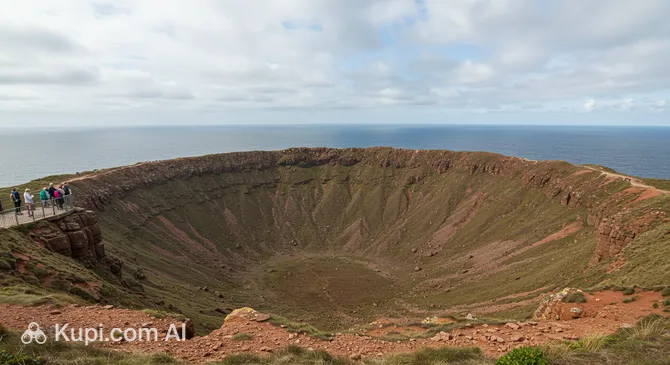
  • Traces of History. The island preserves the memory of dramatic events: here you can see a massive Bomb Crater (The Big Bang). This is the trace of the most powerful non-nuclear explosion in European history, which occurred after the end of World War II.

  • Inspiration for Geniuses. Heligoland was a magnet for the German intelligentsia. It was here that Hoffmann von Fallersleben wrote the words that became the national anthem, and a monument stands on the island in honor of the famous physicist Werner Heisenberg.

  • The "Red Face" of the Island. The hallmark of the place is its sheer red sandstone cliffs, especially the 47-meter Lange Anna. It is one of the most photographed natural sites in the country, where you truly feel at the edge of the world.

  • Winter Swimming. Local residents and tourists maintain an unusual tradition of "bathing tourism." Those wishing to plunge into the invigorating waters of the North Sea can be found on the beaches even in the winter months.

Bomb Crater (Big Bang). Illustration.
Source: Kupi.com AI

Traveler photos:

How to Get There

When planning a trip to this unique archipelago in the North Sea, it is important to consider its island location. Since Heligoland is a car-free zone, you can only get here by water or by air (on small planes). The main route for most tourists passes through major transport hubs on the mainland, followed by a transfer to a ferry or catamaran. You can find out more about how to get to Heligoland by exploring all available route options.

There is no major international airport in the town of Heligoland itself capable of receiving regular flights from large airlines. The closest and most convenient option for international travelers is Hamburg Airport (HAM). It is located in the city of Hamburg, approximately 151 km from Heligoland (in a straight line and by road to the coast). This is a major international hub receiving flights from all over the world. The journey by taxi or bus to the ferry terminals on the coast (usually in Cuxhaven or Büsum) will take about two to three hours.

Another popular alternative is Bremen Airport (BRE), located in the city of Bremen. The distance to Heligoland is about 140 km. This is an important regional airport serving many European destinations. Travel time by road to the coast will be approximately one and a half to two hours. From there, you will need to transfer to sea transport to reach the island.

For clarity, here is summary information on the main airports convenient for planning your route:

AirportPassenger trafficDistance
Westerland - Sylt Airport125 74586 km
Bremen Airport1.8 mln140 km
Eelde Airport112 833146 km
Sonderborg Airport74 000151 km
Hamburg Airport13.6 mln151 km

Rail travel is also an excellent way to get closer to your destination, although there is no railway station in the town of Heligoland itself due to its geographical features. Tourists often choose Hamburg Hauptbahnhof (IATA: ZMB) in the city of Hamburg, which is about 156 km from the island. This is one of the largest stations in Europe with a huge passenger flow. From here, it is convenient to take regional trains to coastal towns (such as Cuxhaven), where ferries depart. The estimated travel time from the station to the vessel departure point is about two hours.

Another convenient option is Bremen Main Station (IATA: DHC) in the city of Bremen, located 137 km from Heligoland. This is a major transport hub connecting the region with the rest of Germany. A car or train trip to the coast will take between one and two hours depending on the chosen departure port.

Below is a table with the closest and most significant railway stations:

StationPassenger trafficDistance
Bremen Hauptbahnhof43.8 mln137 km
Hamburg Hauptbahnhof200.8 mln156 km
Osnabrück Hauptbahnhof12.8 mln213 km
Messe Bahnhof (Messe-Bf) Station228 km
Hanover Main Station91.3 mln236 km

Main Attractions

Despite its modest size, Heligoland offers travelers a rich cultural and natural program. A walk around the island is an opportunity to see unique landscapes and touch the distinctive history of this secluded corner of Germany.

One of the most recognizable and cheerful symbols of the island are the famous Hummerbuden. These brightly colored wooden huts lining the harbor once served as warehouses and workshops for fishermen to repair their gear. Today, these colorful buildings have been transformed into a lively tourist area: they house souvenir shops, small galleries, and cozy bistros serving the freshest North Sea delicacies.

Hummerbuden. Illustration.
Source: Kupi.com AI

Traveler photos:

For those wishing to gain a deeper understanding of the archipelago's past, the Heligoland Museum in the courtyard of the open-air museum is a must-visit. The exhibition tellingly narrates the island's rich history, from the geological formation of the red cliffs to the life of the local community and maritime traditions. Here, you can learn about periods of foreign rule, see ancient household items, and get acquainted with the work of the famous children's writer James Krüss, who was born on this island.

Nature lovers will find unforgettable emotions at the Gannet Rock on Heligoland. This place is a true paradise for ornithologists and photographers. Thousands of seabirds—gannets, guillemots, and razorbills—nest on the sheer cliffs. Observing the noisy bird colony from safe viewing platforms allows you to feel all the power and beauty of wild nature, which is literally within arm's reach here.

Local Cuisine

Heligoland's gastronomy is a true feast for seafood lovers, where the exceptional freshness of products plays the leading role. The undisputed king of the local menu is the famous "Heligoland Red" (Helgoländer Hummer). This lobster is considered a high-class delicacy: gourmets from all over the country come here to taste its tender meat, which is widely recognized as tastier than anywhere else in Germany. Dishes made from it are served in many establishments, often accompanied by light sauces so as not to overpower the natural flavor.

Besides lobster, the North Sea generously provides the island with cod, plaice, and mussels. A mandatory item on the culinary program for any tourist should be the local sandwiches—Fischbrötchen. A fresh roll with North Sea shrimp (Nordseekrabben) or smoked fish makes the perfect snack while walking along the waterfront. Also worth noting is "Knieper"—crab claws, which are a traditional and very popular seasonal dish.

The epicenter of flavor and atmosphere on the island are the historical Hummerbuden. In these bright huts where fishermen used to store their gear, there are now cozy bistros and eateries. A casual atmosphere prevails here: food is often served simply, home-style, allowing you to fully concentrate on the taste of the seafood. This is the best place to learn the secrets of traditional dishes from the locals.

Among drinks in Heligoland, warming options are especially popular, which is not surprising given the windy weather. The island's signature drink is egg grog, prepared here according to old recipes, as well as strong tea with rum and rock candy. If you are looking for a spot for a cozy evening, you can stop by Mocca Stuben Restaurant and Bar, known for its hospitality, or visit the Heligoland Aquarium Restaurant, where your meal is accompanied by a view of marine life.

Travel Tips

A trip to Heligoland is a visit to a unique world where the rhythm of life is dictated by the North Sea, and the usual urban bustle gives way to the cries of gulls and the sound of waves. To ensure your stay on this one-of-a-kind German island is as comfortable as possible, we have prepared a list of important practical recommendations.

  1. Clothing and equipment. The weather here changes rapidly, and the wind blows almost constantly. Even in summer, stick to the "onion principle": a T-shirt, a sweater, and definitely a windproof jacket or raincoat. Shoes should be as comfortable as possible, with flat and non-slip soles, as you will be walking a lot on the rocky paths of the Oberland and the sandy beaches of Düne.

  2. Transport specifics. Heligoland is a car-free zone. There are no cars, buses, and even bicycles for tourists are prohibited during the season. You will cover the entire island on foot. To move between the lower (Unterland) and upper (Oberland) levels of the town, use the elevator or the stairs. To get to the neighboring island of Düne for the beaches, use the regular ferry boat (Dünenfähre).

  3. Finances and shopping. The official currency is the Euro. A unique feature of the island is that it is not part of the EU customs zone, so goods here are sold without VAT (Duty Free). It's an excellent place to buy perfumes, optics, and alcohol at favorable prices. Cards are accepted in most shops and restaurants, but for street food or souvenirs, it's better to have cash. There are ATMs on the island.

  4. Health and safety. The island is very safe; the crime rate is near zero. There is a small hospital (Paracelsus-Nordseeklinik) and a pharmacy. A key safety rule concerns nature: on the beaches of Düne, it is strictly forbidden to approach seals closer than 30 meters. Despite their cute appearance, these are wild predators that can bite if they feel threatened.

  5. Communication and language. The main language is German, although native residents speak the "Halunder" dialect. Thanks to tourism, staff in hotels and restaurants often speak basic English. Mobile connection and internet work stably (standard EU rates apply), and free Wi-Fi is available in many public places and hotels.

  6. Local etiquette. On the island, it is customary to greet people with the short and friendly word "Moin" at any time of day. Locals value peace and quiet, so loud music or noisy behavior in public places is not welcomed. On narrow streets, try not to block the path for electric cars delivering goods.

  7. What to avoid. Do not try to bring a bicycle or scooter with you—during the summer season, their use by tourists is prohibited by island rules. Also, do not feed the seagulls: this is not only harmful to the birds but can also lead to fines, and the birds themselves can behave quite brazenly, snatching food from your hands.

  8. Customs control. Remember that due to the island's special status, when returning to the mainland (to Germany), you pass through customs control. Limits on the export of tobacco and alcohol here are strict, as when entering from a non-EU country. Be sure to check the current regulations to avoid trouble at the port.

Heligoland knows how to make you fall in love with its rugged romance and hospitality. By following these simple tips and respecting local rules, you can enjoy an unforgettable holiday on the red cliffs in the middle of the sea, taking away only the warmest impressions.

Entertainment & Nightlife

The nightlife in Heligoland differs significantly from what major metropolises or noisy beach resorts offer. Here, you won't find the neon signs of massive nightclubs or techno parties until dawn. Evening leisure on the island is synonymous with coziness, friendly conversations, and maritime romance. "Nightlife" here is concentrated in traditional bars, kneipen (pubs), and restaurants where locals and tourists gather to discuss the day over a glass of beer or something stronger.

The epicenter of evening activity is the Unterland (Lower Land) district, especially the streets adjacent to the waterfront and the main shopping street Lung Wai. This is where life stays vibrant the longest. The atmosphere in the establishments is very democratic and relaxed: there is no dress code, and the crowd is a mix of sailors, nature enthusiasts, and local fishermen. People come here in comfortable clothes, often straight after a walk along the cliffs, to enjoy warmth and hospitality.

If you are looking for a place with an authentic atmosphere, be sure to stop by Mocca Stuben Restaurant and Bar. This establishment is popular for its cozy, old-fashioned interior and wide selection of drinks. You can often meet island old-timers here sharing sea tales. It's the perfect location to try the island's main drink—the famous egg grog, which is prepared masterfully here.

For those who prefer to combine dinner with contemplation, the Heligoland Aquarium Restaurant is an excellent choice. Although this place is more about gastronomy than parties, a special magic reigns here in the evening. Dining surrounded by aquariums creates a sense of immersion in the underwater world of the North Sea, making the evening unforgettable and peaceful.

Practical tips for night owls: Keep in mind that the concept of "late" is relative on the island. Many restaurant kitchens close as early as 9:00 PM – 10:00 PM, although bars may stay open until midnight or until the last customer. Alcohol prices here are lower than on the mainland due to the island's tax-free status. As for safety, Heligoland is one of the safest places in the world. You can walk at any time of night without the slightest concern. There are no taxis or public transport at night, but the distances are so small that any hotel can be reached on foot in 10–15 minutes.

Daytime entertainment on the island is more educational in nature. Besides nature walks, it's worth visiting the Heligoland Museum, where you can hide from windy weather and learn about the archipelago's complex destiny. Also popular as "entertainment" is duty-free shopping in the stores of Unterland, where tourists stock up on perfumes, tobacco, and premium alcohol.

Parks & Museums

Heligoland is not quite your typical city with standard parks and squares. The entire archipelago can easily be called one large open-air nature reserve, where history intertwines with unique geology. The green zones here are rugged rocky plateaus and sand dunes, and cultural heritage is kept not only in museum halls but on the streets themselves, among the bright fishing huts.

The main natural attraction and an ideal place for walks is the so-called Oberland (Upper Land). There is a picturesque circular route along the edge of the cliff, offering breathtaking views of the North Sea. Special attention should be paid to the unique geological formation—the Heligoland Rock Foundation. These are outcrops of bunter sandstone that form the island's unique landscape and testify to its ancient origin. A walk here replaces a visit to any botanical garden, allowing you to enjoy the rugged beauty of northern flora.

Another vital natural zone is the Gannet Rock on Heligoland. Although technically an ornithological reserve, for tourists this place serves as the best platform for observing wild nature. Here, at a minimal distance, you can see thousands of seabirds in their natural habitat. For those seeking a calmer, "beach" version of nature, it is worth heading to the neighboring island of Düne, famous for its sandy landscapes and seal colonies.

Heligoland Rock Base. Illustration.
Source: Kupi.com AI

Traveler photos:

The Heligoland Museum invites you to dive into the archipelago's rich past. This complex, which includes both exhibition halls and an open-air museum courtyard, details the island's history: from its strategic military importance and the destruction of World War II to the peaceful life of fishermen and vacationers. A special place in the exhibition is given to the works of the famous children's writer James Krüss, a native of Heligoland, as well as unique exhibits related to the marine biology and geology of the region.

The famous Hummerbuden in the harbor act as a living open-air museum. These colorful wooden buildings, which are an architectural monument, do more than just please the eye; they preserve the spirit of old Heligoland. Walking along them, you feel as if you have stepped back into the past, when the island's life depended entirely on lobster fishing. Today, temporary exhibitions of local artists and craftsmen are often held here.

Insider tip: If you are interested in hidden history, be sure to find out about the possibility of taking a tour of the underground bunkers. Heligoland is riddled with kilometers of wartime tunnels, and descending into these depths gives a completely different, poignant understanding of what this small piece of land endured in the 20th century.

Getting Around

The transport system of the town of Heligoland is radically different from what city dwellers are used to. Here you won't find subways, trams, trolleybuses, or standard scheduled buses, as the archipelago is a unique car-free zone. According to local laws, the use of vehicles with internal combustion engines is prohibited here, so walking is the primary and most pleasant way to get around this compact island.

The only type of regular "public" transport can be considered the ferry service (Dünenfähre), which connects the main island with the neighboring island of Düne, where the beaches and airport are located. Small "Witte Kliff" boats run between the piers every 15–30 minutes during the day. Tickets are purchased at the ticket offices at the pier (Landungsbrücke) or at special vending machines. Keep your ticket, as it often works for a round-trip (there and back).

For ease of movement between the two levels of the city—the lower Unterland (at sea level) and the upper Oberland (on the plateau)—there is a city elevator. This is an important part of the local infrastructure, allowing you to avoid climbing the long staircase. There is a fee for using the elevator; the ticket is inexpensive and bought on-site. An alternative for budget-conscious and athletic tourists is the famous staircase of 184 steps connecting the waterfront and the upper part of the village.

The role of taxis on the island is filled by a few electric vehicles. These quiet transport means are used mainly for delivering luggage from the port to hotels and for transporting people with reduced mobility. Simply "hailing" such a taxi on the street can be difficult, so it's better to book a transfer in advance through your hotel administration. Payment is usually made in cash to the driver.

An important tip for travelers concerns personal transport: the use of bicycles by tourists on the island is strictly regulated. During the summer season (usually from April to October), cycling for guests is prohibited so as not to disturb pedestrians on the narrow streets. Therefore, you should not count on bike rentals; instead, make sure you have the most comfortable walking shoes, as it is on your own two feet that you will see all the beauties of Heligoland.

Accommodation

Despite the island's compact size, Heligoland offers tourists a decent choice of accommodation options to suit different needs and budgets. Here you won't find massive skyscraper hotel chains or noisy "all-inclusive" resort complexes. The foundation of the hotel stock consists of cozy family-run hotels, guesthouses (Pensionen), and modern holiday apartments. The atmosphere in the accommodations is generally very homey and intimate, perfectly matching the overall spirit of this secluded archipelago.

When choosing accommodation, it is important to decide on the location, as the town is clearly divided into two zones. Unterland (Lower Land) is the choice for those who want to be in the center of the action. Staying here, you will be in the immediate vicinity of the harbor, duty-free shops, and most restaurants. This is convenient for tourists with heavy luggage or those who don't want to rely on the elevator. Oberland (Upper Land) is suitable for lovers of peace and panoramic views. Hotels here often offer rooms with breathtaking views of the North Sea and the neighboring island of Düne. This is an ideal starting point for walks along natural trails along the rocky cliffs.

For those seeking maximum communion with nature, there is a unique opportunity to stay on the neighboring island of Düne. There is a campsite and a village of small bungalows there. This is an option for true romantics: you will wake up to the sound of the surf, just a few steps away from sandy beaches and seal colonies; however, keep in mind that the infrastructure there is more modest than on the main island.

Booking tip: Heligoland is a very popular destination, especially among Germans themselves, and the number of places is limited by the physical size of the island. During the high season (July–August), as well as during holidays and long weekends, the best options are booked up several months in advance. It is highly recommended to book accommodation early as soon as you have decided on your travel dates.

The price range on the island varies from medium to high. Budget options like youth hostels are few and far between (for example, the Jugendherberge on the Oberland), so budget-conscious travelers should look for inexpensive rooms in private pensions. Most hotels belong to the mid-range segment, offering comfort and breakfast. Booking is available through popular international online platforms, but many small apartments and guesthouses still prefer direct booking through their websites or by email.

Nearby Cities

If you plan to continue your journey after relaxing on the island, the nearest cities on the mainland will be excellent choices for your next stop. Since Heligoland is far from the coast, the journey to these settlements will require a sea crossing or a flight, opening up access to the rich culture and history of Northern Germany.

Most often, travelers head to Cuxhaven, which serves as the main link to the island. This resort town is known as the gateway to the Wadden Sea—a unique natural site on the UNESCO World Heritage list. Here, it is worth seeing the famous wooden navigation mark, the Kugelbake, which marks the mouth of the Elbe, and taking a stroll along the historic "Alte Liebe" (Old Love) pier.

A little further away is Bremerhaven—a modern center for educational tourism. The Havenwelten ("Harbor Worlds") district attracts guests with unique museums: the Climate House (Klimahaus), where you can walk through all the planet's climate zones, and the famous German Emigration Center. This destination is particularly interesting for families and lovers of interactive exhibitions.

Lovers of maritime romance and military history should visit Wilhelmshaven, the country's only deep-water port. The city is famous for its German Naval Museum and beautiful South Beach (Südstrand). There is also an interesting aquarium here that introduces visitors to the underwater world of the North Sea.

CityPopulationDistance
Wangerooge1 30044 km
Sankt Peter Ording4 06052 km
Langeoog1 10055 km
Baltrum60061 km
Cuxhaven48 35664 km

These cities allow for a deeper understanding of the Schleswig-Holstein and Lower Saxony regions, harmoniously complementing the impressions of a secluded stay on the archipelago.

Shopping & Souvenirs

Shopping on Heligoland is a unique experience that attracts thousands of tourists as much as its natural beauty. The main feature of local commerce lies in the archipelago's special tax status: it is not part of the European Union's customs territory. This means that goods are sold here without VAT and excise duties, turning the entire town into a massive Duty Free zone. Travelers come here for high-quality perfume, cosmetics, optics, tobacco products, and premium alcohol at prices significantly lower than on the mainland.

The heart of the island's commercial life is the Unterland (Lower Land) district. The main shopping artery of the town is Lung Wai street, which in the local dialect means "Long Way." This is where most of the duty-free shops are concentrated. Strolling through this lively pedestrian zone, you will find many boutiques offering designer clothing, watches, and jewelry. The atmosphere here resembles a cozy port town, where modern shop windows stand alongside historical architecture.

There are no major shopping centers or malls in the usual sense on Heligoland. The format of commerce here consists of small private shops, family-run stores, and specialized boutiques. This gives shopping a special charm: owners are often behind the counter themselves and ready to give professional advice. The absence of giant hypermarkets is compensated for by a high concentration of shops per square meter in the port area and central streets.

The famous Hummerbuden play the role of the most colorful market on the island. These bright wooden huts in the harbor are the ideal place for those looking for authenticity. Here you can buy not only the freshest seafood but also works by local craftsmen, paintings, nautical jewelry, and books. A walk along these colorful rows replaces a trip to a flea market, allowing you to find truly unique items with the island's soul.

When choosing souvenirs, look for items with island symbolism. The most popular motif is, of course, the lobster, or "Heligoland Red." Soft toys, magnets, and tableware with its image are found everywhere. Connoisseurs of gastronomic souvenirs should bring home a bottle of local egg liqueur or gin aged on the island. Also popular is high-quality maritime-style clothing—windproof jackets and warm sweaters that will remind you of the fresh North Sea wind.

Shops on the island usually operate according to the arrival schedule of tourist ships. Most outlets open around 10:00 AM and close by 5:00 PM – 6:00 PM, when the main flow of day-trippers leaves the island. On Sundays and public holidays during the high season (May to October), many shops are also open thanks to special resort regulations (Bäderregelung). Bank cards (Visa, MasterCard, EC-cards) are accepted almost everywhere, but having some cash for small purchases in souvenir shops or food stalls won't hurt.

Since the entire island is a duty-free zone, there is no need to issue Tax-Free checks for tax refunds—prices are already exempt from VAT. However, it is extremely important for tourists to remember the flip side: customs limits when returning to the mainland (to Germany). There are strict restrictions on the import of tobacco (e.g., 200 cigarettes), alcohol, and coffee. Customs control at the arrival ports (Cuxhaven, Büsum, etc.) works very thoroughly, so before purchasing, be sure to check the current import regulations to avoid fines.

Reached the end of the page?

That means the route is fully explored