Support

Crater of a 5000 kg bomb

About

Walking along the picturesque cliff edge on the island of Heligoland, it is impossible to miss the site that locals call "The Big Bang." This bomb crater is not just a hole in the ground; it is an impressive historical monument and a geological feature that emerged during the post-war period in Germany.

The enormous hollow was formed by the massive detonation of a 5,000-kilogram projectile, which radically altered the terrain of this part of the island. Today, this spot serves as a quiet reminder of the past, harmoniously integrated into the rugged but beautiful nature of the North Sea. The crater attracts travelers with its unusual nature and the fact that it clearly demonstrates the power of human impact on the Earth's surface.
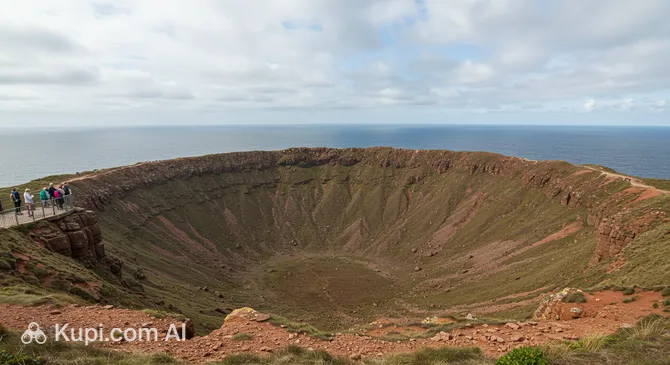
Bomb Crater (Big Bang)
Bomb Crater (Big Bang). Иллюстрация. Источник: Kupi.com AI

With a 4.5-star rating, this site is rightfully considered a must-see for any tourist. Visitors can expect not only historical insights but also stunning panoramic views of the red cliffs and the distant sea, opening up right from the edge of the crater.

Contacts

For those planning a walk to this historical site, here are the address and GPS coordinates for your navigator. Finding the site on the island is easy if you follow the popular walking trails.

How to contactContact
AddressKlippenrandweg, 27498 Helgoland, Germany

What to Do

The main activity here is, of course, contemplation. Standing on the edge of the massive crater, you can fully feel the scale of the events that changed the face of the island. It is an ideal spot for photoshoots: the contrast between the green vegetation inside the crater, the red sandstone of the cliffs, and the deep blue of the sea makes for incredible shots.

Outdoor enthusiasts will enjoy a walk along the Klippenrandweg trail. The route runs right along the edge of the cliff, allowing you to not only view the crater but also observe colonies of seabirds nesting on the sheer walls. The fresh sea air and peaceful atmosphere make this a wonderful place for thoughtful walks.

Many travelers prefer to combine a visit to the crater with a tour of the local underground bunkers and tunnels. This combination allows for a deeper dive into Heligoland's history, moving from the external landscape changes to exploring the man-made defensive structures hidden deep within the island.

Getting There

The journey to this unique location begins with a trip to the island itself. Heligoland is located about 47 kilometers from the mainland. The most popular way to get here is by ferry from ports such as Cuxhaven or Büsum. The sea crossing takes between 2 and 3 hours, depending on the vessel and weather conditions. There is also a small airport on the island that receives flights from Hamburg.

Once you arrive at the pier, you won't need a taxi or public transport—the island is virtually car-free, and everything is accessible on foot. To find the crater, head up to the island's upper plateau (Oberland) and follow the Klippenrandweg trail, which winds along the cliff edge. The path is well-marked with signs, making it easy to find your way.

The walk from the central part of the settlement to the crater is short. It is a great opportunity to enjoy the sea breeze and the panoramic views of the vast North Sea from the top of the sheer cliffs.

Ближайший город: Heligoland

History & Facts

The history of this site is closely tied to the island's strategic importance in the North Sea. Back in 1890, Germany gained control of this territory through an agreement with Great Britain, exchanging it for holdings in Africa. From then on, the island was developed into a powerful naval fortress with an extensive network of defensive structures.

The key event that shaped the current landscape occurred in April 1947. At that time, one of the largest non-nuclear explosions in history took place, known as the "Big Bang." Approximately 6,700 tons of explosives were used to dismantle the military fortifications. The detonation was so powerful that it literally reshaped the island's geography, leaving behind massive craters and altering the rocky coastline.

Despite the immense destruction, the island managed to recover and find a new life. In 1952, the territory officially returned to West German control, after which it began its transformation into a peaceful resort. Today, the crater is not only a geological feature but also an important historical monument, serving as a reminder of the dramatic changes of the mid-20th century.

Time Needed

To simply view the crater, take a few impressive photos, and read the information boards, 30–60 minutes is usually sufficient. Since the site is outdoors, the duration of your visit depends entirely on how long you wish to enjoy the scenery.

However, we recommend allowing 1.5–2 hours if you plan to enjoy a full walk along the Klippenrandweg trail. This will allow you to explore the surroundings at a leisurely pace, observe the birds, and fully appreciate the scale of the landscape changes that once occurred here.

Working Hours

One of the pleasant features of this attraction is its accessibility. The bomb crater is located in an open area, so it is open to visitors 24/7.

You can come here at dawn to see the first rays of sun illuminate the crater, or stop by in the evening to enjoy the silence. The site is open every day of the week, including weekends (Monday to Sunday — Open 24 hours).

Круглосуточно

Nearby

The island of Heligoland is small, so most of its interesting locations are within walking distance of each other. A stroll from the crater will allow you to discover other unique sites, from natural peaks to historical bunkers.

NameDistance
Heligoland Rock Base0.2 km
Gannet Rock of Heligoland0.4 km
Heligoland Museum0.5 km
Mocca Stuben Restaurant-Bar0.6 km
Aquarium Restaurant Helgoland0.8 km
Hummerbuden1 km

Reached the end of the page?

That means the route is fully explored