Support

Johannes Gutenberg University Mainz Botanical Garden

About

If you are looking for a peaceful corner of nature in the heart of university life, the Botanical Garden of Johannes Gutenberg University is exactly the place. Located in the city of Mainz, this garden is a unique symbiosis of a research center and a picturesque public park. Here, in Germany, lies a true open-air living museum covering an area of about 10 hectares.
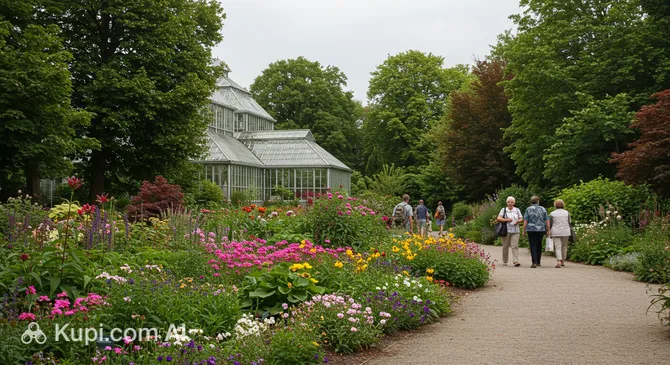
Botanical Garden of Johannes Gutenberg University Mainz
Botanical Garden of Johannes Gutenberg University Mainz. Иллюстрация. Источник: Kupi.com AI

The garden is famous for its impressive collection of approximately 8,500 plant species from all regions of the world. Thanks to the mild climate of the Rheinhessen wine region, many heat-loving crops thrive here outdoors throughout the year. It is not just an educational base for students, but also an inspiring space for relaxation where you can escape the hustle and bustle of the city.

Strolling along its paths, you can trace the entire diversity of the plant kingdom—from mosses and ancient ferns to exotic tropical species hidden in the greenhouses. The combination of strictly organized scientific beds and landscaped areas makes visiting the garden an exciting journey through the climatic zones of our planet.

Contacts

To clarify details before your visit or to get up-to-date information, you can contact the garden administration. The garden is conveniently located on the university campus and is always open to nature lovers.

How to contactContact
AddressJohannes Gutenberg-Universität, Anselm-Franz-von-Bentzel-Weg 9, 55128 Mainz, Germany
Phone+49 6131 3922251
Websitewww.botgarten.uni-mainz.de

What to Do

In this green oasis, visitors are invited to take a unique journey around the world. Be sure to stop by the Systematic Department—it is a true "living carpet" where plants are arranged in neat groups by family and genus. This organized diversity allows you to clearly see how the Earth's flora evolved.

Specialized collections, which are the pride of the university, deserve special attention. A rare glacial landscape "Mainzer Sand" has been recreated here, and a unique collection of Oriental plants is being formed. The Botanical Garden also houses one of the largest research collections of sage (Salvia) in Europe. Fans of the exotic should visit the greenhouses, where bizarre forms of tropical and subtropical plants stand side by side under glass.

Throughout the year, the garden organizes cultural events and themed tours that allow for a deeper dive into the world of botany. If you prefer solitude, the Mainz Botanical Garden is the perfect place for a quiet walk or relaxation surrounded by rare flowers and centuries-old trees right in the center of the university campus.

Getting There

Finding the Botanical Garden of Johannes Gutenberg University is easy, as it is located directly on the university campus. The exact address for your navigator is Anselm-Franz-von-Bentzel-Weg 9. If you are traveling by car, you can use the GPS coordinates (8.2406978, 49.9908251) to reach the campus.

For those who prefer public transport, buses and trams regularly run from the city center towards the "Universität" stop. A taxi ride from Mainz Central Station takes only about 10–15 minutes, making the garden easily accessible even for tourists with a tight schedule.

Ближайший город: Mainz

History & Facts

The history of this green space began in the challenging post-war years—between 1946 and 1955. The garden was founded by the outstanding botanist, Professor Wilhelm Troll. Interestingly, the plot of land where rare plants now bloom was previously used for agriculture and even for training exercises. The first staff members and students had to put in a lot of effort to manually transform this territory into a scientific center under difficult economic conditions.

The original goal of the garden was to provide the university with material for teaching and in-depth research. Professor Troll paid special attention to comparative plant morphology, which is reflected in the garden's structure: a large-scale systematic collection consisting of more than 3,500 individual beds was created at the center. By the mid-1950s, an alpine collection and an impressive pergola in the biological department had already appeared.

It is curious that the garden's famous greenhouses were closed to the general public for a long time and used exclusively for scientific purposes. It was only in the early 1990s, under the leadership of garden director Professor Joachim W. Kadereit, that the greenhouse doors were opened to visitors. Since then, the garden has continued to grow and develop: in 1986, the landscape of the "Mainzer Sand" nature reserve was recreated here, and in 2006, the steppe zone was reconstructed and moved to the heart of the garden.

Time Needed

To leisurely explore the main collections and enjoy the peaceful atmosphere, most visitors will need about 2–3 hours. This time is sufficient to stroll through the open landscape areas and visit the most interesting greenhouses.

If you are a passionate plant enthusiast or want to study one of Europe's largest collections of sage (Salvia) in detail, it is better to set aside half a day for your visit. The garden's quiet setting and abundance of cozy corners are perfect for long contemplation and a thoughtful introduction to the diversity of the plant world.

Working Hours

The Botanical Garden warmly welcomes guests daily, providing an excellent opportunity for walks at any time of the week. The garden gates are open from Monday to Sunday from 8:00 to 18:00.

It is important to note that the garden is open seven days a week and is available for visits throughout the year. Each season brings its own colors: from the spring blooming of primroses to the vibrant autumn foliage of the trees, making a visit here interesting in any season.

8:00 – 18:00

Nearby

Exploring the surroundings after visiting the botanical garden will help make your trip to Mainz even more rewarding. The city offers many historical and cultural locations just a few kilometers from the university campus.

A walk through the city center will allow you to see ancient Roman monuments, majestic cathedrals, and charming old squares. Below is a list of interesting places to include in your itinerary:

NameDistance
Chicken Kokio1.4 km
House of Smoke2 km
Carnival Fountain2.1 km
St. Stephan's Church2.1 km
Mali & Milo2.2 km
Sanctuary of Isis and Magna Mater2.3 km
Hartenberg Park2.3 km

Reached the end of the page?

That means the route is fully explored