Support

Wildgehege Witthausbusch

About

Imagine a corner of pristine nature harmoniously integrated into the urban landscape: this is exactly how Witthausbusch Wildlife Park (Wildgehege Witthausbusch) greets its visitors. This picturesque reserve is located in a conservation area of the city of Mülheim and is one of the most charming spots Germany has to offer for ecotourism enthusiasts.
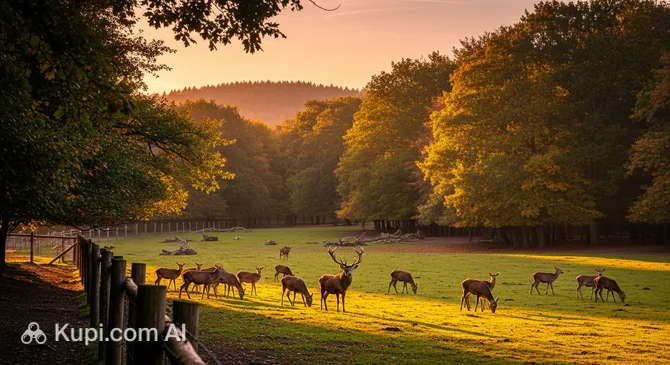
Witthausbusch Wildlife Park
Witthausbusch Wildlife Park. Иллюстрация. Источник: Kupi.com AI

Across a vast area of about 50 hectares, animals live in conditions that closely mimic their natural habitat. There are no cramped cages here—instead, there are spacious forested enclosures where deer, mouflons, and wild boars roam freely. A walk along the well-maintained trails through the Ruhr River landscapes allows you to feel like part of a wild forest while remaining comfortably close to urban infrastructure.

The reserve fulfills an important mission of regional biodiversity conservation and environmental education. Thanks to high ratings and positive reviews, it has become a popular family destination where the emphasis is on peace, tranquility, and the chance to see European forest inhabitants from the closest possible distance.

Contacts

To clarify details before your visit or to organize group tours, you can use the park's official contact information.

How to contactContact
Address45470 Мюльхайм-на-Руре, Германия
Phone+49 208 360703
Websitewww.muelheim-ruhr.de

What to Do

The main reason visitors come here is the opportunity for direct animal observation. You can wander along marked forest trails that lead to special viewing platforms. Here, deer and mouflons often approach the fences quite closely, allowing for great photos or simply the chance to admire their grace. During the summer season, the reserve often hosts guided tours that explain the unique features of the local ecosystem.

Every season brings its own unique moments to a visit. In spring, you can see adorable fawns, and in autumn, you can witness the impressive rutting season of the ungulates. For those who prefer active recreation, the territory is equipped with paths for running and cycling, while information panels with interesting facts about the fauna turn a simple walk into an educational quest.

Families with children will especially enjoy the play areas and wooden animal sculptures scattered along the paths. After the active part of your visit, you can enjoy a picnic in specially equipped clearings overlooking the forest or the river. The silence and natural sounds of nature create perfect conditions for meditation and a break from urban noise.

Getting There

Reaching this natural sanctuary is quite straightforward. If you are traveling by car, follow the B1 highway from the city center toward Dümpten, then look for the "Witthausbusch" signs. Free parking with approximately 200 spaces is available for visitors. A drive from nearby Essen or Düsseldorf via the A40 or A52 autobahns takes no more than 20–30 minutes.

For those preferring public transport, bus routes 160 and 162 run regularly from the Mülheim Main Station (Hauptbahnhof Mülheim). You should get off at the stop named "Witthausbusch"; the journey takes about 10–15 minutes. Alternatively, you can take the S-Bahn to Mülheim-Styrum station, which is about a 2-kilometer walk from the park entrance.

Active travelers might consider a bike ride. Excellent cycling paths run along the Ruhr River, leading directly to the reserve. If you decide to walk from the city center, a pleasant route of about 4 kilometers awaits, passing through scenic riverside locations.

Ближайший город: Mülheim

History & Facts

The history of this site began in the 1960s when authorities decided to create a nature conservation complex on the grounds of former hunting estates. Following the region's rapid industrial growth in the post-war period, there was an urgent need to preserve local flora and fauna, and Witthausbusch became the ideal location for restoring populations of ungulate animals.

In the 1970s, extensive landscaping work was carried out: the first walking trails were laid, and feeding stations and spacious enclosures were installed. The core idea was to create a space where environmental education could be combined with accessible recreation for city residents. This period saw the launch of the first breeding programs for native animal species, the results of which we see today.

By the 1980s, the reserve was fully integrated into the city's park system and became a favorite spot for family leisure. In the early 2000s, the area underwent a modernization phase: modern viewing platforms and interactive information stands explaining the habits of forest inhabitants were introduced. Today, the site is managed by municipal authorities and is considered a benchmark for sustainable tourism in the Ruhr region.

Interestingly, despite its proximity to industrial centers, the park has managed to fully preserve the atmosphere of a pristine forest. Animals here are kept in semi-wild conditions, allowing them to lead natural lives and giving visitors the chance to observe them without the barriers of traditional cages and bars.

Time Needed

To leisurely explore the main trails and enjoy a connection with nature, most visitors need 2 to 3 hours. During this time, you can complete a standard route of about 3–5 kilometers, take memorable photos, and observe the animals being fed.

If you are planning a trip with children, it is worth budgeting a bit more time—up to 4 hours. The presence of play areas and the chance to have a small picnic in one of the clearings make for a very relaxed visit. Also, consider the season: in warm weather, the relaxing atmosphere of the dense Witthausbusch forests often encourages visitors to stay longer.

Working Hours

The wildlife park welcomes guests six days a week. Please note that Monday is a closing day. At all other times—from Tuesday to Sunday—the park is open to visitors from 11:00 to 18:00.

It is worth keeping in mind that during the winter period and in poor weather conditions, opening hours may be reduced. Entry to the territory is free, though it is recommended to check for up-to-date information on the official website of the city of Mülheim before your visit.

DayWorking hours
понедельникЗакрыто
вторник11:00–18:00
среда11:00–18:00
четверг11:00–18:00
пятница11:00–18:00
суббота11:00–18:00
воскресенье11:00–18:00

Nearby

A visit to the wildlife park can easily be combined with exploring other interesting sites in the area. The proximity to the Ruhr River and the historic city center offers many opportunities to extend your walk.

Within a radius of a few kilometers, you will find both quiet natural spots and significant architectural landmarks of the region.

NameDistance
Witthausbusch Park0.2 km
Ruhr Beach0.7 km
Haus Dimbeck1 km
Mülheim an der Ruhr Open-Air Stage1.3 km
Saarn Abbey1.7 km
FAIR1-HEiM1.8 km
Haus Ruhrnatur1.8 km

Reached the end of the page?

That means the route is fully explored