Support

Mulheim

About

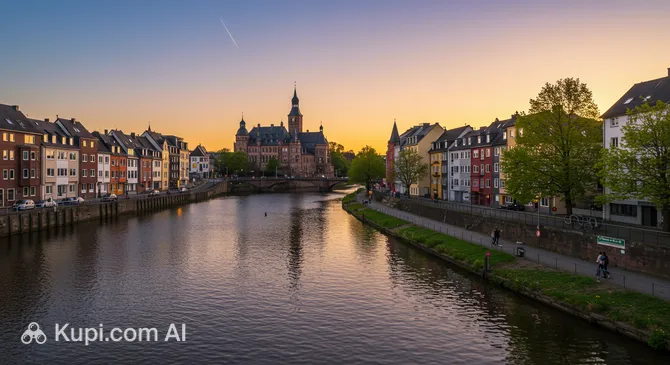
Mülheim an der Ruhr is often called the "city on the river," a name fully justified by its picturesque location. Situated in the state of North Rhine-Westphalia, this city is a perfect example of how Germany combines modern urbanism with natural beauty. Mülheim is considered one of the greenest cities in the Ruhr region, offering travelers a cozy atmosphere away from the hustle and bustle of major metropolises.

Mülheim. Illustration.
Source: Kupi.com AI

Today, it is home to over 170,000 people who take pride in the fact that more than half of the city's territory is occupied by parks, forests, and gardens. The rich history of Mülheim is reflected in its architectural appearance, where historic buildings harmoniously coexist with well-developed infrastructure. The climate here is temperate, making walks along the Ruhr River pleasant at almost any time of year.

Among the key attractions, a special place is held by Schloss Broich (Broich Castle) — one of the oldest Carolingian-era fortifications north of the Alps. Fans of unusual museums should visit the Aquarius Water Museum, located in a historic water tower, which offers panoramic views of the surroundings. Also popular is MüGa Park, laid out on the riverbank, which has become a favorite recreation spot for both locals and visitors.

Mülheim is an ideal destination for those seeking a balance between educational tourism and relaxation in nature. Be sure to include this charming city in your itinerary to enjoy its hospitality and unique charm.

Weather Overview

The climate in this region can be described as moderately warm, with mild winters and comfortable summers, making the city accessible for visits year-round. The warmest months are traditionally July and August, when the average temperature is around 19–19.5°C, and daytime maximums reach a pleasant 23.8°C. This is an ideal time for strolling along the Ruhr River and attending outdoor events.

Winters here are not severe, and heavy frosts are rare. In January and December, the average temperature stays at 4–5°C, and nightly minimums rarely drop below 1.9°C. However, you should be prepared for high humidity: December is considered the rainiest month, with up to 19 days of precipitation. Spring and autumn bring gradual warming, but an umbrella will always come in handy during your trip, as even in the driest months, there are between 12 and 15 rainy days.

Expect a warm summer with occasional rain and cool, fairly damp winters. Since the weather in Mülheim can be changeable, it's worth checking the forecast before your trip to choose suitable clothing for long walks through this green city.

Average monthly temperature

Average monthly precipitation

Interesting Facts

Beyond its main attractions, Mülheim hides many fascinating secrets that only reveal themselves to curious travelers. This city might surprise you with its water traditions, historical records, and unusual transformations of industrial areas.

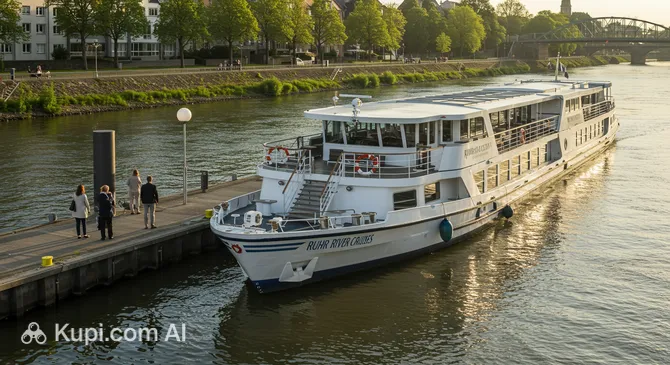
White Fleet Mülheim (Ruhr River Cruises). Illustration.
Source: Kupi.com AI

Traveler photos:

  • The legendary White Fleet of Mülheim (Weiße Flotte) is not just a tourist attraction, but a true symbol of the city. A journey aboard one of the vessels along the Ruhr River to the picturesque district of Kettwig or Lake Baldeney allows you to see the "green heart" of the Ruhr region from the water, enjoying the peace and panoramic views.

  • In the past, Mülheim held the unofficial title of "City of Leather." At the beginning of the 20th century, more than 50 tanneries operated here, and the city was considered one of the most important centers of this industry in Germany. Today, a specialized museum located in an old factory building serves as a reminder of this rich artisanal heritage.

  • Mülheim was a true pioneer of urbanism: it was here that one of the first pedestrian shopping zones in post-war West Germany was organized. This decision fundamentally changed the atmosphere of the center, prioritizing pedestrian comfort long before it became a global trend.

  • The picturesque MüGa Park appeared on the city map thanks to the 1992 Landesgartenschau (State Garden Show). The name of the park itself is curious — it is an abbreviation of "Mülheims Garten an der Ruhr" (Mülheim's Garden on the Ruhr), and today this area serves as the main green corridor linking the city to the river.

How to Get There

Mülheim, located in the heart of the Ruhr region, boasts excellent transport accessibility. Thanks to the region's developed infrastructure, travelers can choose from many route options. To plan your trip as efficiently as possible, we recommend reviewing detailed information on how to get to Mülheim by various modes of transport.

The city itself does not have its own civil airport, but this is not an issue due to the proximity of major aviation hubs. The most convenient option for arrival is Düsseldorf International Airport (DUS), which is just 17.4 km from Mülheim. It is the largest airport in the region, receiving flights from all over the world. A taxi or transfer from there will take approximately 30 minutes, making it the preferred choice.

As an alternative, you can consider Cologne/Bonn Airport (CGN). It is located a bit further away, at a distance of about 62 km, but also serves many international destinations. The journey from this airport to your destination will take about 1 hour by car.

For clarity, here is summary information on the main airports:

AirportPassenger trafficDistance
Dusseldorf International Airport20 mln17 km
Dortmund Airport3.1 mln52 km
Weeze Airport2.0 mln55 km
Cologne Bonn Airport10 mln62 km
Maastricht Aachen Airport230 93296 km

Rail service in Germany is known for its reliability and dense network. The nearest major hub is Essen Hauptbahnhof (ESZ). It is located just 9.7 km from Mülheim, making it extremely convenient for transfers; a short taxi ride or a trip on the city train (S-Bahn) takes no more than 15–20 minutes.

Many tourists also use Düsseldorf Hauptbahnhof (QDU) (23 km from Mülheim). This is one of the country's main railway stations with a huge passenger flow. Thanks to frequent connections, you can reach Mülheim from there in about half an hour.

Below is a table with data on the nearest railway stations:

StationPassenger trafficDistance
Essen Hauptbahnhof55.5 mln10 km
Düsseldorf Hauptbahnhof91.3 mln23 km
Krefeld Station24 km
Dormagen Railway Station2.2 mln36 km
Dortmund Hauptbahnhof47.5 mln41 km

Main Attractions

Mülheim an der Ruhr offers its guests a harmonious blend of historical monuments, green oases, and interesting technical structures. Steeped in the atmosphere of the river, the city invites leisurely walks and immersion in local culture. Here are several places that are definitely worth a visit.

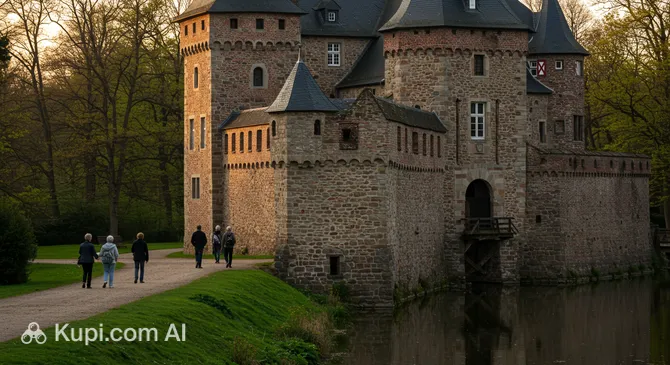
One of the city's main historical gems is Schloss Broich. This majestic structure is considered the oldest preserved Carolingian-era fortress north of the Alps, making it a unique architectural monument. Tourists are drawn here not only by the ancient walls and archaeological finds but also by the rich cultural life: the castle grounds regularly host knightly tournaments, jazz festivals, and historical celebrations that transport guests back to the Middle Ages.

Broich Castle. Illustration.
Source: Kupi.com AI

Traveler photos:

For those who want to get closer to the region's ecosystem, the House of Nature (Haus der Natur) is a must-see. This interactive museum is located in a historic building on Schleuseninsel (Lock Island). The exhibition engagingly tells the story of the river's flora and fauna, encouraging visitors not just to look, but to experiment with natural phenomena. It is an ideal spot for a family holiday where you can learn everything about the city's "green artery."

Outdoor enthusiasts should head to MüGa Park. Created on the site of former industrial zones for a garden show, today this park is the true "green heart" of Mülheim. Here you can stroll through themed gardens, see modern sculptures, and simply relax on the riverbank, enjoying the peace in the very center of the city. The park serves as an excellent example of how an industrial past can be transformed into a cozy urban space.

The Ruhr Sluice in Mülheim is also worth your attention. This hydraulic structure is interesting to watch in action as ships overcome the river's elevation changes. Nearby is the famous "Water Station" (Wasserbahnhof) — a popular departure point for river cruises, offering picturesque views of the surroundings and the river valley.

Local Cuisine

The culinary scene in Mülheim an der Ruhr is a fascinating blend of hearty Westphalian traditions and modern culinary trends. As the city is located in the heart of the Ruhr region, the local cuisine is characterized by generous portions and a love for meat dishes. However, thanks to the high standard of living in the city, you can also find exquisite fine-dining restaurants offering gastronomic experiments.

The main culinary symbol of the region, which every tourist must try, is the famous Currywurst. This is a fried sausage topped with a special ketchup and curry-based sauce, served almost everywhere: from street stalls to cozy beer gardens. If you want to try something more traditional for home cooking, look for "Pfefferpotthast" on the menu — a spicy beef stew with onions, or classic potato pancakes called Reibekuchen, which are particularly popular at street fairs and markets.

As for drinks, Mülheim, like all of Germany, has a cult following for beer. A classic Pilsner (Pils) with its characteristic bitterness is preferred here. Proximity to Düsseldorf and Cologne also brings variety: in some establishments, you can find Altbier or Kölsch. For those who prefer non-alcoholic drinks, the ideal choice is Apfelschorle — a refreshing mix of apple juice and sparkling water, loved by locals of all ages.

A feature of the dining culture in Mülheim is the opportunity to enjoy food by the water. The picturesque Mülheim Ruhrbania City Harbor has become a magnet for gourmets: here, on the promenade, there are many cafes and restaurants with open terraces. It is an ideal place to have dinner with a view of the Ruhr River and the ships passing by. In the summer, the Ruhr Beach is especially popular, where you can have a cocktail in the relaxed atmosphere of a beach club.

Despite its commitment to tradition, the city is open to the world. If you crave variety, Mülheim's gastronomic map offers many international options. For example, lovers of Asian flavors can visit the restaurant Vietnamese Cuisine TRAN, which is famous for its authenticity. Italian trattorias and Turkish snack bars are also widely represented in the city, making food choices accessible for every taste and budget.

Travel Tips

Mülheim an der Ruhr is an incredibly cozy and green city, where traveler comfort largely depends on knowing local nuances and rules. To ensure your trip goes smoothly and leaves only pleasant impressions, we have prepared a list of practical recommendations to help you feel confident from the first minutes of your stay.

  1. Clothing and Essentials. The weather in the North Rhine-Westphalia region is changeable, so the best strategy is to dress in layers (the "onion principle"). Even in summer, a light raincoat or a compact umbrella won't go amiss, as rain is not uncommon here. Since Mülheim is famous for its parks and the Ruhr embankments, be sure to bring comfortable shoes for long walks. There is no strict dress code in the city; the clothing style is casual.
  2. Transport. The city has an excellent public transport system, part of the VRR transport association. For getting around, it's most convenient to use the trams and buses of the Ruhrbahn company. It's more economical to buy day passes (Tagesticket), which also work for trips to neighboring cities like Essen. Taxis can be called via apps (such as Uber or FreeNow) or found at ranks, but this is not a cheap pleasure. Renting a car within the city limits is not necessary — public transport handles everything perfectly.
  3. Finances. The official currency is the Euro (€). Although Germany is a modern country, "cash is king" here. In small bakeries, kiosks, or souvenir shops, cards may not be accepted, so always have banknotes and coins with you. ATMs (Geldautomat) are available everywhere. Tipping in restaurants is customary at 5–10% of the bill, often simply by rounding up the amount when paying (tell the waiter the total figure you want to pay).
  4. Health and Safety. Mülheim is a safe city, and you can comfortably walk around even in the evening. However, at train stations and in crowded tourist spots, you should keep an eye on your personal belongings. Pharmacies (Apotheke) are easily recognized by the red letter "A"; they operate during normal shop hours, but every district always has a duty pharmacy open 24/7 (information about duty schedules is posted on the doors). The emergency number is 112.
  5. Communication. The primary language is German, but most locals, especially young people and service workers, speak English well. For navigation, download the DB Navigator app (for trains and buses). Free Wi-Fi is available in many cafes, shopping centers, and at the station, but for stable connectivity, it's better to buy a prepaid SIM card (e.g., at Aldi or Lidl supermarkets), for which a passport is required for activation.
  6. Local Etiquette. Germans value politeness and personal space. When entering a small shop, it is customary to say hello ("Hallo" or "Guten Tag") and goodbye ("Tschüss"). Punctuality is not a stereotype but a way of life: it's better to arrive on time for meetings and excursions. In public places, try not to be noisy, especially in the evening.
  7. What to Avoid. Never walk on bicycle paths (usually marked by color or markings on the sidewalk) — this can cause sharp displeasure from cyclists and even lead to a collision. Also, do not cross the road on a red light, even if there are no cars: locals strictly follow the rules, and such behavior is considered bad manners, especially in front of children.
  8. Useful Life Hack. Remember that Sunday in Germany is a day of rest (Ruhetag). Almost all shops, including grocery supermarkets and pharmacies, will be closed. Plan your purchases in advance, and dedicate Sunday to walks in MüGa Park, visiting museums, or relaxing in cafes, which remain open on this day.

Mülheim reveals itself to those ready to slow down and enjoy its peaceful rhythm. By following these simple tips, you can avoid minor troubles and fully immerse yourself in the atmosphere of this hospitable German city.

Entertainment & Nightlife

The nightlife in Mülheim an der Ruhr has its own unique, calm character. Unlike the boisterous parties of neighboring Düsseldorf or Essen, the atmosphere here is one of comfort and leisure. Evening entertainment in the city is focused on cultural events, waterfront dining, and traditional German pubs where you can spend time in long conversation.

The waterfront area has become a center of attraction in the evening in recent years. The picturesque Mülheim Ruhrbania City Harbor is a place where life hums until late evening. Here, along the promenade, you'll find modern bars and restaurants with open terraces. It is an ideal location for a "pre-party" or a romantic evening: you can enjoy cocktails while watching the sunset over the Ruhr River. The crowd here is diverse, ranging from young people to sophisticated couples, and the dress code is elegant casual.

For connoisseurs of cultural leisure, the Stadthalle Mülheim an der Ruhr is the primary landmark. This concert and theater complex is located on the riverbank and serves as the heart of the city's social life. It regularly hosts theatrical productions, classical music concerts, comedy shows, and gala evenings. The interiors call for evening attire, and the event program is busy year-round.

During the warmer months, the Open-air Stage Mülheim an der Ruhr (Freilichtbühne) becomes the epicenter of activity. Located in a park, this open-air venue draws hundreds of spectators for concerts, film screenings, and festivals. The atmosphere here is as democratic and relaxed as possible: many people come with families or large groups to enjoy art in the fresh air.

If you're looking for classic bars and pubs (Kneipen), it's worth checking out the historic city center (Altstadt) in the church hill area. Authentic establishments have been preserved here, serving fresh draft beer amidst a friendly bustle. Prices in Mülheim's venues are moderate: a glass of beer costs an average of 4–5 euros, while cocktails start from 8–10 euros.

Daytime entertainment in the city is also varied. In addition to strolling through the parks, shopping enthusiasts can visit HafenCenter — a modern shopping mall where you can not only shop but also grab a bite at the food court. There are also several cinemas and small galleries active in the city.

Practical tips and safety: Mülheim is a safe city, and night walks through the center or along the waterfront do not cause concern. Public transport is reliable: at night (especially on weekends), NachtExpress (NE) buses run, connecting the center with the outskirts and neighboring cities. Taxis can be found at designated stands near the station or called via an app; a ride through the city at night will cost around 15–20 euros. Most establishments close around 1:00 or 2:00 AM, so if you plan to dance until dawn, locals usually take the train to neighboring Essen or Düsseldorf.

Parks & Museums

Mülheim an der Ruhr is rightfully proud of its status as one of the greenest cities in the region: more than 50% of its territory is occupied by forests, gardens, and park areas. For travelers, this means a rich choice of nature spots for relaxation, which harmoniously coexist with educational museums that tell the story of the city's industrial and natural heritage.

The largest and most popular place for walks is Witthausbusch Park. This is a vast green area designed in the style of an English landscape garden, perfect for those who want to escape the city bustle without leaving Mülheim. There are wide avenues for jogging and walking, and large lawns for picnics. A favorite for families with children is the wildlife enclosure located within the park, where you can see deer and domestic pets in conditions close to their natural habitat.

Another gem of the city is MüGa Park, stretching right along the riverbank. Created on the site of former industrial wastelands, today it is a model of modern landscape architecture. Here you can stroll through themed gardens, each with its unique design, or simply relax by the water with a view of the city castle. For those seeking solitude, the small but cozy Darlington Park, named after Mülheim's British sister city, is ideal. It is a quiet place filled with the fragrance of flowers and an atmosphere of peace.

Mülheim's cultural program is inextricably linked with the themes of water and ecology. The main museum site in this field is the House of Nature (Haus der Natur). Located in a historic sandstone building, this museum offers an interactive immersion into the region's ecosystem. The exhibition is designed to be interesting for visitors of all ages: here you can learn about the fish that inhabit the Ruhr, the work of renewable energy sources, and even conduct your own small experiments.

No less impressive is the Aquarius Water Museum, located in an old water tower. Ascending in a glass elevator through the water tank, visitors are introduced to the history of water supply through multimedia exhibits. At the top of the tower is an observation deck offering a breathtaking panorama of the Ruhr valley and the industrial landscapes of neighboring cities.

History buffs should take note of Schloss Broich. While it is primarily an architectural monument, its walls house a historical museum containing archaeological finds that tell the story of the fortress from the Carolingian era to the present day. The castle's architecture itself, with its powerful defensive walls and towers, serves as a visual aid for the history of fortification.

Insider Tip: If you find yourself in Witthausbusch Park, be sure to find the small St. Lawrence Chapel. This place has a special, peaceful energy, and the walk to it through the old beech forest will make you feel as though you are far outside the city, in the wild.

Getting Around

The public transport system in Mülheim is characterized by high reliability, punctuality, and comfort, being part of the large Rhine-Ruhr Transport Association (VRR). The main transport operator is the company Ruhrbahn, which maintains a unified network with neighboring Essen. To get around the city, tourists most often use trams and the light rail, known here as the Stadtbahn (U-Stadtbahn). Lines U18 and 901 are a hybrid of a metro and a tram: they go underground in the city center and emerge on the surface in the outskirts, providing fast connections not only between districts but also with neighboring cities.

The bus network densely covers those corners of the city where tracks do not reach. Buses run strictly according to the schedule found at every stop. An important feature for late-night strollers is the NachtExpress network, which begins operating after midnight when the main transport stops. This allows you to return to your hotel without issues even after visiting evening events or restaurants.

The fare system is unified within the VRR tariffs. The ticket price depends on the tariff zone (Preisstufe). For trips within Mülheim, Zone A is usually sufficient. For tourists, it is most economical to purchase a Tagesticket (day ticket) (for an individual or a group of up to 5 people), which allows unlimited travel throughout the day. There are also single tickets (EinzelTicket) and short-trip tickets (Kurzstrecke) — for up to 3-4 stops.

Tickets can be purchased from orange or gray machines at stations and major stops (the menu is often available in English), at Ruhrbahn customer service centers, or from bus drivers (but only for cash and not always). The most modern method is using mobile apps such as "ZÄPP" or the "VRR App," where tickets are often slightly cheaper. Important: if you bought a paper ticket from a machine and it does not have a start date and time on it, you must validate (stamp) it before entering the carriage or immediately inside the bus/tram. Fines for fare evasion, including unstamped tickets, are quite substantial.

For route planning, it is recommended to use the DB Navigator app or Google Maps — they are perfectly integrated with local schedules. Note an important detail: doors on trams, the metro, and buses do not open automatically. To enter or exit, you must press the button on the door or handrail once the vehicle has come to a complete stop.

If you prefer an active lifestyle, Mülheim offers a great alternative — the bicycle. The city is part of the metropolradruhr bike-sharing network. Rental stations are scattered throughout the city, and registering in the system allows you to take a bike in one place and leave it in another. Given the abundance of parks and bike paths along the Ruhr River, this is not just transport, but a way to enjoy the trip. Taxis are also available (found at station ranks or called via Uber and FreeNow apps), but they are significantly more expensive than public transport.

An interesting feature of the local transport system is the U18 metro-tram line. It is notable because for a significant stretch, it runs right down the middle of the busy A40 autobahn. A trip on this route offers a unique opportunity to see the region's industrial landscape and feel the rhythm of life in the Ruhr area from the window of a comfortable carriage.

Accommodation

Where to stay:

Mülheim an der Ruhr offers travelers a balanced choice of accommodation that reflects the character of the city itself: practicality, comfort, and coziness prevail over ostentatious luxury. The core of the hotel stock consists of mid-range hotels (3–4 stars) aimed at both business travelers visiting the Ruhr region and holidaymakers. Private apartments and small guesthouses (Gasthaus) are also widely represented in the city, where you can experience the atmosphere of German hospitality.

When choosing an area to stay, you should be guided by the purpose of your trip. If transport accessibility and the ability to quickly reach neighboring metropolises are important to you, it is better to choose hotels in the city center (Innenstadt), near the main station and the HafenCenter shopping complex. This will put you in the thick of things and provide easy access to all necessary shops and cafes.

For those looking for more picturesque views and a calm atmosphere, staying near the Ruhr River is an ideal option. Hotels located near the castle or the green zone of MüGa Park offer wonderful opportunities for morning jogs and evening strolls by the water. Staying here allows you to be within walking distance of major historical sights, such as Schloss Broich, while maintaining a resort-like feel.

Important booking tip: Mülheim is in close proximity to the exhibition centers of Düsseldorf and Essen. During major international trade fairs (Messe), accommodation prices can increase several times over, and vacancies fill up very quickly. We recommend checking the exhibition calendar before your trip and booking accommodation in advance if your dates coincide with major events.

The price range in the city can be described as moderate. Budget options and hostels are less common, but prices for standard hotel rooms are usually lower than in neighboring Düsseldorf. Booking is most convenient through popular online platforms, although many small family-run hotels also take reservations directly through their websites or by email.

Nearby Cities

For those who want to explore the surroundings, Mülheim serves as an excellent starting point for day trips to several interesting nearby locations:

Just a few minutes' drive away is Essen — the cultural heart of the Ruhr region. This city is famous for its industrial heritage, particularly the Zollverein Coal Mine, which is a UNESCO World Heritage Site. Essen offers a unique blend of industrial history, modern art, and extensive park areas like Grugapark.

Fashion lovers and those seeking vibrant city life should head to Düsseldorf. The capital of North Rhine-Westphalia is known for its elegant Rhine embankment, the luxurious Königsallee shopping boulevard, and its historic center (Altstadt), often called "the longest bar in the world" due to its high concentration of pubs and restaurants.

Also very close is Duisburg, where you can see the world's largest inland port. Special attention should be paid to the Landschaftspark Duisburg-Nord — a former ironworks transformed into a unique public space where industrial structures have become part of the park landscape and light installations.

CityPopulationDistance
Oberhausen209 5668 km
Duisburg495 8859 km
Essen582 41511 km
Heiligenhaus26 36712 km
Bottrop117 38313 km

These nearby destinations allow you to get a sense of the region's diverse culture and landscapes.

Shopping & Souvenirs

Shopping:

Shopping in Mülheim an der Ruhr can be a pleasant discovery for travelers. The city offers an interesting balance between large shopping centers that attract buyers from all over the region and cozy shopping streets with a boutique atmosphere. There is no hustle and bustle of overcrowded metropolises here, allowing you to shop at a calm and relaxed pace while combining it with walks through picturesque neighborhoods.

The heart of the city's trade is the pedestrian zone along Schloßstraße in the city center. This street, stretching from the main station to the Ruhr River, is filled with shops of famous affordable brands, bookstores, and department stores. If you are looking for something more exclusive, head to the Saarn district, which locals affectionately call a "village in the city." The district's main street, Düsseldorfer Straße, is famous for its elegant boutiques, jewelry salons, and gourmet food shops, resembling a miniature version of Düsseldorf's luxury quarters.

For fans of large-scale shopping under one roof, Mülheim offers several significant locations. First and foremost is the famous Rhein-Ruhr-Zentrum (RRZ) — one of Germany's oldest and largest shopping centers, located on the border with Essen. Hundreds of shops, a cinema, and entertainment zones are gathered here. In the very center of the city, next to the station, is the modern Forum City Mülheim complex, which impresses with its architecture and convenient location.

Also worth mentioning is HafenCenter, located near the city harbor. It is a compact and convenient shopping center where you can find everything needed for daily life, from groceries to electronics, and it is perfect for quick purchases during a walk along the waterfront.

Markets give the city a special flavor. The main weekly market on Berliner Platz operates in the mornings several times a week and offers the freshest farm products, flowers, and local pastries. It's a great place to try regional cheeses or sausages. The Saarn district also hosts its own market, which features a more refined assortment and a special homely atmosphere.

Souvenirs from Mülheim often involve items related to the region's history and culture. Look out for the local beer Mölmsch, which is the pride of the city's brewing traditions. Souvenirs from the shop at the Aquarius Museum or Schloss Broich are also popular. History enthusiasts can find interesting leather goods, a nod to Mülheim's past as the "City of Leather."

Shops in Mülheim are usually open from Monday to Saturday from 10:00 AM to 8:00 PM. Large shopping centers like Forum or RRZ may stay open longer, especially on Fridays. Smaller boutiques in residential areas may close around 6:30 PM and have shorter hours on Saturdays. Sunday is a day of rest when almost everything is closed, except for bakeries and shops at the train station.

Regarding payment, major centers and supermarkets accept Visa and Mastercard without issues, as well as contactless payments. However, in small cafes, kiosks, or at the market, cash (Euros) remains the preferred, and sometimes the only, method of payment. The Tax-Free system is available for tourists from non-EU countries: look for the "Global Blue" sticker in shop windows to arrange a tax refund on purchases over a certain minimum amount.
Reached the end of the page?

That means the route is fully explored