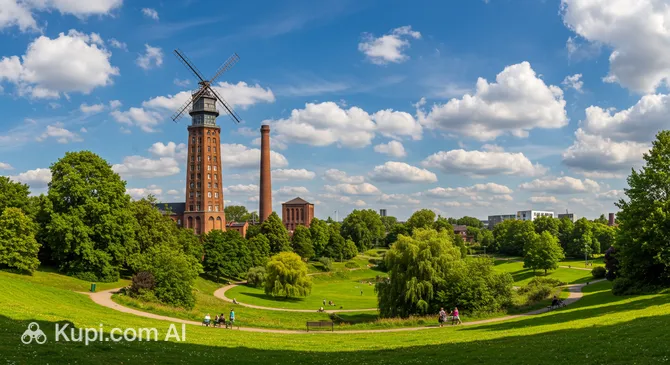
Gelsenkirchen is a surprising city located in the heart of North Rhine-Westphalia, in the west of the country. Stretching along the Emscher River, it is an essential part of the famous Ruhr metropolitan area. The city uniquely combines the heritage of a major industrial region with an abundance of green zones and parks, offering visitors both a dynamic urban rhythm and the opportunity to retreat into nature.
Gelsenkirchen. Illustration.
Source: Kupi.com AI
With a population of approximately 260,126, Gelsenkirchen is one of the significant cities in Germany. Its history is closely tied to the coal and steel industries, but today it is a modern center with a well-developed infrastructure. The city has successfully transformed itself, offering guests numerous museums, theaters, and sports facilities.
Among the main attractions of Gelsenkirchen that draw tourists, the famous Zoom Erlebniswelt zoo stands out, offering exciting thematic worlds. The city is also famous for its well-kept parks, ideal for walks and relaxation. For sports fans, a visit to the Veltins Arena, the home stadium of the legendary football club Schalke 04, is a must-see on the itinerary.
Gelsenkirchen is a place where the industrial past harmoniously intertwines with a vibrant cultural life and the cozy atmosphere of welcoming neighborhoods. Visit Gelsenkirchen to discover a city with a warm soul hidden behind industrial facades, and take home unforgettable impressions that will surely make you want to return again.
The climate in Gelsenkirchen is moderate. Summers, especially in July and August, are warm here: the average temperature stays around 18-19°C, and the maximum can reach 23-24°C. Winters are cool, with an average temperature in January and December around 3-5°C. A characteristic feature is frequent precipitation throughout the year, resulting in a high number of rainy days (from 12 to 18 per month). At the same time, the total monthly rainfall is usually small, averaging 2-3 mm. Expect warm summers with occasional light rain and cool, damp winters. For more detailed information on weather conditions, see the Gelsenkirchen climate page.
Average monthly temperature
Average monthly precipitation
Interesting Facts
Beyond its well-known landmarks, Gelsenkirchen holds many surprising stories and features that not everyone knows about. Ready to see the city from an unexpected side?
ZOOM Erlebniswelt Gelsenkirchen. Illustration.
Source: Kupi.com AI
Traveler photos:
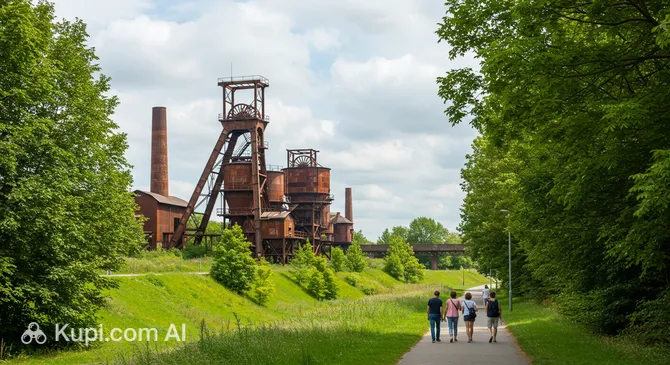
Gelsenkirchen was once called the "city of a thousand chimneys" due to its booming industrial past tied to coal mines and metallurgy. Today, many of these industrial giants have found a second life, transforming into unique cultural spaces, concert venues, and parks, such as Nordstern Park, which spans the site of a former mine.
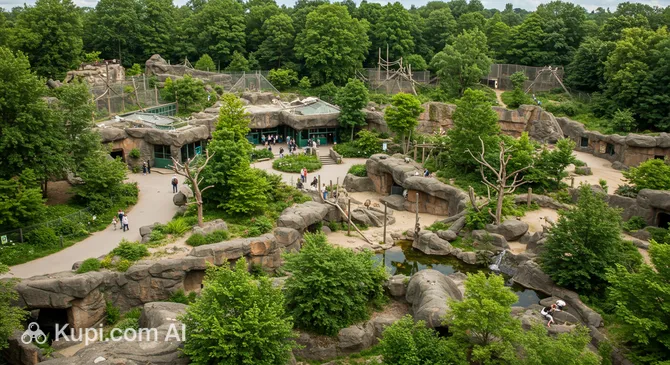
The local zoo, ZOOM Erlebniswelt Gelsenkirchen, is considered one of the most innovative in Germany. Its uniqueness lies in its division into three thematic zones—"Alaska," "Africa," and "Asia"—where conditions as close as possible to the animals' natural habitats have been created. It’s not just a zoo, but a whole journey across continents!
Gelsenkirchen is the heart of the Schalke 04 football club, whose fame resonates throughout Europe. The team's home stadium, the Veltins Arena, is one of the most modern in the world and holds over 60,000 spectators. During matches, the city literally breathes football, and devoted fans create an unforgettable atmosphere. To feel the team spirit, you can stop by the Schalke 04 Club Bar.
The city still honors its mining traditions. One such tradition is the celebration of "Miners' Day," when Gelsenkirchen remembers its industrial heritage by organizing themed events, exhibitions, and festivities for residents and visitors alike.
How to Get There
Reaching Gelsenkirchen, located in the heart of the Ruhr region in Germany, is easy via various methods, including flights to nearby international airports and train travel through the country's extensive railway network.
Several major international airports in neighboring cities are the most convenient options for flying to Gelsenkirchen. The primary and closest major airport is Düsseldorf International Airport (DUS), located in Düsseldorf, approximately 34.5 km from Gelsenkirchen. As one of Germany's largest aviation hubs, it offers train or taxi connections to Gelsenkirchen taking about 40–60 minutes. Another significant option is Dortmund Airport (DTM), situated in Dortmund, about 36.7 km away. Although smaller than Düsseldorf Airport, it also offers convenient connections, and the trip to Gelsenkirchen takes around 45–60 minutes. You might also consider Cologne/Bonn Airport (CGN), located in Cologne at a distance of about 71 km. Despite the greater distance, it is a major international airport with many flights; the journey to Gelsenkirchen from here takes about 1–1.5 hours.
For your convenience, here is a summary of the main airports serving Gelsenkirchen:
Gelsenkirchen itself has its main railway station (Gelsenkirchen Hauptbahnhof), which is well-integrated into the regional rail network and receives trains from various German cities. For a wider selection of international and high-speed (ICE) routes, it is convenient to use major hub stations in neighboring cities. The nearest such hub is Essen Hauptbahnhof (ESZ), located in Essen, just 9 km from the center of Gelsenkirchen. This is one of the Ruhr's most important stations, from which you can easily reach Gelsenkirchen by regional train (S-Bahn, RE) or taxi in just 10–20 minutes. Also worth noting is Dortmund Hauptbahnhof (DTZ) in Dortmund, about 26 km from Gelsenkirchen. This is a very large transport hub with excellent connections throughout Germany and Europe, from which Gelsenkirchen can be reached by train in about 20–30 minutes.
Below is information about some railway stations used to reach Gelsenkirchen or located in the immediate vicinity:
In addition to air and rail travel, Gelsenkirchen is easily accessible by car thanks to Germany's extensive autobahn network (e.g., A2, A40, A42). The city is also served by regional bus routes. Within Gelsenkirchen, public transport is well-developed, including trams and buses, making it easy to move around the city and its surroundings.
Main Attractions
Gelsenkirchen, known for its industrial past, now offers tourists many interesting places to visit. Among them are unique park areas and one of the best zoos in Europe.
One of the city's main gems is ZOOM Erlebniswelt Gelsenkirchen. This world-class zoo offers visitors a fascinating journey across three continents: "Alaska," "Africa," and "Asia." Each zone recreates the natural habitat of the animals with incredible precision, allowing visitors to observe them in conditions as close to nature as possible. Spacious enclosures, the absence of bars (where possible), and well-thought-out routes make a visit to ZOOM Erlebniswelt an unforgettable adventure for the whole family.
ZOOM Erlebniswelt Gelsenkirchen. Illustration.
Source: Kupi.com AI
Traveler photos:
Another iconic location is Nordstern Park. Situated on the site of a former coal mine, this park is a prime example of successful industrial land reclamation. Here, industrial heritage harmoniously combines with modern landscape design. Visitors can stroll along the Rhine-Herne Canal, relax on green lawns, visit the open-air amphitheater, or climb the former mine tower, which offers a panoramic view of the city and its surroundings. The park is interesting for its atmosphere and the opportunity to touch the history of the Ruhr region.
Nordstern Park. Illustration.
Source: Kupi.com AI
Traveler photos:
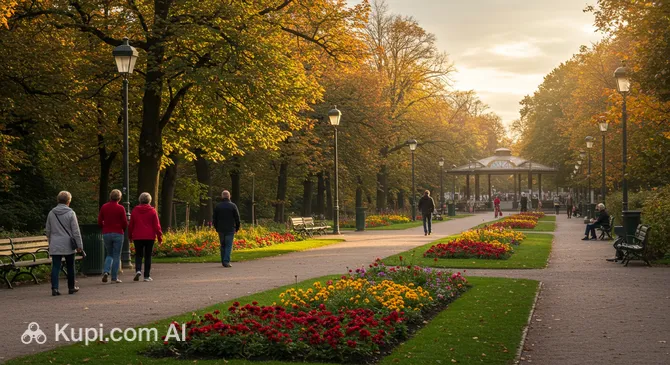
For those seeking a quiet escape into nature, Bulmker Park is an excellent choice. This traditional city park, with its picturesque lake, well-kept alleys, and playgrounds, is a favorite relaxation spot for locals. It offers a peaceful atmosphere perfect for leisurely strolls, picnics, or simply escaping the city bustle. Bulmker Park is a green oasis where you can enjoy the silence and beauty of nature in the heart of Gelsenkirchen.
Bulmker Park. Illustration.
Source: Kupi.com AI
Traveler photos:
Local Cuisine
The cuisine of Gelsenkirchen reflects its history and culture, which are closely linked to the Ruhr region. Hearty, substantial dishes that once provided strength to workers are highly valued here, and today they delight both locals and visitors with their rich flavors. The city's gastronomic scene offers both traditional German treats and modern culinary delights.
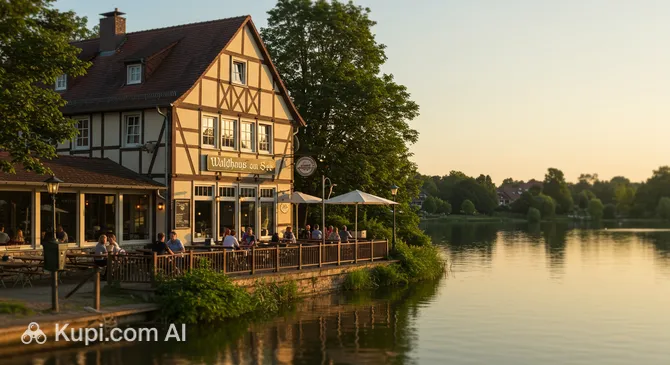
One of the symbols of street food not just in Gelsenkirchen but across all of Germany is the famous Currywurst—a savory sausage topped with a spicy curry sauce, often served with fries or a bread roll. It is the perfect option for a quick and tasty snack while exploring. Also, look out for traditional dishes like Pfefferpotthast—a thick meat stew with pepper and spices typical of Westphalia, and Grugapfanne—a hearty dish made of potatoes, bacon, and onions. These dishes are best enjoyed in traditional restaurants or gaststätten.
Waldhaus am See. Illustration.
Source: Kupi.com AI
Traveler photos:
When it comes to drinks, one cannot forget the famous German beer. In Gelsenkirchen, you will find many varieties, from classic lagers and pilsners to craft options from local breweries. Besides beer, various lemonades, juices, and, of course, coffee are popular and can be enjoyed in cozy cafes. During the cold season, traditional mulled wine (Glühwein) will keep you warm, especially if you visit a Christmas market.
The food culture in Gelsenkirchen is diverse. Locals love gathering in traditional pubs (Kneipe) and beer gardens (Biergarten), not just for the beer, but for socializing and a hearty dinner. Tourists will also appreciate the atmosphere of farmers' markets, where they can buy fresh local products like bread, cheeses, and sausages. There are many restaurants in the city offering both regional and international cuisine. For example, to enjoy traditional dishes in a pleasant setting, you can visit the Waldhaus am See restaurant. Gastronomic festivals and street fairs are also an integral part of the city's culinary life, offering a chance to try seasonal delicacies and sweets.
Travel Tips
Welcome to Gelsenkirchen! To ensure your trip to this interesting city in Germany goes smoothly and leaves only pleasant impressions, we have prepared some practical tips for you.
Clothing and Essentials for the Season: The climate in Gelsenkirchen is moderate, so layering is your best friend. In summer, bring light clothing and a jacket for the evening; in winter, a warm coat, hat, and gloves. Don't forget an umbrella or raincoat, as rain occurs throughout the year. Comfortable shoes are a must for walking around the city, and an adapter may be needed for electrical appliances (Type F sockets are used in Germany).
Getting Around Town: It is convenient to get around Gelsenkirchen using public transport—trams (Straßenbahn) and buses are at your service. The city is part of the Verkehrsverbund Rhein-Ruhr (VRR) transport association, so consider purchasing day or multi-day tickets, which can be cost-effective. Taxis are available, and apps like Free Now also work. Car rentals are useful if you plan to explore the surroundings of North Rhine-Westphalia, but for the city itself, it is not always necessary thanks to the developed public transport network.
Financial Matters: The official currency is the Euro (€). Bank cards (Visa, Mastercard) are accepted in many places, especially in large shops and restaurants, but it's always useful to have some cash for small purchases, markets, or certain cafes. ATMs (Geldautomat) are easy to find. Tipping in restaurants is welcomed (usually 5-10% of the bill or rounding up the amount) if you liked the service. It is also customary to round up the fare for taxi drivers.
Health and Safety: Pharmacies (Apotheke) are marked by a characteristic red 'A' symbol or a green cross; there are always on-duty pharmacies (Notdienst) for night or weekend cases—information about them can be found on the doors of any pharmacy. The emergency number is 112. Tourists from EU countries will find the European Health Insurance Card (EHIC) useful, while others are strongly recommended to take out travel insurance. Gelsenkirchen is generally a safe city. Follow usual precautions: watch your belongings in crowded places and be careful after dark.
Language and Communication: The primary language is German. However, English is quite common, especially among young people and in the service sector (hotels, restaurants, tourist spots). Learn a few basic phrases: "Hallo" (Hello), "Guten Tag" (Good day), "Danke" (Thank you), "Bitte" (Please/You're welcome), "Sprechen Sie Englisch?" (Do you speak English?). A SIM card with internet access can be purchased at mobile phone shops or large supermarkets. Wi-Fi is available in many cafes, hotels, and some public areas.
Local Etiquette and Customs: Greet people with "Hallo" or "Guten Tag." Germans value punctuality, so try not to be late for meetings. In residential buildings and public places, it is customary to observe quiet hours (Ruhezeit), especially after 10:00 PM and on Sundays. Give up seats on public transport to the elderly, pregnant women, and passengers with small children.
What to Avoid: Try not to be noisy or excessively loud in public places, especially during rest hours and on transport. Crossing the road in the wrong place (jaywalking) is not common and can result in a fine—always use pedestrian crossings, especially on busy streets.
Additional Tip for Gelsenkirchen: The city is famous for its football club Schalke 04. If you are interested in football, try to catch a match at the Veltins Arena or visit the club museum. Keep in mind that on match days, the city—especially the areas around the stadium—is very busy. Also, remember that many shops in Germany, including Gelsenkirchen, are closed on Sundays, so plan your shopping in advance.
We hope these tips help you better prepare for your trip and fully enjoy your stay in Gelsenkirchen. We wish you an exciting and pleasant journey!
Entertainment & Nightlife
Gelsenkirchen, a city with a rich industrial history and a deep passion for football, offers its guests and residents a variety of options for evening and night leisure. While it may not claim the title of Germany's clubbing capital, you will find cozy bars, traditional German pubs (kneipen), and interesting spots to enjoy your time after sunset.
The main hubs for evening relaxation are concentrated in the city center and around the famous Veltins Arena, which becomes particularly lively on match days. Sports fans and those seeking an informal atmosphere should visit the Schalke 04 Club Bar, where you can discuss the latest football battles over a glass of beer. Another establishment with an authentic atmosphere is the Schlegel-Krug Restaurant, offering traditional German dishes and a wide selection of drinks. For dinner in a more exotic setting, XIAO Gelsenkirchen is a great choice, known for its Asian cuisine.
Although the number of major world-renowned nightclubs in Gelsenkirchen is small, there are venues in the city where you can dance to modern rhythms or attend a themed party. For fans of live music and open-air events, the Amphitheater in Nordstern Park is a landmark location. Especially during the warmer months, it hosts concerts, festivals, and other cultural events that attract both locals and tourists. Many restaurants also stay open until late evening, allowing for a relaxed dinner experience.
Nordstern Park. Illustration.
Source: Kupi.com AI
Traveler photos:
The atmosphere in Gelsenkirchen's nightlife spots is generally friendly and relaxed. The dress code in most places is casual unless it's a special event. Bars are typically open until late at night, especially on Fridays and Saturdays, and some clubs may stay open until morning. The crowd here is diverse: from students and young people to the older generation and, of course, devoted football fans.
When planning an evening out, it's best to aim for after 8:00–9:00 PM, when venues start to fill up. Average prices for drinks and food in Gelsenkirchen are comparable to other cities in the Ruhr area. For getting around the city at night, a taxi is the most convenient option, as public transport schedules may be limited. You can call for a car by phone or find one at designated taxi stands.
Gelsenkirchen is generally considered a safe city for night walks, especially if you stick to central and well-lit areas. Nevertheless, standard precautions should not be ignored. If you happen to get lost or need help, do not hesitate to ask locals or staff members—they will likely be happy to assist you.
During the day, Gelsenkirchen also offers plenty of interesting leisure options. A visit to the world-famous ZOOM Erlebniswelt Gelsenkirchen zoo, divided into Alaska, Africa, and Asia theme zones, is a must. For fresh air, in addition to the previously mentioned Nordstern Park with its industrial past, the more traditional Bulmker Park is also excellent. The city also features theaters and museums that introduce visitors to the cultural and historical heritage of the region.
Parks & Museums
Gelsenkirchen can pleasantly surprise travelers who expect to see only industrial landscapes. The city harmoniously combines extensive green zones, created on the sites of former industrial facilities, with interesting museum collections that reveal both the region's history and the world of art.
One of the most impressive examples of landscape design is Nordstern Park. Spanning the site of a closed coal mine, this park has become a symbol of change in the Ruhr region. Here, industrial architecture sits alongside well-kept lawns and walking paths along the canal. The park's main feature is the monumental Hercules statue, installed atop a former mine tower, offering a panoramic view of the surroundings.
For those seeking solitude and a classic park atmosphere, Bulmker Park is a wonderful choice. This green oasis, created in the early 20th century, offers residents and visitors quiet alleys, a picturesque lake, and cozy picnic spots. It is the perfect place to take a break from the city bustle, enjoy the birdsong, and take a leisurely stroll among century-old trees.
The cultural life of Gelsenkirchen also deserves attention. Art lovers should visit the Gelsenkirchen Art Museum (Kunstmuseum Gelsenkirchen). Its collection ranges from classical modernism to contemporary art, but the museum is particularly famous for its collection of kinetic art—moving objects that create mesmerizing visual effects.
It is impossible to talk about the culture of this city without mentioning football. The famous Schalke Museum, located at the Veltins Arena stadium, is a place of pilgrimage for fans. The exhibition immerses visitors in the history of the legendary Schalke 04 club, telling of triumphs and tragedies, great players, and the devotion of the fans, which has become an integral part of the city's identity.
Another important point of attraction is ZOOM Erlebniswelt Gelsenkirchen. Although it is a zoo, its "journey across continents" concept makes it a true open-air cultural and educational center, where the landscapes of Alaska, Africa, and Asia are recreated with incredible accuracy.
Insider Tip: If you want to see an unusual combination of nature and art, head to the Rungenberg Slag Heap (Halde Rungenberg). After climbing the stairs, you will find yourself at the top of an artificial hill where the "Night Sign" (Nachtzeichen) light installation is located, and you can enjoy perhaps the most surreal sunset in the city.
Getting Around
Planning a trip to Gelsenkirchen? Moving around the city and its surroundings is quite simple thanks to a well-developed public transport system. It is part of the large Rhine-Ruhr transport association (Verkehrsverbund Rhein-Ruhr, or VRR), which ensures convenient transfers and a unified ticket system for the vast region.
The main modes of transport in Gelsenkirchen are trams (Straßenbahn) and buses. Tram lines connect key city districts and provide links to neighboring towns. The bus network is even more extensive, covering almost every corner of Gelsenkirchen and taking passengers where rail transport does not reach. The city also operates the Stadtbahn line U11, part of the light rail system connecting Gelsenkirchen with Essen and other cities in the Ruhr area.
The fare system within the VRR is unified. There are several types of tickets:
EinzelTicket (Single Ticket): for one trip in one direction. The price depends on the fare zone (Preisstufe). For trips within Gelsenkirchen, a Preisstufe A ticket is usually sufficient, costing approximately 3-3.50 euros.
4erTicket (4-trip ticket): slightly more economical than buying four separate single tickets.
TagesTicket (Day Ticket): allows unlimited travel throughout the day. There is an option for one person (approximate cost 7-8.50 euros for Preisstufe A) and for groups of up to 5 people.
Kurzstrecke (Short Trip): for travel over short distances (usually up to 3 bus/tram stops or 1-2 Stadtbahn stops).
Weekly and monthly passes are also available for those planning frequent use of the transport system.
Tickets can be purchased at machines at stops (payment in cash or by card), at customer service centers (Kundencenter), from bus drivers (usually only single and day tickets for cash), and through mobile apps like the VRR App or DB Navigator. Before starting your journey (or immediately after boarding if the ticket was bought from the driver), the ticket must be validated (entwerten) in special yellow or orange validation machines unless stated otherwise. An unvalidated ticket is considered invalid and can lead to a fine.
Public transport in Gelsenkirchen usually starts early in the morning (around 5–6 AM) and ends late at night (around midnight or 1 AM). On Friday and Saturday nights and before public holidays, special night buses (NachtExpress) run, providing transport even after daytime routes stop.
For tourists, day tickets (TagesTicket) might be the most convenient, especially if a lot of travel is planned. Always check the current schedule and plan your routes in advance using the official VRR website or mobile apps. This will help save time and avoid misunderstandings.
In addition to public transport, other ways to get around Gelsenkirchen include:
Taxi: can be found at special ranks or called by phone. This is a more expensive option but convenient for door-to-door travel.
Bike Rental: The Metropolradruhr bike-sharing system operates in the city and region. Renting a bike is a great way to explore Gelsenkirchen's parks and green zones, especially in good weather.
Carsharing: Some carsharing operators' services may be available, providing flexibility for independent trips.
The choice of the best way to move around depends on your plans, budget, and preferences. Gelsenkirchen's public transport offers a reliable and economical solution for most tourist needs.
Accommodation
In Gelsenkirchen, travelers will find a variety of accommodation options to suit different budgets and preferences. The city offers budget-friendly choices such as hostels and guesthouses, as well as comfortable mid-range hotels. Short-term rental apartments are also available, which can be convenient for families or those who prefer more independence.
When choosing where to stay in Gelsenkirchen, it is worth looking at areas with good transport accessibility and proximity to the sites you are interested in. Central districts of the city typically offer easy access to shops, restaurants, and some attractions. For those visiting for events or sports, accommodation near the Veltins Arena may be convenient. Areas adjacent to well-known spots like ZOOM Erlebniswelt Gelsenkirchen or Nordstern Park are also popular for their leisure opportunities.
ZOOM Erlebniswelt Gelsenkirchen. Illustration.
Source: Kupi.com AI
Traveler photos:
The price range for accommodation in Gelsenkirchen varies from economy class to more premium offers. It is recommended to book your accommodation in advance, especially if your trip coincides with major events, football matches, or peak tourist seasons, to ensure the best selection and prices. The most common booking methods are popular online platforms and hotel websites, though direct booking is also an option.
Nearby Cities
For those who want to explore the surrounding area, Gelsenkirchen serves as an excellent starting point for day trips to several interesting nearby locations:
For instance, neighboring Essen, just 8 kilometers away, offers a rich industrial heritage, including the famous Zollverein Coal Mine Industrial Complex (a UNESCO World Heritage site), as well as various museums and cultural events. Another popular option is Bochum, located about 10 kilometers away, known for its German Mining Museum and planetarium, as well as the "Starlight Express" musical, which attracts audiences from all over the country.
These nearby destinations provide a glimpse into the diverse culture and landscapes of the region.
Shopping & Souvenirs
Gelsenkirchen might not be a top destination for shopping tourism in Germany, but you can still find everything you need and bring home pleasant souvenirs. The city offers a good selection of shops, from well-known chain brands to small local stores, though it is more famous for its industrial history and football team than for exclusive boutiques.
The main shopping area in Gelsenkirchen is the city center, particularly Bahnhofstraße and its surrounding districts. This is where department stores, clothing, shoe, electronics, and cosmetics shops are concentrated. A stroll along these streets will allow you to explore the range offered by most popular German and international brands.
While Gelsenkirchen may not have giant shopping complexes like those in megacities, there are shopping centers and galleries offering various goods under one roof. These are convenient for those who want to shop in any weather and find everything they need in one place, from groceries to fashion and home goods.
The city regularly hosts weekly markets (Wochenmarkt), where you can buy fresh local produce, flowers, and some delicacies. Occasionally, you may stumble upon flea markets (Flohmarkt), where vintage items, antiques, and handmade crafts are sold—a great place to find unusual souvenirs.
When it comes to souvenirs, the most popular gift from Gelsenkirchen is undoubtedly merchandise from the local football club Schalke 04. Scarves, jerseys, mugs, and other items with the team's logo can be found in specialized shops. You can also look for traditional German souvenirs like beer steins, local handicrafts, or sweets.
Shops in Gelsenkirchen are usually open from Monday to Saturday, roughly from 10:00 AM to 7:00 PM or 8:00 PM. Large supermarkets and shopping centers may stay open later. On Sundays, most shops are closed, except for some small outlets at railway stations or gas stations. Cash (Euros) and bank cards (EC-card, Visa, Mastercard) are accepted. In small shops and markets, cash is preferred.
For tourists from non-EU countries, a Tax-Free system is available. If you make purchases over a certain amount in participating shops, you can obtain a special receipt and claim a VAT refund when leaving the EU. Check the conditions and availability of this option directly in the shops.