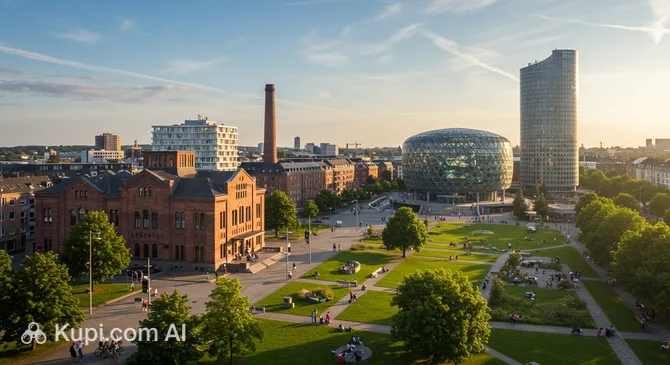
Bochum is the heart of the Ruhr region, located between Dortmund and Essen. It is a city where an industrial past is harmoniously interwoven with a cultural present, creating a unique atmosphere. If your goal is to see Germany in all its diversity, then Bochum will be a great discovery, demonstrating the transformation of a major industrial center into a cozy and modern space for living and tourism.
With a population of about 364,000 people, this city is an important educational and cultural hub of the state of North Rhine-Westphalia. Bochum grew on fertile lands between the Emscher River and the hills of the Bergisches Land. Today, it is known for its democratic spirit: thanks to a large university and numerous creative spaces, it's easy to feel at home here while enjoying the energy of change.
Bochum. Illustration.
Source: Kupi.com AI
Once, Bochum's history revolved exclusively around coal mining and steel production, but today these pages of the past have been transformed into fascinating museum exhibitions. The city knows how to surprise: former industrial giants coexist with green parks, and the old Town Hall neighbors modern art objects.
Travelers should definitely visit the famous industrial monuments and gaze at the stars in the futuristic planetarium. Art lovers will appreciate the local theaters, while families with children will have a great time at the zoo. You can end the day in one of the atmospheric pubs serving the legendary local beer. Bochum is a place where everyone will find something for themselves, whether it's historical mysteries or gastronomic pleasures.
Weather Overview
The climate in Bochum can be characterized as temperate and mild, without extreme temperature fluctuations, which makes the city accessible for visits all year round. Summer here is pleasant and not too hot: in July and August, average daytime temperatures reach a comfortable 23°C. This is an ideal time for walking among industrial monuments in the open air and relaxing in green areas.
Winters in the region are cool but rarely severe. In the coldest month, January, the temperature usually ranges from 1.7°C to 5.7°C. Snow falls infrequently, but rain is a constant companion of the local weather in any season. To choose the best dates for your visit and get your wardrobe right, we recommend checking the current weather in Bochum before planning your trip.
In general, expect a warm summer with occasional rain and cool, damp winters. It's worth considering that precipitation is distributed fairly evenly throughout the year, but December often becomes the rainiest month (up to 19 days with precipitation), while April and May please with drier and clearer days.
Average monthly temperature
Average monthly precipitation
Interesting Facts
Bochum holds many fascinating secrets that go far beyond the typical guidebook. This city, once an industrial giant, today surprises travelers with world records and unique cultural phenomena.
It is home to the German Mining Museum — the world's largest museum institution dedicated to mining. Its uniqueness lies in the fact that visitors can descend into a real underground mine and see with their own eyes the working conditions of miners from previous centuries.
Bochum is home to the most successful musical in the world running in a single venue. The legendary Starlight Express, where all the actors perform on roller skates, has been running here continuously since 1988. This phenomenon is even listed in the Guinness World Records, and a special theater was built for the production.
The city's nightlife center has the intriguing name "Bermuda Triangle" (Bermuda3Eck). This quarter has an incredible concentration of bars, cafes, and restaurants. Local legend says that it's easy to "get lost" here until the morning, enjoying the atmosphere of an eternal holiday.
The city is inextricably linked with the name of the popular musician Herbert Grönemeyer, whose album "Bochum" became one of the best-selling in the history of German music. The song dedicated to the city has become an unofficial anthem that locals know by heart and sing with special pride.
German Mining Museum. Illustration.
Source: Kupi.com AI
Traveler photos:
How to Get There
When planning a trip to the Ruhr region, it's worth thinking about your route in advance. Thanks to the region's dense transport network, getting to your destination is easy. You can find more details on how to get to Bochum by considering various options, but most tourists prefer a combined route: a flight to one of the neighboring metropolitan areas and a short trip by train or car.
For international travelers, the most convenient option is Düsseldorf International Airport (IATA: DUS). It is located about 38.5 km from the city and receives flights from major airlines worldwide. From the airport, you can reach Bochum on a direct S-Bahn or Regional Express train, which takes less than an hour, or take a taxi.
An alternative option is Dortmund Airport (IATA: DTM), located just 27.8 km away. This airport is popular with European low-cost carriers, making it an excellent choice for budget travel. Its proximity to the city allows you to quickly reach the center by shuttle bus or car.
Below is information about the main airports in the region:
The railway service in Germany is famous for its efficiency and density of coverage. The city has its own central station — Bochum Hauptbahnhof, which receives both regional and some high-speed long-distance trains (ICE/IC). This allows for a comfortable arrival from almost anywhere in the country.
The nearest major transport hubs are in Essen (Essen Hauptbahnhof) and Dortmund (Dortmund Hauptbahnhof). These stations are key hubs where trains from all over Europe arrive. From there, you can reach Bochum by suburban train (S-Bahn) or Regional Express (RE) in just 10–15 minutes. Thanks to the frequent schedule, the wait for a transfer is usually minimal, making the trip fast and untiring.
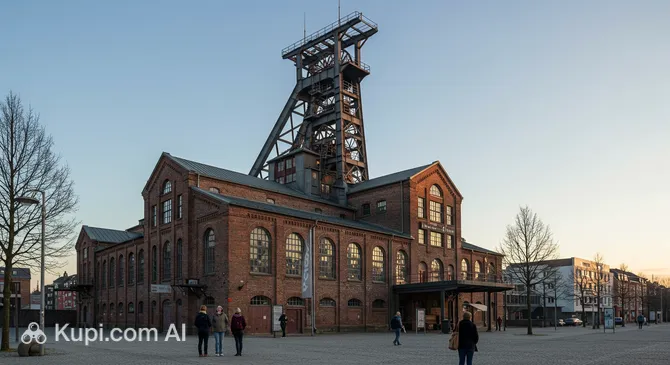
Bochum offers its guests a rich cultural program where industrial giants of the past sit alongside nature and modern technology. A visit to the city is unimaginable without seeing its main symbol — the German Mining Museum. This is not just an exhibition, but a real immersion into the world of mineral extraction: here you can descend into a demonstration mine underground to feel the atmosphere of the miners' labor, or climb to the top of the famous headframe for a breathtaking panorama of the entire Ruhr region.
German Mining Museum. Illustration.
Source: Kupi.com AI
Traveler photos:
For those fascinated by the mysteries of the universe, the Zeiss Planetarium Bochum is a must-visit. Equipped with advanced projection systems, it is considered one of the most modern in the world. Under its huge dome, not only educational astronomical shows are held, but also musical performances that create a full immersion effect into outer space.
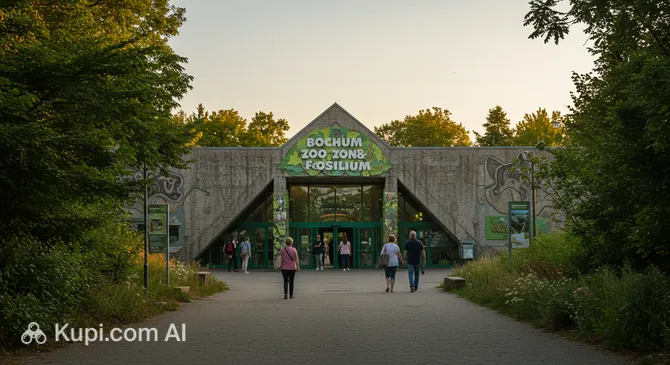
Nature lovers and families with children should check out the Bochum Zoo and Fossilium. This unique place combines modern fauna with evolutionary history: next to the enclosures inhabited by seals, penguins, and meerkats, there is an impressive collection of ancient fossils. The zoo is located in the center of the city park, making it an ideal spot for a quiet and educational stroll.
Bochum Zoo and Fossilium. Illustration.
Source: Kupi.com AI
Traveler photos:
To see the city from an unusual perspective and enjoy the fresh air, head to Tippelsberg. This green hill, created through land reclamation, has turned into a popular recreation area with hiking trails. From its summit, a magnificent view of the surrounding area opens up, which is especially impressive at sunset. And for a vibrant end to the evening, Varieté et cetera is perfect, offering guests exciting acrobatic shows, comedy, and gastronomic delights.
Local Cuisine
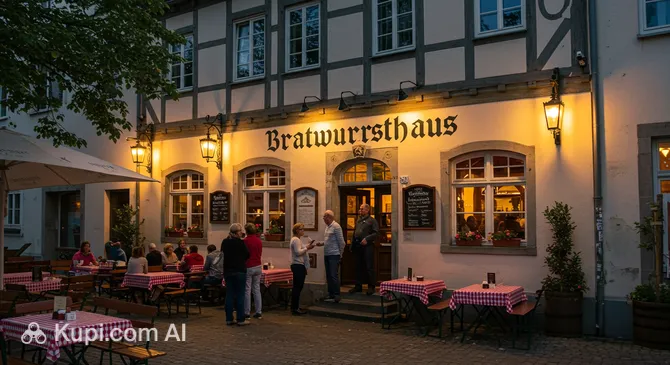
Bochum's gastronomic scene is a fascinating blend of hearty Ruhr region traditions and modern culinary trends. Simple, honest food from working-class neighborhoods and refined new-wave dishes are equally loved here. The main culinary symbol of the city is undoubtedly the Currywurst. This sliced fried sausage topped with a spicy tomato sauce and curry powder is prepared here with special care. Many locals and tourists head specifically to the famous Bratwursthaus to try what is perhaps the best version of this dish in the region.
Bratwursthaus. Illustration.
Source: Kupi.com AI
Traveler photos:
Fans of traditional German cuisine should look out for "Pfefferpotthast" — a thick meat stew with plenty of pepper and onions that has been prepared in Westphalia for centuries. This dish is perfect for warming up in cool weather and is often served with pickled cucumbers and boiled potatoes. At street fairs and markets, be sure to try "Reibekuchen" — crispy potato pancakes usually eaten with applesauce or, for a heartier version, with smoked fish.
Speaking of drinks, it's impossible not to mention the local pride — the private brewery Moritz Fiege. Their beer with its characteristic swing-top bottle is an integral part of the city's culture. The light Fiege pilsner is the most popular choice in local pubs and beer gardens. During the warmer months, the streets come alive thanks to beer festivals, where tasting the foamy beverage turns into a real celebration of socializing and fun.
For those who prefer buying fresh products or want a snack on the go, Markthalle Bochum is an excellent place. An atmosphere of gastronomic abundance reigns here: farmers offer fresh vegetables, regional cheeses, bread, and meat delicacies. The street food culture in the city is very developed: from cozy food trucks to bustling snack bars — no one goes hungry in Bochum.
Travel Tips
To ensure your trip to Bochum goes smoothly and leaves only pleasant impressions, it's worth knowing some local peculiarities in advance. This city, combining industrial heritage and student energy, is very hospitable, but like everywhere in Germany, order and preparedness are valued here.
Clothing and essentials. The weather in the Ruhr region is changeable, so the best strategy is to dress in layers (the "onion principle"). Be sure to bring a waterproof jacket or umbrella, as rain is not uncommon here at any time of year. For walks through industrial museums and parks, choose very comfortable flat shoes — you'll be walking a lot, sometimes on cobblestones or gravel. There is no strict dress code in the city; the clothing style is democratic and casual.
Transport. Public transport in Bochum works excellently and is part of the unified VRR (Verkehrsverbund Rhein-Ruhr) system. For getting around, it's most convenient to use the metro (U-Bahn), trams, and buses. Renting a car inside the city is not necessary and can be burdensome due to finding parking. Important: when buying a ticket from a machine, don't forget to validate it before your trip, otherwise you risk a heavy fine.
Finance. The official currency is the Euro (€). While credit cards (Visa, Mastercard) are accepted in many places, Germany remains a country where people love cash. In small bakeries, kiosks, or traditional pubs (Kneipe), cards may not be accepted at all, or only local EC-cards. Always have a small supply of cash with you. Tips are not automatically included in the bill: it's customary to simply round up the amount or add 5–10% for good service.
Health and safety. Bochum is a safe city, but as in any major transport hub, you should be more careful with your belongings around the main station (Hauptbahnhof), especially after dark. Pharmacies are easy to recognize by the sign with a red letter "A". They work during normal store hours, but in each district, there is always one on-duty pharmacy open 24/7 (information can be found on the door of any closed pharmacy).
Communication. The official language is German, but thanks to the large number of students, many locals, especially young people and service workers, speak English well. For navigation and transport schedules, download the DB Navigator or VRR App. Free Wi-Fi is available in many cafes and the city center, but for stable connectivity, it's better to purchase a local prepaid SIM card at a supermarket or mobile shop (passport required for registration).
Local etiquette. When entering small shops or an elevator, it's customary to say hello (a simple "Hallo" or "Guten Tag" is appropriate). Germans value personal space and punctuality: being even 5 minutes late is considered impolite. In public places, try not to be noisy, especially in the evening and on Sundays.
What to avoid. Never walk on bicycle paths! In Bochum, as in all of Germany, cyclists are full participants in traffic, and they ride fast. Stepping onto a bike path (usually marked by color or tiles on the sidewalk) is not only dangerous but will also cause strong dissatisfaction among locals. Also, do not cross the road on a red light, even if there are no cars — this is considered bad form, especially if children are nearby.
Extra tip. Remember "Ruhetag" (Day of Rest). On Sunday, almost all shops, supermarkets, and pharmacies (except those on duty) are closed in Bochum. Only cafes, restaurants, museums, and bakeries (in the morning) are open. Plan your grocery shopping and retail errands in advance so you're not left without essentials on your day off.
By following these simple recommendations, you can easily blend into the rhythm of life in Bochum and feel confident in any situation. Enjoy the atmosphere of the Ruhr region, its unique culture, and hospitality!
Entertainment & Nightlife
Bochum is rightfully considered one of the nightlife centers of the entire Ruhr region. Thanks to its status as a university city, there is a young and energetic atmosphere here that only quiets down toward morning. The epicenter of the fun is the legendary Bermuda3Eck ("Bermuda Triangle"). This is a pedestrian zone in the city center where more than 60 gastronomic establishments, bars, and clubs are concentrated in an area of just a few square kilometers. In summer, tables are set out on the street, and the entire district turns into one big open-air party.
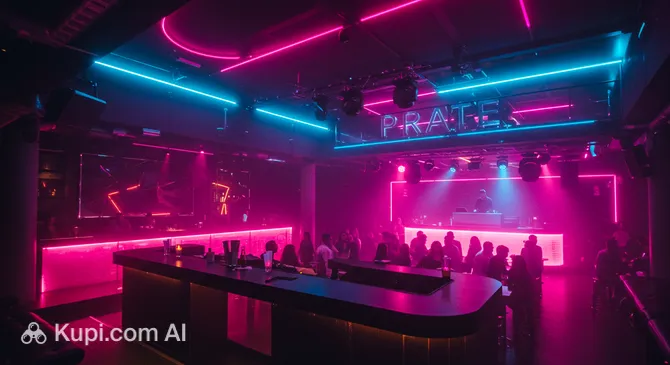
If you are looking for large-scale dance events, you should visit Prater. This is not just a nightclub, but an entire entertainment complex with several dance floors, each offering its own musical style — from current charts and house to hits of the 80s and 90s. The venue is known for its themed parties and high-quality sound, attracting partygoers from all over the region.
Prater. Illustration.
Source: Kupi.com AI
Traveler photos:
For those who prefer a more relaxed setting or want to start the evening with a cocktail, Flex Bar Bochum is an excellent choice. It is a popular meeting place for students and locals where you can play table football (kicker), drink beer at affordable prices, and socialize in a casual atmosphere. Hookah lovers and those seeking lounge areas should check out Huqqa Shisha Bar, which offers a wide selection of tobaccos and a cozy interior for long conversations.
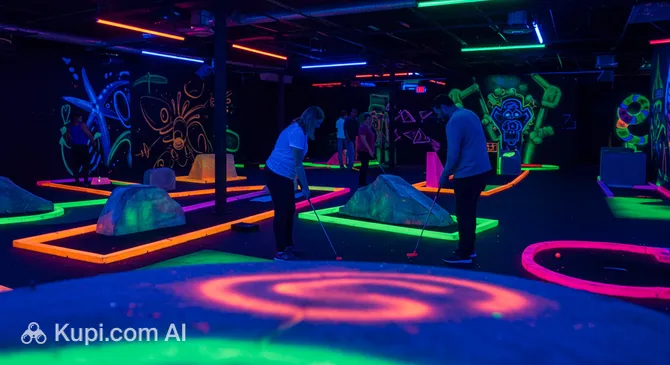
Bochum's nightlife is not limited to just dancing and drinks. If you're looking for an unusual way to spend an evening with friends, head to Glow25 - Neon Indoor Minigolf Bochum. Playing with 3D glasses among glowing decorations creates a surreal atmosphere and provides plenty of vivid emotions. And connoisseurs of performing arts and gastronomy will enjoy an evening at the Varieté et cetera theater, where dinner is accompanied by breathtaking acrobatic and comedy acts.
Blacklight Mini Golf Bochum. Illustration.
Source: Kupi.com AI
Traveler photos:
Practical tips for tourists:
Opening hours: Bars in the "Bermuda Triangle" start filling up around 8:00 PM – 9:00 PM. Clubs open their doors closer to 11:00 PM, but the peak of the fun happens around 1:00 AM.
Dress code: In most bars, the dress style is completely casual. For large clubs like "Prater," it's better to dress a bit more stylishly (smart casual), avoiding tracksuits.
Prices: Bochum is an affordable city. A glass of beer costs an average of 3.50–5 euros, cocktails from 7 to 10 euros. Club entry can cost from 5 to 15 euros depending on the event.
Safety and transport: The Bermuda3Eck area is well-lit and patrolled, making it safe to walk at night. To get home, it's convenient to use the Night Express buses (routes marked NE), which run on weekends, or call a taxi via popular apps (Uber, Free Now).
During the day, Bochum offers a calmer but no less interesting leisure experience. The cultural program can include a visit to the drama theater (Schauspielhaus Bochum), which is among the best in Germany, or strolls through picturesque parks. History and technology buffs will enjoy spending time in industrial culture museums, while families can visit the city zoo before the city plunges back into the lights of nightlife.
Parks & Museums
Bochum is a city that successfully breaks the stereotypes of the "gray" industrial zone of the Ruhr region. Today, it is one of the greenest places in the area, where industrial heritage harmoniously coexists with extensive landscape gardens, and museum collections cover everything from the depths of the earth to distant stars. Cultural life here is in full swing, offering tourists routes that combine educational recreation and walks in the fresh air.
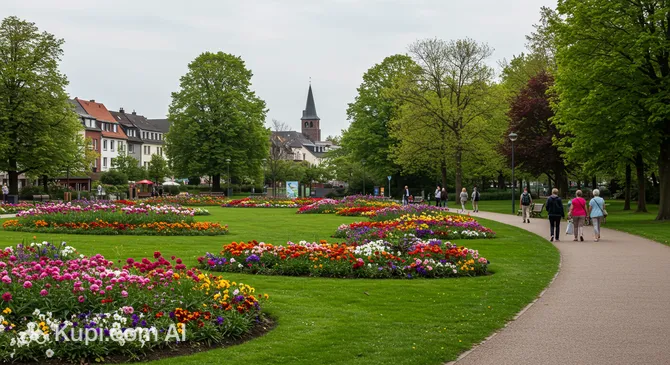
Among the city's green oases, Stadtpark Bochum (City Park) holds a special place. This is the oldest landscape garden in the Ruhr region, designed in the English style as far back as the 19th century. Here you can not only enjoy the silence among centuries-old trees and a rose garden but also climb the historical Bismarck Tower, which offers views of the surroundings. The park is perfect for leisurely walks after a busy day in the city center.
Bochum Park. Illustration.
Source: Kupi.com AI
Traveler photos:
For those seeking more panoramic views and unusual landscapes, Tippelsberg is a mandatory stop. This hill is a vivid example of how nature reclaims space: a former construction waste site has turned into a popular recreation area with hiking trails. From the top of the hill, perhaps the best panorama of the Ruhr Valley opens up, making this place particularly attractive at sunset.
The city's museum map is incredibly diverse. The main magnet for tourists remains the German Mining Museum, which allows you to understand the very essence of the region. These are not just exhibition halls, but an opportunity to go underground and feel the atmosphere of a mine. The above-ground part of the museum is impressive for its architecture and huge collection of machinery telling the history of mining.
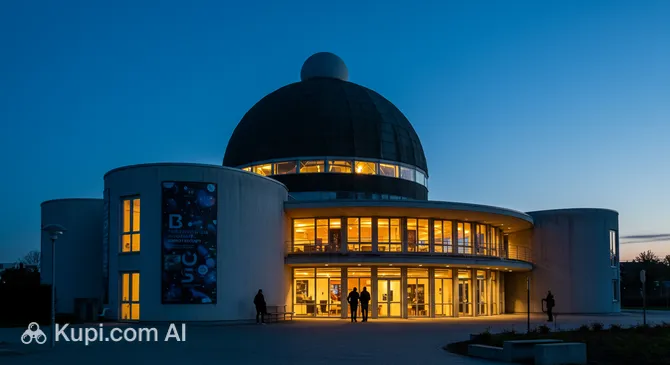
Space and technology fans should visit Zeiss Planetarium Bochum. Thanks to one of the most modern projectors in the world, the building's dome transforms into a realistic starry sky. Astronomical lectures and music shows regularly take place here, creating a unique audiovisual experience for spectators of all ages.
Planetarium Bochum. Illustration.
Source: Kupi.com AI
Traveler photos:
The cultural route should also include the Kunstmuseum Bochum (Bochum Art Museum), located near the city park. It specializes in 20th-century and contemporary art, offering bold and interesting exhibitions. And for a family visit, the Bochum Zoo and Fossilium is a great fit, where observing live animals is combined with studying fossils in a unique museum of evolution.
Among the architectural monuments, the historical Town Hall stands out with its famous cast-steel bell, a reminder of the city's industrial power. Also worth noting is the pilgrimage church in the Stiepel district (Stiepeler Dorfkirche) — a preserved monument of medieval architecture with ancient paintings that transports visitors centuries back.
Insider tip: If you have time, head to the Botanical Garden of the Ruhr University. There you will find a real Chinese Garden — a corner of Eastern tranquility created by Chinese masters. This is a place not all tourists know about, providing an amazing sense of peace and perfect for beautiful photos.
Getting Around
The public transport system in Bochum is characterized by punctuality and a high degree of integration. The city is part of the "Rhine-Ruhr" transport association (Verkehrsverbund Rhein-Ruhr or VRR), which allows using a single ticket for all types of transport: metro (U-Bahn), trams, buses, and even regional trains (S-Bahn) within the paid fare zone. This eliminates the need for tourists to understand different operators and fares for every transfer.
The backbone of urban mobility is the light rail and metro network. The most famous and busiest line is the U35, which locals call the "CampusLinie." It connects the central station with the Ruhr University and the popular recreation area at Lake Kemnader. A feature of Bochum's transport is that in the city center, many tram lines go underground, functioning as a full-fledged metro, while on the outskirts, they come to the surface, providing fast communication between districts.
A zonal system applies for fare payment. For trips within the city, you will need a ticket for fare zone A (Preisstufe A). Tickets can be purchased at machines at stations (they have menus in several languages), at Bogestra customer service centers, or from bus drivers (but only for cash and not always). Buying via mobile apps like "VRR App" or "DB Navigator" is gaining popularity, which is often a bit cheaper and more convenient as it saves searching for change.
A critical point for tourists: a paper ticket bought from a machine often needs to be validated (stamped) before the start of the trip. Look for small orange or red validator boxes on the platforms or at the entrance to the transport. A ticket without a time stamp is considered invalid, and the fine for fare evasion (Schwarzfahren) in Germany is quite substantial — usually 60 euros. If you bought a ticket in an app, it is activated immediately or at the selected time, and you don't need to stamp it.
Transport runs according to a schedule that is very strictly observed. Daytime routes usually operate from 5:00 AM until midnight. On weekends and holidays, they are replaced by "Night Expresses" (routes designated NE), which run every hour, taking late-night visitors from the Bermuda3Eck district home. This makes the city's nightlife accessible and safe even without using a personal car.
As an alternative to public transport, bicycle rental is well-developed in Bochum. The Metropolradruhr system allows you to rent a bike at one station and return it at another; stations are scattered throughout the city, including tourist spots and the university. Electric scooters from popular sharing services are also available. Classic taxis can be found at special stands at the station or called via apps (e.g., Uber or Free Now), but a trip will cost significantly more than on the comfortable metro or bus.
Accommodation
Where to stay:
Bochum offers travelers a wide range of accommodation options, varying from functional business hotels to cozy private apartments. Since the city is not a typical resort, it's hard to find luxury five-star complexes with pools; however, the middle-class segment is excellently developed. Most hotels focus on comfort, cleanliness, and practicality, making them a great choice for both business trips and those exploring the Ruhr region.
The most convenient area for tourists to stay is the Innenstadt (City Center). By staying here, you will be within walking distance of the main railway station (Hauptbahnhof) and the famous "Bermuda Triangle" entertainment district. This is an ideal location for those planning to use public transport actively or wanting to be in the thick of the evening's events. If you prefer quiet and proximity to nature, consider options in the Stadtpark (City Park) area or closer to the Ruhr University, where quieter guesthouses and apartments prevail.
Pricing in Bochum is generally more democratic than in neighboring Düsseldorf or Cologne.
Budget segment: Hostels and inexpensive pensions offer overnight stays from 40–60 euros. This is a good choice for students and backpackers.
Middle class: A standard double room in a 3-4 star hotel will cost around 80–120 euros. Most of the city's chain hotels fall into this category.
Apartments: Renting apartments through online platforms is becoming increasingly popular, especially for families or groups of friends who want to save on meals and live "like locals."
Important booking tip: While finding a free room is usually no trouble, the situation changes dramatically during major trade fairs (Messe) in neighboring Essen or Düsseldorf. During these periods, thanks to excellent transport links, Bochum becomes a "bedroom community" for fair visitors; prices skyrocket, and rooms run out weeks in advance. Therefore, if your trip coincides with large events in the region, book your accommodation in advance, ideally 2–3 months beforehand.
For searching and booking, it's most convenient to use major international online aggregators where you can read reviews and compare prices. Direct booking on hotel websites can sometimes offer a small discount or free breakfast, so it's worth checking this option before making a final decision.
Nearby Cities
For those looking to explore the surroundings, Bochum serves as an excellent starting point for day trips to several interesting nearby places. Thanks to the dense urban development and the unified transport system of the Ruhr region, the trip to neighboring metropolitan areas takes very little time, allowing you to easily change scenery and gain new experiences.
Just 14 km to the west lies Essen — a city often called the cultural heart of the region. The main attraction here is the Zollverein Coal Mine Industrial Complex (Zeche Zollverein), a UNESCO World Heritage site. It's not just an industrial monument, but a real masterpiece of architecture and design. Also in Essen, it's worth visiting Villa Hügel — the grand residence of the Krupp industrialist dynasty, surrounded by a huge park, and the Museum Folkwang with its rich collection of 19th and 20th-century paintings.
To the east, at a distance of about 18 km, is Dortmund. This city is world-famous for its passion for football: it's home to the famous Signal Iduna Park stadium and the German Football Museum. However, Dortmund is not just about sports. Travelers can stroll through the extensive Westfalenpark, climb the Florian Tower for a panoramic view, or explore the history of brewing at the local brewery museum.
For a family vacation, Gelsenkirchen is an excellent choice. Although the city is also famous for its football traditions, tourists are drawn here by ZOOM Erlebniswelt — a unique zoo divided into climatic zones (Alaska, Africa, and Asia), where conditions as close as possible to the animals' natural habitats have been created.
These nearby destinations offer a glimpse into the diverse culture and landscapes of the region.
Shopping & Souvenirs
Shopping:
Shopping in Bochum is a pleasant combination of practicality and variety. Unlike posh Düsseldorf with its luxury boutiques, a more democratic atmosphere prevails here. The city offers excellent opportunities for updating your wardrobe in popular brand stores as well as for finding unique items in small shops. A feature of local shopping is the presence of one of Germany's largest open-air shopping centers, which attracts shoppers from all over the Ruhr region.
The heart of urban commerce is the pedestrian zone in the center, especially Kortumstraße. It stretches from the main station through the entire center and is filled with department stores, clothing, shoe, and cosmetic shops. Here you will find familiar European mass-market brands. While walking along this busy artery, it's worth turning into side alleys, such as Huestraße, where more specialized shops and cozy cafes for a break are hidden.
If you prefer large-scale shopping in one place, Bochum will not disappoint. Outside the center is the famous "Ruhr Park" — a huge open-air mall where shopping turns into a stroll. Within the city limits, Hannibal Center is also popular. This is a large shopping complex located on the site of a former industrial facility where you can find everything from food and electronics to sports goods and clothing. Its convenient location and large parking area make it an excellent choice for those who value time.
Lovers of gastronomic discoveries and fresh products should visit the local markets. The main attraction for foodies is Markthalle Bochum. A special atmosphere reigns in this historical building: here you can not only buy farmer's cheeses, meat, and delicacies but also have a delicious snack right at the counters. On Tuesdays and Fridays, a classic weekly market unfolds on the square in front of the Town Hall (Dr.-Ruer-Platz), where locals buy seasonal vegetables and flowers.
As souvenirs from Bochum, tourists often take home items related to the region's industrial history. Miner figurines, pieces of coal in beautiful packaging, or traditional "Schlägel und Eisen" (hammer and pick) symbols are popular. A beer mug or glass from the local brewery Moritz Fiege makes a great gift. Football fans don't leave without a scarf or shirt from the VfL Bochum club, and those with a sweet tooth will appreciate chocolate or gingerbread with the city's symbols.
Shops in the city center are usually open from Monday to Saturday from 10:00 AM to 8:00 PM. Large shopping centers may stay open longer, often until 9:00 PM or 10:00 PM, especially on Fridays. Sunday is a day off when absolutely everything is closed, except for some bakeries in the morning and shops at the station. Payment by card (Visa, Mastercard) is widespread in shopping centers and chain stores, but in small shops and at markets, it's better to have cash euros on hand.
Tourists from non-EU countries can use the Tax Free system. If the purchase amount in one store exceeds 50 euros, ask the salesperson to issue a Tax Free Form. You can get part of the VAT back when flying out of the airport by presenting the forms and unopened purchases at customs.