Support

Schloß Broich

About

Imagine a place where the stones remember the times of Carolingian kings and Viking raids. In the heart of Mülheim stands Schloss Broich (Broich Castle) — a unique historical complex recognized as the oldest surviving Carolingian defensive structure north of the Alps. This fortress, which traces its history back to the 9th century, is today a major source of pride that Germany carefully preserves in this region.
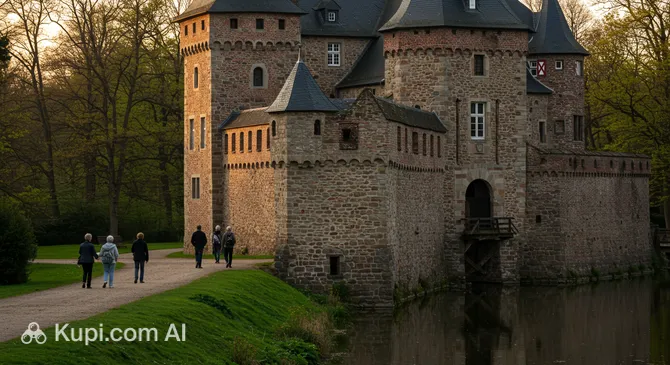
Broich Castle
Broich Castle. Иллюстрация. Источник: Kupi.com AI

The architectural style of the castle is a fascinating journey through the centuries. Here, austere medieval walls and a 17-meter keep stand alongside elegant neoclassical elements added in the 18th century. Following meticulous restoration, visitors can see the exposed foundations of the original fortress, making Broich an invaluable site for fans of archaeology and history.

Today, the castle walls house the Mülheim an der Ruhr Historical Museum. Surrounded by a picturesque park on the banks of the Ruhr River, the castle has evolved from an impregnable citadel into a welcoming cultural center. It is the perfect destination for those who want to touch authentic medieval history and enjoy a peaceful walk in a historical setting.

Contacts

For information about special exhibitions or organizing guided tours, you can use the official contact details below.

How to contactContact
AddressAm Schloß Broich 28, 45479 Mülheim an der Ruhr, Germany
Phone+49 208 9609616
Websitewww.schloss-broich-muelheim.de

What to Do

The main reason to step inside is the Mülheim an der Ruhr Historical Museum. In its halls, you will find a rich collection of archaeological finds, detailed models of the castle at different periods of its existence, and rare documents telling the story of its owners' lives. Be sure to look for the exposed 9th-century Carolingian foundations — a rare opportunity to see masonry from the time of Charlemagne.

Architecture enthusiasts will enjoy studying the contrasts between the massive keep and the neoclassical western wing. You can peer into the inner courtyards and residential buildings to imagine how the daily lives of the fortress's inhabitants changed over a thousand years. Walking through the grounds around the castle is a pleasure in itself: paths lead through a well-kept park directly to the Ruhr riverbank, providing excellent photo opportunities against the backdrop of the ancient walls.

If you're lucky, you might catch one of the many cultural events. Schloss Broich often serves as a stage for knightly tournaments, medieval fairs, jazz festivals, and theatrical performances. Even when the museum is quiet, the very atmosphere of the place, steeped in the history of the von Broich and von Daun-Falkenstein dynasties, leaves an unforgettable impression.

Getting There

The castle is located at Am Schloß Broich 28 in Mülheim an der Ruhr. Reaching it from nearby major cities like Düsseldorf or Essen is easiest by train. Travel to Mülheim (Ruhr) Hauptbahnhof station; the journey takes about 20–30 minutes. From the station, take tram No. 301 or 302 and get off at the Schloß Broich stop — you will arrive at the site in 5–10 minutes.

For those traveling by car, the A40 or A52 autobahns are the most convenient routes. Parking for visitors is available near the castle complex. If you are arriving at Düsseldorf Airport, a taxi or rental car ride will take approximately 30–40 minutes.

Active travelers can enjoy a walk from the center of Mülheim — the path along the scenic banks of the Ruhr River takes no more than 20–30 minutes. The castle is also a popular point on the Ruhr Valley cycle routes, so arriving by bike is a fantastic idea.

Ближайший город: Mülheim

History & Facts

The history of this site began in the spring of 884 AD, when Henry of Franconia established a fortification here to defend against Viking raids. Schloss Broich is rightfully considered the oldest preserved Carolingian fortification north of the Alps. Its historical significance is highlighted by the fact that in 923, it hosted a meeting between King Henry the Fowler and the French monarch Robert I.

In the 12th century, the castle gained a new owner — the Archbishop of Cologne, Philip I von Heinsberg, who purchased it for 400 marks and significantly strengthened it by erecting a 17-meter keep (donjon) and a powerful curtain wall. Over the centuries, the fortress endured many trials: it withstood a siege in 1240 and was heavily damaged by Spanish troops in 1598, yet it rose from the ruins each time, changing its appearance to suit the tastes of new owners from the noble von Broich and von Daun-Falkenstein dynasties.

In the 18th century, the austere fortress began its transformation into an elegant residence. At the invitation of Maria Luise Albertine, the famous French architect Nicolas de Pigage worked here, introducing elements of classicism to the castle's facade. Later, in the 19th century, the castle transitioned from a noble seat to the private property of banker Eduard Stöcker, and since 1938, it has been owned by the city.

World War II left its marks on the walls of Broich, but an extensive restoration under the direction of Professor Günther Binding between 1967 and 1974 not only restored the structure but also uncovered the unique 9th-century Carolingian foundations. In 1975, the castle reopened its doors to the public, becoming Mülheim's primary historical symbol.

Time Needed

To leisurely explore the castle grounds, visit the halls of the Historical Museum, and walk through the adjacent park, you will typically need about 2–3 hours. This is sufficient time to examine the ancient foundations and enjoy the architectural details of different eras.

If your visit coincides with one of the cultural festivals or concerts frequently held within the castle walls, you should set aside half a day. On such days, the atmosphere of the medieval fortress comes alive, and you will likely want to stay longer.

Working Hours

Schloss Broich is open to visitors daily, making it easy to include in your travel itinerary on any day of the week. The complex's opening hours are:

Monday – Sunday: 8:00 AM to 8:00 PM.

Please note that the opening hours of the Historical Museum may differ from the general access times for the castle grounds, so it is best to plan your visit for the first half of the day if you wish to see the exhibitions.

8:00 – 20:00

Nearby

Mülheim an der Ruhr offers many interesting locations within walking distance of the castle. A stroll through the surrounding area allows you to see both the region's industrial heritage and its charming historical district.

NameDistance
Darlington Park0.1 km
Stadthalle Mülheim an der Ruhr0.2 km
MüGa Park0.3 km
Mülheim Ruhrbania City Harbor0.4 km
Alte Dreherei0.5 km
White Fleet Mülheim (Ruhr River Cruises)0.6 km
Ruhr Lock Mülheim0.6 km

Reached the end of the page?

That means the route is fully explored