Support

Freilichtmuseum Mühlenhof in Münster

About

Imagine being able to travel back several centuries in an instant to an authentic Westphalian village. This is exactly the journey offered by the Mühlenhof Open-Air Museum, located in the picturesque city of Münster. This unique complex in Germany spans five hectares of land on the shores of the man-made Lake Aasee, inviting guests to immerse themselves in the world of peasant life and ancient crafts.
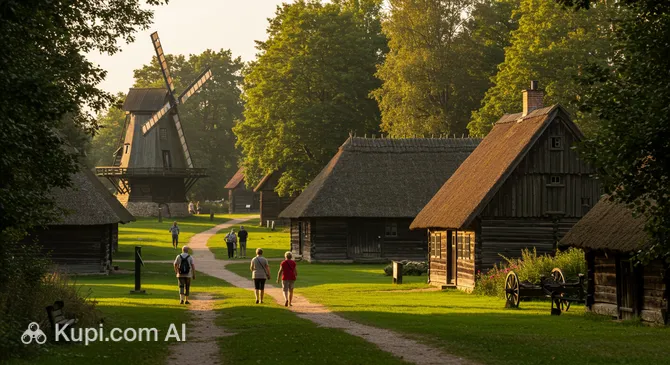
Mühlenhof Open-Air Museum
Mühlenhof Open-Air Museum. Иллюстрация. Источник: Kupi.com AI

The heart of the museum consists of 30 historic structures collected from various corners of the region. Here, you can see a majestic 18th-century windmill, an old village school, a church, a forge, and even a traditional inn. These are not just stage sets — each building was carefully moved and restored, preserving the smallest details of the interiors, furniture, and tools used by people hundreds of years ago.

Mühlenhof is famous for its ability to bring history to life. It is a place where the tranquility of nature harmoniously blends with educational leisure. Strolling through the "museum village," visitors can feel the rhythm of their ancestors' lives, see authentic Westphalian architecture, and enjoy a peaceful atmosphere away from the city bustle.

Contacts

To plan your visit and inquire about special events, you can use the museum's official communication channels. The administration is available to answer questions regarding group tours and venue rentals.

Below is the essential contact information for the site:

How to contactContact
AddressTheo-Breider-Weg 1, 48149 Münster, Germany
Phone+49 251 981200
Websitewww.muehlenhof-muenster.org

What to Do

At Mühlenhof, history literally comes to life beneath your feet. One of the most fascinating activities here is the free exploration of historic estates and workshops. You can enter every house to examine the massive oak furniture, old kitchen hearths, and even the clothing worn by Westphalian peasants. The atmosphere is so authentic that it's easy to imagine yourself as a village resident from centuries past.

Special attention should be paid to the demonstrations of traditional crafts. You can see a blacksmith at work in a real forge or peek into a locksmith's workshop. Interactive activities are often held for both children and adults, such as lessons in the old village school, where you can try writing with a slate pencil on a board and hear the sounds of the Low German dialect. The melodies of barrel organ grinders, occasionally heard on the grounds, add a special fairytale charm to the place.

Don't forget to stop by the local village inn for a snack in a historical setting, or visit the apiary, where you'll be introduced to the secrets of ancient beekeeping. If the weather is nice, be sure to combine your cultural program with a rest by the water: the museum borders the beautiful park at Lake Aasee, making your walk as diverse and pleasant as possible.

Getting There

Reaching this picturesque corner of history is easy, as it is located right next to a popular recreation spot for locals — Lake Aasee. If you prefer public transport, you can take the city buses; the nearest stops are within walking distance, making the journey from the center quick and convenient.

For those who value comfort, a taxi is always available from the central station or any point in the city center. The ride takes about 10–15 minutes. If you are traveling by car, there is a convenient parking area located near the museum entrance.

Many tourists choose to reach the museum by bicycle, as Münster is rightfully considered the bicycle capital of the region. The route along the dedicated paths by the lakeshore turns a simple trip into a pleasant stroll. A walk from the city center takes about 30–40 minutes and allows you to fully enjoy the local park landscapes.

Ближайший город: Munster

History & Facts

The history of this remarkable place began in 1961. The first and most iconic exhibit was an 18th-century windmill, which was carefully transported from the Emsland region. This "Mill Court" — which is exactly what the name Mühlenhof translates to — laid the foundation for the future museum complex.

Over the following decades, the museum grounds expanded continuously. Authentic historic buildings were brought in from all over Westphalia. Each of the 30 structures standing today underwent a complex process of dismantling and reconstruction at the new site. Notable among them are a village school from 1823 from the Steinfurt district and a cozy village church dating back to 1840.

The interior contents of the houses are of particular value. The museum's creators aimed not just to preserve the walls, but to recreate the lifestyle of bygone eras. All interior items, clothing, and tools are authentic artifacts from the 17th to the 20th centuries, making Mühlenhof one of the most detailed historical sites in the region.

Interestingly, some of the peasant estates featured are among the oldest surviving residential buildings in Germany. Thanks to the efforts of restorers and historians, visitors today can see a living picture of how the rural culture and crafts of Münsterland developed over the centuries.

Time Needed

To leisurely explore the entire 5-hectare territory and look inside each of the thirty historic buildings, it is recommended to set aside 2 to 4 hours. This is plenty of time to get acquainted with the main exhibits and enjoy a bit of relaxation in nature.

If your visit coincides with workshops, old-style school lessons, or folklore festivals, you should plan for half a day. This is especially true for families with children, who will surely be interested in the craft demonstrations and a walk along the scenic lakeshore.

Working Hours

When planning your visit to the museum, please note its opening schedule. The site is open to visitors from Wednesday to Sunday, offering plenty of time for a full tour during the day.

Opening Hours:

  • Monday — closed;
  • Tuesday — closed;
  • Wednesday – Sunday: 10:00 AM – 6:00 PM.
During the winter period (November–February), opening hours may be reduced, so it is recommended to check for current information before your visit.

DayWorking hours
ПонедельникЗакрыто
ВторникЗакрыто
Среда10:00 – 18:00
Четверг10:00 – 18:00
Пятница10:00 – 18:00
Суббота10:00 – 18:00
Воскресенье10:00 – 18:00

Nearby

The museum's location on the shores of Lake Aasee allows tourists to combine a visit to the ethnographic village with other interesting local sites. The surrounding area is rich in cultural and entertainment options that perfectly complement your city itinerary.

You can take a walk to the university castle or visit the main squares of the historic center, located just a couple of kilometers away. Below is a list of nearby attractions:

NameDistance
LWL Museum of Natural History and Planetarium0.5 km
Allwetter Zoo Münster0.6 km
Botanical Garden of the University of Münster1.7 km
Münster Palace1.8 km
Schlossplatz1.9 km
Westphalian State Museum of Art and Cultural History2.2 km
Pablo Picasso Art Museum Münster2.2 km

Reached the end of the page?

That means the route is fully explored