Support

St.-Paulus-Dom

About

In the heart of the historic center, on the spacious Domplatz square, rises St. Paul's Cathedral—the primary spiritual landmark that Münster is rightfully proud of. This monumental church is the cathedral of the bishopric and one of the most important architectural monuments in the Westphalia region of Germany.
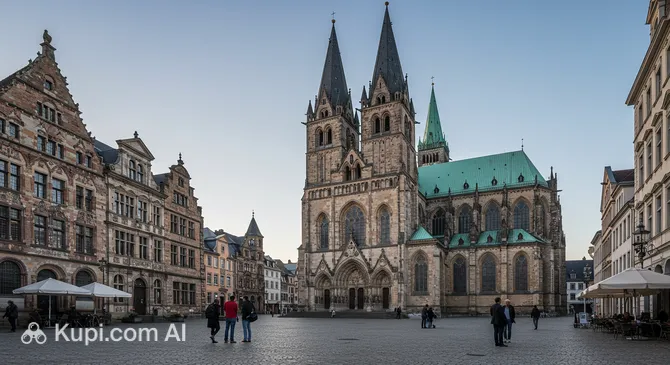
St. Paul
St. Paul's Cathedral (Münster). Иллюстрация. Источник: Kupi.com AI

The current cathedral building, begun in the 13th century, is an impressive example of the transition from Romanesque style to Gothic. Its monumental towers and high vaults are visible from many points in the city, serving as a reminder of the region's rich historical heritage. Inside the cathedral, an atmosphere of tranquility prevails, and the light passing through the ancient stained-glass windows creates a wonderful play of colors on the ancient stone walls.

St. Paul's Cathedral is not just a religious building, but a true open-air museum where masterpieces of medieval art, unique mechanisms, and priceless relics are gathered under one roof. It serves as a symbol of the city's resilience and rebirth, attracting thousands of pilgrims and architecture enthusiasts from all over the world.

Contacts

To plan your visit to the city's main cathedral, it is worth checking its contact details in advance. This will help you find your way or check the times for special events and services.

Below is the essential information for contacting the cathedral administration and its exact location in the historic center.

How to contactContact
AddressDompl. 28, 48143 Münster, Germany
Phone+49 251 4956700
Websitewww.paulusdom.de

What to Do

The main attraction inside the cathedral is the legendary 16th-century astronomical clock. This highly complex mechanism not only shows the exact time but also tracks the phases of the moon, the positions of the planets, and even the signs of the zodiac. Every day at noon, you can watch a small mechanical performance: as the chimes ring, the Magi pass by the figure of the Virgin Mary, while figures of Chronos and Death remind viewers of the fleeting nature of existence.

Be sure to look for the Triumphal Cross, made of oak, and the majestic sculpture of Saint Christopher—the patron saint of all travelers. Music lovers will appreciate the three church organs, whose sound during services or concerts fills the entire cathedral with incredible energy. The interior decoration is also impressive, featuring carved altars and surviving fragments of ancient frescoes.

Leaving the cathedral, you will find yourself on Domplatz, which hums with its own vibrant life. On Wednesdays and Saturdays, a traditional farmer's market unfolds here, where you can taste local delicacies, buy fresh flowers, and feel the true rhythm of Westphalian life. On holidays, the square becomes a venue for concerts and city celebrations.

Getting There

The cathedral is easy to find as it is located in the pedestrian zone in the very heart of the city. If you arrive at the main station, Münster Hauptbahnhof, a walk to Domplatz will take about 10–15 minutes through picturesque streets. For those who prefer public transport, buses (lines 1 to 15) run regularly from the station and stop directly at Domplatz.

As Münster is rightfully considered the bicycle capital of Germany, renting a bike is an excellent option—it is the most popular and convenient way to get around for locals. If you are traveling by car, it is recommended to leave it in one of the parking lots outside the historical ring, as access to the cathedral itself is restricted.

Ближайший город: Munster

History & Facts

The history of this site dates back to the beginning of the 9th century when, in 805, Saint Ludger, the city's founder, laid the foundation for the first church here. Since then, the cathedral has been rebuilt several times. The second church, erected during the Ottonian era, was seriously damaged by a devastating fire in 1090, but its parts became the foundation for a future architectural masterpiece.

The current building of St. Paul's Cathedral began to take shape in 1225. Construction continued for nearly 40 years, and in 1264, Bishop Gerhard von Mark solemnly consecrated the new cathedral. The architects managed to harmoniously incorporate fragments of the old Romanesque towers into the new majestic Gothic appearance, creating a unique multi-layered style for the building.

Over the centuries of its existence, the cathedral has endured many trials, including the Reformation and significant destruction during the Second World War. However, thanks to a meticulous restoration completed in the post-war years, today we can see the temple almost in its original medieval grandeur, carefully preserving the spirit of ancient Westphalia.

Time Needed

To tour the cathedral's interiors, study the details of the famous astronomical clock, and soak in the silence of the ancient vaults, it usually takes about 1.5–2 hours. This is enough time to leisurely walk through the main chapels and examine the sculptures.

If your visit coincides with market days (Wednesday or Saturday) or you plan to climb the tower and stroll across Domplatz, you should add at least another hour to your time. Visiting the cathedral is a great way to take a break from a busy sightseeing schedule and enjoy art from different eras.

Working Hours

St. Paul's Cathedral is open to visitors daily. On weekdays and Saturdays, you can enter from 6:30 AM to 7:00 PM. On Sundays, the cathedral doors open for tourists a bit later, from 12:00 PM to 6:00 PM, due to the morning solemn services.

Please note that sightseeing may be limited during services, so it is recommended to plan your visit between masses. The tower climb also has its own schedule, which depends on the season, so it's worth checking the official website for up-to-date information before your visit.

Nearby

The cathedral's location in the city's historic core allows tourists to easily combine their visit with other iconic sites. A walk around the area will offer many interesting discoveries: from ancient market squares to cozy corners with monuments to local heroes.

Many of the key attractions are just a few minutes' walk away, making this area an ideal starting point for a walking tour.

NameDistance
Cathedral Square (Domplatz) Münster0.1 km
Kiepenkerl Monument0.1 km
Münster Weekly Market0.1 km
Prinzipalmarkt0.2 km
Historic City Hall0.2 km
Westphalian State Museum of Art and Cultural History0.2 km
Church of Our Lady (Überwasserkirche)0.2 km

Reached the end of the page?

That means the route is fully explored