Support

Haus Rüschhaus

About

If you are looking for peace and historical charm, be sure to visit this cozy corner. Haus Rüschhaus is a magnificent example of late Baroque architecture, located just a few kilometers from the city center of Münster. The estate, built in the mid-18th century, served as the private residence of the famous architect Johann Conrad Schlaun, who managed to embody in stone the perfect balance between rural comfort and aristocratic dignity.
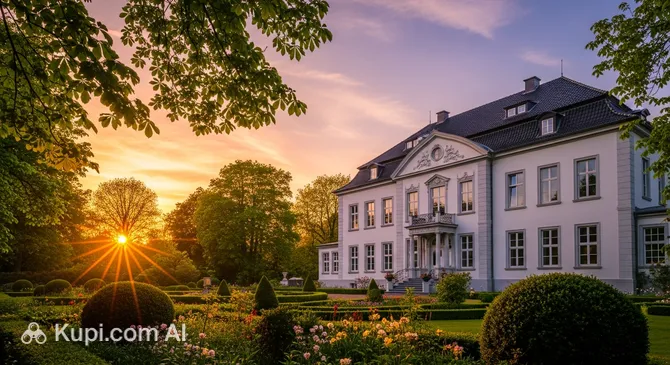
Haus Rüschhaus
Haus Rüschhaus. Иллюстрация. Источник: Kupi.com AI

For many travelers visiting this part of Germany, this place is primarily associated with the name of the great poetess Annette von Droste-Hülshoff. Today, it houses a museum dedicated to her life and work. The building, surrounded by a traditional moat and masterfully restored gardens, looks like a living set for an old novel.

The uniqueness of the site lies in its Gräftenhof architectural design—a typical Westphalian manor on an island. The combination of red brick, light sandstone, and the garden's strict geometric forms makes Haus Rüschhaus a true gem of the region, attracting both literature lovers and connoisseurs of fine architecture.

Contacts

To plan your visit to Haus Rüschhaus, it's helpful to have current contact information on hand. The manor is located in a picturesque suburb, and it is recommended to check details on the official resource before your trip.

How to contactContact
AddressAm Rüschhaus 81, 48161 Münster, Германия
Phone+49 2534 1052
Websitewww.haus-rueschhaus.de

What to Do

The main impression of the visit is the opportunity to glimpse into the private life of the past. Inside Haus Rüschhaus, you can explore carefully preserved rooms with their original furniture, exquisite stucco, and wood paneling. A special place in the exhibition is occupied by Annette von Droste-Hülshoff's private study—a small, cozy room that the poetess herself affectionately called the "snail shell". The spirit of creativity and solitude can still be felt here today.

In addition to exploring the interiors, it's worth taking time for a stroll around the grounds. The restored Baroque gardens, designed by Schlaun himself, invite you to quiet reflection among the sharp lines of hedges and flower beds. It's an ideal spot for those who appreciate landscape design aesthetics and want to take beautiful photos against the historical facade.

For active tourists, a visit to the estate often becomes part of a larger cycling route. The surrounding Münsterland landscapes, with their flat terrain and picturesque paths, turn the journey to the house into a pleasant outdoor adventure. At the museum itself, you can also learn about materials dedicated to Schlaun's architectural projects, which shaped the appearance of the entire region.

Getting There

There are several ways to reach this architectural monument, located in the Nienberge district. The most popular and authentic option among locals is a bicycle ride. Dedicated paths lead from the city center directly to the manor gates, allowing you to enjoy the typical landscapes of the Münsterland region.

If you prefer public transport, buses run regularly from the city center. You can also use a taxi, which takes about 15–20 minutes from the main railway station. For those traveling by car, there is a small parking lot at Am Rüschhaus 81, although spaces may be limited on weekends.

Ближайший город: Munster

History & Facts

The history of this place dates back to the 14th century when the lands belonged to the bishops of Münster. However, Haus Rüschhaus acquired its current appearance thanks to the outstanding architect Johann Conrad Schlaun. Between 1745 and 1749, he transformed the old estate into his exquisite country residence, masterfully blending the features of a farmhouse with those of an aristocratic manor.

A new chapter in the house's history began in 1825 when it was purchased by the von Droste zu Hülshoff family. It was here, from 1826 to 1846, that the great German poetess Annette von Droste-Hülshoff lived and worked. Within these walls, she created her most significant works, including the famous novella "The Jew's Beech" (Die Judenbuche). The surrounding silence and seclusion served as her main source of inspiration.

In 1936, the city purchased the estate, recognizing its immense cultural value. Despite the turbulent events of the 20th century, the building remained virtually undamaged, preserving its authentic atmosphere. Since 1979, a special foundation has taken over the preservation of this heritage, turning the former residential manor into a modern literary center and museum.

Time Needed

To leisurely explore the house's interiors and stroll through the picturesque garden, most visitors need about 1.5 to 2 hours. This is quite enough time to soak up the 19th-century atmosphere and study the museum's exhibition in detail.

If you plan to arrive by bicycle as part of a longer route through the surrounding area, it's worth setting aside extra time to relax in the garden. The peaceful setting of Haus Rüschhaus invites you to linger a bit longer, enjoying the quiet and the classical Baroque architecture.

Working Hours

The opening hours of Haus Rüschhaus may vary depending on the season, as well as special cultural events or poetry readings. As it is an active museum complex, access to the interiors is sometimes only possible as part of a guided tour group.

Before you set off, we strongly recommend visiting the manor's official website or checking the current schedule at a tourist information center. This will help you plan your visit in advance and ensure you don't miss the chance to see the famous "snail shell" from the inside.

Nearby

A visit to Schlaun's country residence can easily be combined with exploring other interesting sites. The surrounding area offers a rich variety—from majestic castles to modern entertainment centers—allowing you to create a full day's itinerary.

NameDistance
Botanical Garden of the University of Münster4.7 km
Allwetter Zoo Münster4.9 km
Münster Palace4.9 km
LWL Museum of Natural History and Planetarium4.9 km
Schlossplatz5 km
Mühlenhof Open-Air Museum5.1 km
Church of Our Lady (Überwasserkirche)5.4 km

Reached the end of the page?

That means the route is fully explored