Support

Schloss Münster

About

Imagine a majestic Baroque ensemble that is not just an architectural monument, but a pulsating center of student life. Münster Castle (or the Prince-Bishop's Palace) is an architectural gem located in the historical center of the city of Münster. This three-winged complex, built in the second half of the 18th century, serves today as the main building of the University of Münster, harmoniously combining historical grandeur with a modern educational environment.
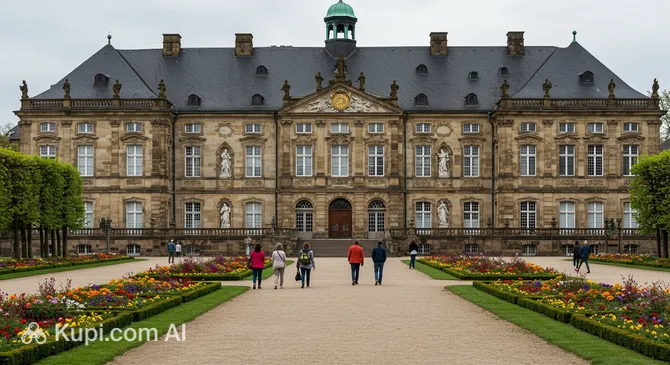
Münster Palace
Münster Palace. Иллюстрация. Источник: Kupi.com AI

For a traveler visiting Germany, this site is the perfect place to discover North German Baroque. The red brick and light sandstone facade, decorated with elegant sculptures and columns, creates a solemn atmosphere, while the surrounding park invites you for a leisurely stroll.

Today, Münster Castle is more than just a museum piece; it is a living space hosting lectures, exhibitions, and significant cultural events. Its high rating among tourists confirms it as one of the most photogenic and atmospheric locations in the region.

Contacts

To contact the administration of the University of Münster, located within the castle, or to inquire about events, you may use the official contact details provided below.

Here is the essential contact information for planning your visit:

How to contactContact
AddressSchlosspl. 2, 48149 Münster, Germany
Phone+49 251 8332860
Websiteuni-muenster.de

What to Do

Start your visit with a walk across Schlossplatz—the vast square in front of the palace, which offers the best panoramic view of the Baroque facade. This is the perfect spot for classic photographs, especially in clear weather when the intricate details designed by Johann Conrad Schlaun are most visible. Don't forget to look at the monument to Kaiser Wilhelm I, which stands majestically before the entrance.

Be sure to walk around the building to enter the English landscape park. Here you can feel the calm atmosphere of a university campus, observe student life, and enjoy the peace away from city traffic. The Botanical Garden is located on the park grounds, featuring preserved fragments of the old citadel bastions—it’s a wonderful place for botanical discoveries and secluded relaxation.

Inside the castle itself, which is an active educational institution, open lectures and temporary exhibitions are frequently held. Even if you don't plan to attend a class, it's worth peeking into the halls to appreciate the austerity and elegance of the Classicist interiors created by Lipper. During the summer, cultural festivals and open-air concerts often transform the palace square into the center of the city's social life.

Getting There

Finding your way to the castle is easy, as it is located at Schlosspl. 2, right in the heart of the city. If you arrive at the main station, Münster Hauptbahnhof, a walk to the palace square will take about 15–20 minutes. For those preferring public transport, you can take bus lines 1, 2, 3, 10, or 11—get off at the Universitätsallee stop. City buses also run regularly to Schlossplatz.

Münster is widely considered Germany's bicycle capital, so renting a bike is an excellent choice. Convenient cycle paths lead to the castle, and there is ample bicycle parking available at the building. If you are traveling by car, paid parking spaces can be found in the university zone and surrounding streets, though these are often occupied during term time.

For travelers arriving from Münster/Osnabrück Airport (FMO), the journey takes about an hour: first by train or express bus to the main station, followed by a short route through the historic center directly to the majestic palace facade.

Ближайший город: Munster

History & Facts

The history of this grand structure began on August 26, 1767, when the foundation stone was laid at the initiative of Bishop Maximilian Friedrich von Königsegg-Rothenfels. The palace was built on the site of the former Paul's Castle, which had been severely damaged during the Seven Years' War. The project was designed by the famous architect Johann Conrad Schlaun, who envisioned a perfect Baroque ensemble complemented by a formal French garden.

Following Schlaun's death in 1773, Wilhelm Ferdinand Lipper took over the construction. He introduced his own adjustments to the residence: the interiors took on Classicist features, and the strict French garden was redesigned into the English landscape park that was fashionable at the time. In the 19th century, the castle ceased to be a bishop's residence and passed to the Prussian authorities, becoming the administrative center of Westphalia.

The 20th century brought great trials to the castle. In 1945, the building was almost completely destroyed. While British occupation authorities considered demolishing the ruins, the city's residents were persistent in saving the monument. Reconstruction began as early as 1946; symbolically, the first rooms to be restored were the lecture halls. Since 1954, Münster Castle has officially served as the main building of the university, transforming from a symbol of power into a symbol of knowledge.

Time Needed

To simply enjoy the view of the Baroque facade and take memorable photos at Schlossplatz, you will need about 30–45 minutes. This is enough time to appreciate the scale of the architectural design and walk along the main building.

If you plan a more detailed visit—including a stroll through the shaded alleys of the university park, a visit to the Botanical Garden located behind the palace, or viewing temporary exhibitions—it is best to set aside 1 to 2 hours. For those who wish to combine the castle visit with a full walk through Münster’s historical center, including the City Hall and the Cathedral, allocating half a day (about 3-4 hours) is ideal.

Working Hours

Since the castle building is an active administrative and academic hub of the university, access to its interior is limited to a specific schedule. The following areas are open to visitors during these hours:

Monday – Thursday: 10:00 – 12:30 and 15:00 – 18:00.
Friday: 10:00 – 12:30.
Saturday and Sunday: Closed.

Please note that access to the palace park and the external facade is available at any time; however, the interior rooms and the Botanical Garden may close earlier or be unavailable during official university events.

DayWorking hours
Понедельник10:00 – 12:30, 3:00 – 18:00
Вторник10:00 – 12:30, 3:00 – 18:00
Среда10:00 – 12:30, 3:00 – 18:00
Четверг10:00 – 12:30, 3:00 – 18:00
Пятница10:00 – 12:30
СубботаЗакрыто
ВоскресеньеЗакрыто

Nearby

Exploring the area around the castle will allow you to further immerse yourself in the atmosphere of this historic Westphalian city. Most of Münster's key cultural landmarks are within walking distance, making this district ideal for a walking tour.

Be sure to visit the Cathedral Square and wander through the historic streets, where every facade tells a centuries-old story. Below is a list of interesting sites located nearby:

NameDistance
Schlossplatz0.1 km
Botanical Garden of the University of Münster0.2 km
Church of Our Lady (Überwasserkirche)0.7 km
Cathedral Square (Domplatz) Münster0.8 km
Westphalian State Museum of Art and Cultural History0.8 km
Kiepenkerl Monument0.9 km
St. Paul's Cathedral (Münster)0.9 km

Reached the end of the page?

That means the route is fully explored