Support

Weserburg | Museum of Modern Art

About

If you want to see how historic port architecture harmonizes with avant-garde contemporary ideas, then the Weserburg Museum of Modern Art is a must-visit on your itinerary. Located in Bremen, it occupies a unique spot on an island in the middle of the Weser River. It is one of the largest museums of its kind in Germany, offering visitors 6,000 m² of exhibition space.
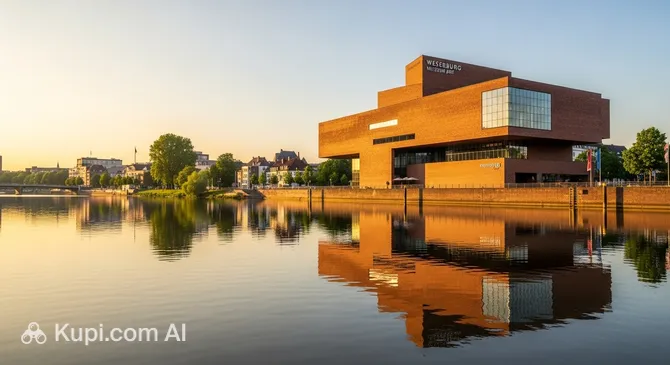
Weserburg Museum of Modern Art
Weserburg Museum of Modern Art. Иллюстрация. Источник: Kupi.com AI

What makes the Weserburg unique is its concept: it is Europe's first "museum of collectors." Rather than just displaying state funds, it showcases treasures from more than 20 private collections. This approach allows guests to experience a subjective and deeply personal perspective on art from the 1960s to the present day, including paintings, sculptures, and complex installations.

The museum is based in monumental 19th-century brick buildings that once served as tobacco and coffee warehouses. Today, their Gothic facades hide bright and spacious galleries where the Hanseatic League's industrial past serves as a striking backdrop for world-class masterpieces.

Contacts

To plan your visit and check current programs, you can use the museum's official contact details. The administration is ready to answer questions by phone or via the email address listed on the website.

How to contactContact
AddressTeerhof 20, 28199 Bremen, Германия
Phone+49 421 598390
Websiteweserburg.de

What to Do

Visiting the Weserburg is primarily an opportunity to see rare works that have been hidden in private collections for decades. You can discover pieces by masters such as Gotthard Graubner, A.R. Penck, and Ernst Wilhelm Nay. The permanent exhibition covers a wide range of styles: from Abstract Expressionism and Pop Art to Conceptualism and contemporary computer art.

Special attention should be paid to the temporary exhibitions, which the museum organizes in collaboration with major art venues in Europe and the USA. For those wishing to dive deeper into theory, an extensive library is open to the public. It contains unique catalogs, books, and rare posters reflecting the development of world art over the last 60 years.

Don't miss the chance to appreciate the architecture of the space itself. Huge halls with high ceilings and original elements of the old warehouses create a unique atmosphere for experiencing art objects. Meanwhile, the museum's panoramic windows offer breathtaking views of the river and the embankments, highlighting the museum's seamless connection with Bremen's urban landscape.

Getting There

The museum is conveniently located at Teerhof 20, on a picturesque island in the middle of the Weser River. The most pleasant way to get here is on foot. From Bremen's central Market Square or the historic Schnoor district, the walk takes only 15–20 minutes across the Bürgermeister-Smidt-Brücke.

If you are using public transport, take tram lines 4, 6, or 8. You should get off at the Teerhof or Am Brill stops, which are about a 5-minute walk from the museum building. From the main railway station (Bremen Hauptbahnhof), the journey on tram #4 or #6 takes about 10–15 minutes.

For those who prefer taxis or private vehicles, there are parking zones in the Teerhof area and on the adjacent embankment. However, it is worth noting that the central part of the city is ideally suited for pedestrians and cyclists, with convenient and very beautiful paths running along the river.

Ближайший город: Bremen

History & Facts

The history of this site began long before picture frames and installations appeared here. The buildings housing the museum were constructed in 1894 in a Neo-Gothic style and served as warehouses for the Hagens & Co tobacco factory. Later, the well-known Schilling brothers coffee company stored its supplies here, making this location an important part of Bremen's trading history.

After significant damage during World War II, the buildings were restored in 1949. From 1973, the complex became city property, and art workshops began operating here. The idea to transform the old warehouses into a world-class modern museum emerged in 1982, with art historian Thomas Deecke, who became the institution's first director, playing a key role in its realization.

The official opening of the Neues Museum Weserburg Bremen took place on September 6, 1991. The museum was a pioneer in Europe, implementing a unique public-private partnership model. Deecke managed to convince leading collectors not to hide their treasures in private storage but to put them on public display, creating a living and constantly evolving dialogue between the viewer and a private perspective on art.

Time Needed

To get a full sense of the current exhibitions and enjoy the building's architecture, we recommend setting aside 2 to 3 hours for your visit. This time is sufficient for a leisurely tour of the permanent collection from private archives and an introduction to the temporary exhibitions.

If you are a deep connoisseur of modern art and plan to spend time in the museum's specialized library or study the media installations in detail, your visit might take half a day. Don't forget to also allow time for a short walk around the island, which offers magnificent panoramic views of the river.

Working Hours

The Weserburg Museum is open to guests from Tuesday to Sunday, 11:00 AM to 6:00 PM. Monday is a day off — the galleries are closed to the public at this time.

Please note that the ticket office closes half an hour before the museum's closing time. Before your trip, we strongly recommend checking the official website for the current schedule during holidays or periods when temporary exhibitions are being changed.

DayWorking hours
понедельникЗакрыто
вторник11:00–18:00
среда11:00–18:00
четверг11:00–18:00
пятница11:00–18:00
суббота11:00–18:00
воскресенье11:00–18:00

Nearby

Exploring the surroundings of the Weserburg Museum will allow you to feel the atmosphere of the ancient Hanseatic city more deeply. Most of the iconic landmarks are within a comfortable walking distance along the embankment or across the bridges to the historic center.

NameDistance
Meisenfrei Blues Club0.4 km
Martini Pier0.4 km
Glockenspiel House0.5 km
Böttcherstrasse0.5 km
Bremen Town Hall0.6 km
Bremen Market Square0.6 km
Roland Statue of Bremen0.6 km

Reached the end of the page?

That means the route is fully explored