Support

Brandenburg Gate

About

When people talk about the Brandenburg Gate, many immediately picture the famous symbol of Berlin. However, Potsdam, a cultural treasure trove of Germany, has its own equally remarkable triumphal arch. The Potsdam Brandenburg Gate is located on the street of the same name and serves as a magnificent entrance to the city's historical center. Interestingly, it was built in 1770, making it 18 years older than its famous namesake in Berlin.
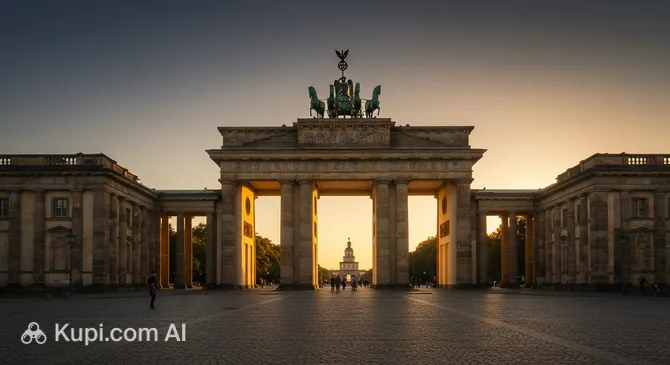
Brandenburg Gate. Illustration.
Source: Kupi.com AI

Traveler photos:

Built by order of Frederick the Great to mark the end of the Seven Years' War, this gate is a striking example of Classicist architecture. Its design was modeled after the Arch of Constantine in Rome. A unique feature of the gate in Potsdam is that it has two different facades. This is because two different architects worked on it: Carl von Gontard designed the facade facing the city, while his student Georg Christian Unger designed the exterior facade.

Originally, the gate was part of the city wall, but today it stands as a standalone monument, embodying the city's rich history. Richly decorated with bas-reliefs and double Corinthian columns, it attracts lovers of architecture and history from all over the world. Walking through the Brandenburg Gate is a wonderful opportunity to touch the past and begin your exploration of the magnificent palaces and parks of Potsdam.

Contacts

Since the Brandenburg Gate is a public historical monument, it does not have standard contact details such as a phone number or email. The gate is freely accessible 24/7. It is located on Luisenplatz at the western end of the pedestrian Brandenburger Straße. You can reach it via public transport — trams No. 91, 94, 98 or buses No. 605 and 695 to the "Brandenburger Straße" stop.

How to contactContact
AddressLuisenpl., 14471 Potsdam, Germany
Phone number+49 331 27558899
Websitewww.potsdam.de

What to Do

A visit to the Brandenburg Gate in Potsdam is a great opportunity to touch history and take some memorable photos. Tourists often start their city tour right here. In the evening, the arch and the fountain in front of it are beautifully illuminated, creating a special atmosphere. Take a close look at the architectural details: since two different architects worked on the gate, the facades facing toward and away from the city differ from each other. This is a great chance to appreciate the unique style and craftsmanship of the creators.

The Brandenburg Gate serves as a symbolic entrance to the old town and a starting point for fascinating walks. From here begins the pedestrian Brandenburger Straße, leading to the Church of St. Peter and Paul. Strolling along it and the neighboring streets, you can visit numerous shops, souvenir stalls, and cozy cafes. The Dutch Quarter is also nearby, where you can find restaurants serving local cuisine. It is an ideal place to relax after sightseeing and enjoy the city's atmosphere.

The gate is a central element for many tourist routes. From here, it is convenient to reach other iconic sites in Potsdam. Luisenplatz is right next door, and the famous Sanssouci Park with its magnificent palaces is within walking distance. For a deeper dive into the city's history and culture, you can use the services of a professional guide or take a tourist bus, whose route often passes through this iconic spot.

Getting There

Getting to the Brandenburg Gate in Potsdam is quite simple thanks to its central location and well-developed transport network. The gate is situated in the heart of the city, right next to Luisenplatz. If you are already in the city, public transport is the most convenient option. You can take city buses and trams to the "Luisenplatz" stop, which is located in the immediate vicinity of the landmark.

For travelers arriving from the capital of Germany, the fastest and most convenient way is by regional train. A trip from Berlin to Potsdam on RE1 trains or the S7 S-Bahn takes only 30–40 minutes. Trains arrive at Potsdam Central Station (Potsdam Hauptbahnhof). From the station to the Brandenburg Gate, you can either take a pleasant 15-minute walk through the city or use local public transport, which will quickly take you to your destination.

If you are traveling by car, reaching the gate is also straightforward. There are paid parking lots in the Luisenplatz area and adjacent streets where you can leave your car while strolling through Potsdam's historical center. This allows you to enjoy not only the gate itself but also the nearby attractions without any hassle.

Nearest city: Potsdam

History & Facts

The history of the Brandenburg Gate in Potsdam is inextricably linked to the reign of Frederick II the Great and one of the key events of the 18th century — the Seven Years' War. The monument's construction began in 1770 by order of the king, who wished to celebrate Prussia's victory. This gate, built on the site of an older and more modest city gate, was intended to be more than just part of a defensive wall; it was to be a majestic symbol of power and glory. Its architectural style was inspired by the triumphal arches of Ancient Rome, emphasizing its triumphant character.

The design of the gate was entrusted to two prominent architects of the time: Carl von Gontard and his student Georg Christian Unger. This resulted in a unique feature of the structure — it has two completely different facades. Gontard designed the side facing the city, while Unger designed the outer "field" side. The Arch of Constantine in Rome was chosen as a direct prototype, which is reflected in the use of double Corinthian columns and rich decoration.

The gate's decorative elements were intended to glorify military successes and the ensuing peace. The attic (the top part of the structure) features sculptures symbolizing war and victory. For example, you can see depictions of mythological heroes such as Hercules and Mars. Originally, the gate was part of the city wall, but the wall was demolished in 1900, and it has stood as a standalone monument ever since. Interestingly, the side arches for pedestrians were added much later, in 1843, under King Frederick William IV, to make passage through the monument more convenient for the townspeople.

Time Needed

When planning a visit to the Brandenburg Gate, keep in mind that the time needed depends on your interests. If you just want a quick look at the monument itself, take a few photos, and feel its historical significance, 30–45 minutes will be quite enough. This is enough time to appreciate the architectural differences between the two facades and enjoy the view of Luisenplatz.

For a more complete immersion in the atmosphere of the old town, it is recommended to set aside about 1.5–2 hours for a stroll. During this time, you can not only examine the gate in detail but also walk along the adjacent pedestrian Brandenburger Straße, browse the souvenir shops, and reach other nearby attractions, such as the Dutch Quarter. Such a leisurely route will allow you to get better acquainted with the historical center of Potsdam and enjoy its charm.

Working Hours

Since the Brandenburg Gate in Potsdam is an open city landmark, access to it is not limited by any specific working hours. This magnificent architectural monument can be visited at any time of the day or night, all year round. This makes it an ideal site to visit both during a daytime city walk and in the evening when the beautiful lighting is turned on.

You do not need to buy tickets or book a time in advance to visit the Brandenburg Gate. As a public monument located on a city square, it is freely accessible to everyone. You can simply walk up and enjoy its grandeur at any time that is convenient for you.

Open 24 hours

Nearby

Seeing just one landmark, even the most iconic one, is only part of the journey. To truly feel the atmosphere of the city and its history, it is worth exploring the surrounding area. A walk through the neighboring streets and squares allows you to see how the main monument fits into the overall picture and discover less famous but equally interesting places.

The area around the Brandenburg Gate in Potsdam is a perfect example of this. It is not just a point on the map, but a hub from which paths radiate to other treasures of this gem of Germany. Within walking distance, you will find historical buildings, museums, cozy establishments, and other architectural monuments that will help create a more complete and vivid impression of the city.

NameDistance
Lindenstraße Memorial0.3 km
Masala Haus0.4 km
Pub à la Pub Student Pub0.7 km
Nauen Gate0.8 km
Bassinplatz0.8 km
Potsdam Film Museum0.8 km
St. Nicholas' Church (Potsdam)1 km

Have you reached the end of the page?

So the route has been studied inside and out