Support

Memorial to the Murdered Jews of Europe

About

The Holocaust Memorial, officially known as the Memorial to the Murdered Jews of Europe, is one of the most significant and poignant monuments in Berlin. Located in the heart of the capital of Germany, near the Brandenburg Gate, this massive complex is dedicated to the memory of the millions of Jews who were victims of Nazism. Opened in 2005, the memorial serves as a place of remembrance, reflection, and a warning to future generations.

The architectural ensemble consists of a vast field featuring 2,711 concrete slabs, or stelae, of varying heights. The slabs are arranged on an undulating, uneven surface, and the narrow passages between them create a sense of disorientation and loss for visitors. The designer, architect Peter Eisenman, intentionally created a space that evokes deeply personal experiences.
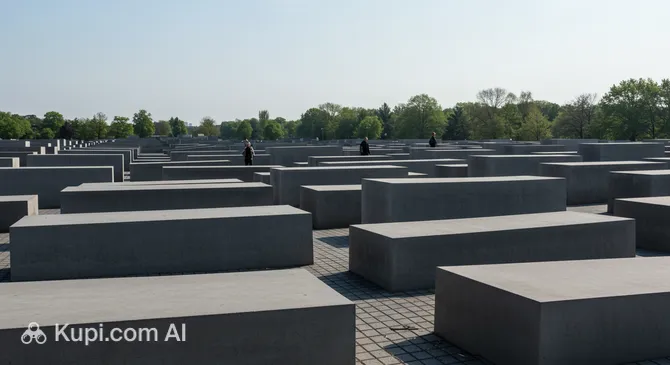
Memorial to the Murdered Jews of Europe. Illustration.
Source: Kupi.com AI

Traveler photos:

A defining feature of the memorial is the total absence of inscriptions, names, or symbols on the gray stelae. This anonymity emphasizes the unimaginable scale of the tragedy and the universality of human grief. Walking through this stone labyrinth becomes a profound emotional experience, encouraging reflection on the fragility of life and the importance of preserving historical memory. An underground Information Center is also located beneath the field of stelae, featuring the stories and fates of Holocaust victims.

Contacts

To get the most up-to-date information regarding the information center's opening hours, special exhibitions, or to contact the memorial administration, you can use the official contact details. We recommend visiting the website to check your visit details, as opening hours may vary depending on the season.

How to contactContact
AddressCora-Berliner-Straße 1, 10117 Berlin, Germany
Phone number+49 30 2639430
Websitewww.stiftung-denkmal.de

What to Do

The main activity for visitors to the Holocaust Memorial is walking through its famous field of concrete slabs. You can move freely through the narrow aisles of this labyrinth, and as you go deeper, the height of the stelae increases. This architectural design creates a powerful emotional impact: a growing sense of isolation, anxiety, and disorientation helps you more deeply feel the tragedy to which the memorial is dedicated. This walk is not just a sightseeing visit, but a profound personal experience that makes one reflect on the fragility of human life.

After exploring the above-ground part of the complex, be sure to visit the underground Information Center located beneath the field of stelae. Here, the abstract feelings experienced in the labyrinth are complemented by real facts and personal stories. The center's halls display documents, photographs, diaries, farewell letters, and the names of victims. You can learn about the fates of individual families, making the scale of the tragedy more tangible and personal.

For a fuller immersion into the historical context, audio guides are available at the Information Center in several languages. The center also regularly hosts themed exhibitions that broaden the understanding of Holocaust events. Thus, a visit to the memorial is a comprehensive experience that combines the emotional impact of unique architecture with a deep exploration of historical evidence, leaving a lasting impression.

Getting There

The Holocaust Memorial is located in the heart of Berlin, making it very easy to visit. It is situated in the central Mitte district, in close proximity to iconic landmarks such as the Brandenburg Gate and the Tiergarten park. Thanks to this convenient location, the memorial is easily accessible on foot while walking through the city's historic center.

The most convenient way to reach the memorial is by using Berlin's extensive public transport system. The nearest subway station (U-Bahn) is Brandenburger Tor, served by the U5 line. After exiting the station, you'll find yourself just a few minutes' walk from the monument. Additionally, several bus and tram stops are located nearby, making it easy to get here from various parts of the city. For example, direct buses run from the main station.

For those who prefer walking, the memorial is clearly visible and accessible from surrounding streets such as Ebertstraße and Cora-Berliner-Straße. Many tourist routes, including Hop-on Hop-off bus tours, include the Holocaust Memorial in their itinerary, making it a must-see stop. Of course, you can always take a taxi to reach the site in maximum comfort from anywhere in Berlin.

Nearest city: Berlin

History & Facts

The history of the memorial's creation began long before its opening. The idea to commemorate the victims of the Holocaust in the capital of Germany came from Lea Rosh, a publicist from Berlin. She initiated the proposal back in 1988, marking the start of a long journey toward the project's realization. By 1989, a special foundation had been established, with its main task being fundraising and organizing a competition for the best architectural design of the future monument.

After a long and careful selection process, the project by American architect Peter Eisenman was approved in 1997. One of the key ideas behind his concept was the total absence of any religious or national symbols. This was intentional, ensuring the memorial became a universal place of remembrance—one that is understandable and relatable to people of different cultures and faiths, uniting them in a shared sense of grief and reflection.

Construction of the memorial complex began on October 30, 2001, and its official opening to the public took place in 2005. The location itself provides a significant historical context; the memorial was built on land that once held buildings directly associated with the history of the Third Reich. This fact adds another, deeper layer of meaning, turning a visit to the monument into a dialogue with the site's difficult past.

Time Needed

When planning your visit to the Holocaust Memorial, you should expect to spend about one to two hours exploring it. This time is sufficient to see both the above-ground part of the complex and the underground Information Center without rushing, providing a complete understanding of the monument.

The length of your visit will depend on how much time you dedicate to each of the memorial's two main sections. Walking through the labyrinth of concrete stelae is primarily an emotional and personal experience; you can spend anywhere from 20-30 minutes to an hour here, depending on your desire to immerse yourself in the atmosphere. For a deeper understanding of the tragedy, it is essential to visit the Information Center located beneath the memorial. It is recommended to set aside at least an hour for the exhibition, which tells the stories of specific individuals and families.

Working Hours

A visit to the Holocaust Memorial is possible year-round; however, it is important to distinguish between the opening hours of its two main parts. The field of stelae itself is open to the public 24/7, allowing guests of Berlin to come here at any convenient time. Many find a special meaning in visiting the site at sunrise or during the evening twilight, when the play of light and shadow creates an especially poignant atmosphere. Entry to the memorial grounds is free.

The underground Information Center, which houses exhibitions of personal stories and documents, operates on its own schedule. Generally, it is open to visitors daily from 10:00 AM to 8:00 PM, though during the winter period (October to March), closing hours may be moved to 7:00 PM or 6:00 PM. The center is closed on Mondays (with the exception of some public holidays) and during the Christmas holidays. Admission to the Information Center is also free, and advance booking for individual visitors is usually not required. However, to avoid queues and confirm current opening hours, it is highly recommended to check the memorial's official website just before your visit.

Open 24 hours

Nearby

A visit to the Holocaust Memorial leaves a profound emotional impression, and exploring its surroundings will help you better understand the multifaceted history of Berlin. The monument is located in the heart of the government district, where iconic sites reflecting different eras of life in Germany are concentrated within a small area. A walk through this neighborhood allows you to see how a tragic past coexists with symbols of modern democracy and the capital's dynamic life.

Just a few steps from the memorial are world-famous attractions that are easily reachable on foot. This makes it an ideal starting point for exploring the city's historic center. You can plan a rich itinerary by combining a visit to the memorial with other key sites, each of which tells the story of Berlin in its own way.

NameDistance
Brandenburg Gate0.3 km
Mall of Berlin0.4 km
Grand Bar0.7 km
Grand Hyatt0.8 km
Tränenpalast0.9 km
Topography of Terror0.9 km
Berlin Story Bunker1.2 km

Have you reached the end of the page?

So the route has been studied inside and out