Support

German Museum of Technology

About

The German Museum of Technology (Deutsches Technikmuseum) is one of the largest and most famous technical collections in Germany, located in the heart of Berlin, in the Kreuzberg district. The museum occupies the vast territory of the former Anhalter Bahnhof freight station, harmoniously combining historical industrial buildings with modern exhibition pavilions. It is a place where the history of engineering comes alive before your eyes.
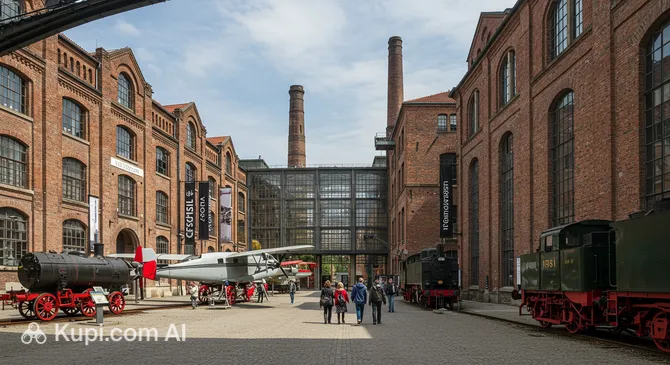
German Museum of Technology. Illustration.
Source: Kupi.com AI

Traveler photos:

The museum's exhibition spans over 26,500 square meters and covers a wide range of topics. Visitors can expect impressive collections dedicated to the development of transport — from vintage steam locomotives and ships to airplanes and cars. A special place is held by the aviation exhibition, symbolized by the famous 'Candy Bomber' (Raisin Bomber) Douglas C-47, mounted on the roof of the building. In addition, there are sections dedicated to communications, manufacturing, and energy technologies.

What makes the German Museum of Technology especially attractive is its interactive approach. Many exhibits can be touched, studied in action, and even experimented with. This format makes the visit engaging not only for adults but also for children, turning the discovery of complex technologies into an exciting adventure. It is the perfect place for a family outing and for anyone who wants to immerse themselves in the world of science and technology.

Contacts

To plan your visit, check opening hours, or get more information about current exhibitions, you can use the museum's official contact details. This is the most reliable way to get up-to-date information directly from the source.

How to contactContact
AddressTrebbiner Str. 9, 10963 Berlin, Germany
Phone number+49 30 4397340
Websitetechnikmuseum.berlin

What to Do

A visit to the German Museum of Technology is a true journey into the world of engineering achievements. The main focus here is on the history of transport, where you can see unique exhibits related to the development of rail, sea, air, and road connections. The railway collection deserves special mention: the building of the former locomotive depot displays real steam engines and historic carriages, allowing you to feel the power and romance of a bygone era. In the shipping halls, hundreds of exhibits from sailboats to steamboats are presented, while the aviation exhibition tells the 200-year history of the conquest of the sky.

The museum is famous for its interactive approach, which turns the tour into a fascinating exploration. Many exhibitions allow visitors not just to watch, but to participate: conduct scientific experiments, understand the working principles of complex mechanisms, and discover the laws of physics. For example, you can try your hand at a ship simulator or tie a real nautical knot. In addition to the permanent exhibition, the museum regularly hosts thematic events, educational programs, and workshops that will interest both children and adults.

Be sure to check out the museum park, located outdoors. It is not just a green area, but a full-fledged part of the exhibition. Here you can see working wind and water mills, peek into a historical forge, and even visit a real brewery where beer is brewed according to ancient techniques. This part of the museum offers a change of scenery and shows how technical knowledge was applied in everyday life and crafts.

Getting There

Getting to the German Museum of Technology is very easy thanks to its excellent location in the Kreuzberg district. The most convenient way is to use public transport. The nearest underground station (U-Bahn) is Gleisdreieck, served by the U1, U2, and U3 lines. It is just a few minutes' walk from the station to the museum entrance, making the trip quick and comfortable.

In addition to the U-Bahn, there are other public transport stops nearby. You can take the suburban train (S-Bahn) to Anhalter Bahnhof, which is also within walking distance. Furthermore, several bus routes stop nearby, making it easy to reach the museum from almost anywhere in the city.

If you are traveling by car, parking spaces are available. However, since the museum is located in the central part of the city, it is recommended to use public transport to avoid potential traffic jams and parking difficulties. A taxi ride from central Berlin is also a quick and convenient alternative.

Nearest city: Berlin

History & Facts

The history of the German Museum of Technology in Berlin began relatively recently, but it is closely intertwined with the city's industrial heritage. The museum was officially founded in 1982 and opened its doors to the first visitors just a year later, in 1983. It was originally named the 'Museum of Transport and Technology', reflecting the initial focus of its collections. This name was kept until 1996, when, following a significant expansion and the opening of a new railway complex, it received its current name — Deutsches Technikmuseum Berlin.

The central and most authentic part of the museum complex is the historical locomotive depot of the former Anhalter Bahnhof station, built back in 1882. This ancient building, which has survived many historical storms, became the perfect home for an impressive collection of rail transport. Thus, the museum does not just display exhibits; it is a piece of technical history itself, allowing visitors to feel the atmosphere of the industrial era.

Since its founding, the museum has grown and evolved continuously, becoming one of the world's leading technical museums. Its mission is not just to store artifacts but to clearly demonstrate technical progress and its impact on society in Germany and beyond. The constant addition of new thematic halls, from aviation and shipping to the history of computers and brewing, makes every visit unique and informative.

Time Needed

When planning a visit to the German Museum of Technology, you should consider its vast size and diverse exhibitions. To get a general overview and see the most iconic halls, such as aviation and rail transport, it is recommended to set aside at least 3–4 hours. This is enough for a quick look at the main collections, but it won't be sufficient for a deeper dive.

For those who want to truly experience the atmosphere of the museum, explore the interactive exhibits, visit the Science Center Spectrum, and walk through the museum park, it's better to plan for a full day. Such a leisurely approach will allow you to fully enjoy all the opportunities this unique place offers, turning a regular visit into an exciting educational adventure without any rush.

Working Hours

The German Museum of Technology is happy to welcome visitors year-round, offering a fascinating immersion into the world of technology. According to the information provided, the museum's standard opening hours are: daily from 10:00 to 18:00. It is important to remember that Monday is a closing day. On public holidays, the schedule may change, so it is always recommended to check for current information on the official website before visiting.

To ensure your visit goes as smoothly as possible, we strongly recommend purchasing tickets online. This will not only help you avoid potential queues, especially during peak tourist season or school holidays, but also guarantees your entry on the chosen day. For some categories of visitors, including children and teenagers under 18, admission may be free, but an appropriate online ticket may still be required.

DayOpening hours
MondayClosed
Tuesday9:00 – 17:30
Wednesday9:00 – 17:30
Thursday9:00 – 17:30
Friday9:00 – 17:30
Saturday10:00 – 18:00
Sunday10:00 – 18:00

Nearby

A visit to the German Museum of Technology is an exciting event in itself, but exploring its surroundings can make your day in Berlin even more fulfilling. The Kreuzberg district, where the museum is located, and the adjacent neighborhoods are full of interesting places, from historical monuments to modern cultural spaces. A walk nearby will allow you to better feel the multifaceted atmosphere of Germany's capital.

Within walking distance of the museum, you will find both iconic landmarks and cozy corners that allow you to complement your impressions of the world of technology with historical and cultural context. Below is a list of nearby points of interest with distances to help you easily plan your route.

NameDistance
BRLO Brwhouse0.3 km
Berlin Story Bunker0.5 km
Topography of Terror1 km
Grand Hyatt1.1 km
Jewish Museum Berlin1.3 km
Mall of Berlin1.3 km
Brandenburg Gate2 km

Have you reached the end of the page?

So the route has been studied inside and out