Support

Berlin Wall Memorial

About

The Berlin Wall Memorial is the main open-air memorial complex dedicated to the history of the division of Germany. It is located in the heart of Berlin on the historic Bernauer Straße, which once served as the border between East and West Berlin. This memorial covers a vast territory and serves as an important site for reflecting on the tragic events of the past and preserving their memory.

A final original section of the Berlin Wall is preserved here, allowing visitors to get a real sense of the scale and construction of the border fortifications of the late 1980s. Walking along this 1.4-kilometer stretch provides an opportunity to see all elements of the former "death strip," including the border strip and a watchtower, and to feel the oppressive atmosphere of the divided city.
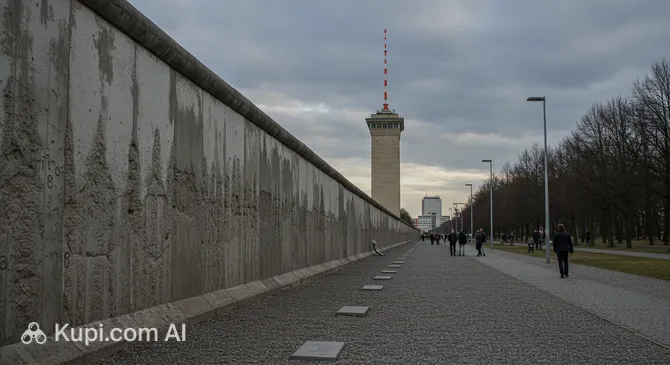
Berlin Wall Memorial. Illustration.
Source: Kupi.com AI

Traveler photos:

An important part of the memorial ensemble is the Chapel of Reconciliation. It was built in 2000 on the foundation of a church that stood in the border strip and was demolished by the GDR authorities in 1985. Today, the chapel has become a symbol of peace and of overcoming division—a place to stop and reflect on the victims of the separation and the value of freedom.

Contacts

It is best to check the official memorial website for the most up-to-date information on opening hours, special exhibitions, and events. Below are the main contact details and directions to the complex.

How to contactContact
AddressBernauer Str. 111, 13355 Berlin, Germany
Phone number+49 30 213085123
Websitewww.stiftung-berliner-mauer.de

What to Do

Visiting the Berlin Wall Memorial is an opportunity to literally touch history and realize the scale of the events that divided Berlin for decades. The main element to see is the preserved 70-meter section of original border fortifications, which gives a full picture of what the "death strip" looked like in the late 1980s. This part of the complex is enclosed between two steel walls, forming a monument inscribed in memory of the city's division and the victims of communist tyranny. While walking through the grounds, you will also see multimedia stands, historical photographs, and brass plaques on the ground marking the locations of escape tunnels and where people lost their lives.

A special place in the memorial complex is held by the "Window of Remembrance"—a poignant steel monument where black-and-white photographs of those who died while trying to cross the border are displayed in several rows. This monument, opened in 2010, is dedicated to all victims of the Wall, including those who died jumping from the windows of houses on Bernauer Straße. A visit to the Chapel of Reconciliation is also an essential part of the experience. This modern building made of clay and wood stands on the foundation of a church blown up by the GDR authorities and today serves as a place for reflection and prayer for the victims of the division.

In addition to exploring the outdoor exhibition, visitors can climb to the observation deck of the Documentation Center, located on the opposite side of the street. From there, a panoramic view of the entire preserved section of border fortifications opens up, allowing for a better understanding of their complex structure and scale. Inside the center, you can view the permanent exhibition "1961–1989. The Berlin Wall," which tells the history of Germany's division in detail. Thus, a visit to the memorial offers a deep dive into one of the most dramatic periods of 20th-century history.

Getting There

Reaching the Berlin Wall Memorial is very easy thanks to its central location and Berlin's excellent public transport system. It is one of those places that can be reached effortlessly from any part of the capital. The most convenient and fastest way is to use public transport, which will take you almost to the very entrance of the memorial complex.

The main transport hubs near the memorial are the Bernauer Straße U-Bahn station and the Nordbahnhof S-Bahn station. You can reach Bernauer Straße via the U8 line; once you exit the station, you will find yourself right on the memorial grounds. Nordbahnhof is served by S-Bahn lines S1, S2, S25, and S26. Additionally, the memorial can be reached by the M10 tram (Gedenkstätte Berliner Mauer stop) or by bus No. 247.

If you prefer more comfortable travel or are carrying luggage, you can use taxi services. A trip from central districts, such as the Brandenburg Gate or Alexanderplatz, will take no more than 15–20 minutes, depending on traffic. Also, given its central location, the memorial can be reached on foot or by bicycle if you are staying nearby, which is a great way to get to know the Mitte district better.

Nearest city: Berlin

History & Facts

The history of the Berlin Wall Memorial is inextricably linked to the history of the Wall itself, which became one of the darkest symbols of the Cold War. Its construction began almost overnight: on the morning of August 13, 1961, the residents of Berlin woke up to find their city divided. This decision, made on the recommendation of the Warsaw Pact countries, divided families and friends for decades, and West Berlin found itself completely isolated. The wall stood from 1961 to November 9, 1989, serving as a physical manifestation of the division of Germany and the world.

After the fall of the Wall, there was a need to create a place of remembrance that would commemorate the tragic events and the victims of the division. Thus, on August 13, 1998, on the anniversary of the start of construction, the main monument to the victims of the division of Germany was opened. Later, on May 21, 2010, the complex was expanded with the poignant "Window of Remembrance" monument, which features photographs of those who died. The creation of the memorial was a large-scale project: the Berlin Senate invested 28 million euros into it, aiming to preserve authentic evidence of the past for future generations.

The idea of creating a memorial on the historic Bernauer Straße is largely credited to Manfred Fischer, often called the "Pastor of the Berlin Wall" for his active involvement in the project. Thanks to his efforts and the support of the authorities, a section of the border strip was recreated on an area of four hectares. The entire memorial complex was finally completed in 2012. Today, it is not just a historical site, but an important place for reflecting on the value of freedom and peace, reminding us of how fragile human connections can be in the face of political barriers.

Time Needed

When planning a visit to the Berlin Wall Memorial, it is worth setting aside 2 to 3 hours. This time is usually sufficient to explore all the key parts of this extensive open-air complex without rushing and to dive deep into the history of divided Berlin. Attempting to see everything in an hour is possible, but such a visit will be quite superficial, and you risk missing many important details.

Most of the time is spent walking along the 1.4-kilometer stretch of Bernauer Straße, where the outdoor exhibition is located, featuring preserved wall fragments, a watchtower, and information stands. The Documentation Center deserves special attention, with its permanent exhibition and an observation deck offering a view of the entire "death strip"—you should set aside about an hour for this. Time will also be needed to view significant sites such as the "Window of Remembrance" with photos of the victims and the Chapel of Reconciliation.

Therefore, for a thoughtful and full-impression visit, it is better to plan for half a day. This will allow you not only to see all the exhibits but also to take time for reflection, feel the special atmosphere of this historical site in Germany, and realize the scale of past events without hurrying from one object to another.

Working Hours

Visiting the Berlin Wall Memorial is convenient because its main part—the open-air exhibition complex—is accessible 24/7 all year round, with no ticket required. You can walk along the 1.4-kilometer section of Bernauer Straße at any time to see the preserved wall fragments and other elements of the memorial. This allows for flexible planning of your visit to Berlin.

However, it is worth noting that certain parts of the complex have their own operating hours. The Documentation Center with its permanent exhibition and observation deck, as well as the Visitor Center, are usually open from Tuesday to Sunday, 10:00 AM to 6:00 PM. Admission is also free, and advance booking for individual tourists is generally not required. Nevertheless, to get the most accurate and up-to-date information, especially if you plan to attend a guided tour or a special event, it is recommended to check the official memorial website.

8:00 – 22:00

Nearby

After a deep and emotional immersion into history at the Berlin Wall Memorial, it is worth taking some time to explore the surroundings. The Mitte district, where the memorial is located, is full of other iconic landmarks that help create a more complete picture of multifaceted Berlin. A walk nearby will allow you to see how the tragic past intertwines with the vibrant and dynamic modern life of Germany's capital.

From historical monuments and world-class museums to cozy courtyards and iconic gastronomic spots—all of this is within walking distance or a short public transport ride. Exploring the nearby attractions will enrich your journey, adding new impressions and perspectives. Below is a list of interesting places located nearby.

NameDistance
Tränenpalast1.6 km
Rüyam Vegetable Kebab 21.6 km
Berlin TV Tower2 km
Alexanderplatz2.1 km
Grand Bar2.1 km
Brandenburg Gate2.2 km
Mall of Berlin2.8 km

Have you reached the end of the page?

So the route has been studied inside and out