Support

Sanssouci Palace

About

Sanssouci Palace, located in Potsdam near Berlin, is more than just a palace—it is the true realization of a dream by the Prussian King Frederick II the Great. It is an outstanding monument of Rococo architecture, often called the "Prussian Versailles" for its elegance and harmony with nature. The entire palace and park ensemble is rightfully included in the UNESCO World Heritage list, being a jewel of Germany's cultural heritage.

The name of the palace translates from French as "without cares," perfectly reflecting its purpose. Frederick the Great intended Sanssouci not as a pompous official residence, but as a secluded retreat where he could rest from state affairs, dedicating time to art, music, and philosophy. Unlike the giant palaces of Europe, Sanssouci impresses with its intimacy and coziness, which makes it especially attractive.

The palace is elegantly situated at the top of vineyard terraces that cascade down to a magnificent park. A stroll through Sanssouci Park is a pleasure in itself: picturesque alleys, fountains, sculptures, and other elegant buildings await you here, creating an atmosphere of idyll and tranquility. It is the perfect place to feel the spirit of the Enlightenment and enjoy the harmony of architecture and landscape.
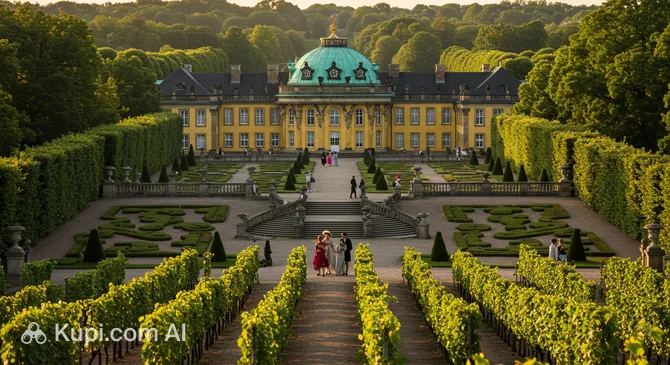
Sanssouci Palace. Illustration.
Source: Kupi.com AI

Traveler photos:

Sanssouci reflects the king's personal taste so strongly that his style even received its own name—"Friderician Rococo." Visiting this unique place allows you not only to admire the magnificent interiors and gardens but also to touch history by looking into the world of one of Europe's most famous monarchs. It is a must-see on the itinerary of any traveler exploring the surroundings of Berlin.

Contacts

To plan your visit to Sanssouci Palace, it is very important to have the most current information. We strongly recommend checking the opening hours, ticket prices, and current visitor rules before your trip, as these may change.

At the moment, specific contact details such as the official website, phone number, or email for the palace are not provided. To get the latest and most reliable information, please refer to the official tourism portals of the city of Potsdam, where the palace is located, or the tourism resources of Berlin. This will help you organize your trip in the best possible way and avoid any inconvenience.

How to contactContact
AddressMaulbeerallee, 14469 Potsdam, Germany
Phone number+49 331 9694200
Websitewww.spsg.de

What to Do

A visit to Sanssouci Palace is an opportunity to immerse yourself in the elegant atmosphere of the 18th century. Inside the palace, guests can explore the luxurious halls and personal chambers of Frederick the Great, designed in the unique "Friderician Rococo" style, which is characterized by elegance and lightness. Of particular note are the magnificent Marble Hall, the concert room where the king himself played music, and his personal library. Everywhere you will be surrounded by an exquisite collection of artworks and furniture from that era, allowing you to feel the monarch's personal taste and philosophical aspirations.

No less impressive is a walk through the massive park, which is an integral part of the ensemble. The park's main attraction is the famous terraced vineyards cascading down from the palace. Exploring the picturesque alleys, you will find many fountains, sculptures, and elegant pavilions hidden among the greenery. Be sure to visit the exotic Chinese House, which houses a collection of porcelain, as well as the New Chambers and the impressive Orangery Palace.

The park is so large that you can spend an entire day here, discovering new architectural masterpieces. In addition to the main palace, other significant buildings are located within the park, including the Picture Gallery and the monumental New Palace. During the warmer months, Sanssouci Park comes alive with concerts and various cultural events that add a special charm to this historical site. It is an ideal place for leisurely walks and experiencing the harmony of art and nature.

Getting There

Getting to the magnificent Sanssouci Palace from Berlin is quite easy, even though it is located in the neighboring city of Potsdam, about 25 km southwest of the center of Germany's capital. The most convenient and popular way is to use public transport. Take the S-Bahn (line S7) suburban train or one of the regional trains (such as the RE1) that depart regularly from Berlin's major stations. You need to get to Potsdam's main station—Potsdam Hauptbahnhof. The journey takes about 30–40 minutes.

Once you arrive at Potsdam station, you have several options to reach the palace and park complex. If the weather is nice and you enjoy walking, you can reach the park on foot. It takes about 25–30 minutes (approximately 2 km), and you can enjoy the city's atmosphere along the way. For those who prefer to save time, city buses (such as route 695) depart directly from the station and will quickly take you to the palace entrance.

If you are traveling by car, there are several parking lots near Sanssouci Park where you can leave your vehicle. Another convenient option, especially for those who want to see other sights in Potsdam, is the Hop-on Hop-off tourist buses. They run through the city and stop right at the palace, making it easy to combine your visit with other iconic landmarks.

Nearest city: Berlin

History & Facts

The history of Sanssouci Palace is inextricably linked to the personality of the Prussian King Frederick II the Great, for whom this residence became his life's work. Construction was carried out in record time, from 1745 to 1747, based on the monarch's personal project and sketches. Frederick wanted to create not a pompous palace for official receptions, but a secluded summer villa on top of a picturesque hill where he could live "without cares." The architect Georg Wenzeslaus von Knobelsdorff was commissioned to bring this idea to life, and he managed to convey the king's vision of a light and elegant building.

The creation of the palace was a truly creative process involving the best masters of their time. Outstanding sculptors such as Johann August Nahl, Benkert, and Ebenhech, as well as skilled woodcarvers the Hoppenhaupt brothers, worked on the decoration. The stucco was created by the famous Sartori and Merck, giving the interiors a unique elegance in the Friderician Rococo style. However, the creative process did not always go smoothly: due to disputes with the king over the layout and location of the building, Knobelsdorff was removed from the project.

The construction was completed by the Dutch architect Jan Bouman, and on May 1, 1747, the grand opening of the palace took place. Sanssouci quickly became Frederick the Great's favorite place, his personal refuge where he not only rested but also hosted the most prominent people of the era. It was here that the famous philosopher Voltaire stayed and held long conversations with the king. This residence was not just a beautiful building, but a true cultural and intellectual center reflecting the spirit and aspirations of its enlightened owner.

Time Needed

When planning a visit to Sanssouci Palace, it is important to calculate your time correctly to fully enjoy its beauty. For a general introduction to the complex, which includes viewing the palace interiors and a leisurely stroll through the adjacent park with its famous terraces, it is recommended to allow at least 3–4 hours. This is enough time to appreciate the main attractions without rushing and to feel the peaceful atmosphere of the place.

If you want to dive deeper into the history and art of this unique complex, you should plan a full day for your visit. The vast park hides many other treasures, such as the New Palace, the Chinese Tea House, the Orangery Palace, and the Picture Gallery. Visiting these additional pavilions and museums, as well as possibly participating in guided tours, will provide a complete picture of the scale and splendor of Frederick the Great's summer residence. Some tourists note that even one day may not be enough to see everything.

Working Hours

Sanssouci Palace is open to visitors year-round, but opening hours change depending on the season. Generally, during the summer period (approximately from April to October), the palace can be visited from 10:00 to 17:30 or 18:00. In the winter months (from November to March), opening hours are shorter, and it is open to guests from 10:00 to 16:30 or 17:00. It is important to remember that Monday is the traditional day off. Since the schedule may change, it is strongly recommended to check the current information on the official website of the palace complex before your visit.

To guarantee entry and avoid long lines, especially during the peak tourist season, we recommend purchasing tickets online in advance. This will allow you to book a specific time slot for your visit. Given the immense popularity of Sanssouci, the number of tickets for each day is limited, so planning ahead will make your trip more comfortable and predictable.

DayOpening hours
MondayClosed
Tuesday10:00 – 17:30
Wednesday10:00 – 17:30
Thursday10:00 – 17:30
Friday10:00 – 17:30
Saturday10:00 – 17:30
Sunday10:00 – 17:30

Nearby

A visit to Sanssouci Palace is just the beginning of your acquaintance with Potsdam's rich cultural heritage. To get a full impression of this amazing place, it is worth taking the time to explore its surroundings. Very close by are other magnificent palaces, picturesque parks, and interesting sites, each with its own unique history and atmosphere.

Walking through the surrounding area will allow you to dive deeper into the era of Frederick the Great and his successors, see how architecture and landscape design developed, and simply enjoy the beauty of this region of Germany. Below is a list of nearby attractions that will make your trip even more fulfilling and memorable.

NameDistance
New Palace1.6 km
Havellandhalle Resort13.2 km
Grunewald Forest14.8 km
Garnelen Guemmer Aquarium20.1 km
Charlottenburg Palace21.7 km
Maxxim22.6 km
Rüyam Gemüse Kebab23 km

Have you reached the end of the page?

So the route has been studied inside and out