Sanssouci Park is a magnificent palace and park ensemble in Potsdam, Germany, which is rightfully considered one of the most outstanding examples of 18th- and 19th-century landscape art in Europe. Stretching across an area of about 290 hectares, it represents a harmonious blend of elegant architecture and thoughtful landscape design. The name of the park translates from French as "without cares," which fully reflects the vision of its creator — the Prussian King Frederick the Great, who wanted to have a place here for relaxation and inspiration.
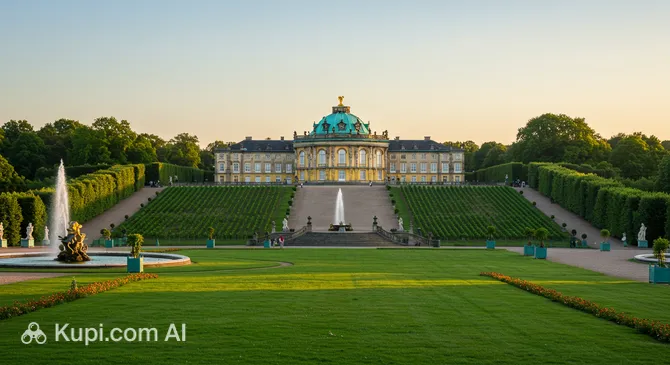
The central element and true jewel of the park is Sanssouci Palace — the former summer residence of Frederick the Great. This elegant single-story palace, built in the Frederician Rococo style, was constructed according to the King's personal sketches in 1745–1747. The palace is located at the top of a hill with famous vineyard terraces, creating a unique and memorable image. Due to its grace and harmony with nature, the ensemble is often called the "Prussian Versailles".
Traveler photos:
In addition to the main palace, the park's vast territory is home to many other architectural treasures: the New Palace, the Chinese House, the Orangery, ancient temples, and picturesque ruins. A walk along the endless alleys, past fountains, sculptures, and well-tended flower beds, gives a sense of peace and tranquility. The harmonious synthesis of art and nature was highly appreciated on a global level: in 1990, the entire ensemble of Sanssouci palaces and parks was included in the UNESCO World Heritage List.