Support

Berlin Zoological Garden

About

The Berlin Zoo (Zoologischer Garten Berlin) is not just one of Berlin's main attractions, but a true wildlife oasis in the heart of the metropolis. Located in the picturesque Tiergarten district, it is one of the oldest and largest zoos in Germany. Its vast 35-hectare territory is home to an impressive number of animals from all over the world.
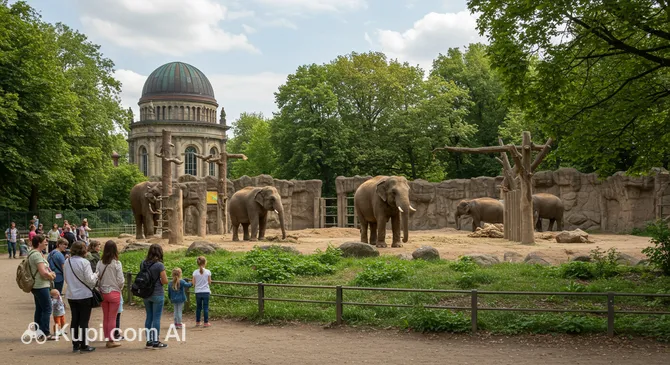
Berlin Zoological Garden. Illustration.
Source: Kupi.com AI

Traveler photos:

One of the zoo's gems is the adjacent famous Aquarium, opened back in 1913. It occupies three floors where visitors can immerse themselves in an amazing underwater world. It features not only thousands of fish species, from bright tropical ones to imposing sharks, but also reptiles, amphibians, insects, and other invertebrates. This makes the visit comprehensive and even more exciting.

Every year, the Berlin Zoo attracts about 2.6 million visitors, confirming its incredible popularity among both tourists and locals. This place is ideal for family vacations and long walks. Here, you can not only get acquainted with the diverse fauna of our planet but also learn about important conservation programs for rare and endangered species in which the zoo actively participates.

Contacts

To plan your visit, clarify opening hours, or ask questions, you can contact the Berlin Zoo administration. All up-to-date information on events, animal feeding times, and special programs is also available on the zoo's official resources.

How to contactContact
AddressHardenbergpl. 8, 10787 Berlin, Germany
Websitewww.zoo-berlin.de

What to Do

Visiting the Berlin Zoo is an exciting journey through the world of wildlife, where every corner holds something interesting. A walk through the zoo allows you to see many animals in spacious enclosures with meticulously designed habitats. Here, you can observe elephants, graceful flamingos, and ostriches, as well as appreciate the exotic antelope house, which has become one of the zoo's hallmarks. Don't forget to take a photo at the famous "Elefantentor" — a monumental entrance that is a work of art in itself.

To make your visit even more memorable, be sure to check the animal feeding schedule, which takes place throughout the day. This is a unique opportunity to see giant pandas (at 11:00 and 15:00), elephants (at 11:30), California sea lions (at 14:00), and many other inhabitants in action. For younger visitors, a visit to the petting farm, where they can stroke and feed friendly goats and sheep, will be a real adventure. Such interactive moments provide especially vivid impressions.

In addition to animal watching, the zoo has everything for a comfortable family holiday in Berlin. Children will love the large playground with sand, and numerous cafes and souvenir shops allow you to take a breath and buy commemorative gifts. The famous Aquarium is also located on the grounds, and visiting it will complete your experience. The zoo is also known for its success in breeding rare species: for example, the polar bear cub Knut was born here in 2006, which became a global event and serves as a reminder of the important role this place plays in wildlife conservation.

Getting There

Getting to the Berlin Zoo is very easy thanks to its central location in the Tiergarten district and Berlin's excellently developed public transport system. The main transport hub is the "Zoologischer Garten" station, which is just a few steps from the zoo's main entrance. You can reach it from almost anywhere in the city, making a visit to the zoo convenient for all tourists.

The most convenient way to reach the zoo is by public transport. The Zoologischer Garten station is served by S-Bahn trains (lines S3, S5, S7, S9) and the U-Bahn (lines U2, U9). Numerous bus routes also stop nearby, including the popular tourist routes No. 100 and No. 200. The Kurfürstendamm metro station (lines U1, U9) is also close by, from which you can walk to the zoo in a few minutes.

If you prefer comfort, you can take a taxi. A ride from central areas, such as the Brandenburg Gate or Potsdamer Platz, will take about 10–15 minutes depending on traffic. Those traveling by private car should keep in mind that finding parking in the city center can be difficult, so public transport is often a more preferable option.

Nearest city: Berlin

History & Facts

The history of the Berlin Zoo spans more than 175 years, making it the oldest in Germany and the ninth oldest in the world. It was officially opened on August 1, 1844, during the reign of King Frederick William IV of Prussia. The foundation of the collection was the royal menagerie located on Peacock Island, from which the first inhabitants were transferred to the new zoo. The creation of a public zoological garden was initiated by prominent figures of the time, including the famous scientist Alexander von Humboldt.

A significant contribution to the zoo's development was made by its director Heinrich Bodinus, who took office in 1869. Under his leadership, unique pavilions for that time were built in exotic styles: an antelope house resembling a mosque, an Indian-style elephant house, and an Egyptian-style ostrich pavilion. It was then that the famous "Elefantentor" (Elephant Gate) appeared, becoming one of the symbols of the zoo. These architectural solutions turned the zoo not just into a place for animals, but into a popular Berlin landmark.

The 20th century brought difficult trials for the zoo. During the Second World War, most of the territory was destroyed, and fewer than a hundred of the nearly four thousand animals survived. After the city was divided, the zoo ended up in West Berlin. This prompted the creation of a second zoo in 1955 in the eastern part of the city — the Tierpark in the Friedrichsfelde district. Thus, historical events have led to Berlin being home to two large zoological gardens today, each with its own unique history and atmosphere.

Time Needed

To fully enjoy your visit and see all the highlights of the Berlin Zoo, it is recommended to set aside at least half a day. Given the extensive 35-hectare territory and the vast number of inhabitants, a quick walk-through won't allow you to get a complete impression. For a leisurely stroll, animal observation, and visiting key pavilions, you should plan for 4 to 5 hours. Nature enthusiasts and families with children can easily spend a whole day here, as there are rest areas, cafes, and playgrounds on the grounds.

The duration of your visit largely depends on your plans. Keep in mind that the famous three-story Aquarium deserves separate attention. If you plan to visit it, feel free to add at least another 1.5–2 hours to your itinerary. Additionally, animal feeding shows, which follow a set schedule, or a visit to the petting zoo might take up more of your time. To avoid rushing and see all the best parts, it is best to arrive at the zoo in the first half of the day.

Working Hours

The Berlin Zoo is open to visitors year-round, seven days a week, allowing you to plan your visit at any convenient time. However, opening hours depend on the season: in summer, daylight hours are longer and the zoo stays open later, while in winter, it closes earlier. Generally, the zoo opens at 9:00, and closing times range from 16:30 in the winter months (approximately from late October to February) to 18:30 in the summer period (approximately from late March to late September). It is important to note that ticket offices and entrances close one hour before the zoo itself, and animal pavilions close 30 minutes before.

To avoid queues and save money, it is highly recommended to purchase tickets in advance online on the zoo's official website. This is especially relevant during the peak tourist season and on weekends. Although booking is not always mandatory, buying tickets online guarantees your entry and is often cheaper than at the gate. Since opening hours may change slightly, it is always best to check the latest information on the official Berlin Zoo website before your visit.

9:00 – 17:00

Nearby

A visit to the Berlin Zoo is just one part of a great adventure awaiting you in Berlin. Thanks to its central location in the Tiergarten district, you find yourself surrounded by many other iconic sites of Germany's capital. A stroll through the surrounding area will allow you to dive deeper into the city's atmosphere and see it from different perspectives.

Very close to the zoo are famous shopping streets, historical monuments, museums, and cozy parks. This is a great opportunity to combine exploring the animal world with a cultural program or gastronomic discoveries. Below is a list of interesting places located within walking distance or a short drive away.

NameDistance
Maxxim0.9 km
Grand Hyatt2.2 km
BRLO Brwhouse2.5 km
Rüyam Gemüse Kebab2.7 km
Brandenburg Gate2.8 km
Berlin Story Bunker2.8 km
German Museum of Technology2.8 km

Have you reached the end of the page?

So the route has been studied inside and out