Support

Schloss Herrnsheim

About

Nestled within the picturesque landscapes of the Rhineland-Palatinate region, Herrnsheim Palace stands as a majestic testament to the former power of the German aristocracy. Located in the city of Worms, this historical site comprises the ruins of a 16th-century imperial castle that once shone in splendid Baroque style.
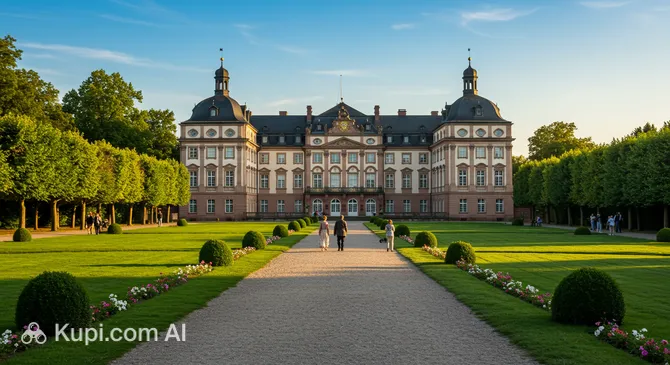
Herrnsheim Palace
Herrnsheim Palace. Иллюстрация. Источник: Kupi.com AI

The castle stands atop a hill, its massive walls serving the role of a fortress. For a long time, it served as the ancestral residence of the influential Dalberg family, who left a deep mark on the history for which Germany is famous. The architectural ensemble of Herrnsheim is considered one of the most important monuments in the region, attracting the attention of researchers and travelers from all over the world.

Today, this site is among the city's key landmarks, alongside the legendary St. Peter's Cathedral. A visit to the palace allows you to touch the authentic atmosphere of the Middle Ages and appreciate the craftsmanship of Baroque architects, preserved through the centuries in stone.

Contacts

To confirm current information before your visit, you can use the official contact details. Please note that the castle may currently be temporarily closed to the public for interior tours.

How to contactContact
AddressHerrnsheimer Hauptstraße 1, 67550 Worms, Germany
Phone+49 6241 8537306
Websitewww.worms.de

What to Do

The main reason tourists come here is the opportunity to touch living history. You can examine the castle ruins in detail and study the characteristic features of 16th-century Baroque architecture preserved in the foundation and wall elements. This place seems to transport you back to the era of the German nobility, allowing you to imagine the daily life of the estate's influential owners.

The grounds around the palace are perfect for thoughtful walks and photography. The contrast between the rugged masonry of the fortress walls and the surrounding landscape creates magnificent angles for shots. History buffs will find inspiration here, studying the surviving fragments of structures that once formed a unified defensive and residential complex.

In addition to the visual inspection, it is worth taking the time to study the information boards telling the story of the Dalberg family. This will help you gain a deeper understanding of Herrnsheim's significance in the context of the region's imperial history and turn a simple walk into a fascinating educational journey.

Getting There

The palace is located at Herrnsheimer Hauptstraße 1, just 3 kilometers from the city center. Thanks to its position on a hill within the city limits, it is easily accessible by car and public transport alike.

From the center of Worms, buses run regularly to the castle, while a taxi ride takes only a few minutes. If you prefer walking, the route from the central districts to Herrnsheim hill makes for a pleasant addition to your excursion.

For tourists arriving from other regions of Germany, the railway network is the most convenient option. From Worms Main Station, you can reach the historical complex by local transport or on foot, enjoying views of the ancient city along the way.

Ближайший город: Worms

History & Facts

The chronicles of this site are inextricably linked to the powerful baronial Dalberg family. For many centuries, members of this family owned the estate, playing a key role in the life of the region. A younger branch of the family even received the official name Dalberg-Herrnsheim in honor of their residence.

Built in the 16th century, the castle was originally conceived as a grand structure in the Baroque style. Outstanding diplomats and church figures once lived within its walls. For example, Emmerich Joseph von Dalberg was a confidant of Talleyrand himself and was awarded the title of Duke by Napoleon Bonaparte.

Despite the fact that Herrnsheim Palace reaches us today in the form of ruins, it has not lost its grandeur. The surviving fragments of the fortress walls and decorative elements still serve as a reminder of the "Golden Age" of the German nobility and the former architectural brilliance of the imperial castle.

Time Needed

To leisurely explore the ruins and walk through the surrounding grounds, an average tourist will need about 1 to 2 hours. This is quite sufficient to study the architectural details and take memorable photos.

If you are passionate about the history of German architecture or plan a detailed study of the Dalberg family heritage, your stay may be longer. Nevertheless, a brief stop in Herrnsheim fits perfectly into a busy itinerary of the city's main attractions.

Working Hours

At present, there is no information regarding a fixed operating schedule for the interior spaces, and the site often has the status of being temporarily closed. The territory around the ruins is generally accessible for external viewing during daylight hours.

Before planning your trip, we strongly recommend checking the current status on the official city portal or the attraction's website to avoid disappointment during your visit.

Nearby

Exploring the palace's surroundings will allow you to immerse yourself deeper into the atmosphere of the ancient city and discover the hidden gems of the region. Worms is rich in historical sites, many of which are within walking distance or a short ride away.

NameDistance
Il Pomodorino2.9 km
Die Funzel3 km
ParkCafé3.4 km
Hotel Boos Museum3.6 km
Luther Monument3.7 km
Rialto Night Club Worms3.9 km
Kaiser Passage3.9 km

Reached the end of the page?

That means the route is fully explored