Support

Narsaq

About

Welcome to Narsaq, a vibrant and picturesque town located in the southern part of Greenland. Nestled on a vast plain at the foot of the Qaqqarsuaq mountain, this settlement is renowned for its strikingly colorful wooden houses and its unique position as a hub for agriculture in an Arctic environment. Unlike many other towns in the region, Narsaq boasts a relatively mild microclimate that allows for thriving sheep farming, giving the surrounding landscape a surprisingly green and pastoral feel during the summer months.

With a population of approximately 1,300 residents, Narsaq offers a cozy, small-town atmosphere where visitors can easily immerse themselves in the local way of life. The town is situated within a deep fjord system, providing breathtaking views of drifting icebergs that break off from nearby glaciers. The history of Narsaq is deeply intertwined with the Norse settlers who arrived in the area centuries ago, and the region remains a fascinating destination for those interested in the cultural heritage of the Arctic.
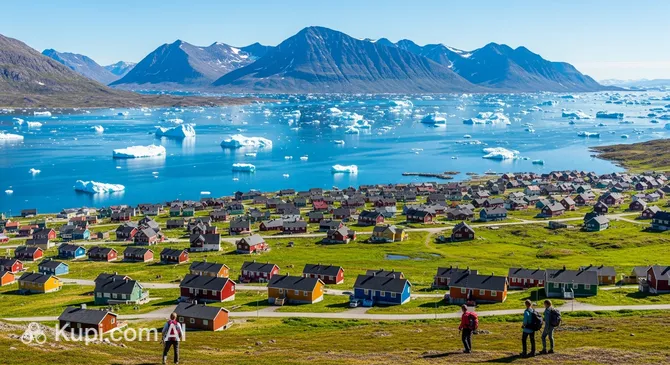
Narsaq. Source: Kupi.Binoculars

Travelers are often drawn to Narsaq for its incredible geological diversity. The area is famous among rock collectors and geologists as the best place to find the rare, glowing gemstone tugtupite, along with other unique minerals. Beyond rock hunting, the town serves as an excellent base for hiking, kayaking, and exploring the nearby ice cap. The local market often features fresh produce and locally sourced meat, reflecting the town's status as the "food basket" of the south.

Whether you are looking to explore the rugged beauty of the fjords or discover the unique mineral wealth of the earth, Narsaq promises an unforgettable experience. It is a destination where the raw power of nature meets the warmth of Greenlandic hospitality, making it a must-visit stop on your Arctic adventure.

Weather Overview

The climate in this region is characterized by significant seasonal contrasts, making it important to prepare for changing conditions. For a more detailed outlook, you can consult the guide to the weather in Narsaq to help plan your activities. The summer months of June through August are the mildest, with July offering average temperatures of 9.5°C and daily highs reaching approximately 12.6°C, creating a cool but pleasant environment for outdoor exploration.

In contrast, the winter season is cold and demanding. February is typically the coldest month, with averages hovering around -10.9°C and minimums dropping to -13.8°C. Travelers should expect cool, mild summers and cold winters, accompanied by frequent but light precipitation throughout the year, as wet days range from 8 to 14 days per month.

Interesting Facts

Beyond its scenic fjords and agricultural charm, Narsaq holds several fascinating distinctions that make it unique even among Greenlandic settlements. Here are a few little-known facts about this Arctic town:
  • A Geological Wonder: The town is situated next to the Ilimaussaq complex, a geological formation that is world-renowned among scientists. It contains over 200 different minerals, approximately 15 of which are unique to this specific area and cannot be found anywhere else on Earth.

  • The Meaning of the Name: In Greenlandic, the word "Narsaq" translates literally to "The Plain." This is a reference to the town's unusually flat terrain, which is a geological rarity in a country where most settlements are built on steep, rocky slopes or cliffs.

  • National Food Hub: Narsaq plays a critical role in feeding the nation. It is home to the only professional slaughterhouse in the country, Neqi A/S, which processes the free-roaming South Greenlandic lamb and reindeer that are distributed to supermarkets and restaurants throughout the island.

  • Iceberg Beer History: The town holds a special place in modern culinary history as the birthplace of Greenland's first microbrewery. The "Greenland Brewhouse" pioneered the method of using 2,000-year-old water melted from inland ice to brew beer, capitalizing on the pristine resources of the surrounding environment.

How to Get There

Reaching this remote destination is an adventure in itself, primarily connecting through the regional hub in South Greenland. The city of Narsaq does not have its own airport, but you can fly into Narsarsuaq Airport (IATA: UAK) in the settlement of Narsarsuaq, which is about 43.6 km from Narsaq. This airport serves as a vital lifeline for the area, handling a steady stream of visitors and locals annually. Since there are no roads connecting the two towns, travel by taxi is not possible; instead, transfers are typically arranged via boat or helicopter, offering a scenic journey through the fjords. You can read more about how to get to Narsaq to plan your specific route and transfer details.

For clarity, here is a summary of the main airport:

Airport Name City Passenger Traffic Km from City
Narsarsuaq Airport Narsarsuaq Small 43.6

Main Attractions

Narsaq offers a fascinating blend of geological wonders, Norse history, and authentic Greenlandic culture. One of the first stops for any visitor should be the Narsaq Museum. Located in the historic colonial harbor area, the museum is housed in the A34 building, which dates back to 1848. It features a diverse collection that ranges from Viking artifacts and traditional Inuit kayaks to a dedicated section on the region's unique geology. This is the perfect place to see the famous glowing tugtupite gemstone and other rare minerals found in the nearby Ilimaussaq complex.

For those interested in local architecture, the Narsaq Church stands as a proud landmark in the town. Unlike many other churches in Greenland that were designed by Danish architects, this distinctive red and white wooden structure was designed by a local carpenter, Pavia Høegh. Originally built in 1927, the church has a unique history; when it needed expansion in 1981, the building was literally cut in half and pulled apart to add a new section in the middle, preserving its original charm while accommodating the growing community.

Nature lovers and hikers will find the ascent of Qaqqarsuaq (The Big Mountain) to be a rewarding challenge. Towering over the town at approximately 685 meters, the mountain dominates the landscape and offers spectacular panoramic views. From the summit, you can gaze out over the colorful houses of Narsaq, the iceberg-filled Tunulliarfik Fjord, and the vast wilderness beyond. It is an ideal spot for photography and for appreciating the sheer scale of the Arctic landscape.

Just a short walk from the town center lies the Landnamsgaarden (Landnám Farm), one of the oldest Norse ruins in the area. Dating back to the year 1000, these ruins provide a tangible connection to the era of Erik the Red and the early Viking settlers. Seeing the stone foundations set against the backdrop of modern Narsaq offers a powerful perspective on the endurance of human settlement in this remote environment.

Local Cuisine

Known as the "food basket" of Greenland, Narsaq offers a culinary experience that is distinct from the rest of the country. Thanks to its location in the fertile agricultural region of the south, the local cuisine is heavily defined by high-quality farm produce rather than just the traditional hunting fare found further north. The star of the show here is undoubtedly South Greenlandic lamb. Raised freely in the mountains around the fjords, the meat is tender and flavorful, often served as roasted chops or slow-cooked in rich stews. It is widely considered some of the best lamb in the world and is a source of immense local pride.

In addition to lamb, the local diet features a robust selection of game meat. Since Narsaq is home to the country's main slaughterhouse, fresh reindeer and muskox are readily available staples. You should definitely try suaasat, the national soup of Greenland. While it can be made with seal meat, in this region it is frequently prepared with reindeer or seabirds, thickened with rice or barley, and seasoned simply with salt and pepper to let the natural flavors shine.

For seafood lovers, the pristine waters of the surrounding fjords provide an abundance of Arctic char, halibut, and cod. A unique local delicacy worth trying is mattak—raw whale skin with a thin layer of blubber. It is rich in vitamins and is traditionally eaten as a snack, offering a chewy texture and a nutty flavor that is an essential part of the Inuit culinary heritage.

When it comes to drinks, no trip to Greenland is complete without experiencing a Greenlandic Coffee. This is more than just a beverage; it is a performance. Typically served after dinner, it combines hot coffee with whiskey, Kahlua, and Grand Marnier, topped with a generous amount of whipped cream. The drink is often lit on fire before being served, symbolizing the Northern Lights, making it a warming treat for cold evenings.

The dining scene in Narsaq is intimate and authentic. You won't find large chains or varied street food stalls here. Instead, most visitors dine at the restaurant within the Hotel Narsaq, which serves a mix of international dishes and local specialties using the freshest regional ingredients. For a more immersive experience, visit Brædtet (The Board), the local open-air market near the harbor. Here, hunters and fishermen sell their daily catch directly to the public, offering a glimpse into the town's subsistence culture and a chance to see the ingredients before they hit the plate.

Travel Tips

Planning a trip to Narsaq requires a bit of foresight due to its remote location and unique Arctic environment, but a little preparation goes a long way. To help you make the most of your visit to this charming South Greenlandic town, here are some essential practical tips.

  1. Clothing and Gear: The weather in Greenland is unpredictable, so the "layering principle" is essential. Bring a moisture-wicking base layer, a warm wool or fleece middle layer, and a high-quality windproof and waterproof outer shell. Sturdy, waterproof hiking boots are a must, as even the town roads can be gravel or uneven. If you are visiting in July or August, a mosquito head net and strong insect repellent are highly recommended, as the flies and mosquitoes in South Greenland can be intense.

  2. Transportation: Narsaq is a small, compact town, and the best way to get around is simply by walking. There is no public transport system like buses or trains within the town. Taxis are available and can be useful for transporting luggage from the harbor or heliport to your accommodation, but for daily exploration, your feet are your best asset. Remember that there are no roads connecting Narsaq to other towns; travel outside the city requires a boat or helicopter.

  3. Finances: The local currency is the Danish Krone (DKK). Major credit cards (Visa and Mastercard) are generally accepted at the Hotel Narsaq, the Pilersuisoq supermarket, and some larger tour operators. However, it is wise to carry some cash, particularly for purchasing fresh produce at the "Brædtet" (open market), buying souvenirs from local artists, or for small transactions. There is an ATM available in the town, typically located at the supermarket or post office area.

  4. Health and Safety: Narsaq is a very safe town with a low crime rate. The primary risks are environmental; be cautious when walking near the water's edge or on icy patches in colder months. There is a local hospital that can handle minor injuries and provide basic medical assistance, and it also serves as the place to access pharmacy supplies. For serious emergencies, medical evacuation to a larger hospital may be necessary, so comprehensive travel insurance is mandatory.

  5. Communication: The main language is Greenlandic (Kalaallisut), followed closely by Danish. English is spoken by staff in the tourism industry and many younger locals, but it is not universally understood by the older generation. A friendly smile works wonders if language is a barrier. For connectivity, you can buy a prepaid SIM card from "Tusass" (the telecommunications provider) at the local post office/store. Wi-Fi is available at the hotel but can be slower and more expensive than you might be used to.

  6. Local Etiquette: Greenlanders are friendly but often respect privacy and silence. A simple nod or a smile is a polite greeting. If you are invited into a local home or stay in a guesthouse, it is customary to remove your shoes at the door. Always ask for permission before taking photographs of locals, especially if they are working at the harbor or market.

  7. What to Avoid: Since Narsaq is a farming community, never walk across fenced fields or tall grass. This grass is grown as winter fodder for the sheep, and trampling it can threaten the livelihood of the farmers. Also, avoid approaching or petting chained sled dogs; they are working animals, not pets, and can be dangerous.

  8. Gemstone Hunting: Take advantage of Narsaq’s unique geology. This is one of the only places in the world where you can buy the rare, pink gemstone tugtupite directly from local polishers. Visit the local workshops to see how they craft jewelry from the stones found in the nearby mountains—it makes for a truly authentic souvenir.

By keeping these tips in mind, you will be well-equipped to navigate the local customs and rugged terrain of Narsaq. Embrace the slower pace of life, respect the incredible nature around you, and enjoy the warm hospitality of this unique Arctic community.

Entertainment & Nightlife

Entertainment and nightlife in Narsaq reflect the town's small size and tranquil atmosphere. You will not find bustling nightclub districts, neon-lit avenues, or large concert venues here. Instead, the evening scene is intimate, community-focused, and centered around a few key establishments where locals and visitors mingle. The "nightlife" is less about partying until dawn and more about enjoying good conversation, storytelling, and the cozy warmth of a local gathering spot against the backdrop of the Arctic night.

The social hub of the town is undoubtedly Hotel Narsaq. Located in the center of town, its restaurant and bar area serve as the primary meeting place for evening relaxation. This is where you can enjoy a cold draft beer—including the distinct local brew from Qajaq Brewery—or a glass of wine while chatting with local farmers, fishermen, and fellow travelers. The atmosphere is casual and unpretentious; there is no dress code, and hiking gear is the standard attire. On weekends, the venue can become livelier, occasionally hosting local musicians or festive gatherings that offer a glimpse into the warm hospitality of South Greenland.

Another spot to experience the local vibe is Café Kuukasik. While primarily a place for daytime meals and coffee, it often stays open into the early evening during the summer season, providing a relaxed setting for a light meal and social interaction. For a different kind of local entertainment, you might check the schedule at the local Community Hall or sports center, which occasionally hosts bingo nights, traditional dances, or community events that are open to the public and offer a truly authentic cultural experience.

Practicalities for a night out in Narsaq are simple. The best time to head out is around dinner time, from 18:00 to 21:00, as venues tend to close relatively early compared to European cities. Prices for alcohol and dining are on the higher side, typical for Greenland, so budget accordingly. Since the town is compact, you do not need to worry about taxis; you can walk everywhere. The streets are perfectly safe for night walks, though you should bring a flashlight (or use your phone) during the darker months to navigate unlit paths and avoid icy patches.

During the day, entertainment shifts towards cultural and outdoor activities. The Narsaq Museum is the cultural highlight, offering deep dives into Viking history and geology. For a more active afternoon, visitors can explore the local stone workshops to watch artisans polishing tugtupite, or visit the bustling Brædtet market near the harbor to see the day's catch. The town also has a library and a souvenir shop, which serve as quiet retreats for browsing local literature and crafts before the evening sets in.

Parks & Museums

While Narsaq may not feature the manicured city parks found in larger metropolises, its "green spaces" are the boundless, rugged landscapes that surround the town, seamlessly blending nature with daily life. The town is a living gallery of Arctic culture, where the outdoors serves as a recreational playground and the local museums preserve the deep history of both Norse settlers and Inuit traditions.

For a refreshing escape into nature without leaving the town's vicinity, Nuugaarsuk (often called "The Point") is the local favorite. Situated at the tip of the peninsula, this natural area offers relatively flat terrain perfect for a leisurely walk or a family picnic. It provides unobstructed views of the Tunulliarfik Fjord and is an excellent spot for watching icebergs drift by. In summer, the area is carpeted with Arctic wildflowers, making it a peaceful retreat where visitors can experience the tranquility of the environment just minutes from the town center.

Another significant natural area is the valley leading towards Dyrnæs. Located a short hike north of the town, this area is historically significant and naturally stunning. It features a landscape of rolling green hills and sheep pastures that contrast sharply with the icy fjord waters. It is a fantastic place for hikers who want to experience the "Garden of Greenland" atmosphere, offering trails that lead past ancient Norse ruins and provide a sense of the agricultural heritage that still thrives in the region today.

The cultural heart of the town is the Narsaq Museum, located around the old colonial harbor. The museum is not just a single building but a collection of historic houses, including the A34 building which dates back to the mid-19th century. Inside, visitors will find comprehensive exhibits detailing the history of the Viking settlers, the development of the modern town, and the traditional Inuit way of life. It serves as the primary custodian of the region's history, housing artifacts that range from hunting tools to colonial furniture.

Given Narsaq's reputation as a geological hotspot, the museum also functions as a specialized mineral gallery. It hosts an impressive collection of rare stones found in the nearby Ilimaussaq complex, including the fluorescent tugtupite. For geology enthusiasts, this section of the museum is world-class, showcasing minerals that are found almost nowhere else on Earth. It explains the scientific importance of the area while displaying the raw beauty of these glowing stones.

For a more intimate look at local culture, consider visiting the preserved House of Henrik Lund. Often managed in conjunction with the museum, this building was the home of the beloved Greenlandic poet, painter, and priest who composed the national anthem. The house has been kept much as it was, serving as a memorial gallery that offers a personal glimpse into the artistic and spiritual life of 20th-century Greenland.

Insider Tip: Don't limit your "gallery" visits to formal museums. Pop into one of the local stone-carving workshops in town. These functioning studios are where local artisans transform raw rock into intricate jewelry and sculptures. It is a chance to see living culture in action, watch the polishing process of the famous tugtupite, and perhaps chat with the artists about their craft.

Getting Around

Navigating Narsaq is a refreshingly simple experience compared to the complex transit networks of major global cities. Due to its small population of approximately 1,300 residents and its compact size, the town does not possess a public transport system in the traditional sense. You will not find subways, trams, trolleybuses, or a scheduled city bus service here. The paved roads are limited to the town itself, and they do not connect to any other settlements, making the local infrastructure self-contained and easy to understand within minutes of arrival.

The primary mode of transport for both locals and visitors is walking. The town center is concentrated, meaning that the hotel, supermarket, museum, and harbor are all within a comfortable walking distance of one another. For those carrying heavy luggage or preferring a motorized option, taxis are the only available alternative. Local taxi companies operate within the town limits and can be hailed by phone or found waiting at the harbor or heliport during scheduled arrivals. They function as the town's on-demand shuttle service, essential for quick transfers during bad weather or for reaching the slightly more distant outskirts.

Regarding payment, the system is straightforward but requires some preparation. Taxis generally accept major credit cards (Visa and Mastercard) as well as the local currency, the Danish Krone (DKK). However, card terminals can occasionally rely on mobile networks that may be spotty, so it is highly advisable to carry some cash in smaller denominations for short rides. There are no travel passes, transit cards, or mobile ticketing apps for transport within the town itself, as the pay-per-ride model is the standard for the few taxi journeys you might take.

While there is no intra-city public transport, the "bus system" of the region is effectively the network of boats and helicopters that connect Narsaq to its neighbors. The blue ships of Disko Line serve as the main commuter link, ferrying passengers through the fjords to Narsarsuaq and Qaqortoq. These boats operate on a schedule similar to a bus or train service elsewhere. Tickets for these inter-town connections should be purchased online well in advance, especially during the peak summer season, as they frequently sell out.

For a smooth experience, tourists should prioritize comfortable, waterproof footwear, as walking conditions can vary from paved streets to gravel paths. If you need a taxi, ask your hotel reception or a local shopkeeper to call one for you, as flagging them down on the street is not always effective. Remember that in winter, the roads can be icy, and while the town is small, the terrain is hilly, so allow extra time to get from point A to point B on foot.

Accommodation

Accommodation in Narsaq is limited, reflecting its small size and remote location. You will not find sprawling luxury resorts or international hotel chains here. Instead, the town offers a modest selection of lodgings that range from a standard hotel to cozy guesthouses and a hostel. The options are generally simple, clean, and functional, designed to provide a warm base for hikers and travelers exploring the rugged South Greenlandic terrain.

Due to the compact nature of the town, choosing a specific area is rarely necessary as almost every accommodation option is centrally located. Whether you stay near the colonial harbor or closer to the heliport, you will likely be within a 10 to 15-minute walk of the supermarket, museum, and the town's few dining spots. Most places offer stunning views of the Tunulliarfik Fjord and the surrounding mountains, allowing you to wake up to the sight of icebergs drifting by.

The most prominent establishment in town is Hotel Narsaq. It serves as the primary hub for tourists and business travelers alike, offering standard hotel rooms with private facilities as well as a guesthouse annex for budget-conscious travelers. It is also the center of social life, housing the town's main restaurant and bar. For those seeking a more independent or budget-friendly experience, there are smaller guesthouses and a hostel often frequented by kayakers and backpackers, offering shared facilities and a communal atmosphere.

Booking Tip: It is critically important to book your accommodation well in advance, especially if you plan to visit during the peak summer months of July and August. With a very limited number of beds available in the entire town, places can fill up months ahead of time. Arriving without a reservation is risky, as alternative options are virtually non-existent.

Regarding costs, prices in Narsaq tend to be in the mid-to-high range, which is standard for Greenland due to the high cost of operations in the Arctic. Payment is typically accepted via credit card at the main hotel, but some smaller guesthouses may prefer arrangements made via email or online booking platforms prior to arrival.

Nearby Cities

For those looking to explore the surroundings, Narsaq serves as an excellent base for day trips to several interesting nearby locations:

The most accessible and popular destination for a day trip is Qaqortoq, located just a short boat ride away. As the largest town in South Greenland, it offers a more urban atmosphere compared to Narsaq. Visitors can explore the famous "Stone and Man" open-air art exhibition, where sculptures are carved directly into the rock faces around the town. Qaqortoq is also a gateway to the Uunartoq Hot Springs, where you can bathe in warm waters while watching icebergs drift by in the fjord.

Another fascinating spot within reach is the settlement of Igaliku. Known as the "Garden of Greenland," it is situated on the site of the ancient Norse cathedral of Gardar. A day trip here typically involves a scenic boat transfer followed by a pleasant hike along the "King's Road." The contrast between the lush green fields, the red sandstone ruins, and the modern sheep farms makes it a UNESCO World Heritage site of immense beauty and historical significance.

Although primarily known as the transport hub, Narsarsuaq is also worth a visit for nature enthusiasts. Located further up the fjord, it offers access to the Greenlandic Arboretum and spectacular hikes to the Kiattut Sermiat glacier. History buffs will appreciate the Narsarsuaq Museum, which details the area's past as a crucial American airbase during World War II.

City Population Distance (km)
Nuuk 18326 466
Sisimiut 5582 767
Qaqortoq 3093 22
Maniitsoq 2534 608
Tasiilaq 2018 672

These nearby destinations offer a glimpse into the diverse culture and landscapes of the region.

Shopping & Souvenirs

Shopping in Narsaq is a distinct experience that focuses on local craftsmanship and authentic Arctic materials rather than high-street fashion or sprawling commercial centers. As a small town with a strong agricultural and geological heritage, the shopping scene here offers visitors a chance to purchase unique items that are deeply connected to the land and culture of South Greenland. You will not find international chain stores; instead, you will discover intimate workshops and local stores where the person selling the item is often the one who made it.

There is no designated "shopping district" in the traditional sense, as the town is compact and easy to navigate on foot. The main commercial activity is concentrated in the town center, particularly along the roads leading to the colonial harbor. Here, you will find the primary supermarket, the post office, and several small artisan workshops scattered among the colorful residential houses. A stroll through this area allows you to visit the most important local businesses within a few minutes of one another.

Travelers looking for a "shopping mall" will not find one in Narsaq. The closest equivalent is the local branch of Pilersuisoq, a large general store found in most Greenlandic towns. This supermarket serves as the community's lifeline, stocking everything from groceries and fresh bakery items to clothing, hardware, electronics, and even rifles. For tourists, it is the go-to place for daily essentials, snacks for hiking, and basic outdoor gear.

For a glimpse into the local subsistence lifestyle, you must visit Brædtet (The Board), the town's open-air market located near the harbor. This is not a souvenir market but a place where local hunters and fishermen sell their daily catch. Depending on the season, you might see fresh cod, redfish, seal meat, or reindeer being sold. While you may not be able to take fresh meat home, it is a culturally enriching place to observe the local food system in action.

When it comes to souvenirs, Narsaq is arguably the best place in Greenland to buy gemstones. The town is famous for tugtupite, a rare, fluorescent pink stone found in the nearby mountains. Local artists polish these stones and set them into beautiful silver or gold jewelry, often in workshops where you can watch the process. Other popular keepsakes include items made from South Greenlandic wool, known for its warmth, and intricate carvings made from reindeer antler or muskox horn (tupilaks), which are crafted by talented local carvers.

Store opening hours in Narsaq are generally limited compared to larger cities. Most shops are open from 10:00 AM to 5:30 PM on weekdays. On Saturdays, hours are often reduced, typically closing around 1:00 PM or 2:00 PM, and most businesses, including artisan workshops, are closed on Sundays. The main supermarket, Pilersuisoq, usually has longer hours and is open on weekends.

Regarding payments, major credit cards like Visa and Mastercard are accepted at the supermarket, the hotel, and larger souvenir shops. However, if you plan to buy small crafts directly from artists or visit the open market, carrying Danish Kroner (DKK) in cash is highly recommended. As for tax-free shopping, Greenland is not part of the EU VAT area and does not have a Value Added Tax (VAT) system; therefore, there is no tax refund mechanism for tourists, as the price you see is the final price.

Reached the end of the page?

That means the route is fully explored