Support

Qaqortoq

About

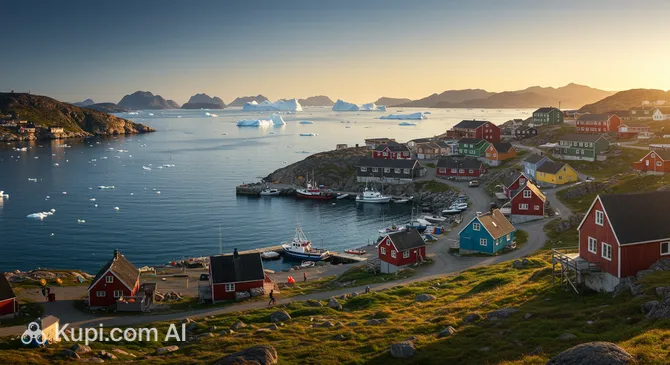
Rising steeply over the harbor in a natural amphitheater, Qaqortoq is widely regarded as one of the most picturesque towns in Greenland. With its kaleidoscope of colorful houses contrasting against the rugged terrain and the deep blue fjord, this southern gem offers a vibrant atmosphere that captivates every visitor. As the administrative center of the Kujalleq municipality, it serves as a vital cultural and economic hub for the region.

Qaqortoq. Source: Kupi.Binoculars

Despite being home to just over 3,000 residents, the town feels lively and significant within the context of the Arctic. The history of Qaqortoq dates back to its founding in 1775, and traces of its colonial past can still be seen in the well-preserved buildings near the old harbor. The town seamlessly combines this heritage with modern Greenlandic life, creating a unique urban experience on the edge of the wilderness.

One of the city's most distinct features is the "Stone & Man" project, an open-air art exhibition consisting of over 30 sculptures carved directly into the local rock faces and boulders scattered throughout the town. Another highlight is the town square, home to the oldest fountain in the country, Mindebrønden, where locals and tourists alike gather to enjoy the scenery. Whether you are interested in exploring nearby Viking ruins, soaking in the Uunartoq hot springs, or simply wandering the hilly streets, Qaqortoq is an unforgettable destination waiting to be explored.

Weather Overview

Understanding the local climate is key to enjoying your visit to this southern Greenlandic town. The weather in Qaqortoq is classified as subarctic, characterized by cool, refreshing summers and cold winters. The warmest season runs from June through August, where average temperatures hover around 8.5°C and daily highs can reach up to 11.2°C, creating comfortable conditions for exploring the outdoors.

Winter transforms the region into a snowy landscape, with February typically being the coldest month, seeing average temperatures drop to -9.7°C and lows reaching -12.4°C. Precipitation is a consistent feature year-round; while the actual accumulation is quite low (often just 2–5mm), the number of wet days is significant, ranging from 8 to 13 days per month. Expect cool, mild summers and cold winters with frequent but light precipitation throughout the year.

Interesting Facts

Beyond its colorful facade and artistic heritage, Qaqortoq holds fascinating stories and historical nuances that are often overlooked by casual visitors. Delving into these local secrets reveals a town that is not only visually stunning but also rich in history and modern culture.

  • The Meaning of the Name: In the local language, the name Qaqortoq translates to "The White." This moniker is somewhat ironic given that the town is famous for its vibrant, rainbow-colored houses, but it is thought to refer to the white-washed historic church or the snow-covered cliffs that surround the settlement in winter.

  • A Hub for Arctic Fashion: Surprisingly, this small town is a capital of high fashion in the Arctic. It is home to Great Greenland, the country's only tannery, where traditional Inuit hunting practices meet modern design to produce sustainable seal fur coats and accessories sold around the world.

  • The Last Viking Record: Just a short boat ride away lie the ruins of Hvalsey Church, a site of immense historical significance. It was here in 1408 that a wedding took place, serving as the very last written record of the Norse Vikings in Greenland before they mysteriously vanished from history.

  • A Building with a Past: The distinctive black-tarred building that now houses the Qaqortoq Museum is the oldest standing structure in the town. Built in 1804, it originally served as the colonial manager's accommodation and remains a perfect example of early Danish colonial architecture.

How to Get There

Reaching this colorful town in southern Greenland is an adventure that immerses you in the Arctic landscape from the very start. Since there are no roads connecting towns in Greenland, the journey almost always involves a combination of air travel and sea or helicopter transfers. For a comprehensive guide on logistics and routes, you can read more about how to get to Qaqortoq and plan your arrival.

The city of Qaqortoq does not have its own airport for fixed-wing aircraft. Instead, international and domestic travelers typically fly into Narsarsuaq Airport (IATA: UAK), which serves as the primary regional hub. Located in the settlement of Narsarsuaq, this airport is approximately 59 km away from Qaqortoq. Because there is no road network linking the two locations, a taxi or bus transfer is not possible. Upon arrival at Narsarsuaq, passengers must transfer to a helicopter or a boat to reach their final destination. The boat transfer is a scenic journey through the fjord system, usually taking about 1 to 2 hours, while the helicopter ride is much faster, offering stunning aerial views.

For clarity, here is a summary of the main airport used to access the region:

Airport Name City Passenger Traffic Km from City
Narsarsuaq Airport Narsarsuaq Small 59.3

In addition to air travel, Qaqortoq is a popular port of call for the Arctic Umiaq Line coastal ferry, Sarfaq Ittuk, which connects various towns along the western coast of Greenland during the ice-free months. This sea route offers a slower but incredibly picturesque way to arrive, allowing visitors to see the coastline and icebergs up close before docking in the town's charming harbor.

Main Attractions

Qaqortoq is a town best explored on foot, where the vibrant culture and history of Southern Greenland are woven into the very streets. The city center is compact yet rich with sights, offering visitors a blend of open-air art, historic architecture, and unique local industries that define the region's identity.

The most iconic feature of the town is undoubtedly the Stone & Man Project. This permanent outdoor gallery transforms the entire city into an artistic landscape, with over 30 motifs carved directly into the granite bedrock and boulders. Initiated by local artist Aka Høegh in the 1990s, the project invited Nordic artists to leave their mark on the town. As you wander through the streets, spotting these intricate carvings—ranging from whales and faces to abstract forms—becomes a delightful scavenger hunt that connects the rugged nature with human creativity.

For a deep dive into local heritage, the Qaqortoq Museum is an essential stop. Housed in the town's oldest building, a black-tarred colonial structure from 1804, the museum offers a fascinating glimpse into the past. Inside, you will find collections dedicated to the Inuit cultures of the Dorset and Thule people, as well as artifacts from the Norse Viking era. The museum also features the beautifully preserved "Blue Room," which recreates the living conditions of the early colonial period, and displays traditional kayaks and hunting equipment.

Dominating the center of town is the historic Church of Our Saviour (Frelserens Kirke). Consecrated in 1832, this striking red wooden church is a classic example of Danish colonial architecture and serves as a central landmark. The interior is humble yet beautiful, featuring a lifebuoy from the ship Hans Hedtoft, which tragically sank in 1959. It is a peaceful place to reflect and admire the town's architectural charm.

To understand the modern economy of the region, a visit to Great Greenland is highly recommended. This facility is the only tannery in the country and plays a pivotal role in the Greenlandic seal fur industry. Visitors can take guided tours to learn about the sustainable practices used in processing the furs and see how traditional hunting methods support local communities. The on-site showroom displays high-fashion fur coats and accessories, blending ancient materials with contemporary design.

Local Cuisine

The culinary scene in Qaqortoq is a direct reflection of its surroundings, offering a unique blend of rugged Arctic tradition and fresh, natural ingredients. As the largest town in South Greenland, it benefits from being in the country's "farming belt," making it one of the best places to experience a true farm-to-table philosophy, Greenlandic style. The local diet is heavily reliant on the harvest from the sea and the land, with an emphasis on purity and flavor.

A standout feature of the region's gastronomy is South Greenland lamb. Unlike in the north, the subarctic climate here allows for sheep farming, and the meat is renowned for its tenderness and distinct flavor, derived from the wild thyme and angelica the animals graze on in the mountains. You will often find it served as a premium dish in local restaurants, roasted or prepared as chops, and it is widely considered some of the finest lamb in the world.

For seafood lovers, the cold, pristine waters of the fjord provide an abundance of high-quality catch. Snow crab, Atlantic prawns, and halibut are staples on many menus. For a more traditional Inuit experience, adventurous eaters should try suaasat, a hearty soup typically made from seal meat (though sometimes reindeer or seabirds) boiled with onions and potatoes. Another delicacy is mattak, a piece of whale skin with a layer of blubber, often eaten raw and prized for its high vitamin C content.

The dining culture in Qaqortoq is relaxed and intimate. Locals and tourists often visit the "Brædtet" (the local open-air market), where hunters and fishermen sell their fresh catch of the day, ranging from redfish to reindeer meat. While the town has a limited number of sit-down restaurants, often located within hotels, they offer a cozy atmosphere where you can enjoy a fusion of Greenlandic ingredients and European or Thai cooking styles—the latter being surprisingly popular and authentic in many Greenlandic towns.

To finish your meal, you must try a Greenlandic Coffee. This is not just a drink but a performance; it typically consists of hot coffee mixed with whiskey, Kahlúa, and Grand Marnier, topped with whipped cream. It is usually served after dinner, often with a story about the "Northern Lights" represented by the flaming Grand Marnier poured over the glass.

Travel Tips

Visiting Qaqortoq is a unique experience that combines the raw beauty of the Arctic with the charm of a small, vibrant community. To help you make the most of your adventure in Southern Greenland, here are some practical tips to ensure your journey is smooth, comfortable, and respectful of the local way of life.

  1. Clothing and Gear: The weather in the Arctic can change rapidly, so the "onion principle" of dressing in layers is essential. Even in summer, bring a windproof and waterproof outer shell, a warm fleece, and a hat. Since Qaqortoq is built on steep hills and granite bedrock, sturdy hiking boots with good ankle support are a must for navigating the town's many stairs and rocky paths. If you plan to visit the nearby hot springs, don't forget your swimwear!

  2. Transportation: Qaqortoq is a compact town best explored on foot, though be prepared for a workout due to the hilly terrain. There is no metro or train system, but local taxis are available and can be very useful if you need to travel from the harbor to the upper parts of town with luggage. Car rental is generally not necessary or common for tourists within the town limits, as there are no roads connecting Qaqortoq to other settlements.

  3. Finances: The official currency is the Danish Krone (DKK). Major credit cards (Visa and Mastercard) are widely accepted in hotels, supermarkets (like Pisiffik and Brugseni), and most restaurants. However, it is wise to carry some cash for small purchases at the open-air market (Brædtet) or when buying souvenirs from local artisans. ATMs are available in the town center.

  4. Health and Safety: Qaqortoq is a very safe place with low crime rates, but nature demands respect. Be cautious when walking on wet or icy rocks. The town hosts the regional hospital for South Greenland, providing medical assistance if needed. Pharmacies are typically integrated into the hospital or larger supermarkets; bring your own supply of prescription medications. In summer, insect repellent is highly recommended as the Arctic mosquitoes can be fierce.

  5. Communication: The official language is Greenlandic (Kalaallisut), and Danish is also an official language. English is widely understood and spoken by those working in the tourism and service industries. Wi-Fi is available in hotels and some cafes, often for a fee. For mobile data, you can purchase a prepaid SIM card from the local telecommunications provider, Tusass. A useful local word to know is "Aluu" (Hello).

  6. Local Etiquette: Greenlanders are generally friendly but value their privacy. A handshake is the standard greeting. If you are invited into a local home, it is customary to remove your shoes at the door. Always ask for permission before taking photographs of locals, especially children or people working at the market.

  7. What to Avoid: Do not walk on the flower beds or disturb the vegetation; in the Arctic climate, plants grow very slowly and are fragile. Also, avoid assuming that shops and services follow the same opening hours as in major cities; many places close early on weekends and may have limited hours on Sundays.

  8. Additional Tip: Prepare for the stairs! Qaqortoq is often described as a natural amphitheater, meaning many streets are connected by wooden or metal staircases. A simple walk to the grocery store can feel like a stair-master workout, so take your time and enjoy the breathtaking views of the fjord that appear with every step you climb.

By keeping these practicalities in mind, you will be well-equipped to embrace the rhythm of life in Qaqortoq. Whether you are climbing the hills to see the art sculptures or enjoying a coffee by the harbor, being prepared allows you to focus entirely on the magic of this colorful Arctic town.

Entertainment & Nightlife

Nightlife in Qaqortoq is intimate, authentic, and surprisingly spirited for a town of its size. As the educational hub of South Greenland, the presence of students adds a youthful energy to the weekends, distinct from other settlements in the region. While you will not find sprawling nightclub districts or neon-lit strips, the town offers a cozy and welcoming after-dark scene centered primarily around the harbor and the main town square.

The atmosphere is decidedly casual and community-focused. Locals and visitors mingle freely, often bonding over live music or a game of billiards. The dress code is practical and relaxed; hiking boots and warm sweaters are far more common than high heels or formal wear, largely due to the town's hilly terrain and cooler evening temperatures. Friday and Saturday nights are the peak times for going out, with venues typically staying open until the early morning hours, whereas weeknights are generally much quieter.

For those looking to experience the local social scene, Arctic Café is the town's most popular watering hole. Located near the center, it serves as a classic pub where you can enjoy a cold beer, play pool, and, as the night progresses, hit the dance floor. It is the place to meet locals and experience the festive side of Greenlandic culture. Another key spot is the bar at Hotel Qaqortoq. Perched on the hill overlooking the harbor, it offers a more refined setting with panoramic views. It is an excellent venue for a quiet evening drink or to try the famous "Greenlandic Coffee"—a potent mix of coffee, whiskey, Kahlúa, and Grand Marnier, often served with a spectacular flaming presentation.

Practicalities are important when planning a night out here. Alcohol prices in Greenland can be high compared to many other countries, so it is wise to budget accordingly. Getting around at night is safe, but the steep streets and staircases can be challenging, especially if they are icy or if visibility is low. Taxis are available and are the recommended way to return to your accommodation if you are staying far from the center; you can usually find them waiting near the main venues or call for a pickup.

During the day, entertainment shifts towards cultural and outdoor pursuits rather than commercial amusement parks or theaters. The town functions as an open-air gallery, perfect for a self-guided art walk to spot the famous rock carvings scattered throughout the streets. Visitors can also spend their afternoons exploring the local museum near the old harbor, hiking around the lake Tasersuaq, or taking boat tours to explore the surrounding fjords before settling in for the evening.

Parks & Museums

Qaqortoq is often described as an open-air gallery where nature and urban design intersect seamlessly. While the town does not feature manicured botanical gardens in the traditional sense, its spectacular natural surroundings and curated public spaces offer visitors a unique blend of recreational areas and cultural landmarks.

For those seeking fresh air and scenic beauty, Lake Tasersuaq (often referred to as the Great Lake) is the town's premier natural playground. Located just a short hike inland from the harbor, this expansive freshwater lake serves as the backyard for the local community. In summer, the surrounding hills are covered in low-growing Arctic vegetation, making it a perfect spot for a picnic or a peaceful hike along the water's edge. It offers a serene escape from the town center and provides stunning reflections of the surrounding mountains on calm days.

Another significant public space is the Town Square, centered around the historic Mindebrønden fountain. Completed in 1932, it holds the distinction of being the oldest fountain in Greenland. This square functions as the town's social heart, where locals gather on sunny days. Surrounded by colorful buildings and often bustling with activity, it offers a charming urban experience where you can sit and watch the daily life of the settlement unfold.

Architecturally, the Gertrud Rask Church stands out as a striking example of modern design amidst the rugged landscape. Perched on a hill overlooking the town, this white concrete structure, consecrated in 1973, was designed to resemble a stylized iceberg or a ship's sail. Its commanding location and unique shape make it a key landmark that contrasts beautifully with the colorful wooden houses below, offering a different aesthetic experience compared to the historic colonial buildings near the harbor.

For a truly authentic outdoor experience, take the time to hike up to the cairns on the hills behind the town. From here, you get a bird's-eye view of the colorful houses stacked against the slopes and the iceberg-filled fjord beyond. This perspective reveals the true scale of the town's isolation and beauty, rewarding hikers with one of the most photogenic panoramas in the region.

Getting Around

Navigating Qaqortoq is primarily a matter of handling its unique geography. As a compact town built into a steep "natural amphitheater," the distances are short, but the terrain can be demanding. There is no metro, tram, or train system in the city. Instead, the public transport network consists of a local bus service and a reliable fleet of taxis, which complement the most common mode of getting around: walking.

The local bus service, often referred to as the Bybus, operates on a loop connecting the harbor, the town center, and the residential areas located higher up the hills. This service typically runs on weekdays and is an excellent way to save your energy for sightseeing rather than spending it climbing the steep roads. The bus is particularly useful for reaching the upper parts of the town near the hospital or the schools if you are staying in those neighborhoods.

For payment, the system is traditional and straightforward. You can purchase a single-ride ticket directly from the driver upon boarding; it is highly recommended to have cash (Danish Krone) in small denominations, as credit card machines may not always be available or reliable on the bus itself. Multi-ride punch cards (klippekort) are also available for those planning a longer stay, offering a discount compared to single fares. A standard ticket is usually valid for one hour, allowing for transfers if necessary, though the route is simple enough that transfers are rarely needed.

Taxis are a popular alternative and operate throughout the day and evening. They are especially convenient if you are traveling with luggage or visiting during inclement weather. You can find taxis waiting at the harbor when ships arrive, or you can book one by phone. Most taxis accept credit cards, but asking the driver before the ride begins is always a good practice. Unlike in some larger capitals, ride-sharing apps are not active here, so relying on official taxi companies is the standard.

While not a form of public transport in the traditional sense, water taxis are a vital part of local logistics. Small boats can be hired at the harbor for transfers to nearby settlements or attractions across the fjord. This is often the only way to reach specific hiking spots or hot springs that are not accessible by road.

For most visitors, walking remains the primary way to experience the city. The town is famous for its "Stone & Man" open-air art project, and exploring on foot allows you to discover these sculptures hidden in rock faces and street corners. However, be prepared for many staircases and steep inclines. If you have mobility issues, relying on the bus or taxis for the uphill journeys is strongly advised.

Accommodation

Accommodation in Qaqortoq is limited compared to larger international destinations, but the available options are comfortable, clean, and well-suited for Arctic travelers. The selection typically ranges from a full-service hotel to smaller guesthouses, bed-and-breakfasts, and hostel-style lodgings. Due to the town's small size, you will not find sprawling luxury resorts; instead, the focus is on cozy, practical hospitality that provides a warm refuge from the subarctic elements.

Because the town is built like a natural amphitheater around the harbor, location is a key consideration. Staying near the harbor area offers the most convenience, placing you close to the boat transfers, the museum, and the few shops and restaurants in the center. However, accommodations located higher up the hills reward guests with spectacular panoramic views of the fjord and the colorful rooftops below. Visitors choosing these spots should be prepared for the daily exercise of navigating the town's many staircases.

For those seeking a traditional hotel experience, the most prominent option is Hotel Qaqortoq. Perched on a hill overlooking the harbor, it is widely considered the premier place to stay in the region. It functions as a social hub for the town, housing a popular restaurant and bar, and offers modern amenities that are standard for 4-star properties. Travelers looking for a more homely or budget-friendly atmosphere often turn to local guesthouses or private rentals, which can offer a more intimate glimpse into local life.

Booking Tip: Capacity in Qaqortoq is low, and demand peaks significantly during the short summer tourist season (June to August). It is highly recommended to book your accommodation several months in advance. If you arrive without a reservation during the high season, you may find that every bed in town is taken by tour groups.

In terms of pricing, accommodation in Greenland is generally considered expensive by international standards. Even budget options can be pricier than mid-range hotels in other parts of the world due to the high costs of operation in the Arctic. Most bookings can be made via major online travel platforms or directly through the property's website, which is often the most reliable method for smaller guesthouses.

Nearby Cities

For those looking to explore the surroundings, Qaqortoq serves as an excellent base for day trips to several interesting nearby locations:

Hvalsey Church Ruins
Located just a short boat ride from the town harbor, the ruins at Hvalsey are the best-preserved Norse remains in Greenland. This site is historically significant as the location of the last written record of the Norse Vikings in the country—a wedding in 1408. Visitors can walk among the stone walls of the old church and farmstead, imagining life in this remote settlement centuries ago. The boat trip itself offers a scenic tour of the fjord, often passing icebergs along the way.

Uunartoq Hot Springs
For a truly unique Arctic experience, a trip to the island of Uunartoq is a must. Unlike other hot springs in Greenland, these are warm enough for bathing year-round. There are three naturally heated pools where visitors can relax in 38°C (100°F) water while enjoying a view of drifting icebergs and mountain peaks. It is a popular excursion that combines relaxation with the raw beauty of the southern Greenlandic nature.

Igaliku
Often called the most beautiful settlement in Greenland, Igaliku is accessible via a boat transfer to Itilleq followed by a pleasant hike over the "King's Road." The village is known for its colorful houses, peaceful atmosphere, and the ruins of Garðar, which was the episcopal seat of the Norse church. Today, it is a thriving sheep farming community and a UNESCO World Heritage site component, offering a glimpse into both ancient history and modern rural life.

City Population Distance (km)
Nuuk 18326 484
Sisimiut 5582 787
Maniitsoq 2534 627
Tasiilaq 2018 689
Paamiut 1429 241

These nearby destinations offer a glimpse into the diverse culture and landscapes of the region.

Shopping & Souvenirs

Shopping in Qaqortoq offers a distinct experience that differs significantly from the bustling commercial centers of Europe or North America. Instead of sprawling malls and international chain stores, you will find a selection of local shops that cater to both the daily needs of residents and the interests of visitors. The retail scene is concentrated and intimate, focusing on high-quality outdoor gear, daily essentials, and unique Greenlandic craftsmanship that reflects the region's cultural heritage.

The main shopping activity is clustered around the harbor area and the central town square. This compact district is easily walkable and contains the majority of the town's retail outlets. As you stroll through these streets, you will encounter a mix of souvenir shops, artisan workshops, and larger grocery stores. The proximity to the port makes it convenient for cruise ship passengers and independent travelers to explore the offerings without venturing too far afield.

While Qaqortoq does not have shopping malls in the traditional sense, the town is served by two large supermarket chains that function as department stores: Pisiffik and Brugseni. These multi-purpose establishments are the commercial anchors of the community. Inside, you can find everything from fresh groceries and bakery items to electronics, clothing, and even hunting rifles. For tourists, they are excellent places to stock up on snacks, toiletries, or warm layers if the Arctic weather proves colder than expected.

For a glimpse into the authentic local lifestyle, a visit to "Brædtet" (the open-air market) is essential. Located near the harbor, this is where local hunters and fishermen sell their fresh catch of the day. Depending on the season, you might see fresh halibut, redfish, seal meat, or seabirds. While you might not be buying raw meat to take home, it is a fascinating cultural hub. There are also occasionally stalls selling homemade crafts or berries during the harvest season.

When it comes to souvenirs, Qaqortoq is one of the best places in Greenland to purchase high-quality local goods. The town is home to Great Greenland, the country's only tannery and a fashion house specializing in seal fur. Their showroom offers everything from small accessories like mittens and bags to full-length coats, all produced sustainably. Additionally, look for tupilaks—traditional figures carved from reindeer antler, musk ox bone, or whale tooth. Intricate beadwork and jewelry made from local stones are also popular keepsakes that directly support local artisans.

Store opening hours in Qaqortoq are generally from 10:00 AM to 5:30 PM on weekdays. On Saturdays, shops often close earlier, typically around 1:00 PM or 2:00 PM, and most retail businesses remain closed on Sundays. It is important to plan your shopping trips accordingly, especially if you arrive on a weekend. As for payment, the Danish Krone (DKK) is the official currency. Major credit cards like Visa and Mastercard are widely accepted in hotels, supermarkets, and souvenir shops, though carrying some cash is recommended for smaller purchases at the market or from individual craftsmen.

Regarding taxes, Greenland operates outside the EU VAT area and does not have a Value Added Tax (VAT) system. This means the price you see on the tag is the final price, and there is no tax refund mechanism for tourists at the airport. However, keep in mind that import rules for products like seal fur or whale bone vary by country, so it is wise to check your home country's customs regulations before making significant purchases.
Reached the end of the page?

That means the route is fully explored