Support

Narsarsuaq

About

Welcome to Narsarsuaq, a unique settlement that serves as the primary gateway to the breathtaking landscapes of South Greenland. Despite its small size, with a population of approximately 145 residents, this locality bustles with activity during the summer months, welcoming travelers eager to explore the Arctic wilderness. Located deep within the Tunulliarfik Fjord, the area is renowned for its surprisingly lush sub-arctic flora and relatively mild climate compared to the rest of the country.

The settlement owes its existence to aviation and strategic geography. The history of Narsarsuaq began in 1941 when it was established as a crucial American airbase, code-named Bluie West One, during the Second World War. Today, the large airfield remains the hub of the community, and visitors can delve into this fascinating past at the local museum, which displays a wide range of artifacts from the military era.

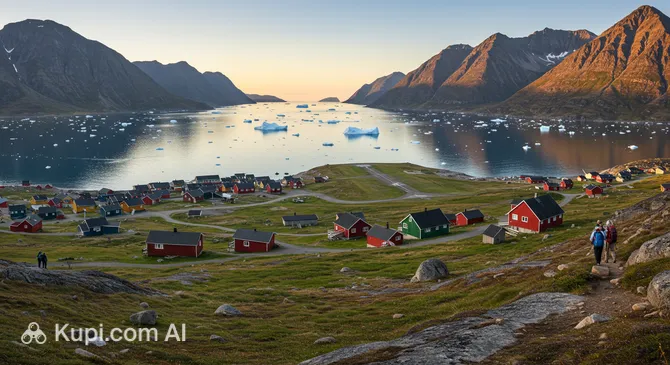
Narsarsuaq. Source: Kupi.Binoculars

Nature lovers will find plenty to admire here. Narsarsuaq is one of the few places where you can hike through a forest in the Arctic, thanks to the Greenlandic Arboretum, which hosts trees from various alpine and sub-arctic regions. It is also an excellent starting point for excursions to the massive Greenland Ice Sheet, offering visitors a chance to witness the sheer scale of the ice cap just a short distance away.

Whether you are passing through on your way to nearby Viking ruins in Qassiarsuk or staying to hike the scenic Signal Hill for panoramic views of the fjord and glacier, Narsarsuaq offers a memorable introduction to the raw beauty of the region. It is a perfect destination for adventurers seeking both historical depth and natural splendor.

Weather Overview

Narsarsuaq experiences a sub-arctic climate that is somewhat sheltered by its position within the Tunulliarfik Fjord, protecting it from the harshest coastal elements. While the conditions can be changeable, the region generally offers distinct seasonal shifts that shape the travel experience. To help plan your trip effectively, it is recommended to check the weather in Narsarsuaq for the most up-to-date forecasts.

Summers are cool but relatively mild for Greenland, with July being the warmest month, featuring an average temperature of 8.3°C and highs reaching up to 11.1°C. This is the prime season for exploring the outdoors, though visitors should be prepared for damp conditions; June is statistically the wettest month in terms of frequency, with precipitation recorded on approximately 18 days.

The winter months are characteristically cold, with February typically being the coldest time of the year, showing an average temperature of -11.7°C and lows dropping to -14.4°C. The transitional seasons of spring and autumn remain chilly, with temperatures often lingering below or just above freezing. Overall, you can expect cool summers with frequent light precipitation and cold, dry winters.

Interesting Facts

Beyond the main attractions, Narsarsuaq holds many fascinating secrets that reveal its unique place in both history and botany. From its geological origins to its days as a bustling military "city," there is much more to this settlement than meets the eye.

  • The Meaning of the Name: In Greenlandic, Narsarsuaq translates to "The Great Plain." This is a literal description of the large, flat glacial moraine on which the settlement sits—a geological rarity in a country dominated by steep mountains and deep fjords. This naturally flat terrain is precisely what made it the perfect candidate for a major airfield.

  • A Vanished Metropolis: Today, the settlement has a modest population of around 145, but during World War II, it was a bustling hub with approximately 4,000 inhabitants. At that time, the base functioned as a self-sufficient town complete with a cinema, a bowling alley, and a 250-bed hospital, which was one of the largest medical facilities in Greenland and treated casualties from the war in Europe.

  • Clearing the Path: In the early years of the Cold War, when jet fighters began using the airfield, they required a clear path for their longer takeoff runs. To ensure safety, the base actually employed a small tugboat specifically tasked with towing icebergs out of the fjord to keep the "runway" extension clear of floating obstacles.

  • A Global Forest: The Greenlandic Arboretum is not just a collection of local flora; it is a massive scientific experiment spanning 150 hectares. It is home to over 100,000 trees representing about 110 different species from the alpine and sub-arctic regions of Siberia, Alaska, and Scandinavia, making it one of the few places in the Arctic where you can get lost in a "global" forest.

How to Get There

Reaching this remote Arctic outpost is an adventure in itself, usually involving a flight over spectacular fjords and glaciers. To ensure your trip goes smoothly, we recommend reviewing all ways to reach the city before booking your tickets. Since Narsarsuaq acts as the primary transport hub for South Greenland, it is well-connected by air compared to other settlements in the region.

The most direct way to arrive is via Narsarsuaq Airport (UAK), which is located right in the heart of the settlement. Historically significant as a former military airbase, it now serves as the main gateway for international flights from Iceland and Denmark, as well as domestic connections. Because the airport is situated just 0.4 km from the center of Narsarsuaq, getting to your accommodation is incredibly convenient. A taxi or hotel transfer takes less than 5 minutes, and for those with light luggage, it is often possible to simply walk to the nearby hotel or hostel. Although it is a small regional hub with an annual passenger traffic of approximately 22,000 people, it is fully equipped to handle travelers heading into the Greenlandic wilderness.

For clarity, here is a summary of the main airport:

Airport Name City Passenger Traffic Km from City
Narsarsuaq Airport Narsarsuaq Small 0.4

Due to the rugged terrain and vast distances, there is no railway system in Greenland. Consequently, Narsarsuaq does not have a train station, and rail travel is not an option in this part of the world. Beyond flying, the only other way to travel between towns and settlements is by sea, with boat transfers and coastal ferries operating during the ice-free summer months.

Main Attractions

Although Narsarsuaq is a small settlement, it serves as a fascinating focal point for history buffs and nature enthusiasts alike. The area offers a mix of military heritage and accessible Arctic wilderness that is unique in Greenland. Below are some of the key places you should visit to fully appreciate this destination.

Narsarsuaq Museum is the best place to start your exploration of the local history. Housed in one of the original buildings from the American airbase era, the museum offers a deep dive into the story of "Bluie West One." Visitors can examine a comprehensive collection of artifacts, including uniforms, photographs, and equipment from World War II. It provides a compelling narrative of how this remote location played a pivotal role in transatlantic aviation and the war effort, making it interesting for anyone curious about 20th-century history.

For a truly unique natural experience, a walk through the Greenlandic Arboretum is essential. Located on the slopes near the airport, this botanical garden is an impressive experiment in Arctic forestry. It contains thousands of trees collected from tree-lines across the globe, including species from Siberia, Alaska, and the Rocky Mountains. It is interesting to tourists because it offers the rare opportunity to walk through a "forest" in a country generally defined by tundra and ice, providing a lush, green contrast to the surrounding rocky landscape.

If you are looking for the best panoramic views, a hike up Signal Hill (locally known as Sukkertoppen) is highly recommended. The trail is relatively accessible and takes about an hour to ascend. Once you reach the summit, you are rewarded with a breathtaking 360-degree view of the airfield, the azure waters of the Tunulliarfik Fjord, and the massive Qinngua Valley. It is the perfect spot for photographers and hikers wanting to capture the scale of the landscape from above.

Finally, no trip to this region is complete without witnessing the Greenland Ice Sheet. Narsarsuaq is located just a few kilometers from the edge of the ice cap, making it one of the most accessible places to see it. Local tour operators run boat excursions that take you close to the glacier fronts where you can see icebergs calving, or guided hikes that allow you to set foot on the ice itself. It is a humbling experience that brings you face-to-face with the immense frozen forces that shape the Arctic environment.

Local Cuisine

Dining in Narsarsuaq is a cozy and intimate affair, reflective of its status as a small airport settlement rather than a bustling metropolis. While you will not find a wide variety of restaurants, the culinary experience here is defined by the exceptional quality of local ingredients. The food culture is deeply rooted in the surrounding environment, focusing on fresh, wild-caught protein from the sea and the tundra, often prepared with a blend of traditional Inuit methods and Danish culinary influences.

As the gateway to South Greenland, which is the country's primary farming region, Greenlandic lamb is a standout dish that every visitor should try. The sheep roam freely in the mountains during the summer, feeding on wild herbs and grasses, which gives the meat a distinct, tender, and highly prized flavor. You will also frequently find musk ox on the menu, served as steaks, roasts, or even burgers. The meat is lean, dark, and rich, offering a unique taste of the Arctic wilderness that is unlike beef or venison.

For seafood lovers, the cold waters of the fjord provide an abundance of fresh catch. Arctic char, halibut, and deep-sea shrimp are staples, often served simply to highlight their natural freshness. Adventurous eaters might want to sample suaasat, the national soup of Greenland. Typically made from seal, whale, or reindeer meat boiled with onions and potatoes, it is a hearty and warming dish designed to sustain locals through the cold winters.

When it comes to drinks, the local tap water is a highlight in itself—it is pure, melted glacial ice that is incredibly crisp and refreshing. For something stronger, the signature experience is Greenlandic Coffee. This is not just a drink but a performance: it combines hot coffee with whiskey, Kahlua, and Grand Marnier, topped with whipped cream. The Grand Marnier is often set alight before being poured, symbolizing the Northern Lights, making it a perfect end to a dinner.

Due to the settlement's small population, dining options are concentrated. The main culinary hub is the restaurant at Hotel Narsarsuaq, which serves both travelers and locals. It offers a mix of international standards and local specialties, often in a cafeteria-style setting during lunch and à la carte for dinner. There is also a café located within the airport terminal for quick bites, coffee, and pastries. Given the limited number of venues, the atmosphere is communal and relaxed, offering a great opportunity to chat with fellow explorers.

Travel Tips

Traveling to a remote outpost like Narsarsuaq requires a bit more foresight than your average city break, given its isolated location and unique Arctic environment. To help you make the most of your adventure in South Greenland and ensure a smooth journey, here are some essential practical tips to keep in mind.

  1. Clothing and Gear: The weather can change rapidly, so the "onion principle" of dressing in layers is essential. Even in summer, bring a windproof and waterproof jacket, warm sweaters, and sturdy hiking boots for the uneven terrain. Crucially, if you are visiting between June and August, you must bring a mosquito head net and strong insect repellent; the sub-arctic vegetation in this area breeds large numbers of non-dangerous but annoying midges and mosquitoes.

  2. Transportation: Within the settlement itself, there is no public transport system like buses or metros because everything is within walking distance. The hotel, airport, and harbor are all close to each other. To visit nearby towns like Qassiarsuk or Narsaq, you will rely on boat transfers (which should be booked in advance) or helicopter flights. Car rentals are generally not available or necessary for tourists here.

  3. Finances: The local currency is the Danish Krone (DKK). While the hotel and the tour office generally accept international credit cards (Visa and Mastercard), it is highly recommended to carry some cash for smaller purchases at the local store or for tipping. There is an ATM located in the airport terminal, but it is wise to withdraw cash before arriving in Greenland if possible to avoid technical issues.

  4. Health and Safety: Narsarsuaq is very safe regarding crime, but the natural environment demands respect. There is no full-service hospital here, only a small nursing station or basic aid; serious medical issues require evacuation to Qaqortoq or Nuuk. Always carry a basic first-aid kit and any personal prescription medications you need, as the local shop has a very limited selection of over-the-counter drugs.

  5. Communication: The official language is Greenlandic, but Danish is also used administratively. Fortunately for travelers, English is widely spoken by staff at the airport, hotel, and tour agencies. For connectivity, you can buy a prepaid SIM card from the local telecommunications provider, Tusass, at the airport post office. Be aware that mobile data can be slower than you are used to, and Wi-Fi at the hotel is often a paid service.

  6. Local Etiquette: Greenlanders are generally somewhat reserved but very friendly. A smile and a nod are appropriate greetings. If you are invited into a private home or stay at a hostel with common areas, it is customary to remove your shoes at the door. Always ask for permission before taking photographs of locals, as privacy is highly valued in small communities.

  7. What to Avoid: Do not walk on the airfield runway or cross restricted airport zones, even if they look like shortcuts to hiking trails. Security regulations are strictly enforced. Also, avoid hiking alone in the mountains without informing someone at your hotel of your route and expected return time, as mobile signal disappears quickly outside the settlement.

  8. Shopping Tip: There is only one supermarket in town, the Pilersuisoq, which sells everything from groceries to rifles. Be mindful of its opening hours, as it often closes early in the evening and has reduced hours on weekends. If you plan to hike or have a late arrival, buy your snacks and water immediately upon arrival.

By packing the right gear and respecting the local rhythm of life, you will find Narsarsuaq to be a welcoming and comfortable base for your explorations. Embrace the quiet isolation and the stunning natural surroundings, and you are sure to have an unforgettable experience in the Arctic.

Entertainment & Nightlife

Nightlife in Narsarsuaq is a unique and intimate experience, defined not by bustling clubs or neon-lit districts, but by cozy gatherings and the awe-inspiring backdrop of the Arctic wilderness. In a settlement of this size, the concept of a "night out" is refreshingly simple: it is about connecting with fellow travelers, sharing stories of the day's adventures, and enjoying the tranquility of the surroundings. The atmosphere is incredibly relaxed, with hikers, guides, and locals mingling in a friendly, informal setting where hiking boots are more common than high heels.

There is no specific "nightlife district" here; instead, the social scene is concentrated entirely within the small central area around the airport terminal and the main accommodation facilities. Since everything is located within a radius of a few hundred meters, you can easily walk between venues. The vibe is communal and welcoming, making it easy to strike up a conversation with someone from the other side of the world who has just returned from the ice sheet.

The primary hub for evening entertainment is the Hotel Narsarsuaq. Its bar and lounge area serve as the settlement's living room, where visitors congregate after dinner. During the summer high season, the restaurant at Hotel Narsarsuaq often stays open late, transforming into a social venue where you can enjoy a glass of wine or a local draft beer. This is also the best place to witness the theatrical preparation of "Greenlandic Coffee," a flaming cocktail that is as much a show as it is a drink, often serving as the highlight of the evening.

For a more casual atmosphere, Café Narsarsuaq (often referred to as the airport café) is another key spot. Located right in the terminal building, it offers a laid-back environment where you can grab a cold beer or a coffee. In the summer months, its outdoor terrace becomes a popular gathering point, buzzing with energy as travelers soak up the midnight sun. It is a perfect place to relax with a view of the airfield and the fjord beyond.

In winter and late autumn, the "nightlife" takes on a different character, shifting its focus to the sky. Narsarsuaq is a prime location for viewing the Northern Lights (Aurora Borealis). With minimal light pollution, you only need to walk a short distance from the hotel—perhaps towards the Greenlandic Arboretum—to find pitch-black skies. Watching the green and purple lights dance overhead is the ultimate evening entertainment here, far surpassing any nightclub experience.

Practical advice for a night out is straightforward. The dress code is strictly "Arctic casual"—warm layers and comfortable footwear are standard everywhere. Prices for alcohol can be higher than in Europe or North America due to import costs, so budget accordingly. The area is extremely safe for night walks, but it is always wise to bring a flashlight if you venture away from the streetlights to stargaze. Taxis are generally not used for "bar hopping" since the venues are neighbors, but the hotel can arrange transfers if you are staying further afield.

While the focus is on the evening, daytime entertainment in Narsarsuaq complements the slow pace of life. Visitors can explore the Narsarsuaq Museum to learn about the area's aviation history or take a peaceful stroll through the arboretum. However, as the sun sets (or simply dips low in summer), the settlement returns to its quiet, communal rhythm, offering a perfect end to an active day.

Parks & Museums

While Narsarsuaq is a small settlement rather than a sprawling metropolis, its cultural and recreational offerings are surprisingly rich and deeply intertwined with its unique history and geography. The destination does not feature traditional city parks or vast art galleries; instead, it presents a fascinating blend of open-air botanical wonders and historical exhibitions that reflect its dual identity as a former military base and a gateway to the Arctic wilderness.

Key Parks and Green Spaces

The crown jewel of the area's green spaces is the Greenlandic Arboretum. Far more than just a park, this is a sprawling 150-hectare botanical garden located on the sheltered slopes near the airport. It serves as a living laboratory, established to determine which tree species can thrive in the sub-arctic climate. Tourists are often struck by the surreal experience of walking through a dense grove of Siberian larch, lodgepole pine, and Sitka spruce in a country otherwise known for its treeless tundra. The area offers a network of peaceful walking paths where the scent of pine needles and the sound of wind rustling through the leaves create a sensory experience found almost nowhere else in Greenland.

For a more rugged natural experience, the area known as Hospital Valley serves as a scenic, park-like expanse. Located a short walk from the town center, this valley was once the site of the military hospital but has since been reclaimed by nature. It is a lush, green corridor featuring a gentle river and abundant wildflowers during the summer months. It is an ideal spot for a leisurely stroll or a picnic, offering shelter from the wind and stunning views of the surrounding mountains without the need for a strenuous hike.

Museums and Galleries

The Narsarsuaq Museum is the primary cultural institution in the settlement, dedicated to preserving the legacy of the site's years as the American airbase "Bluie West One." The museum is compelling because it focuses on a specific, transformative era in Greenlandic history (1941–1958). Inside, visitors can explore a dense collection of photos, films, and original artifacts ranging from vintage typewriters and military uniforms to fragments of aircraft. It provides a human perspective on the soldiers who lived in this remote outpost, making it an essential stop for anyone interested in World War II or aviation history.

Historical and Architectural Sites

The entire settlement of Narsarsuaq can be viewed as an open-air museum of military architecture. Among the most iconic landmarks is the Old Hospital Chimney. Standing solitary in the middle of Hospital Valley, this tall concrete structure is the last remaining part of what was once a massive hospital complex. It has become a poignant monument to the past, offering a stark architectural contrast to the soft greenery of the valley floor. Additionally, the concrete foundations of the old barracks scattered throughout the town serve as silent reminders of the thousands of servicemen who once called this place home.

Authentic Experiences and Insider Tips

For a quiet moment away from other travelers, take a walk towards the "Stone Plain" near the river delta at low tide. This area offers a raw, unfiltered look at the glacial geology that formed the region. Another tip is to look for the "Pearl of the Valley," a small, hidden lake further up from the Arboretum, which is a favorite local spot for a refreshing dip on the rare warm summer days.

Getting Around

Given the small size and unique nature of Narsarsuaq as an airport settlement, visitors will not find a traditional public transport system such as a metro, tram network, or scheduled city buses. The infrastructure is designed primarily to support the airfield and the few hundred residents and staff who live there. Consequently, the most common and practical way to navigate the "town" is simply on foot. The distance between the airport terminal, the main hotel, the supermarket, and the museum is very short, often taking no more than 5 to 10 minutes to walk.

While there are no public bus routes, a limited taxi and transfer service is available, primarily to facilitate movement between the airport and the harbor, which is located approximately 1.5 kilometers away. These transfers are often arranged by local tour operators or the hotel to align with flight arrivals and boat departures. If you have heavy luggage or mobility issues, you can request a ride at the hotel reception or the "Blue Ice Explorer" office located within the airport terminal. It is not a service you hail on the street; rather, it is something you arrange on the spot or book in advance.

For travel beyond the settlement, the local "public transport" effectively consists of boat transfers. Since there are no roads connecting Narsarsuaq to other towns, high-powered rigid inflatable boats (RIBs) and small passenger vessels serve as the region's buses. These boats run frequently during the summer season to nearby destinations like Qassiarsuk and Narsaq. While these are technically inter-city connections, they are the daily commute for many locals and the standard way for tourists to leave the airport area.

Regarding payment, the system is straightforward but requires some planning. For boat transfers and organized vehicle shuttles, tickets are usually booked and paid for in advance online or at the tour operator's counter in the airport arrival hall. Major credit cards (Visa, Mastercard) are widely accepted at these offices. The currency used is the Danish Krone (DKK). If you are arranging a casual ride or a small service locally, having some cash on hand is advisable, as electronic payment terminals may not be available in every vehicle or small boat.

As for alternatives to walking and transfers, renting a mountain bike is a popular option for tourists wishing to explore the area faster. Bikes can typically be rented from the local hotel or hostel and are an excellent way to visit the Arboretum or ride to the harbor. Car rentals are generally not available or necessary, as the road network is limited to the settlement and a few kilometers of gravel tracks leading to the glacier trail. Therefore, a combination of walking and biking remains the most efficient way to experience the local surroundings.

Accommodation

Accommodation in Narsarsuaq is reflective of its nature as a small, remote airport settlement. The options are limited but functional, designed primarily to cater to transit passengers, hikers, and tour groups exploring South Greenland. You will not find a wide array of luxury resorts or boutique chains here; instead, the choices are practical and conveniently located, ranging from a full-service hotel to budget-friendly hostel beds.

Because the settlement is so compact, "location" is rarely an issue. Almost all accommodation is situated within a few hundred meters of the airport terminal and the harbor. This means that wherever you stay, you will be within easy walking distance of the museum, the supermarket, and the start of the hiking trails. There is no need to worry about choosing a "good neighborhood"—the entire community is essentially one small, safe neighborhood surrounded by wilderness.

The primary establishment in town is Hotel Narsarsuaq. As the main hub for travelers, it offers comfortable rooms with private facilities and serves as the social center of the settlement. It is well-equipped for a remote location, featuring a restaurant that serves breakfast, lunch, and dinner, as well as a bar where guests gather in the evenings. For many, this is the default choice for a hassle-free stay with standard amenities.

For budget travelers and backpackers, the Narsarsuaq Hostel offers a more economical alternative. It typically provides simple rooms with shared facilities and a communal kitchen, making it a popular choice for hikers preparing for or returning from treks in the nearby valleys. The atmosphere here is often more communal, allowing for easy interaction with other adventurers.

Booking Tip: Due to the very limited number of beds and the high volume of travelers passing through during the short summer season (June to August), it is absolutely essential to book your accommodation well in advance. It is not uncommon for the hotel and hostel to be fully booked months ahead by tour groups. If you arrive without a reservation in peak season, you may find yourself without a place to stay.

Regarding prices, visitors should expect costs to be relatively high compared to similar standards in Europe or North America, which is typical for Greenland due to the logistics of operating in the Arctic. Booking can usually be done through major online travel platforms or directly via the specific establishment's website. Payment is generally accepted in Danish Krone (DKK) or by credit card.

Nearby Cities

For those looking to explore the surroundings, Narsarsuaq serves as an excellent base for day trips to several interesting nearby locations:

Qaqortoq is the largest town in South Greenland and is widely regarded as the most charming. Located just a short boat or helicopter ride away, it rises steeply from the harbor in a colorful amphitheater of brightly painted wooden houses. Visitors can explore the "Stone & Man" open-air art exhibition, where sculptures are carved directly into the bedrock throughout the town, or visit the local museum housed in the oldest building, which dates back to 1804. It offers a more urban feel compared to Narsarsuaq, with cafés, shops, and a vibrant cultural life.

Just across the fjord lies the historic settlement of Qassiarsuk, also known as Brattahlid. This small sheep-farming village is of immense historical significance as the place where Eric the Red settled in 982 AD. It is part of the UNESCO World Heritage Kujataa landscape and features faithful reconstructions of a Viking longhouse and the first Christian church in North America. A quick boat transfer across the water allows you to walk in the footsteps of the Norse settlers while enjoying the pastoral beauty of the area.

Another unmissable gem is Igaliku, often described as the most beautiful village in Greenland. Situated at the end of the King's Road, which connects it to the landing point at Itilleq, Igaliku was the bishop's seat (Gardar) during the Norse era. Today, you can wander among the impressive sandstone ruins of the cathedral and bishop's palace, set against a backdrop of lush green fields and towering peaks. The peaceful atmosphere and stunning scenery make it a perfect destination for a relaxing day trip.

City Population Distance (km)
Nuuk 18326 466
Sisimiut 5582 759
Qaqortoq 3093 59
Maniitsoq 2534 604
Tasiilaq 2018 630

These nearby destinations offer a glimpse into the diverse culture and landscapes of the region, ranging from ancient Norse history to modern Greenlandic town life.

Shopping & Souvenirs

General Overview

Shopping in Narsarsuaq is a unique experience defined by the settlement's small size and remote location. Visitors should not expect bustling shopping streets, designer boutiques, or large department stores. Instead, the retail scene is purely functional, designed to cater to the basic needs of the local community and the transient population of travelers. However, despite the limited options, you can still find high-quality local handicrafts and essential outdoor gear that serve as perfect mementos of your Arctic adventure.

Main Shopping Areas

Given that the entire settlement is concentrated within a small area, there are no distinct shopping districts. The retail "hub" is effectively a single building: the Pilersuisoq supermarket. This chain store, found in settlements across Greenland, is much more than a grocery store. It acts as a general store selling everything from fresh food and bakery items to clothing, hardware, camping gear, and even rifles. For tourists, this is the place to stock up on snacks for hikes, buy personal hygiene products, or pick up basic souvenirs.

Shopping Malls

There are no shopping malls in Narsarsuaq. The concept of a mall does not exist in a community of this size. The closest experience to browsing multiple "stores" is walking through the small airport terminal, where you will find a few counters and a café that sell various goods.

Markets

Narsarsuaq does not host regular flea markets or food markets in the traditional sense. However, during the summer season when cruise ships dock or large tour groups arrive, you may occasionally find local artisans setting up small, informal tables near the Hotel Narsarsuaq or the harbor area. Here, they sell handmade jewelry, knitted items, and carvings directly to visitors. These pop-up opportunities are the best way to interact with locals and purchase authentic goods.

Souvenirs

Despite the lack of shops, the quality of souvenirs available is excellent. The best places to look are the souvenir shop located within the airport terminal (often operated by local tour companies like Blue Ice Explorer) and the display cases at the hotel reception. Popular items include tupilaks (traditional grotesque figures carved from bone or antler), intricate beadwork, and jewelry made from polished stones found in the region. Another highly prized item is qiviut, the inner wool of the musk ox, which is incredibly soft, warm, and considered one of the finest fibers in the world. When buying items made from animal parts (like seal skin or whale bone), be sure to ask for a CITES certificate if required for customs in your home country.

Opening Hours and Payment

Opening hours in Narsarsuaq are limited and should be noted carefully to avoid inconvenience. The Pilersuisoq store typically opens from roughly 10:00 AM to 5:30 PM on weekdays. On Saturdays, hours are often reduced (e.g., until 1:00 PM or 2:00 PM), and it may be closed or have very short hours on Sundays. Souvenir shops in the airport generally align their hours with flight schedules. The currency used is the Danish Krone (DKK). Major credit cards (Visa and Mastercard) are accepted at the supermarket, hotel, and airport shops, but it is always wise to carry some cash for smaller transactions or informal purchases from local artists.

Tax-Free

Greenland is not part of the EU, and the VAT system differs from Europe. While there is no "tax-free" shopping refund scheme for tourists within the settlement's general stores, the airport features a small duty-free section in the departure hall. This is available to passengers flying internationally (typically to Iceland or Denmark) and offers savings on alcohol, tobacco, perfumes, and chocolates before leaving the country.
Reached the end of the page?

That means the route is fully explored