Support

Ahmednagar

About

Ahmednagar is a city with a unique charm, comfortably nestled in the heart of Maharashtra, India. It is located about 120 kilometers east of Pune, on the fertile plains near the picturesque Sina River, which gives it a special, peaceful atmosphere. Thanks to its strategic location, Ahmednagar has historically been an important regional center.
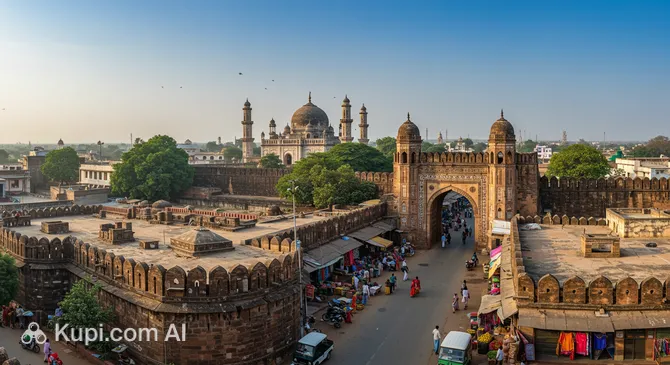
Ahmednagar. Illustration.
Source: Kupi.com AI

With a population of approximately 350,859 people, Ahmednagar is not just a significant urban hub but also the administrative capital of the district of the same name. The city is distinguished by its distinct character: it lacks the frantic rush of major metropolises, offering instead a leisurely pace of life filled with the aromas of spices and the friendliness of local residents. This is a place where historical heritage and modernity harmoniously coexist.

Ahmednagar attracts travelers with its unique landmarks. Among them, the majestic Ahmednagar Fort, a witness to many historical events, stands out in particular. It is also worth noting the ancient temples that reflect the rich culture and spirituality of the region. The city offers the opportunity to immerse yourself in authentic Indian life, stroll through old streets, and visit colorful local markets.

If you want to experience the real India, its history, and culture, away from the noisy tourist routes, Ahmednagar will be a true discovery for you. This city is ideal for travelers who value authenticity, historical heritage, and hospitality.

You can find more interesting facts on the Ahmednagar city history page.

Weather Overview

The weather in Ahmednagar has clearly defined seasons. The city experiences a hot and mostly dry period from March to May. In May, the average temperature reaches 31.3°C, and maximum values can rise to 38.0°C. April is also very hot with an average temperature of 30.9°C and highs of up to 37.7°C. There is practically no precipitation during these months.

The hot period is followed by the monsoon season, which lasts from June to September and brings the bulk of the annual rainfall. July is the wettest month, with about 7 mm of precipitation and approximately 26 rainy days. June, August, and September also see significant rainfall and rainy days. Average temperatures during the monsoon period range from 24.8°C to 27.6°C, which is somewhat cooler than in the pre-monsoon season.

The winter period in Ahmednagar, covering the months from October to February, begins with a transitional October. In this month, as the monsoon retreats, precipitation is still possible (about 3 mm, around 12 rainy days). Then, from November to February, drier and warmer weather sets in. In November, about 1 mm of precipitation falls, and in January and February, there is practically none, with the number of rainy days also minimal (from 0 to 3 days per month). The coolest months are January (average temperature 21.9°C, minimum about 15.4°C) and December (average temperature 22.1°C, minimum about 16.3°C). Overall, Ahmednagar is characterized by a very hot and dry pre-monsoon, a warm and humid monsoon summer, and a warm winter that starts with moderate rainfall in October and transitions into a predominantly dry period from November. Read more about the climatic conditions on the Climate of Ahmednagar page.

Average monthly temperature

Average monthly precipitation

Interesting Facts

Beyond its well-known landmarks, Ahmednagar holds many surprising stories and features that make it a truly unique place. Here are just a few interesting facts that will help you look at this city from a new perspective:

  • The city was founded in 1494 by Ahmad Nizam Shah I, who gave it his name. The majestic Ahmednagar Fort (Bhuikot Killa), one of the main historical gems, served in different eras not only as a residence for rulers but also as a place of imprisonment for famous figures such as Jawaharlal Nehru.

  • Ahmednagar boasts the only Cavalry Tank Museum in India. It houses an impressive collection of armored vehicles, including rare examples of tanks from World War II, making it a must-visit for military history buffs.

  • The city is home to a significant spiritual center — the Meher Baba Memorial. This spiritual teacher attracted followers from all over the world, and the site of his Samadhi (tomb) is visited by thousands of pilgrims annually, especially on commemorative dates, creating a special atmosphere of peace.

  • The legend of Chand Bibi Palace is associated with Ahmednagar. They say a brave female ruler lived here, who wisely and courageously defended the city from invaders. The palace itself is shrouded in an aura of mystery, and stories of Chand Bibi are still passed down by word of mouth by local residents.

How to Get There

You can reach the city of Ahmednagar in several ways, mainly through nearby airports, as the city does not have its own airport. One of the closest options is Shirdi (SAG) Airport, located in the town of Shirdi, approximately 76 km from Ahmednagar. This is a small regional airport, and the journey from there to Ahmednagar by taxi or bus takes about 2 hours and 15 minutes.

A larger and more significant transportation hub is Pune Airport (PNQ), located in the city of Pune at a distance of about 104 km from Ahmednagar. This is a major international airport with significant passenger traffic, offering a large number of domestic and international flights. The trip from Pune Airport to Ahmednagar by taxi or bus can take about 3 hours.

Another option is Chikkalthana Airport (IXU) in Aurangabad, about 109 km from Ahmednagar. This medium-sized airport serves both domestic and some international destinations. The journey to Ahmednagar from here also takes about 3 hours.

For clarity, here is a summary of the main airports serving the Ahmednagar destination:

AirportPassenger trafficDistance
Shirdi741 54076 km
Pune Airport10.5 mln104 km
Chikkalthana Airport695 174109 km
Gandhinagar Airport341 112143 km
Navi Mumbai International Airport20 mln176 km

In addition, Ahmednagar is well-connected by roads to other cities in Maharashtra and neighboring regions. Traveling by bus or car can be a convenient option, especially if you are coming from nearby locations such as Pune, Aurangabad, or Mumbai. State-run and private buses run regularly. It is recommended to check bus schedules in advance or consider renting a car for greater flexibility in movement.

Main Attractions

Ahmednagar, a city with a rich history in the state of Maharashtra, offers tourists several notable sites that are worth including in your itinerary. These attractions reflect both the region's military past and its spiritual heritage. If the provided list of attractions (`{attractions_list_formatted}`) contains data for the sites mentioned below (including a `LandingKey` for a link and an `AttractionImageID` for an image), they will be used to enrich this description.

One of the most significant historical structures is Ahmednagar Fort. This massive fort, built in the 15th century, has witnessed many historical events. It is famous not only for its impressive architecture and powerful fortifications but also for being the place where Jawaharlal Nehru, the first Prime Minister of India, was held under arrest in the 1940s, writing part of his book "The Discovery of India" within its walls. A visit to the fort allows you to touch history and appreciate its strategic importance in the past. If a `LandingKey` is provided for Ahmednagar Fort, its name will become a link, and if an `AttractionImageID` is available, an image may be added.

Another iconic site is the so-called Chand Bibi Palace, which is actually the tomb of Salabat Khan II, a military commander during the Nizam Shahi dynasty. This impressive three-story octagonal structure is located on a hill, offering picturesque views of the surroundings. Tourists are attracted both by the architecture of the mausoleum itself and the opportunity to enjoy the panorama and take beautiful photographs. Similarly, if data is available in `{attractions_list_formatted}`, the name "Chand Bibi Palace" will be formatted as a link and/or accompanied by an image.

For those interested in military equipment, the Cavalry Tank Museum is a real find. It is one of the few museums of its kind in Asia, featuring an extensive collection of tanks, armored vehicles, and other military hardware from various periods, including examples that participated in World War II. The exhibition tells the detailed history of India's armored forces and will be of interest to both adults and children. The presence of a `LandingKey` and `AttractionImageID` in the list will allow for a link to the museum's page and the addition of its image.

In addition to historical and military sites, Ahmednagar is also known as a place of spiritual significance. Meherabad is a pilgrimage center for followers of the spiritual teacher Meher Baba. His Samadhi (tomb) is located here, where people from all over the world come in search of peace and spiritual enlightenment. This place is characterized by a special atmosphere of tranquility and meditation. If relevant data for Meherabad is provided in `{attractions_list_formatted}`, it will also be used.

Local Cuisine

The cuisine of Ahmednagar is a true immersion into the gastronomic traditions of Maharashtra, where everyone will find a dish to their liking. Local recipes are famous for their use of aromatic spices, fresh vegetables, and surprising flavor combinations that make every meal a memorable event. The city's gastronomic scene is vibrant and offers authentic flavors that can surprise even the most discerning gourmet.

Be sure to start your culinary journey with misal pav — a popular spicy stew made from sprouted moth beans (matki), served with crusty pav buns and various toppings. It is perfect for both a hearty breakfast and a snack during the day. Street food lovers should try batata vada — delicious potato balls in chickpea batter, fried until golden brown, and pav bhaji — a thick vegetable curry eaten with soft, lightly toasted buns. These dishes are hallmarks of the local street food scene.

Local desserts, which will delight those with a sweet tooth, cannot be ignored. Treat yourself to puran poli — a sweet flatbread with a delicate filling of boiled chickpeas (or lentils) and jaggery (unrefined cane sugar), often flavored with cardamom and nutmeg. Another popular dessert is shrikhand, a thick, creamy dessert made from strained yogurt, flavored with cardamom, saffron, and nuts.

As for drinks, in Ahmednagar, as in all of India, you can always refresh yourself with traditional masala tea, aromatic and warming, or sweet lassi — a yogurt-based drink that can be either salty or fruity. On a hot day, fresh juices from local seasonal fruits are also popular. Alcoholic beverages, including local beer and other options, are available in licensed restaurants and specialized shops.

The food culture in Ahmednagar is closely linked to its bustling street food and colorful local markets. It is here that you can feel the true spirit of the city, try various snacks, and watch them being prepared. Farmers' markets hold a special place, where the freshest spices, vegetables, fruits, and dairy products are sold directly by local producers. This is an excellent opportunity not only to buy quality products but also to immerse yourself in a noisy, fragrant, and incredibly hospitable atmosphere. Additionally, the city is known for its food festivals, held at various times of the year, offering guests the chance to try delicacies not only from local cuisine but also from neighboring regions, while enjoying a cultural program.

Travel Tips

Welcome to Ahmednagar! To make your trip to this historical city in India as comfortable and memorable as possible, we have prepared some practical tips. They will help you better navigate the area and avoid potential inconveniences.

  1. Clothing and Essentials:

    The climate in Ahmednagar is predominantly hot and dry, with a monsoon season. It is recommended to bring light, breathable clothing made of cotton or linen. During the summer months (March-May), choose the lightest possible items. During the rainy season (June-September), a raincoat and umbrella will be useful. In winter (November-February), evenings can be cool, so a light jacket or sweater won't hurt. For visiting temples and other religious sites, choose modest clothing that covers shoulders and knees; women may need a headscarf. Don't forget comfortable walking shoes, sunscreen, a hat, sunglasses, and a universal adapter for electrical appliances.

  2. Transport:

    The main mode of transport in Ahmednagar is the auto-rickshaw—a convenient and inexpensive way to travel short distances. Be sure to agree on the price before starting the trip if the rickshaw is not equipped with a meter. City buses are also available, connecting different parts of the city and suburbs. For intercity travel, you can use state-run bus services. Taxis are also available; you can try using ride-hailing apps like Ola or Uber, though their availability may be limited compared to major metropolises. Car rental is possible, but driving in Indian cities can be difficult for an unaccustomed tourist; a more convenient option would be renting a car with a driver.

  3. Finance:

    The local currency is the Indian Rupee (INR). You can exchange currency at banks or authorized exchange offices; avoid street money changers. Credit and debit cards (Visa, Mastercard) are accepted in most hotels, large restaurants, and shops. However, it is always helpful to have cash for payments in small shops, markets, and for auto-rickshaw rides. ATMs are quite common. A tipping culture exists: it's customary to leave 5-10% of the bill in restaurants if service is not included. Small tips are also appropriate for porters and drivers.

  4. Health and Safety:

    There are pharmacies in Ahmednagar where you can purchase basic medications; some may be open 24/7, especially those near hospitals. Medical care is available to tourists in both public and private clinics. It is recommended to have travel insurance. The city is generally considered safe, but usual precautions should be taken: avoid walking alone in poorly lit and deserted places after dark, and watch your belongings in crowded areas. Drink only bottled water and be cautious when choosing street food, preferring popular and clean stalls.

  5. Communication:

    The main language of communication in Ahmednagar is Marathi. Hindi is also widely spoken and understood. English is used in the tourism sector, hotels, and large shops, but the level of proficiency can vary, especially among rickshaw drivers or small traders. Learn a few simple phrases in Marathi or Hindi: "Namaskar" (Hello), "Dhanyavad" (Thank you), "Kiti?" (How much?). A local SIM card (e.g., Airtel, Jio) can be purchased at official mobile stores with a passport and visa. Wi-Fi is available in most hotels and some cafes.

  6. Local Etiquette:

    Local residents are usually friendly and hospitable. The traditional greeting is "Namaste" or "Namaskar" with palms folded at the chest. When visiting temples and homes, remove your shoes before entering. Use your right hand for eating, passing money, or items, as the left hand is considered unclean. Ask permission before taking photos of people. Modesty in dress and behavior is valued, especially when visiting religious sites.

  7. What to Avoid:

    Try not to point at people or sacred objects with your index finger—it's better to use an open palm or a nod of the head. Also, avoid touching another person's head, as the head is considered a sacred part of the body. Do not point your feet at people or religious images, as this is considered disrespectful.

  8. Additional Tip:

    Ahmednagar is rich in history, featuring the famous Ahmednagar Fort and other monuments. To dive deeper into the city's past, consider hiring a local guide when visiting attractions. Also, the city is known for its military cantonment, so be mindful and respect any marked restricted areas.

We hope these tips help you feel more confident and enjoy every moment of your stay in Ahmednagar. We wish you a fascinating and pleasant journey!

Entertainment & Nightlife

Ahmednagar, a city with a rich history, offers its guests various ways to spend their time, although its nightlife may seem more reserved compared to major metropolises. Evening entertainment here has its own calmer and more authentic character, conducive to socializing and relaxing after an eventful day.

When the sun sets, Ahmednagar doesn't fall completely asleep. The main evening activities are concentrated around restaurants offering local Maharashtrian and Indian cuisine. Many of them are open until late in the evening, around 10:30-11:00 PM, making them a great place for dinner with friends or family. The best time to visit is from 7:00 PM to 9:00 PM. Dinner in a good local restaurant can cost from 300 to 800 Indian Rupees per person. Look for such establishments in central areas, for example, around Kapda Bazaar or along Station Road. While the specific names of the most popular restaurants are best checked locally as they can change, you will always find decent options with authentic food.

As for bars, they are usually establishments within hotels or small local bars where you can have a drink in a quiet setting. The atmosphere in such places is typically relaxed and conducive to conversation. It will be very difficult to find loud nightclubs with dancing until dawn here; the focus is shifted toward more measured leisure. Bars are usually open until 11:00 PM or midnight. The cost of drinks in hotel bars can vary from 250 to 600 Rupees, while prices in simpler local bars will be lower. In most places, the dress code is informal and casual, although smart casual may be appropriate for a bar in a more prestigious hotel. Recommendations for specific bars are also best obtained from hotel staff or locals.

For getting around in the evening, auto-rickshaws or taxis are the most convenient. It is recommended to agree on the fare in advance with auto-rickshaw drivers. If popular Indian taxi-hailing apps are available in the city, they can be a more predictable option in terms of price. Public transport runs significantly less frequently at night. For safety reasons, especially after dark, try to stick to well-lit and busy streets and, if possible, do not travel alone.

During the day, Ahmednagar offers other types of entertainment. The city is rich in historical sights. You can dedicate time to exploring iconic places such as the majestic Ahmednagar Fort or the Chand Bibi Mahal (Salabat Khan's Tomb). For lovers of quiet relaxation, there are city parks where you can stroll, and local markets will allow you to immerse yourself in the daily life of the city.

Overall, evening in Ahmednagar is more about cozy gatherings and slow conversations than loud parties. This provides a wonderful opportunity to dive deeper into the local atmosphere and enjoy the hospitality of India in its more traditional manifestation.

Parks & Museums

Ahmednagar, a city with a rich history, offers its guests not only an immersion into the past but also the opportunity to relax in green corners and get acquainted with its cultural heritage through its museums and monuments.

While Ahmednagar is not famous for extensive national parks within the city limits, you can find pleasant public gardens and spaces for relaxation here. One such place is Kot Bagh-e-Nizam, a historical garden that was once part of a palace complex. This place attracts with its atmosphere of privacy and the opportunity to touch history while walking among old trees. There are also more modern parks and squares in the city where locals and tourists can spend time outdoors, enjoying the peace away from the urban bustle.

The cultural life of Ahmednagar is represented by several interesting museums. A key one is the Cavalry Tank Museum, one of the unique museums of its kind in Asia. It houses an impressive collection of armored vehicles from different eras, which will be of interest not only to military historians but also to a wide range of visitors, including families with children. Another important site is the Ahmednagar Historical Museum and Research Centre, where you can learn more about the rich past of the city and region, seeing artifacts, coins, and documents related to the Nizam Shahi era and subsequent periods.

The main historical landmark of the city is undoubtedly Ahmednagar Fort. This powerful fortress, built in the 15th century, holds the memory of many significant events in Indian history, including the imprisonment of Jawaharlal Nehru. Its massive walls, moats, and bastions make an indelible impression and are a must-visit. Also worth noting is the Tomb of Salabat Khan II, also known as Chand Bibi Palace. Located on a hill, it offers not only an introduction to an elegant example of Islamic architecture but also panoramic views of the surrounding landscapes.

For a more authentic experience, visit the bustling local markets of Ahmednagar, where you can feel the real flavor of Indian life and purchase souvenirs. And for those seeking solitude and unusual experiences, it's worth exploring the lesser-known but equally picturesque tombs and ancient ruins in the city's surroundings, which tell their quiet stories to the attentive traveler.

Getting Around

When planning your travel around Ahmednagar, you will find that the public transport system here has its own characteristics typical of many Indian cities of this size. The main ways to get around are buses and auto-rickshaws, which provide access to most areas of the city and its surroundings.

Buses in Ahmednagar are the most economical way to travel. The route network generally covers the main roads and popular destinations. Buses may belong to either a state transport corporation or private operators. Fares are usually paid in cash directly to the conductor on the bus. Ticket prices are low, but be prepared for buses to be crowded during peak hours. Schedules may not always be accurate, so it's better to check information with locals or at bus stops if they are equipped with information boards.

Auto-rickshaws (or tuk-tuks) are a ubiquitous and very popular form of transport in Ahmednagar. They are convenient for short and medium trips, especially if you need to get to places where buses do not run. It is important to remember that the fare should be agreed upon with the driver in advance, before starting the trip, as not all auto-rickshaws are equipped with meters, or drivers may be reluctant to use them. In some cases, apps for hailing auto-rickshaws may be available, which simplifies the process of ordering and determining the price.

In addition to buses and auto-rickshaws, you can use taxi services in Ahmednagar. This is a more comfortable but also more expensive option. Taxis can be found at special stands or ordered by phone. Recently, mobile apps for ordering taxis, such as Ola or Uber, have been gaining popularity and may operate in cities the size of Ahmednagar, offering more predictable rates and booking convenience.

The payment system in Ahmednagar's public transport is predominantly cash-based. It is recommended to always have small bills with you to pay for travel in buses and auto-rickshaws. Specialized tourist passes or unified transport cards for a city of this scale are generally not available. If you use taxi services through an app, payment can be made either in cash or by card through the app.

Practical tips for tourists:

  • Always confirm the route and fare before the trip, especially when using an auto-rickshaw.
  • Try to avoid traveling during peak hours if you want more comfort.
  • Have cash in small denominations with you.
  • To navigate bus routes, don't hesitate to ask locals for help — they are usually very willing to assist.
  • Public transport usually starts early in the morning and ends late in the evening, but there are generally no night routes.

Alternative ways to get around, such as car-sharing or a developed bike-rental system, are not usually as widespread in cities like Ahmednagar as they are in major metropolises. However, for short distances in some areas, you may encounter cycle rickshaws. The main focus for tourists remains on buses, auto-rickshaws, and taxis.

Accommodation

In Ahmednagar, travelers can find a variety of accommodation options to suit different budgets and preferences. The city features everything from budget guesthouses and hotels to more comfortable mid-range accommodations. Choices also include apartments and rental options for those who prefer more independence and space.

When choosing a place to stay, consider areas located near major attractions or transport hubs, which will ensure ease of movement around the city. While specific popular areas for tourists may vary, the central part of the city often offers good access to infrastructure.

In Ahmednagar, you can find hotels offering various levels of service. It is recommended to check reviews and locations before booking. Unfortunately, there are no specific hotel examples in the provided information, but you can easily find up-to-date listings on popular booking platforms.

General booking tip: if your trip falls during the peak tourist season or during major local events, it is recommended to book your accommodation in advance. This will help ensure the best choice and possibly better prices. The price range varies from budget options to mid-range and higher-class hotels. You can conveniently book accommodation through well-known online platforms or directly on hotel websites.

Nearby Cities

For those looking to explore the surrounding area, Ahmednagar serves as an excellent starting point for day trips to several interesting nearby locations.

Among the popular destinations is Pune. This vibrant city, one of the largest in the state of Maharashtra, is famous for its rich history, numerous educational institutions, and its role as an important IT hub. Here you can visit attractions such as the Aga Khan Palace and Shaniwar Wada Fort.

Another interesting option for a day trip is Aurangabad. The city is known primarily as a starting point for visiting the famous Ajanta and Ellora cave complexes, which are included in the UNESCO World Heritage list. Also in Aurangabad, it's worth seeing the Bibi Ka Maqbara mausoleum, often called the "poor man's Taj Mahal."

Below is a table with some other cities in the vicinity of Ahmednagar that may be of interest for short visits:

CityPopulationDistance
Rahuri54 32535 km
Pathardi228 27946 km
Shrigonda31 13453 km
Warni15 12369 km
Sangamner65 80478 km

These nearby destinations offer a variety of experiences, allowing you to better understand the culture, history, and natural beauty of the state of Maharashtra and India as a whole.

Shopping & Souvenirs

Ahmednagar offers its guests an interesting local shopping experience that differs from the familiar shopping malls of major metropolises. Here you can immerse yourself in the atmosphere of traditional Indian trade, find authentic goods, and feel the flavor of the city's daily life. Shopping in Ahmednagar is more about searching for unique local products than hunting for global brands.

The main shopping spots are usually concentrated on central streets and in old bazaar areas. Look for busy streets where locals do their daily shopping. Often streets like MG Road or other main roads are teeming with shops offering textiles, clothing, footwear, jewelry, and household items. Walking through such areas is a fascinating activity in itself.

Modern large shopping centers in Ahmednagar may not be as widely represented as in India's major cities. The focus here is shifted toward traditional trade formats. However, you may come across small local shopping complexes offering a variety of goods under one roof.

Markets are the heart of trade in Ahmednagar. Be sure to visit the local bazaars, where life is in full swing. Here you can find everything: from fresh fruits, vegetables, and aromatic spices to inexpensive clothing, colorful fabrics, costume jewelry, and small souvenirs. Markets offer a great opportunity to observe local life and bargain, which is part of Indian shopping culture.

As souvenirs from Ahmednagar, consider buying traditional Indian goods. These could be:

  • Bright textile products: saris, shawls, stoles, cotton or silk tablecloths.
  • Handcrafted items: products made of wood, metal, and ceramics.
  • Ethnic jewelry: bracelets, earrings, and necklaces with local flair.
  • Spices and tea: India is famous for its spices, and these make excellent and useful souvenirs.
  • Local sweets and delicacies.

Most shops in Ahmednagar are open from about 10:00 or 11:00 AM and work until 8:00 or 9:00 PM. Some small shops may close for a lunch break in the middle of the day. Regarding payment, it is preferable to use cash in markets and small shops. In larger stores and some tourist spots, bank cards may be accepted. The UPI mobile payment system is also very common in India and is used by many locals.

The Tax Free system for tourists in India is not as common as in some European or other countries, especially when shopping in small towns and markets. If you make a significant purchase in a large export-oriented store, you can inquire about tax refunds, but generally, you should not count on this during regular shopping in Ahmednagar.

Reached the end of the page?

That means the route is fully explored