Support

Bodhi Tree

About

The Bodhi Tree is more than just a tree; it is one of the greatest shrines in Buddhism, located within the Mahabodhi Temple complex in the town of Bodh Gaya, India. According to Buddhist tradition, it was under this legendary tree that Prince Siddhartha Gautama attained enlightenment and became the Buddha, the founder of one of the world's major religions. It is a place of pilgrimage for Buddhists from across the globe, and its significance is hard to overstate.
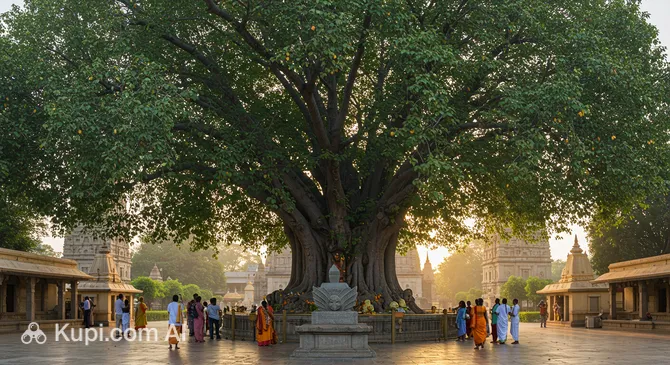
Bodhi Tree. Illustration.
Source: Kupi.com AI

Traveller photos:

The current Bodhi Tree, revered by believers, is a direct descendant of the original historical tree. It is believed to be the fourth generation of the sacred fig (Ficus religiosa) and is over 120 years old. The majestic tree, which according to some sources reaches a height of about 80 meters, grows on the western side of the main Mahabodhi Temple, next to the so-called Diamond Throne (Vajrasana)—the spot where the Buddha sat in meditation.

For Buddhists, the Bodhi Tree symbolizes spiritual awakening, wisdom, and the path to liberation from suffering. Visiting this sacred site, touching its history, and experiencing the special atmosphere of peace and spirituality is a cherished dream for many followers of the Buddha's teachings. It is not just a landmark, but a living witness to a pivotal moment in the history of world spiritual thought.

Contacts

Since the Bodhi Tree is a sacred object within the Mahabodhi Temple complex, it does not typically have its own separate contact details. For up-to-date information on visiting, opening hours, and rules of conduct, please contact the Bodhgaya Temple Management Committee or the local tourist information center in Bodh Gaya.

There, you can find all the necessary information to plan your visit to this iconic site in India.

How to contactContact
AddressMocharim, Bodh Gaya, Bihar 824231, India
Phone+91 631 220 0735
Websitebodhgayatemple.com

What to Do

Visiting the Bodhi Tree in Bodh Gaya is, first and foremost, a deep spiritual experience for Buddhists and a fascinating cultural immersion for travelers from all over the world. The primary activity here is meditating under the shade of the sacred tree, following a centuries-old tradition established by the Buddha himself. Many visitors also simply contemplate this iconic site, reflecting on its immense historical and religious significance for millions of people.

Beyond the tree itself, visitors can explore the vast Mahabodhi Temple complex that surrounds the shrine, which has been a UNESCO World Heritage site since 2002. Here you can see the Diamond Throne (Vajrasana)—the place where, according to tradition, the Buddha attained enlightenment during his meditation. Nearby are numerous Buddhist temples and monasteries built by representatives of various Buddhist traditions from around the world, each with its own unique architecture and atmosphere.

Many pilgrims and tourists bring offerings of flowers, incense, and prayer flags to the Bodhi Tree. A common practice is the ritual circumambulation (parikrama) of the tree and the main temple in a clockwise direction. This is a traditional way of showing respect in Buddhism. Observing these rituals or participating in them allows for a deeper appreciation of the atmosphere of holiness and peace that reigns in this remarkable place.

Getting There

The Bodhi Tree, a sacred site for Buddhists worldwide, is located in the town of Bodh Gaya in the state of Bihar, India. To reach this iconic landmark, travelers usually head toward the nearest major city, Patna, the capital of Bihar. Patna is approximately 96 kilometers from Bodh Gaya, and it is home to the nearest international airport, Jay Prakash Narayan International Airport.

From major Indian cities such as Delhi, Mumbai, or Kolkata, you can conveniently fly to Patna on regular flights. Upon arrival at Patna airport, you will have several options to continue your journey to Bodh Gaya. You can take a bus, which is an economical option, hire a taxi for a faster and more comfortable trip, or rent a car if you prefer independent travel throughout the region.

Another popular way to reach Bodh Gaya is by train. The nearest major railway station, Gaya, is located about 16 kilometers from the town of Bodh Gaya itself. From Gaya railway station to the Mahabodhi Temple complex, where the Bodhi Tree is located, you can easily take a taxi, a colorful local rickshaw, or a shuttle bus. The trip from the station usually doesn't take much time.

Nearest city: Bodh Gaya

History & Facts

The Bodhi Tree in Bodh Gaya, India, is not just an ancient plant but a living symbol of enlightenment in the Buddhist world. Its history spans over two and a half millennia and is inextricably linked to the life of Gautama Buddha. According to ancient texts, it was beneath this sacred fig (Ficus religiosa) that Prince Siddhartha Gautama, after years of ascetic practices, entered deep meditation in the 6th century BCE. He vowed not to leave his spot until he achieved awakening, and after 49 days under the shade of this tree, he attained enlightenment, becoming the Buddha.

The fate of the original Bodhi Tree was full of trials. Legends say it faced many dangers. According to one version, it was destroyed by King Pushyamitra in the 2nd century BCE during a period of Buddhist persecution. Another legend claims that Emperor Ashoka, before his conversion to Buddhism, ordered the tree to be burned, but it miraculously regrew from the ashes—a sign that deeply influenced the emperor. The current tree, revered by millions of pilgrims, is considered a direct descendant of that original historical tree.

The current sacred tree in Bodh Gaya was grown from a sapling brought from Sri Lanka. History tells that Emperor Ashoka's daughter, the nun Sanghamitta, took a sapling from the original Bodhi Tree to Sri Lanka in the 3rd century BCE. It was planted in Anuradhapura by King Devanampiya Tissa in 249 BCE and is known as the Jaya Sri Maha Bodhi, which still grows and is revered today. Thanks to this foresight, the sacred lineage was preserved, and a descendant of the Sri Lankan tree was eventually returned to its historical home in Bodh Gaya. The tradition of planting descendants of the Bodhi Tree has spread to many Buddhist monasteries worldwide, symbolizing the path to awakening.

Time Needed

To fully experience the atmosphere and explore the Bodhi Tree and the surrounding Mahabodhi Temple complex in Bodh Gaya, it is recommended to set aside approximately 2 to 4 hours. This is enough time to stroll through the grounds, see the sacred tree itself—a descendant of the original tree under which the Buddha attained enlightenment—and the main shrines of the complex. You can observe the rituals of pilgrims from all over the world and perhaps find time for a brief meditation or quiet contemplation.

If you plan to immerse yourself more deeply in the spiritual atmosphere of this unique place, visit the many other temples and monasteries in Bodh Gaya, or participate in longer spiritual practices, you should plan for a full day. This approach will allow you to explore the surroundings without rushing and fully appreciate the significance of this vital center of Buddhism.

Working Hours

The Bodhi Tree is located within the Mahabodhi Temple complex in Bodh Gaya. The complex is generally open to visitors daily, approximately from 5:00 AM to 9:00 PM. It is important to remember that these hours may vary depending on the season, as well as during religious ceremonies and Buddhist festivals. For example, during major celebrations like Vesak, access to the shrine may be open 24 hours a day for pilgrims.

While special reservations are not usually required to visit the tree itself, it is recommended to always check current information regarding opening hours and potential restrictions on the official Mahabodhi Temple complex website or inquire locally. This will help you plan your visit effectively and avoid any surprises. Generally, the Bodhi Tree is accessible year-round.

DayOpening hours
Monday5:00 – 12:00
Tuesday5:00 – 21:00
Wednesday5:00 – 21:00
Thursday5:00 – 21:00
Friday5:00 – 21:00
Saturday5:00 – 21:00
Sunday5:00 – 21:00

Nearby

Visiting the Bodhi Tree in Bodh Gaya is undoubtedly a profound spiritual experience. However, to make your journey even more enriching, it is worth taking the time to explore the surroundings of this sacred site. Near the Bodhi Tree, you will find many other significant Buddhist shrines, monasteries, and cultural sites, each revealing the rich history and spiritual heritage of India in its own way.

Exploring nearby attractions will allow you to dive deeper into the atmosphere of Bodh Gaya, witness the diversity of architectural styles in Buddhist temples from various countries, and perhaps find new sources of inspiration and peace. Below is a list of some interesting places located near the Bodhi Tree.

NameDistance
Mahabodhi Temple0 km
Archaeological Museum Bodhgaya0.4 km
Carrot Cake & Coffee0.4 km
Wat Thai Buddhagaya0.7 km
Royal Bhutanese Monastery0.8 km
Great Buddha Statue1.1 km
Tergar Monastery1.2 km

Reached the bottom of the page?

Looks like you know this route inside out