Support

Deer Park (Sarnath)

About

Deer Park (Sarnath) is a sacred Buddhist site located just a few kilometers northeast of the city of Varanasi, in the state of Uttar Pradesh, India. This place holds immense religious significance for Buddhists worldwide, as it is where Siddhartha Gautama, after attaining enlightenment and becoming the Buddha, is said to have delivered his first sermon. This event, known as the first "Turning of the Wheel of Dharma," marked the teaching of the Four Noble Truths and the Eightfold Path, serving as the starting point for the spread of Buddhism.
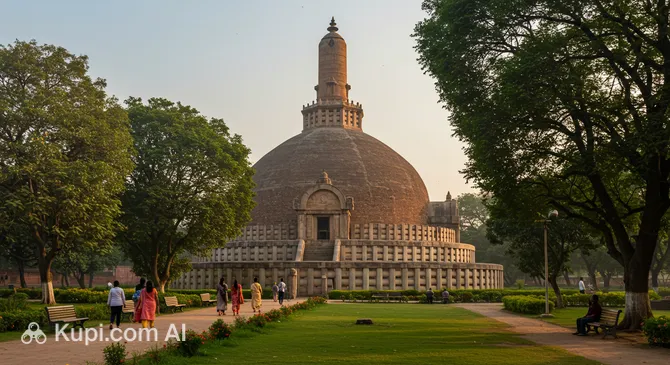
Deer Park (Sarnath). Illustration.
Source: Kupi.com AI

Traveler photos:

The name "Sarnath" is derived from a shortened version of the name of the bodhisattva Saranganatha, which means "Lord of the Deer." In the Buddha's time, the area was known as Rishipattana (or Isipatana in Pali), which translates to "the place where the holy sages (rishis) fell." Another ancient name is Mrigadava, or "Deer Sanctuary." This is because, according to legend, a local Raja declared the area a sanctuary for deer so they could live here freely. This tradition highlights the deep connection between the site and nature and the animal world.

Today, the Deer Park in Sarnath attracts pilgrims and tourists from all over the world. Here, you can see the ruins of ancient monasteries, the Dhamek Stupa built on the spot where the Buddha gave his first sermon, and the famous Ashoka Pillar with its Lion Capital, which has become the national symbol of India. A visit to this peaceful place allows you to touch the origins of one of the world's oldest religions and experience the atmosphere of deep spirituality that has been preserved here for millennia. Traditions say that even the deer came to listen to the Buddha's sermons, as his enlightened speech was accessible not only to humans but to all living beings.

Contacts

For the most up-to-date information regarding the Deer Park (Sarnath), including visiting hours and available tours, it is recommended to consult the official tourism resources of Varanasi or check the details on-site. As this is a well-known attraction, reaching the park from the city center is generally easy via taxi, auto-rickshaw, or public transport heading towards Sarnath.

How to contactContact
Address92JG+GMM, Sarnath, Varanasi, Uttar Pradesh 221007, India
Phone number+91 1800 200 8335

What to Do

Deer Park (Sarnath) in Varanasi is a remarkably peaceful place, permeated with a special atmosphere and energy. Visitors can immerse themselves in a meditative state, feeling the spiritual significance of this historical corner. The primary activity is a leisurely walk through the ancient Buddhist complex, where you can closely examine the archaeological excavations, the ruins of ancient monasteries, and stupas. These structures, restored by British archaeologists in the 19th and 20th centuries after their destruction at the end of the 12th century, hold the memories of centuries.

Many come here specifically for meditation practice. It is believed that in these places, one can mentally transport themselves thousands of years back and imagine listening to the teachings of the Buddha himself. This is especially valuable in contrast to the noisy and chaotic Varanasi; here in Sarnath, a completely different, slower rhythm of life prevails. Visitors can observe the daily life of the park, which is a direct successor to the very sanctuary once created by the Raja of Varanasi.

In addition to the historical ruins and meditative practices, you can simply enjoy the silence and peace while observing the surrounding nature. This place allows you to take a break from the city bustle and touch the ancient history and spirituality of India. Deer Park offers a unique experience that combines historical exploration with the opportunity for inner contemplation.

Getting There

Deer Park, also known as the site of Buddha's first sermon, is located in Sarnath, approximately 12-13 kilometers northeast of the holy city of Varanasi in the Indian state of Uttar Pradesh. Reaching this iconic landmark is relatively straightforward, especially if you are already in Varanasi, which serves as a major transport hub in India.

There are several ways to travel from Varanasi to Sarnath. One of the most convenient options is to hire a taxi or an auto-rickshaw. The journey takes about 30-45 minutes, depending on traffic conditions. This will take you directly to the park entrance or nearby Sarnath attractions. Public transport is also available, such as local buses, which can be a more economical but less comfortable option.

Additionally, Sarnath has its own railway station (Sarnath Railway Station), making it possible to travel by train from Varanasi or other nearby cities. This can be an interesting alternative, especially for those who prefer rail travel. From the station, you can reach the Deer Park on foot or by taking a rickshaw.

Nearest city: Varanasi

History & Facts

Deer Park in Sarnath, located near Varanasi, is one of the four most sacred sites of Buddhism. Its history dates back to the time of the Buddha, approximately in the 6th-5th centuries BCE. At that time, the area, known as Rishipattana or Isipatana, was a dense forest where rishis (sages) from ancient Benares sought solitude for spiritual practices. It was here, according to Buddhist tradition, that Siddhartha Gautama, after attaining enlightenment and becoming the Buddha, delivered his first sermon. He taught the Four Noble Truths, performing the first "Turning of the Wheel of Dharma." Legend has it that the first listeners of his teachings were two forest deer, which gave the park its modern name.

Sarnath’s heyday as a Buddhist center began in the 3rd century BCE when the powerful Emperor Ashoka, ruler of the Mauryan Empire, converted to Buddhism. Under his patronage, a majestic temple and monastery complex was erected at the site of the Buddha's first sermon. It was here that the famous Ashoka Pillar was installed, topped by a capital featuring four lions facing the cardinal directions. This image is now the official emblem of the Republic of India. For over a thousand years, Sarnath remained a vital center of Buddhist learning and pilgrimage, attracting believers and monks from across Asia. Chinese travelers Faxian (5th century) and Xuanzang (7th century) left detailed descriptions of Sarnath during its peak, mentioning that about 1,500 monks lived in the monastery and the main stupa reached a height of nearly 100 meters.

Unfortunately, at the end of the 12th century, Sarnath was destroyed during the Muslim conquests, and this sacred site fell into decline for many centuries. It wasn't until the 19th and 20th centuries that British archaeologists began large-scale excavations, uncovering the ruins of ancient monasteries, stupas, and other structures, including the famous Dhamek Stupa, which is believed to stand on the exact spot of the Buddha's first sermon. Today, Sarnath is a small town that carefully preserves its great past. It has once again become an important pilgrimage center for Buddhists from around the world and a popular tourist destination, allowing visitors to connect with the origins of one of the world's major religions.

Time Needed

To explore the Deer Park in Sarnath and its adjacent key historical sites, such as the majestic Dhamek Stupa and the ruins of the Ashoka Pillar, most visitors typically need about 2-3 hours. This time will allow you to take a leisurely stroll through the grounds where, according to tradition, the Buddha delivered his first sermon, observe the deer in their designated area, and soak in the tranquility of this significant site.

If you wish to delve deeper into Sarnath's rich heritage, we recommend setting aside extra time. A visit to the Sarnath Archaeological Museum, which exhibits unique finds including the famous Lion Capital of Ashoka, will add approximately 1-1.5 hours to your excursion. Additionally, exploring the numerous modern temples built here by representatives of various Buddhist countries can take another 1-2 hours. Ultimately, for a complete and thoughtful exploration of all Sarnath's attractions, including the Deer Park, you should plan for at least half a day (4-5 hours), or perhaps more if you have a deep interest in Buddhism and history.

Working Hours

Deer Park (Sarnath) is a place of great historical and spiritual importance, so it is important to check the current opening hours before visiting. Generally, such sites are open to visitors during daylight hours, but the exact schedule may change depending on the season or special events. It is recommended to check the attraction's official website or contact local tourist information centers in Varanasi for the latest information on operating hours, entrance fees, and any need for advance booking.

Usually, Deer Park is open for visits year-round; however, weather conditions in India can affect your comfort, especially during the hot summer months or the monsoon season. Verifying information in advance will help you plan your visit in the best way possible and avoid any inconvenience. You should also find out if there are any restrictions on photography or videography within the park grounds.

8:00 – 17:30

Nearby

Visiting the Deer Park (Sarnath) is undoubtedly a highlight, but exploring the surrounding areas can significantly enrich your experience. Often, nearby sites offer a deeper dive into the culture, history, or natural beauty of the region, complementing what you have already seen and revealing new facets of Varanasi.

By expanding your itinerary, you will have the chance to discover lesser-known but equally fascinating places, allowing for a more complete and multifaceted perspective of the area. Small detours from your main plan can lead to unexpected discoveries and provide even more unforgettable moments during your journey through India.

NameDistance
Sarnath Buddhist Temple0.1 km
Dhamek Stupa0.2 km
Ashoka Pillar0.4 km
Archaeological Buddhist Remains of Sarnath0.4 km
Welcome Garden Amusement Park2.3 km
Nadesar Palace6.3 km
Sant Shiromani Guru Ravidas Temple, Rajghat6.4 km

Have you reached the end of the page?

So the route has been studied inside and out