Support

Sarnath Buddhist Temple

About

The Sarnath Buddhist temple is not just a single building, but an extensive religious complex located on the outskirts of Varanasi, India. This site holds immense significance for Buddhists worldwide, as it is where, according to tradition, Shakyamuni Buddha delivered his first sermon after attaining enlightenment. This event, known as the "Turning of the Wheel of Dharma," marked the beginning of Buddhism as a world religion.
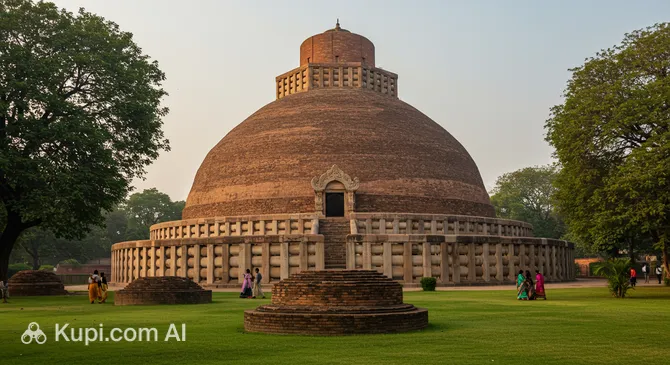
Sarnath Buddhist Temple. Illustration.
Source: Kupi.com AI

Traveler photos:

Today, Sarnath is a unique ensemble where ancient ruins coexist with modern active temples. Travelers can see structures built by representatives of various Buddhist countries and traditions, emphasizing the site's international status. The complex includes monasteries, meditation centers, and an archaeological museum housing priceless finds discovered during excavations.

The central and most impressive structure is the Dhamekh Stupa — a majestic building about 33 meters high, built around 500 CE. It stands on the very spot where the Buddha is believed to have addressed his first five disciples. A walk through this sacred place allows you to touch centuries of history and experience the atmosphere of tranquility and spiritual seeking that prevails here to this day.

Contacts

Since the Sarnath Buddhist temple complex is vast, comprising numerous historical sites, parks, and temples, it doesn't have a single centralized information desk. The most accurate information on opening hours for individual attractions and ticket prices is best obtained directly on-site or at tourist centers in Varanasi.

Located 10 km from Varanasi, Sarnath can be reached by auto-rickshaw, which is the most popular method for tourists. Additionally, local buses depart from the Varanasi railway station and follow this route.

How to contactContact
Address92JG+7MC, Sarnath Sta Rd, Pandeypur, Sarnath, Varanasi, Uttar Pradesh 221007, India

What to Do

Visiting Sarnath is an immersion into the history of Buddhism. The main highlight is the Dhamekh Stupa, where the Buddha is said to have given his first sermon. Surrounding it are the ruins of ancient monasteries and temples that offer a glimpse into the past scale of this site. Be sure to visit the Sarnath Archaeological Museum — it houses the famous Ashoka Lion Capital, which became the national symbol of India.

Beyond the antiquities, Sarnath offers a chance to experience modern Buddhism. Here, you can see temples built by representatives of various countries, including Thailand, Japan, Tibet, and others. This creates a unique atmosphere of an international spiritual center. For quiet walks and reflection, the Deer Park is ideal — a picturesque spot where, according to legend, the Buddha began his teaching. Here, you can escape the hustle and bustle and enjoy nature.

Sarnath is not just a place for contemplation but also for active participation. Visitors can join tours to gain a deeper understanding of the complex's history and significance, take part in religious ceremonies, or try meditation practices under the guidance of mentors. This makes a trip here interesting for both pilgrims and tourists wishing to learn about India's spiritual traditions and culture.

Getting There

The Sarnath Buddhist temple complex is located just 10 kilometers north of central Varanasi, making it very accessible for tourists. The easiest and most popular way to reach this sacred site is to hire a taxi or a more exotic auto-rickshaw. The trip from the city center usually takes about 20–30 minutes, though travel time can increase due to heavy traffic.

For travelers on a budget, public transportation is available. Local buses to Sarnath depart from a stop near the city's main railway station in Varanasi. Furthermore, Sarnath has its own railway station where trains from Varanasi arrive several times a day, providing a way to bypass traffic jams.

Many tourists also opt for organized sightseeing tours. This option is particularly convenient as it usually includes a hotel transfer and the services of a guide. A guide can explain the history and significance of each site within Sarnath in detail, making your visit even more informative and meaningful.

Nearest city: Varanasi

History & Facts

Sarnath’s history dates back to ancient times when the place was known as Rishipattana or Mrigadaya, which translates to "Deer Park." Since time immemorial, sages have come here for spiritual practices and meditation. However, the site gained worldwide fame due to one key event: it was here that Siddhartha Gautama, having become the Buddha, delivered his first sermon. He taught the doctrine of the Four Noble Truths to his first five disciples, symbolically performing the "First Turning of the Wheel of Dharma" and marking the birth of the Buddhist religion.

Sarnath's golden era is associated with the great Emperor Ashoka, who made Buddhism the state religion in the 3rd century BCE. By his order, a grand monastic complex was built here. The jewel of the complex was the famous stele with the four-lion capital, which is now the national emblem of India. During its heyday, Sarnath was one of the world's largest Buddhist centers: according to ancient travelers, up to 1,500 monks lived in its monasteries, and the main stupa reached nearly 100 meters in height.

Unfortunately, Sarnath's peak was followed by a period of decline. In the Middle Ages, the complex suffered several destructive invasions, leaving most of the ancient buildings in ruins, and for centuries, this sacred place was practically forgotten. A new chapter began only in the 19th century when British archaeologists initiated large-scale excavations. Thanks to their work, a priceless part of history was returned to the world, allowing the ancient complex to be reconstructed and made accessible to pilgrims and tourists from all over the world visiting Varanasi.

Time Needed

For a thorough exploration of the Sarnath Buddhist complex, it is recommended to set aside about 3–4 hours. This is enough time to unhurriedly visit the main shrines: the majestic Dhamekh Stupa, the ruins of ancient monasteries, and the archaeological museum housing priceless artifacts. This duration allows you not only to see the key sites but also to stroll through the well-maintained grounds, feeling its peaceful atmosphere.

If you are short on time, you can manage in 1.5–2 hours by focusing on the most iconic spots — the Dhamekh Stupa and the Deer Park. However, remember that Sarnath is not just a collection of antiquities but an important place for meditation and spiritual practice. To deeply immerse yourself in its atmosphere, visit several modern temples built by Buddhist communities from different countries, and relax away from the noise of Varanasi, it is better to plan for a half-day trip.

Working Hours

Most sites within the Sarnath Buddhist complex are open to visitors daily, typically from early morning until sunset. The main part of the complex, including the ruins and parks, usually operates from 6:00 AM to 6:00 PM. However, please note that the Sarnath Archaeological Museum has its own schedule: it welcomes guests from 9:00 AM to 5:00 PM, and it is closed on Mondays. As schedules can change, especially during public holidays, it is highly recommended to check current opening hours on official resources or at tourist centers before your trip.

The complex is accessible year-round. Generally, no advance ticket booking is required for a standard visit; tickets can be purchased at the ticket office by the entrance. Nevertheless, if you plan to visit Sarnath as part of a large group or a school excursion, it is better to contact the museum administration in advance. You should also plan ahead if you wish to book an individual guided tour.

8:00 – 17:00

Nearby

A visit to Sarnath is not just about seeing a single temple, but a journey through the places where Buddhism was born. The entire area is a unique complex of historical and spiritual monuments, many of which are within walking distance of each other. Exploring them allows for a more complete and vivid understanding of the site's significance.

To fully immerse yourself in the atmosphere of Sarnath, it is worth taking time to explore the surroundings. A walk through the nearby stupas, temples, and parks will enrich your experience and help you better understand the centuries-old history of this sacred corner of India.

NameDistance
Deer Park (Sarnath)0.1 km
Dhamek Stupa0.2 km
Ashoka Pillar0.4 km
Archaeological Buddhist Remains of Sarnath0.4 km
Welcome Garden Amusement Park2.2 km
Nadesar Palace6.3 km
Sant Shiromani Guru Ravidas Temple, Rajghat6.3 km

Have you reached the end of the page?

So the route has been studied inside and out