Support

Dhamek Stupa

About

The Dhamek Stupa is a majestic monument of Buddhist architecture located in Sarnath, just a few kilometers from the sacred city of Varanasi in India. This site holds immense spiritual significance, as it is where, according to tradition, the Buddha delivered his first sermon after attaining enlightenment, thereby "turning the Wheel of Dharma." For Buddhists around the world, it is one of the most important pilgrimage sites.
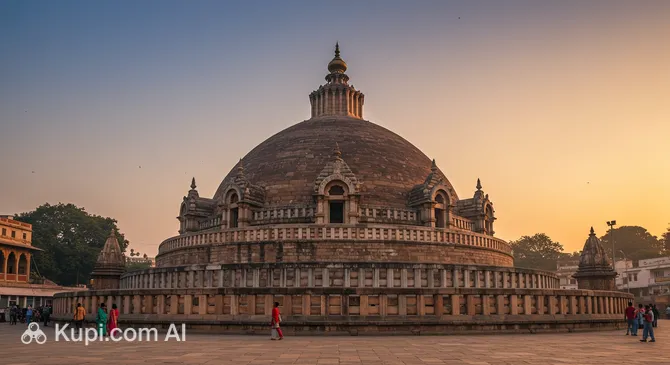
Dhamek Stupa. Illustration.
Source: Kupi.com AI

Traveler photos:

The structure is a massive cylindrical stupa built of red brick and stone. Its imposing dimensions — about 43.6 meters in height and 28 meters in diameter — leave a lasting impression. The Dhamek Stupa is not just a religious object but also an outstanding example of ancient craftsmanship, drawing attention with its monumentality and historical aura.

The lower part of the stupa is adorned with complex carved geometric and floral patterns, characteristic of Gupta-era art. These skillful bas-reliefs, despite the passing centuries, still testify to the high mastery of ancient stone cutters and give the structure a special artistic value. A visit to the Dhamek Stupa allows you to touch ancient history and feel the peaceful atmosphere of this holy place.

Contacts

Since the Dhamek Stupa is a site of significant historical and spiritual importance, traditional contact details such as a phone number or email address may not be listed. To reach the stupa from Varanasi, where it is easily accessible, you can take a taxi or an auto-rickshaw — the trip is quite short, as Sarnath is located just a few kilometers away. For up-to-date information on opening hours, potential entry fees, and visiting rules, it is best to check official India tourism portals or local tourist offices in Varanasi.

How to contactContact
AddressDhamekh Stupa, Dharmapala Rd, Singhpur, Sarnath, Varanasi, Uttar Pradesh 221007, India

What to Do

The main activity for visitors to the Dhamek Stupa is performing a ritual circumambulation around it, known as pradakshina. This is a traditional form of veneration in Buddhism, allowing one to more deeply experience the spiritual atmosphere of this holy site. You will see pilgrims and tourists from all over the world slowly moving in a circle, offering prayers and meditating, feeling a sense of peace and connection to an ancient tradition.

In addition to the circumambulation itself, visitors can spend time studying the stupa's intricate carvings and architectural details. The area surrounding the Dhamek Stupa also offers opportunities for a deeper immersion into Buddhist history. Other important Buddhist monuments and museums are located nearby, which will round out your understanding of the Buddha's life and the development of his teachings in India. Furthermore, it is a wonderful place to simply enjoy the silence, tranquility, and surrounding nature, taking a break from the hustle and bustle of Varanasi.

Getting There

Reaching the Dhamek Stupa, located in Sarnath, is quite simple, as it is only 13 kilometers from the center of Varanasi. Varanasi itself is well-connected to other major cities in India by air, rail, and road. From Varanasi, you can easily reach Sarnath by taxi, auto-rickshaw, or local bus. The journey usually takes about 30-40 minutes, depending on traffic conditions.

For those who prefer traveling by rail, Sarnath Railway Station is a convenient option, located in close proximity to the stupa complex. If you are arriving in Varanasi by plane, you will first need to take a taxi or bus from Lal Bahadur Shastri Airport to the city, and then transfer to transport heading to Sarnath to reach the Dhamek Stupa.

Nearest city: Varanasi

History & Facts

The history of the Dhamek Stupa is rooted in antiquity. According to historical evidence, the original structure at this site was erected as early as 249 BC. The construction was commissioned by the famous Emperor Ashoka of the Mauryan dynasty, who was one of the greatest patrons of Buddhism in ancient India. That first stupa was built of wood, and unfortunately, only isolated fragments and reliefs remain today, testifying to its former splendor.

The monumental stone structure we see today appeared much later. The massive Dhamek Stupa, striking in its size and intricate masonry, was built in the early 6th century AD. This very construction, which has survived the centuries, became one of the main symbols of Sarnath and an important center of pilgrimage for Buddhists from all over the world. Its architecture and surviving decorative elements are a vivid example of the art of that era.

The choice of location for the stupa was far from accidental and holds deep sacred meaning. It was here, in the Deer Park of Sarnath near Varanasi, that Siddhartha Gautama, having become the Buddha, delivered his first sermon to the five ascetics, his first disciples, after attaining enlightenment in Bodh Gaya. This event marked the "turning of the Wheel of Dharma" and became the starting point for the spread of Buddhist teachings. Interestingly, the name "Dhamek" is believed by researchers to be a corrupted form of the Sanskrit expression "Dharma Chakra," which literally means "Wheel of Law" or "Wheel of Teachings."

Time Needed

To explore the Dhamek Stupa and its surrounding grounds in Sarnath, near Varanasi, a typical visitor is recommended to set aside approximately 1 to 2 hours. This is usually enough time to perform the traditional circumambulation of the stupa (pradakshina), carefully observe its impressive size, ancient masonry, and the surviving intricate bas-reliefs, and to feel the special atmosphere of this sacred Buddhist site.

Of course, the exact time you spend at the Dhamek Stupa will depend on your personal interest and how much you wish to immerse yourself. If you are passionate about Buddhist history, ancient architecture, or plan to also visit the nearby archaeological museum and other ruins in the Deer Park, your visit may last longer. Some visitors also enjoy spending extra time in the quiet and calm of this location, meditating or simply enjoying the peaceful environment.

Working Hours

The Dhamek Stupa complex is generally open to visitors daily from morning until evening. Usually, visiting hours are set from 6:00 AM to 6:00 PM. It is important to remember that these hours may vary slightly depending on the season, so it is worth checking current information before your visit.

No special ticket booking or advance registration is typically required to view the Dhamek Stupa, as it is primarily an open space. The landmark is accessible for visits year-round. For the most up-to-date information on opening hours, especially if your trip coincides with holidays or special periods, it is recommended to check official India tourism websites or consult information centers in Varanasi.

6:00 – 17:00

Nearby

Visiting the Dhamek Stupa is, without a doubt, a profound and memorable experience. However, to make your journey to Sarnath even more rewarding, it is worth paying attention to other attractions located nearby. Exploring the surroundings will allow you to dive deeper into the history and culture of this unique place, which is so closely tied to the life of the Buddha and the birth of Buddhism in India.

Near the Dhamek Stupa, there are several interesting sites that will complement your impressions and help you form a more complete picture of this significant corner of Varanasi. From ancient ruins to active temples, every visitor will find something of interest.

NameDistance
Ashoka Pillar0.2 km
Archaeological Buddhist Remains of Sarnath0.2 km
Deer Park (Sarnath)0.2 km
Sarnath Buddhist Temple0.2 km
Welcome Garden Amusement Park2.2 km
Nadesar Palace6.2 km
Sant Shiromani Guru Ravidas Temple, Rajghat6.4 km

Have you reached the end of the page?

So the route has been studied inside and out