Support

Allahabad Fort

About

Allahabad Fort, also known as Prayagraj Fort, is a majestic historical structure in the city of Prayagraj, located in the state of Uttar Pradesh in northern India. The uniqueness of the fort lies in its strategic location at Triveni Sangam — the sacred confluence of three rivers: the Ganges, the Yamuna, and the mythical Saraswati. This makes it not only an important historical site but also a place of special spiritual significance.

Built in 1583 by order of Emperor Akbar, the fort is an outstanding example of Mughal architecture. Its powerful walls and towers demonstrate the superior craftsmanship of the builders of that era and preserve centuries of history. This architectural marvel is considered one of the key monuments of the region, attracting the attention of history and culture enthusiasts.
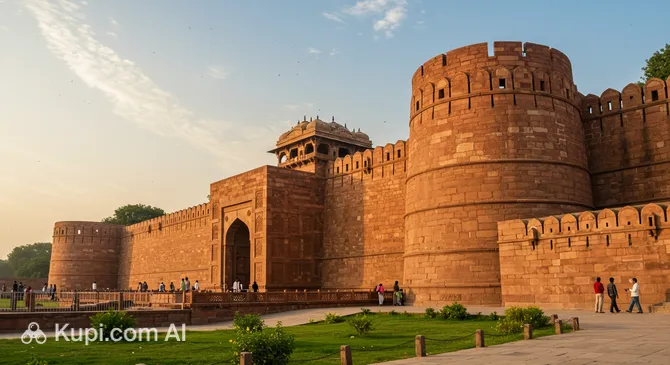
Allahabad Fort. Illustration.
Source: Kupi.com AI

Traveler photos:

Currently, Allahabad Fort is managed by the Indian Armed Forces, which partially restricts tourist access to its grounds. Despite this, its external grandeur and historical significance are beyond doubt. Inside the fort are important sites such as the Ashoka Pillar and the ancient Patalpuri Temple. Visiting the areas surrounding the fort and the sections open to the public allows you to experience its rich heritage and the atmosphere of this landmark location.

Contacts

Since Allahabad Fort is under the jurisdiction of the Indian Army, it does not have a centralized tourist contact center. To obtain the most accurate and up-to-date information regarding opening hours, accessible areas, and entry regulations, it is recommended to consult the official tourism portals of the city of Prayagraj or check details directly with local tour guides on-site.

Some travel resources list general visiting hours from approximately 7:00 AM to 6:00 PM; however, access to certain parts of the fort may be restricted and requires special permission. Entry to public areas is typically free.

How to contactContact
AddressAllahabad fort, Prayagraj, Uttar Pradesh 211005, India

What to Do

A visit to Allahabad Fort offers a unique combination of exploring military architecture and immersing oneself in a spiritual atmosphere. Although much of the territory is used by the Indian Army and access is limited, several iconic sites remain open to visitors. The main highlight is the opportunity to explore impressive examples of Mughal architecture while walking along the massive walls and towers. You can appreciate the strategic importance of this site at the confluence of sacred rivers and learn about its role in India's history.

The main draw for tourists and pilgrims is the Patalpuri Temple, an underground shrine located inside the fort. Descending the stairs, you enter an ancient sanctuary filled with numerous divine idols. A special place here is held by the sacred Akshaya Vat, or the "immortal banyan tree," whose roots are visible in the temple, creating a mystical atmosphere. Also of interest is the Saraswati Kund — a well that is believed to be the source of the mythical Saraswati River.

Inside the fort stands the famous Ashoka Pillar — a polished sandstone monument dating back to the 3rd century BCE. It preserves the edicts of Emperor Ashoka, as well as later inscriptions by rulers of the Gupta dynasty and the Mughal Emperor Jahangir. It is worth noting that access to the pillar may require special permission from military authorities. Nevertheless, even the exterior grandeur of the fort and a visit to its open zones allow you to touch the rich history and culture of this outstanding site.

Getting There

Allahabad Fort is conveniently located in the city of Prayagraj, which enjoys excellent transport links with other major cities in India. There are several ways to reach Prayagraj. The city is a major railway hub, making train travel one of the most popular options. Bus services to neighboring towns are also well-developed. For those who prefer flying, Prayagraj Airport serves domestic flights.

The fort itself is situated in the central part of the city, making it easily accessible for tourists. From the center of Prayagraj, you can quickly reach the site using local transport. Numerous auto-rickshaws and taxis are at your service, offering a convenient and affordable way to get around. If you are staying at a nearby hotel, a walk to the fort is also a great way to see more of the city.

Nearest city: Prayagraj

History & Facts

The history of Allahabad Fort is inextricably linked to the Mughal era. Its construction began in 1583 by order of Emperor Akbar, who saw this massive structure as a key element for consolidating power in the region and protecting the empire. Almost simultaneously with the fort's construction, the city was renamed Allahabad and soon became the capital of one of the Mughal Empire's most prosperous provinces, highlighting its strategic importance.

With the decline of the Mughal Empire, the fort and city became a target for Maratha rulers. However, a new chapter in its history began with the arrival of the British. In 1765, a British garrison was stationed within the fort, and by 1801, the city came fully under the administration of the British East India Company. During the famous Indian Rebellion of 1857, the fort and its surroundings were the scene of fierce battles, leaving their mark on the history of India.

The modern history of this site is also marked by an important event. In October 2018, the state government decided to rename the city of Allahabad to its ancient name — Prayagraj. This decision was officially approved by the national government two months later. It is worth noting that the renaming caused public debate and was challenged in the Supreme Court in 2020, reflecting the complex and multi-layered history of this iconic region.

Time Needed

To fully explore Allahabad Fort, it is recommended to set aside approximately 2-3 hours. This time will be sufficient to leisurely study the fort's impressive architecture, learn about its rich history, and enjoy the scenic views of the confluence of sacred rivers. This time frame allows you to fully experience the atmosphere of this unique location.

The duration of your visit may vary depending on your interests. If your plans include visiting other attractions in Prayagraj, it is worth budgeting additional time. It should also be noted that, since the fort is an active military facility, access to its grounds is partially restricted. Visitors usually focus on the exterior of the massive walls and towers, as well as visiting shrines open to the public, all of which fit within the recommended timeframe.

Working Hours

When planning a visit to Allahabad Fort, it is important to remember that it is under the jurisdiction of the Indian Army; therefore, it does not have strictly established visiting hours for tourists. Although some sources suggest approximate hours from 7:00 AM to 6:00 PM, this information may be inaccurate as access to the grounds can change. It is strongly recommended to check current regulations and visiting hours with local tourism services in Prayagraj or directly on-site before your trip to avoid any unexpected changes.

The fort is generally accessible year-round, and its operation is not tied to specific seasons. However, due to its military status, there is no standard procedure for advance ticket booking. Access to some parts of the fort may be limited and sometimes requires special permission from the commandant. During certain periods, such as the Kumbh Mela festival, parts of the fort may be specifically opened for pilgrims and tourists.

9:44 – 18:00

Nearby

Visiting Allahabad Fort is just the beginning of a fascinating journey through the city of Prayagraj, one of the most important spiritual centers in India. To fully experience the unique atmosphere of this place, it is worth exploring the surrounding areas, which are rich in historical and religious landmarks. A walk along nearby temples and ghats (riverside steps for ritual ablutions) will allow you to dive deeper into the culture and traditions of the region.

Many iconic sites are located within walking distance of the fort, making them particularly convenient to explore. Each of these attractions holds its own story and complements the overall impression of a visit to this ancient city. Below is a list of interesting sites located very nearby.

NameDistance
Akshayavat Temple (Patalpuri Temple)0.1 km
Saraswati Ghat0.8 km
Triveni Sangam (Prayagraj)1.1 km
Mankameshwar Mahadev Temple1.1 km
Shivalaya Park1.4 km
Alopi Shankari Devi Shakti Peeth Temple1.7 km
Kali Ghat on the Yamuna2.1 km

Have you reached the end of the page?

So the route has been studied inside and out