Support

Mahabodhi Temple

About

The Mahabodhi Temple is not just an ancient structure, but one of the most sacred places for Buddhists worldwide. Located in Bodh Gaya, in the heart of India, this temple marks the exact spot where, according to tradition, Prince Gautama Siddhartha attained enlightenment and became the Buddha. This event transformed Bodh Gaya into a major center of pilgrimage and spiritual quest for millions of people arriving from all corners of the planet.

The majestic brick-built temple stands as a pyramid about 55 meters high and is one of the oldest such structures in eastern India. Its historical and spiritual significance is so great that in 2002, the entire complex was added to the UNESCO World Heritage list. The atmosphere around the temple is filled with peace and deep reverence, attracting not only pilgrims but also tourists interested in world culture.
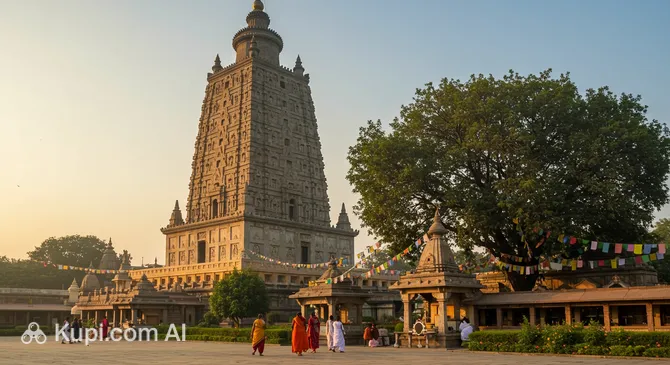
Mahabodhi Temple. Illustration.
Source: Kupi.com AI

Traveller photos:

An integral and particularly revered part of the temple complex is the sacred Bodhi tree. It is believed that the current tree is a direct descendant of the very tree under which the Buddha meditated more than two and a half thousand years ago. It was grown from a sapling brought from Sri Lanka, which in turn originated from the original tree. For Buddhists, as well as for everyone interested in world history, a visit to the Mahabodhi Temple is an opportunity to touch the roots of one of the world's oldest religions and feel the special energy of this holy place.

Contacts

To plan your visit to the temple complex, confirm current opening hours, visitor rules, or ceremony schedules, it is recommended to consult official sources. The Mahabodhi Temple is managed by a special committee, the Bodhgaya Temple Management Committee.

How to contactContact
AddressBodh Gaya, Bihar 824231, India
Phone+91 631 220 0735
Websitebodhgayatemple.com

What to Do

Visiting the Mahabodhi Temple is, above all, an opportunity to immerse yourself in its unique spiritual atmosphere. As the primary pilgrimage site for Buddhists, every visitor can witness or participate in religious ceremonies, meditations, and prayers. Even if you are simply interested in world culture, you will have the chance to observe the rituals and feel the profound peace of this holy place where, according to belief, the Buddha's enlightenment occurred.

The main focus of visitors is on two major shrines: the temple itself and the legendary Bodhi tree. You can explore the architecture of the building in detail, which is a unique example of ancient Indian craftsmanship and has remained almost unchanged for centuries. Next to the temple grows a direct descendant of the very tree under which the Buddha meditated—a place with special energy and appeal for both believers and ordinary tourists.

Getting There

There are several ways to reach the Mahabodhi Temple, located in the city of Bodh Gaya, as it is one of India's key pilgrimage destinations. The most convenient option is to travel by air. Gaya Airport (GAY), the nearest to the city, is located just 7-8 kilometers from the center. This airport handles both domestic and international flights, primarily serving pilgrims from Southeast Asian countries. From the airport, you can quickly reach the temple by taxi or auto-rickshaw; the trip takes about 15-20 minutes.

For those who prefer to travel by rail, the nearest major station is Gaya Junction, located approximately 13 km from Bodh Gaya. This is a major transport hub receiving trains from large Indian cities such as Delhi, Kolkata, Varanasi, and Patna. Buses, shared minivans (tempos), and auto-rickshaws regularly run from Gaya railway station to Bodh Gaya. An auto-rickshaw ride takes about 30-40 minutes.

You can also reach Bodh Gaya by bus from neighboring cities. There is a direct bus service from Patna, the capital of Bihar state, which is about 96 kilometers away. Additionally, there are bus routes connecting Bodh Gaya with Varanasi and other important centers in the region. Within the city itself, which is quite compact, the temple complex is easily accessible on foot from most hotels, or you can use local cycle or auto-rickshaws.

Nearest city: Bodh Gaya

History & Facts

The history of the Mahabodhi Temple is inextricably linked to a pivotal event in the history of Buddhism. According to legend, around 500 BC, a wandering monk, Prince Gautama Siddhartha, arrived on the banks of the Falgu River near the city of Gaya. It was here, in the shade of a Bodhi tree (a sacred fig), that he immersed himself in meditation. After three days and nights of continuous practice, he attained enlightenment, finding answers to all the questions that troubled him, and became the Buddha. He then spent another seven weeks in meditation, solidifying his experience, before heading to Sarnath to begin his teachings.

The first structure at this sacred site was built by Emperor Ashoka. Approximately 250 years after the Buddha's enlightenment, in the 3rd century BC, the great ruler visited Bodh Gaya and ordered a temple to be built to honor this monumental event. Throughout its centuries-long history, the temple has been destroyed and restored multiple times, only highlighting its enduring significance. The magnificent structure we see today was built in the 13th century during the Pala dynasty.

An important recognition of the site's historical and cultural value was the inclusion of the Mahabodhi Temple in the UNESCO World Heritage list in 2002. This status confirms the complex's uniqueness not only as a religious shrine but also as an outstanding monument of human history that has attracted pilgrims and travelers from all over the world for millennia, seeking spiritual inspiration and a connection to antiquity.

Time Needed

For a standard introductory visit to the Mahabodhi Temple in Bodh Gaya, 2 to 3 hours is usually sufficient. During this time, you can leisurely walk around the entire temple complex, admire the magnificent architecture of the main temple (a UNESCO World Heritage site), and, of course, spend time at the sacred Bodhi tree—a descendant of the very tree under which the Buddha attained enlightenment. This will also give you the opportunity to observe pilgrims from all over the world and experience the peaceful atmosphere of this unique location in India.

If you plan for a deeper immersion, it is worth setting aside half a day or even more. Many visitors come here not just as tourists, but for spiritual practices. There are dedicated meditation areas within the complex, and participating in morning or evening rituals and chants can be an unforgettable experience. Additionally, many other small stupas, shrines, and a lotus pond are located around the main temple, exploring which also requires extra time. Thus, the duration of your visit depends directly on your interests: from a quick look to a whole day dedicated to meditation and contemplation.

Working Hours

The Mahabodhi Temple in Bodh Gaya is open to visitors year-round, allowing pilgrims and tourists from all over the world to visit the shrine at any convenient time. The complex is open daily, typically from 5:00 AM to 9:00 PM. Special ceremonies and chants are also held throughout the day, for instance, at 5:30 AM and 6:00 PM. Some sources mention a possible break during the day, roughly from 12:00 PM to 2:00 PM, so it is worth confirming this detail before your visit.

Entry to the temple complex is free; no advance ticket booking is required for a standard visit. However, please note that a small fee may be charged for using photo and video cameras. Since opening hours may change due to special rituals or other reasons, it is highly recommended to check the latest information on the official website of the Bodhgaya Temple Management Committee or at local tourist centers immediately before your trip.

5:00 – 21:00

Nearby

Visiting the Mahabodhi Temple is the centerpiece of any trip to Bodh Gaya, but to truly feel the atmosphere of this unique place, it's worth exploring the surrounding area. The city is literally woven from many monasteries, temples, and meditation centers built by Buddhist communities from different countries. Each of these places possesses its own unique architecture and energy, complementing the experience of the main shrine.

Most significant sites are within walking distance of the temple complex, making it easy to plan an interesting route for several hours or even a whole day. A walk through the neighborhood will give you the opportunity to see how the Buddhist traditions of various nations—from Thailand and Bhutan to Japan—are embodied in architecture and rituals, creating a truly international center of spirituality in India.

NameDistance
Bodhi Tree0 km
Archaeological Museum Bodhgaya0.4 km
Carrot Cake & Coffee0.4 km
Wat Thai Buddhagaya0.7 km
Royal Bhutanese Monastery0.8 km
Great Buddha Statue1.1 km
Tergar Monastery1.2 km

Reached the bottom of the page?

Looks like you know this route inside out