Support

Naida Caves

About

Imagine a whimsical labyrinth of orange-brown rocks where sunlight filters through natural openings in the ceiling, creating fantastic pillars of light. Naida Caves are an amazing natural and historical complex located on the sunny island of Diu. This place cannot be called caves in the classical sense: it is a network of open canyons, grottoes, and halls shaped by both nature and human hands in a country as mysterious as India.
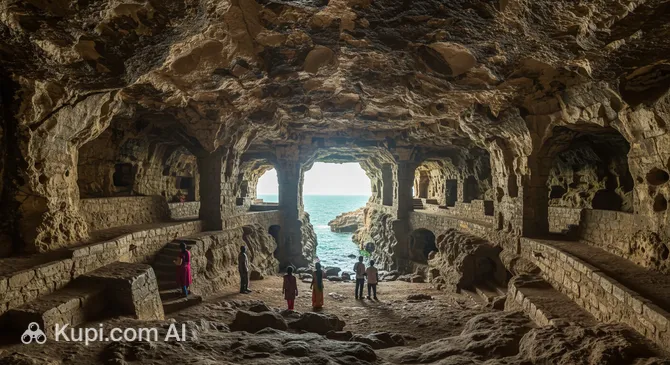
Naida Caves
Naida Caves. Иллюстрация. Источник: Kupi.com AI

One of the main features of this place is its unusual geometry. The walls of the caves are decorated with numerous arches and passages that look like sets for an adventure film. Thanks to their aesthetics and unique atmosphere, Naida is considered one of the most photogenic attractions in the region, attracting travelers from all over the world.

The complex is located in close proximity to the famous Diu Fort, making it a must-see on any tourist's itinerary. Here you can feel the breath of history and simultaneously marvel at how nature reclaims man-made forms, turning them into something completely magical.

Contacts

For your convenience, the main contact details for the site are provided below. Please note that this is an open natural and historical area, so there may not be a direct telephone line.

How to contactContact
AddressPX6J+474, Diu, Dadra and Nagar Haveli and Daman and Diu 362520, India

What to Do

The main thing to do in the caves is, undoubtedly, exploring their intricate corridors. Walking along the winding paths, you can discover new halls and hidden corners that stay pleasantly cool even on the hottest days. This is an ideal place for those seeking solitude and wanting a break from the hustle and bustle of popular beaches.

For photography enthusiasts, this is a true paradise. The unique rock shapes, rough stone texture, and dynamic lighting allow for incredibly beautiful shots. It is recommended to experiment with shooting angles, catching moments when light falls through the "windows" in the vaults, creating sharp contrasts and deep shadows.

Families with children often turn a visit to the caves into an exciting quest: the natural labyrinth is perfect for safe games and little discoveries. You can also have a short rest or a picnic in the shade of the stone arches, enjoying the silence and majestic tranquility of this place.

Getting There

Getting to this amazing place is easy. Naida Caves are located just 3–4 kilometers from the central part of the city of Diu. You can easily reach them by taxi, local rickshaw, or even a rented bicycle—the journey will take no more than 10–15 minutes. The route to the site is well-marked with signs, and any local resident will be happy to point you in the right direction.

Diu Island itself is connected to the mainland by a bridge, making it accessible by car and bus from the neighboring state of Gujarat. The nearest major town to the island is Verapur, from which regular buses run. Additionally, there is a small airport on the island that accepts domestic flights, making a visit to the attraction convenient for tourists from all over the country.

Ближайший город: Diu

History & Facts

The history of this place is as multifaceted as its rock vaults. Naida Caves have a mixed origin: nature created the foundation, and man gave it its current form. It is believed that a significant part of the halls and passages were carved into the rocks during the era of Portuguese rule. In those days, stone was actively quarried here, which was used for the construction of the majestic fort and other city structures.

For centuries, the island of Diu served as a vital strategic hub on the trade routes connecting India, Persia, and Europe. The Portuguese maintained control over this territory from the 16th century until 1961. It was during this long colonial period that a unique architectural style was formed here, and these picturesque man-made grottoes became a "side effect" of the large-scale construction.

Researchers believe that in the past, the caves could have served as more than just a quarry. Due to their intricate structure and cool microclimate, they may have been used as a reliable shelter, a place for storing food supplies, or a reservoir for collecting fresh water. Today, it stands as a silent monument to an era when every carved stone became a part of the island's history.

Time Needed

To leisurely explore every corner of this stone labyrinth, an average visitor will need about 1.5–2 hours. This is plenty of time to walk through all the main corridors, find the most striking angles for photographs, and simply enjoy the silence in one of the cool halls.

If you are a professional photographer or a history buff, you may want to stay here longer. The changing light throughout the day transforms the appearance of the caves beyond recognition, revealing new details in the stone's texture and the play of shadows.

Working Hours

Naida Caves are usually open to visitors daily from early morning until sunset. It is recommended to plan your visit for the first half of the day: at this time, sunlight enters the grottoes at the most striking angle, and the air temperature has not yet reached its peak.

Since official hours may change depending on the season or local holidays, visitors are advised to check for up-to-date information on-site or on official tourism portals before their trip.

Nearby

Exploring the surroundings of the caves will allow you to feel the local flavor of the island more deeply and get acquainted with its rich past. Most interesting locations are within walking distance or just a few minutes' drive away, allowing you to create a packed itinerary for the whole day.

Near the caves, you will find both historical monuments and modern memorials dedicated to the region's maritime history. Below is a list of nearby sites worth visiting:

NameDistance
Jalandhar Beach0.5 km
Shiv Fast Food & Restaurant0.8 km
Chakratirth Beach Resort0.8 km
Chakratirth Beach0.9 km
INS Khukri Memorial0.9 km
Saint Paul's Church1.1 km
The Floatel Floating Restaurant1.2 km

Reached the end of the page?

That means the route is fully explored