Support

Dwarka

About

Dwarka is an amazing city, a true gem on the western coast of India, located at the very tip of the Saurashtra peninsula in the state of Gujarat. It is here, where the Gomti River meets the waters of the Arabian Sea, that this ancient city lies, shrouded in an atmosphere of legend and deep spirituality.

With a population of about 39,000, Dwarka is one of the seven sacred cities of Hinduism (Sapta Puri) and a major center of pilgrimage. The city lives at a special pace, filled with the sounds of prayers, ringing bells, and ancient tales, especially those associated with Lord Krishna. According to legend, it was he who founded his legendary kingdom here, making Dwarka a symbol of divine glory and prosperity.
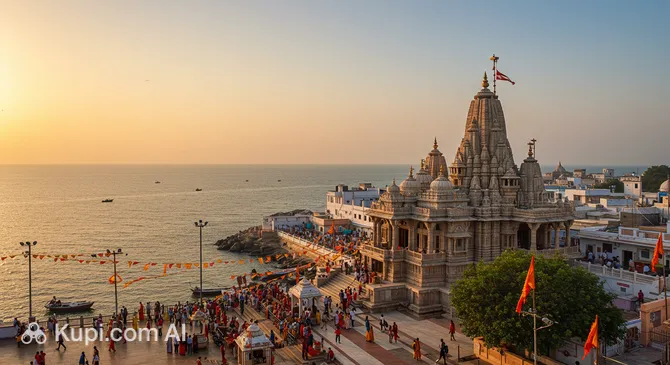
Dwarka. Illustration.
Source: Kupi.com AI

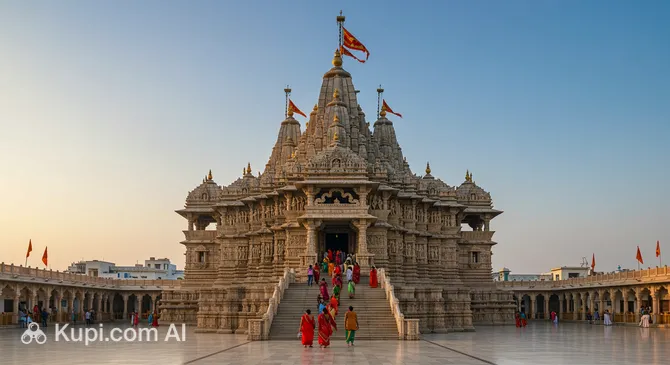
The key attraction and the heart of the city is the magnificent Dwarkadhish Temple (Jagat Mandir), dedicated to Krishna. Its majestic architecture and spiritual atmosphere attract thousands of believers and tourists. In addition, Dwarka charms with its embankments, where you can enjoy the tranquility and watch spectacular sunsets over the Arabian Sea, as well as immerse yourself in the unique culture and daily life of the locals.

Dwarka is an ideal destination for those who seek not just a holiday, but a deep immersion into the world of ancient Indian traditions, spiritual practices, and fascinating myths. A visit to this sacred city promises unforgettable impressions and an opportunity to touch the rich heritage of India.

You can find more interesting facts on the history of Dwarka page.
Weather Overview

The weather in Dwarka is characterized by a hot climate throughout most of the year. In April, the average temperature is around 27.6°C, and in May and June, it rises to 29-30°C, with maximum values reaching about 31°C during these peak months. Winter months, such as January and December, bring more moderate weather with average temperatures in the 21-23°C range.

The majority of rainfall in Dwarka occurs during the monsoon season, which lasts from June to September. July and August are the rainiest months, with the highest number of rainy days. Outside the monsoon season, from October to May, the city experiences very dry weather, and rain is extremely rare. Thus, travelers should expect a hot summer with monsoon rains and warm, mostly dry weather during other seasons.

To get more detailed information about climatic conditions and the current forecast, you can check the weather in Dwarka page.

Average monthly temperature

Average monthly precipitation

Interesting Facts

Beyond its famous temples and sacred status, Dwarka holds many amazing stories and little-known details that make this ancient city even more alluring. Here are just a few of them:

Dwarkadhish Temple. Illustration.
Source: Kupi.com AI

Traveler photos:

  • Dwarka is often called the "Indian Atlantis." According to ancient texts, the original city founded by Lord Krishna was submerged by the sea. Modern underwater archaeological research off the coast has indeed discovered ruins of an ancient settlement, adding even more mystery to this legend.

  • The city's main temple, the majestic Dwarkadhish Temple dedicated to Lord Krishna, is said to have been originally built by his great-grandson Vajranabha over 2,000 years ago. Although the current structure dates to a later period, its connection to ancient history is undeniable, and the evening fire ceremonies (Aarti) attract many believers.

  • Located near the main part of the city is the island of Beyt Dwarka, which is believed to have been the personal residence of Lord Krishna. Local residents and fishermen still pass down stories of mysterious finds and miracles associated with this sacred island.

  • In ancient times, Dwarka was not only a spiritual center but also a flourishing trading port. Important maritime routes passed through it, carrying gold, spices, and precious silks. Thanks to this prosperity, the city earned the nickname Swarnapuri, which means "Golden City."

How to Get There

Dwarka, being one of the most important pilgrimage centers in India, has decent transport accessibility, though getting here may require transfers. The city does not have its own airport, so travelers usually combine a flight with a trip by car or train. You can find all the details and plan your route by following the link: more about how to get to Dwarka.

Since there is no airport in Dwarka itself, tourists must fly into neighboring cities. The nearest air hub is Govardhanpur Airport (JGA) in Jamnagar, located about 110 km from Dwarka. This is a small but convenient airport for domestic flights. The journey from here to Dwarka by taxi or bus takes about 2.5–3 hours.

Another popular option is flying into Rajkot Hirasar Airport (HSR) in Rajkot. It is located further away, about 213 km from Dwarka, but handles more flights. A car journey from this airport takes about 4–5 hours. You might also consider flying via the airport in Bhuj, though the logistics can be more complicated due to its geographic location.

For convenience, here is summary information on the main airports in the region:

AirportPassenger trafficDistance
Govardhanpur Airport169 099110 km
Rudra Mata Airport186 403136 km
Kandla48 408151 km
Keshod19 322169 km
Rajkot Hirasar1.1 mln213 km

Railway connection is one of the most popular and budget-friendly ways to reach the city. Dwarka has its own railway station (Dwarka Railway Station), which is well-connected to major cities in the region such as Ahmedabad, Rajkot, and Jamnagar, and also has direct connections to Mumbai and other metropolises across the country. Trains in India are often booked well in advance, especially during religious festivals.

Additionally, Dwarka can be reached by intercity buses that run from most major cities in the state of Gujarat. The roads in this region are in good condition, so a trip by bus or rental car can also be a comfortable option.

Main Attractions

Dwarka, one of the seven sacred cities of India, attracts pilgrims and tourists with its rich history and spiritual atmosphere. The city offers many iconic sites worth visiting to connect with its ancient heritage.

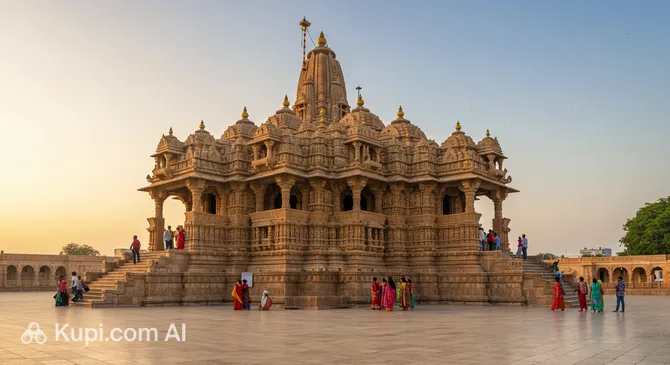
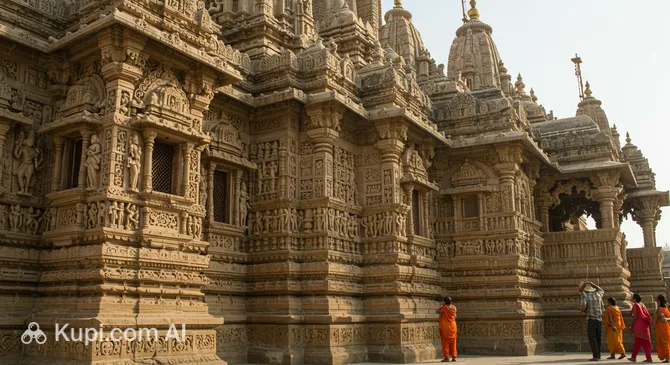
The main jewel of the city is the majestic Dwarkadhish Temple, dedicated to Lord Krishna. This five-story temple, also known as Jagat Mandir, impresses with its complex architecture, carved details, and high spire. It is believed that the original temple was built over 2,500 years ago by Krishna's grandson. Pilgrims from all over the country come here to offer prayers and witness colorful rituals. The atmosphere here is always filled with devotion and reverence.

Dwarkadhish Temple. Illustration.
Source: Kupi.com AI

Traveler photos:

Not far from the main temple is the Rukmini Devi Temple, dedicated to Krishna's consort, Rukmini. According to legend, due to a curse from the sage Durvasa, Rukmini had to live separately from Krishna, which is why her temple is located at a distance. The temple is decorated with exquisite carvings and paintings depicting scenes from the lives of Rukmini and Krishna. This place attracts visitors with its calm atmosphere and beautiful architecture.

Rukmini Devi Temple. Illustration.
Source: Kupi.com AI

Traveler photos:

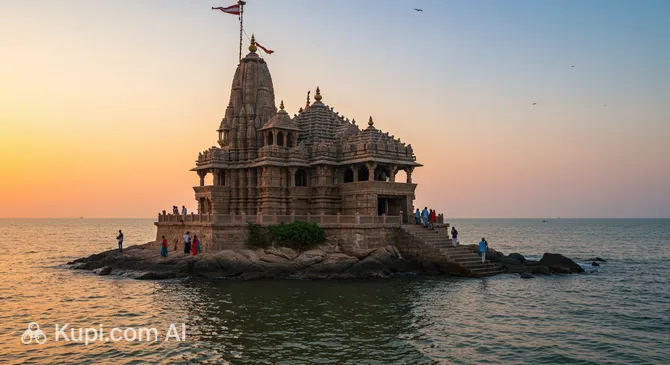
For those seeking peace and beautiful views, the Bhadkeshwar Mahadev Temple is a must-visit. This unique temple, dedicated to Lord Shiva, is located on a small hill right by the Arabian Sea. During high tide, the temple becomes completely surrounded by water, creating a truly mesmerizing sight. Visiting the temple during sunset is particularly impressive.

Bhadkeshwar Mahadev Temple. Illustration.
Source: Kupi.com AI

Traveler photos:

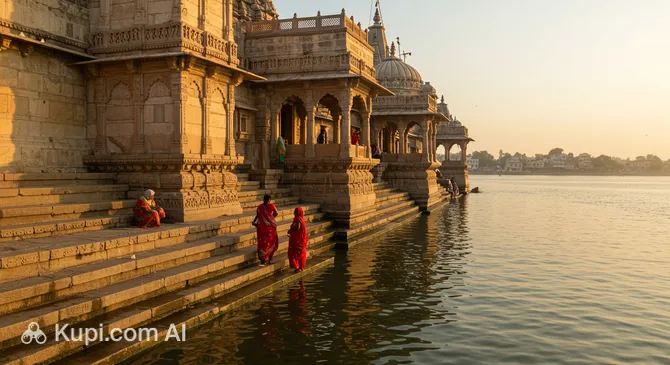
The sacred Gomti Ghat is another important pilgrimage site in Dwarka. This is where the Gomti River flows into the Arabian Sea. Pilgrims perform ritual ablutions here, believing that it washes away sins. There are also several small temples located on the ghat. It is a lively place where you can observe local traditions and feel the spiritual energy of the city.

Gomti Ghat. Illustration.
Source: Kupi.com AI

Traveler photos:

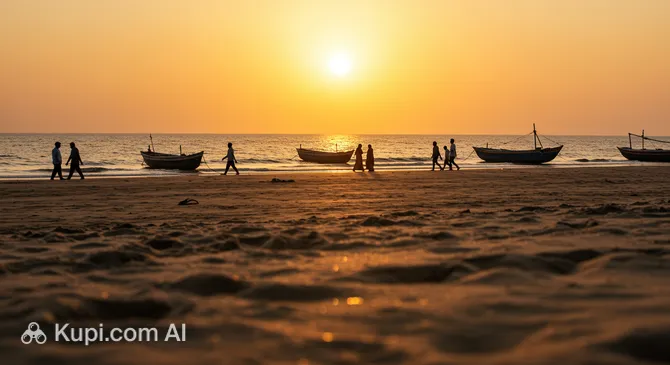
In addition to spiritual shrines, Dwarka offers the opportunity to relax on the coast. Dwarka Beach is a place where you can enjoy the sea breeze, stroll along the sand, and watch the sunset. While it may not be as developed as major tourist beaches, it offers a peaceful atmosphere for relaxation after visiting the temples.

Dwarka Beach. Illustration.
Source: Kupi.com AI

Traveler photos:

Local Cuisine

The cuisine of Dwarka is a true immersion into the gastronomic traditions of Gujarat, where every meal becomes a vibrant cultural experience. The city is famous for its predominantly vegetarian cuisine, rich in the aromas of spices and fresh local products. Dwarka's food scene offers travelers a unique opportunity to get acquainted with the authentic flavors of this holy place.

Be sure to try the famous Gujarati Thali—a large platter featuring a variety of vegetable curries, dal (lentil soup), rice, fresh flatbreads (roti or puri), and tangy chutneys. Other iconic dishes include dhokla—airy steamed cakes made from fermented chickpea or rice flour batter—and khandvi—delicate rolls made from chickpea flour with yogurt and spices. For dessert, shrikhand—a thick sweet yogurt flavored with saffron, cardamom, and nuts—is often served.

Street food in Dwarka is a separate chapter of the culinary journey. On every corner, you can find fragrant samosas (fried stuffed pastries), crispy pakoras (vegetable fritters), and churmura (spicy puffed rice with vegetables and spices). Among beverages, the refreshing lassi—a traditional Indian yogurt-based drink—is especially popular. Generally, non-alcoholic drinks are preferred, in keeping with the city's sacred status.

Locals and tourists enjoy food in small family-run eateries, at bustling street stalls, and in restaurants offering a wider selection of dishes. For example, at establishments like Barsana, you can explore the region's culinary heritage more deeply. It is also worth visiting local markets selling fresh fruits, vegetables, spices, and homemade sweets, offering a full immersion into the city's atmosphere.

The Barsana. Illustration.
Source: Kupi.com AI

Traveler photos:

Dwarka's gastronomy is closely intertwined with its culture and spirituality. Gastronomic festivals are often held during religious holidays, filling the streets with the aromas of traditional treats. A visit to Dwarka is not just a pilgrimage to shrines, but also an opportunity to discover a unique and delicious page of Indian cuisine.

Travel Tips

Welcome to Dwarka, one of the oldest and holiest cities in India! To ensure your pilgrimage or tourist trip is as comfortable as possible and leaves only pleasant impressions, we have prepared some practical tips.

  1. Clothing and Essentials:

    Dwarka has a hot and fairly humid climate, especially in summer. Bring light, breathable clothing made of cotton or linen. Since Dwarka is an important religious center, a modest dress code is mandatory when visiting temples (especially the main Dwarkadhish temple): clothing must cover shoulders and knees. Don't forget comfortable walking shoes, sunscreen, a hat, and sunglasses. Power outlets in India vary, so bring a universal adapter.

  2. Local Transport:

    Dwarka is a relatively small city, and getting around is quite simple. The main mode of transport is auto-rickshaws—the most convenient and common way to reach most places. Always agree on the fare in advance. Taxis are also available and can be hired for longer trips or if traveling in a group. Public buses run but may not be the most comfortable option for tourists. Car rental is unlikely to be necessary for moving within the city itself.

  3. Financial Matters:

    The local currency is the Indian Rupee (INR). You can exchange currency at banks or authorized exchange bureaus; avoid street changers. Credit and debit cards are accepted in large hotels and some shops, but it's better to carry cash for small purchases, rickshaw fares, and small eateries. There are ATMs in the city. Tipping is not always mandatory but is appreciated (5-10% in restaurants, small amounts for porters and drivers). A rough daily budget (excluding accommodation) can be 1,500-3,000 Rupees, depending on your preferences.

  4. Health and Safety:

    There are pharmacies in Dwarka where you can buy basic medications, but 24-hour ones may be few. It is recommended to carry a basic first-aid kit. For serious medical assistance, you may need to go to larger cities. Drink only bottled water. Dwarka is generally considered a safe city for tourists, especially in the pilgrimage areas. However, as everywhere, take basic precautions: watch your belongings in crowded places (especially in temples), and avoid walking in poorly lit and deserted areas after dark.

  5. Communication:

    The main language in Dwarka is Gujarati, though Hindi is also widely spoken. In tourist areas and hotels, staff often speak English, but knowing a few phrases in Hindi or Gujarati (e.g., "Namaste" for hello, "Dhanyavad" for thank you) will be very helpful and appreciated by locals. You can purchase a local SIM card at official telecom stores by presenting your passport and visa. Wi-Fi is available in most hotels and some cafes.

  6. Local Etiquette:

    Indians are hospitable people. The greeting "Namaste" (palms together at chest level and a slight nod) is always appropriate. Always remove your shoes before entering temples and private homes. Try to use your right hand for eating, handing over money, or items, as the left hand is traditionally considered "unclean." Show respect for local customs and traditions, especially in religious places. If you want to take a photo of someone, it is best to ask permission first.

  7. What to Avoid:

    Do not wear overly revealing or tight clothing, especially when visiting temples and other sacred sites—this can be perceived as disrespectful. Also, avoid public displays of affection (e.g., hugging and kissing), as this is not customary in Indian culture. Do not point your feet at people or religious images, as it is considered offensive.

  8. Special Feature of Dwarka:

    Dwarka is primarily a place of pilgrimage. Be prepared for large crowds, especially during Hindu festivals such as Janmashtami (Krishna's birthday). It is better to plan a visit to the Dwarkadhish Temple for early morning or evening to avoid the main heat and crowds. Do not miss the evening Aarti ceremony at the temple—it is an unforgettable sight. It is also worth visiting Gomti Ghat for a ritual bath if you are interested in local traditions.

We hope these tips help you better prepare for your trip to amazing Dwarka and enjoy its unique atmosphere, spirituality, and ancient history. Have a great journey!

Entertainment & Nightlife

Evening and nightlife in Dwarka has its own unique character, shaped by the city's status as one of India's most important pilgrimage centers. Here, you won't find noisy nightclubs or districts with bars open until dawn. Instead, Dwarka offers more peaceful and spiritual ways to spend your evening.

The main focus in the evenings is on dining at local restaurants and cafes. Many establishments offer traditional Gujarati cuisine as well as popular Indian dishes. The atmosphere in these places is usually family-oriented and calm. Notable spots for a pleasant dinner include the restaurant at the Park Royal Hotel or Barsana, both offering diverse menus. Generally, restaurants stay open until late evening but not late into the night, so plan your dinner accordingly. The dress code in most places is casual, but given the city's religious significance, modest clothing is recommended.

Sunset Point. Illustration.
Source: Kupi.com AI

Traveler photos:

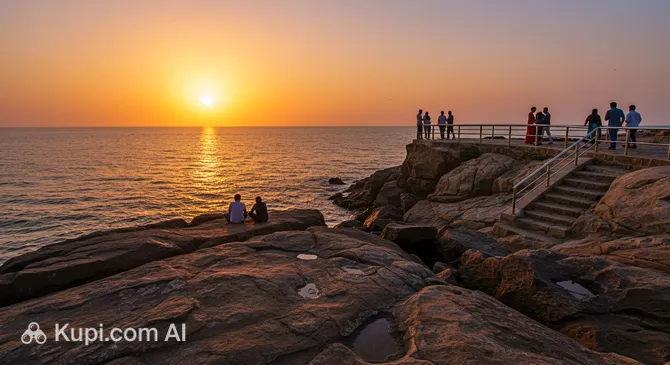
After sunset, many tourists and pilgrims enjoy the city's tranquil atmosphere. A popular spot for evening walks is Sunset Point, which offers beautiful views of the Arabian Sea, especially at dusk. You can also take a stroll along Dwarka Beach or the Gomti River embankment, where Gomti Ghat is located. Areas around the main temples, such as the Dwarkadhish Temple, can remain lively in the evening due to devotees attending services.

In terms of practical advice, it is best to use auto-rickshaws or taxis to get around the city in the evening and at night. Agree on the fare before starting your journey. Dwarka is considered a relatively safe city, but you should always take standard precautions, especially in less crowded areas. Keep in mind that public life here winds down earlier than in large metropolises.

As for daytime entertainment, Dwarka is primarily famous for its numerous temples. Be sure to visit the majestic Dwarkadhish Temple, dedicated to Lord Krishna, as well as the Rukmini Devi Temple and the Bhadkeshwar Mahadev Temple located on the shore. The city does not have large amusement parks or major Western-style museums; the main cultural program is tied to its religious heritage.

Parks & Museums

Dwarka, the sacred city on the Arabian Sea coast, offers visitors a unique blend of spiritual heritage and natural beauty, replacing traditional urban parks and museums with its temples, ghats, and picturesque coastal areas.

For those seeking seclusion in nature and beautiful views, Dwarka offers several noteworthy spots. Dwarka Beach is a popular place for walking, relaxing by the sea, and observing local life. Here, you can enjoy the fresh sea breeze and picturesque sunsets. Another point of attraction for panoramic view lovers is Sunset Point, which offers breathtaking views of the Arabian Sea, especially in the evening. Gomti Ghat, located on the banks of the Gomti River as it flows into the sea, is not only a sacred place for ablutions but also a beautiful location for contemplation and immersing oneself in the city's atmosphere.

Dwarka Beach. Illustration.
Source: Kupi.com AI

Traveler photos:

While Dwarka may not have large museums in the classical sense, its numerous temples are living museums of history, architecture, and religious art in themselves. The city's main shrine is the majestic Dwarkadhish Temple, dedicated to Lord Krishna. Its complex architecture, ancient rituals, and rich history attract pilgrims and tourists from all over the world. This temple is a true treasure reflecting millennial traditions.

Dwarkadhish Temple. Illustration.
Source: Kupi.com AI

Traveler photos:

Equally significant is the Rukmini Devi Temple, dedicated to Krishna's consort. It is known for its exquisite carvings and the legends surrounding its founding. A visit to this temple allows for a deeper understanding of local culture and mythology. Another iconic spot is the Bhadkeshwar Mahadev Temple, uniquely situated on a small hill by the sea and accessible only during low tide. This location offers not only a spiritual experience but also stunning views.

Rukmini Devi Temple. Illustration.
Source: Kupi.com AI

Traveler photos:

For a more authentic experience, try to attend the evening Aarti ceremony at Gomti Ghat—it is a mesmerizing sight filled with the sounds of prayers and the light of lamps. Also, don't miss the chance to explore the many small shrines and ashrams scattered throughout the city to feel its true spirit.

Getting Around

Getting around Dwarka, this important pilgrimage center, is quite simple, although the public transport system is not as extensive as in major metropolises. The transport network is based on local buses and, of course, the ubiquitous auto-rickshaws.

Buses run along major routes, connecting different parts of the city and nearby settlements. This is the most economical way to get around. Fares are usually paid in cash directly to the conductor or driver upon entry. Ticket prices are low. Schedules may not always be precise, but buses run fairly frequently, especially during the day. You can check routes and directions with locals or the conductor.

Auto-rickshaws (tuk-tuks) are the most popular and flexible mode of transport in Dwarka. They are easy to find anywhere in the city. You should agree on the fare with the driver before starting your journey, as meters are not always used or may be out of order. Prices can vary depending on the distance, time of day, and your bargaining skills. There are also cycle-rickshaws for short trips, especially in the older and narrower parts of the city.

For more comfortable travel or long-distance trips, you can use taxi services. These are usually private cars that can be ordered through a hotel or found at designated stands. Taxi fares are higher than auto-rickshaws, but the comfort level is corresponding. Car-sharing and developed bike-sharing systems have not yet become widespread in Dwarka.

Tourists are advised to carry small denominations of cash for fares. During peak hours, especially during major religious festivals, transport can be overcrowded. Plan your trips in advance, especially if you need to be somewhere at a specific time. For exploring the central attractions, which are located compactly, getting around on foot is perfectly feasible.

Accommodation

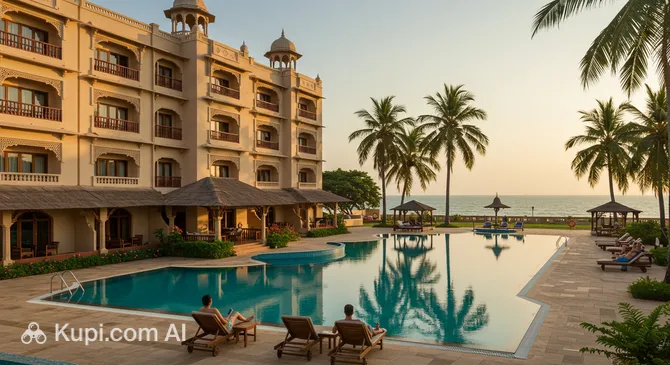
In Dwarka, a sacred city for pilgrims, there is a wide range of accommodation options to suit the needs of different categories of travelers. You can find budget guesthouses and dharamshalas (pilgrim shelters) as well as mid-range hotels offering more comfortable conditions. There are fewer luxury resorts in the traditional sense; the main focus is on convenience for pilgrims and tourists visiting the shrines.

Most accommodation options are concentrated near the main temples, such as the Dwarkadhish Temple, making them especially convenient for those visiting for pilgrimage purposes. Areas adjacent to Dwarka Beach and Gomti Ghat are also popular, offering scenic views. Among the well-known options is the Hotel Gopal Dwarka, which offers comfortable stays.

Hotel Gopal Dwarka. Illustration.
Source: Kupi.com AI

Traveler photos:

Accommodation prices in Dwarka range from very budget-friendly to moderate. During peak pilgrimage seasons, such as Janmashtami, it is recommended to book your stay well in advance as demand increases significantly. Bookings can be made through popular online platforms or by contacting hotels and guesthouses directly. Given the nature of the city, many places offer basic amenities aimed at pilgrims, but more comfortable options can always be found.

Nearby Cities

For those who want to explore the surrounding areas, Dwarka serves as an excellent starting point for day trips to several interesting nearby locations:

Mandvi, located on the coast of the Arabian Sea, attracts visitors with its historic shipyards, where traditional wooden vessels (dhows) have been built for centuries, as well as its beautiful beaches like Mandvi Beach and the majestic Vijay Vilas Palace. It is a great place for those interested in maritime history and looking to relax by the sea.

Jamnagar, also known as the "Jewel of Kathiawar," is interesting for its Lakhota Lake with a fort-palace of the same name in the middle, which has been converted into a museum. The city is also famous for the Bala Hanuman Temple, which is listed in the Guinness World Records for the longest continuous chanting of religious hymns.

Bhuj, the capital of the Kutch region, is a cultural hub known for its unique crafts, embroidery, and architecture. After the devastating earthquake of 2001, the city was rebuilt and offers tourists sights such as the Aina Mahal (Mirror Palace) and Prag Mahal palace, as well as a chance to experience the rich culture of Kutch.

CityPopulationDistance
Salaya30 00066 km
Mandvi814 65576 km
Porbandar200 00095 km
Mundra20 338102 km
Naliya11 415114 km

These nearby destinations provide insight into the diverse culture and landscapes of the region.

Shopping & Souvenirs

Shopping in Dwarka, a sacred city in India, primarily offers tourists goods related to religious themes, as well as traditional handicrafts and local textiles. This is not the place where you will find large shopping malls or global brand boutiques, but you can purchase unique souvenirs and items that reflect the culture and spirituality of this ancient city.

Most shops and stalls are concentrated around the main temple complexes, especially near the Dwarkadhish Temple. The narrow streets leading to the temple abound with small shops offering a variety of goods for pilgrims and tourists. Trading points can also be found near other popular spots like Gomti Ghat.

Dwarkadhish Temple. Illustration.
Source: Kupi.com AI

Traveler photos:

In Dwarka, there are no large modern shopping centers in the conventional sense. Shopping here is more traditional, focusing on small stores and market stalls.

Although there may not be one large centralized market in Dwarka comparable to those in major cities, you will find many street vendors and small market areas, especially near the temples. Here, you can buy fresh fruits, local sweets, spices, as well as small souvenirs and religious items. The atmosphere of such places is very colorful and allows you to dive into the daily life of the city.

From Dwarka, it is worth bringing back items related to Lord Krishna: small figurines, images, and keychains. Traditional Gujarati textiles, such as Bandhani (tie-dye fabric) and embroidered items, are also popular. You can find beautiful prayer beads (japa mala), incense, Ayurvedic products, and seashell crafts that serve as reminders of the nearby Arabian Sea. Don't forget the colorful fabrics and shawls, which make excellent gifts.

Most shops in Dwarka open around 10:00-11:00 AM and operate until 8:00-9:00 PM, often with a lunch break during the day. Markets and stalls near temples may start earlier. Cash (Indian Rupees) remains the primary method of payment, especially in small shops and markets. Some larger stores and hotels may accept bank cards, but it is always best to have enough cash on hand. UPI payment systems are also gaining popularity.

Tax-free systems for tourists in Dwarka, as in most small cities in India, are practically non-existent for the types of goods typically purchased by tourists in such locations. This option is more common at major international airports and specialized stores in large metropolises when purchasing high-value items.

Reached the end of the page?

That means the route is fully explored