Support

Dakshineswar Kali Temple

About

The Dakshineswar Kali Temple is a majestic Hindu temple complex located in the suburb of Dakshineswar, near the city of Kolkata in India. It stretches along the eastern bank of the sacred Hooghly River and is one of the most revered pilgrimage sites in the country. Founded in 1855, this temple attracts believers and tourists from all over the world with its spiritual atmosphere and architectural beauty.

The main deity of the temple is Bhavatarini—a specific manifestation of the goddess Kali whose name translates as "Savior of the Universe" or "She who liberates her devotees from the ocean of material existence." This site became widely known thanks to the great Bengali saint Ramakrishna, who served here as a priest and lived most of his life here, filling the temple with a special spiritual power. For followers of Hinduism, a visit to Dakshineswar is an opportunity to touch living history and receive the blessing of the Divine Mother.

The architectural ensemble is a classic example of the Bengali "Navaratna" (nine spires) style. In addition to the main temple, the extensive complex grounds house twelve temples dedicated to Shiva, a Radha-Krishna temple, and the room where Ramakrishna lived. Visitors can not only take part in rituals but also enjoy the tranquil atmosphere on the riverbank.
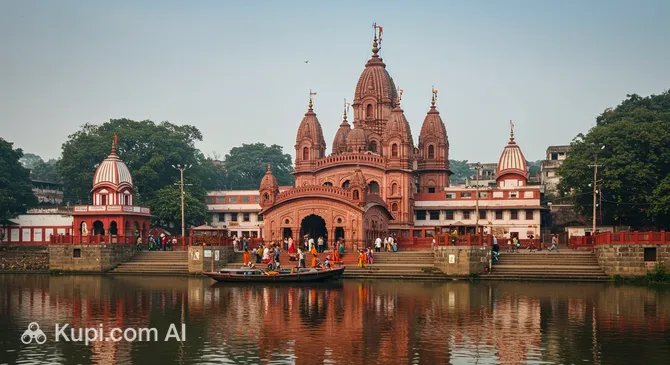
Dakshineswar Kali Temple. Illustration.
Source: Kupi.com AI

Traveler photos:

Visiting the Dakshineswar Kali Temple is a unique opportunity to immerse yourself in the culture and spirituality of India, witness impressive religious ceremonies, and feel the energy of one of its most significant holy places. It is not just a landmark, but a living spiritual center that plays an important role in the lives of millions of people.

Contacts

For the most up-to-date information regarding ritual schedules, visiting rules, or other inquiries, you can contact the temple complex administration. All primary contact details, including phone numbers and the official website, are listed below.

How to contactContact
AddressDakshineswar, Kolkata, West Bengal 700076, India
Phone number+91 33 2564 5222
Websitewww.dakshineswarkalitemple.org

What to Do

A visit to the Dakshineswar Kali Temple is an opportunity to immerse yourself deeply in the living spiritual tradition of India. The main activity for visitors is participating in and observing religious ceremonies dedicated to the goddess Kali. You can witness a puja (ritual worship), see devotees offering flower garlands, and feel the incredibly powerful energy of this holy place. After the darshan (viewing of the deity), you can spend time in meditation in the special Natya Mandapa hall, used for gatherings and spiritual practices. Many pilgrims also perform ritual ablutions in the sacred waters of the Hooghly River, which can be reached via steps leading directly from the temple.

Beyond the main shrine, the temple complex offers much for those interested in Hindu culture and architecture. Be sure to visit the twelve temples dedicated to Shiva located along the riverbank, as well as the Radha-Krishna temple. Of particular significance to pilgrims and tourists is the room where the great saint Ramakrishna lived and meditated. Today, this space has been converted into a small shrine where you can see the saint's personal belongings and soak in the atmosphere where he achieved spiritual insights. You can also find the sacred tree on the grounds under which, according to tradition, Ramakrishna meditated, and take a stroll through the peaceful garden.

Getting There

The Dakshineswar Kali Temple is located on the eastern bank of the Hooghly River, in the suburb of the same name near Kolkata. Thanks to its location, it is easily accessible from the city center via various modes of transport. The journey to this iconic landmark can be an interesting part of your excursion in itself.

The most convenient and fastest way to reach the temple is by using the Kolkata Metro. You need to travel to the "Dakshineswar" station (the terminal station on one of the lines). From the metro exit, a specially constructed pedestrian bridge leads to the entrance of the temple complex; the walk takes no more than 10–15 minutes. Additionally, you can reach the temple by suburban trains to the Dakshineswar railway station or by using numerous city buses serving this area.

For those who prefer comfort, taxi services or online ride-hailing apps are always available. The trip from the city center takes anywhere from 45 minutes to an hour and a half, depending on traffic. Another scenic way to reach the temple is by water. Ferries regularly depart from various piers, such as Belur Math or Howrah Station Ferry Ghat, along the Hooghly River and stop at the Dakshineswar jetty. Such a trip not only avoids traffic jams but also allows you to enjoy views of the river and the city from a unique perspective.

Nearest city: Kolkata

History & Facts

The history of the Dakshineswar Kali Temple is inextricably linked with the name of Rani Rashmoni, a wealthy and devout widow from Kolkata. According to legend, in 1847, on the eve of a pilgrimage to the sacred city of Varanasi, the goddess Kali appeared to her in a dream and commanded her to build a temple in her honor on the banks of the Hooghly River. Rashmoni canceled the trip and invested all her funds into the construction, which began that same year and was completed in 1855. Thus, on land that formerly belonged to a Muslim community and was shaped like a turtle (a favorable symbol for Shakti worship), a majestic temple complex arose, becoming one of the spiritual centers of India.

The temple gained worldwide fame thanks to the great mystic and saint Ramakrishna Paramahamsa. He arrived at Dakshineswar shortly after its opening and served as the head priest (pujari) here from 1856 to 1886. His deep devotion to the goddess Kali, his mystical experiences, and his teachings attracted many followers to the temple, including his famous disciple Swami Vivekananda. It was Ramakrishna's presence and activities that transformed the temple from a simple place of worship into a powerful center of spiritual revival, the fame of which spread far beyond Bengal.

From an architectural standpoint, the complex is a striking example of the traditional Bengali "Navaratna" style, meaning "nine spires." Throughout its more than 160-year history, the temple has not only maintained its religious significance but has also become an important cultural monument. It continues to be a major pilgrimage site for followers of Hinduism, especially those who revere the goddess Kali in her form as Bhavatarini—the "Savior of the Universe." Visiting this site is an opportunity to touch living history and the spirituality that inspired one of the greatest saints of the 19th century.

Time Needed

When planning a visit to the Dakshineswar Kali Temple, you should generally allow for 2–3 hours. This time is usually sufficient for a comprehensive and leisurely exploration of the entire temple complex. During this period, you will have time to visit the main shrine of the goddess Kali, stroll along the row of twelve Shiva temples on the riverbank, stop by the Radha-Krishna temple, and visit the room where Saint Ramakrishna lived and meditated.

It is important to consider that the duration of your visit depends heavily on the day of the week and the time of day. The primary factor is the queue to see the main deity, which can take over an hour on weekends and holidays. If you are short on time and only wish to see the architecture and feel the general atmosphere, you can manage in about an hour, especially if you visit on a weekday. For those who wish to immerse themselves more deeply in the spiritual life of the temple—for example, to attend the evening aarti ceremony or spend time in meditation—it is worth dedicating half a day.

Working Hours

The Dakshineswar Kali Temple is open to visitors year-round. It typically operates daily, but with a break in the middle of the day. The morning session for visits lasts approximately from 6:00 AM to 12:30 PM, and the evening session from 3:00 PM to 8:30 PM. Please note that schedules may vary slightly depending on the season. As opening hours can change, especially during major religious festivals, it is highly recommended to check the most current information on the official temple website before your visit.

Entry to the temple complex is free, so there is no need to book tickets in advance. However, be prepared for potentially long queues, especially on Tuesdays, Saturdays, and during Hindu festivals. If you want to enjoy a quieter atmosphere, it is best to plan your visit for early morning on a weekday.

6:00 – 13:00, 3:30 – 19:30

Nearby

Visiting the Dakshineswar Kali Temple is a profound spiritual experience, but to make your trip truly complete, it is worth exploring the surrounding area. The temple district and nearby territories are rich in other significant sites closely linked to the history and spiritual life of Kolkata. Exploring these attractions will allow you to delve deeper into the heritage of Bengal and better understand the context in which Dakshineswar became one of the most important pilgrimage centers.

Many of the nearby sites are directly connected to the life and teachings of Saint Ramakrishna and his followers. This transforms an ordinary tourist trip into a genuine pilgrimage to holy places. By setting aside extra time to explore the surroundings, you can gain a holistic picture of the spiritual and cultural life of this unique corner of India.

NameDistance
Belur Math2.5 km
Sri Sarada Devi's House5.5 km
Mayer Ghat, Baghbazar5.5 km
Swami Vivekananda's Ancestral House and Cultural Centre7.7 km
Howrah Bridge7.8 km
Aerosky Bar & Kitchen8.2 km
Animel Planet Aquarium8.5 km

Have you reached the end of the page?

So the route has been studied inside and out