Support

Swami Vivekananda's Ancestral House and Cultural Centre

About

The Swami Vivekananda Ancestral House & Cultural Centre is a significant memorial complex located in Kolkata, one of the cultural hubs of India. This site is entirely dedicated to the life, teachings, and legacy of Swami Vivekananda, a prominent Indian philosopher, spiritual leader, and social activist who played a key role in the revival of Hinduism and the introduction of Indian philosophy to the Western world.
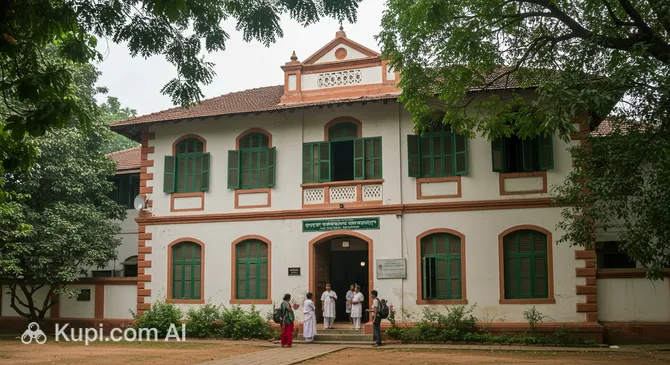
Swami Vivekananda's Ancestral House and Cultural Centre. Illustration.
Source: Kupi.com AI

Traveler photos:

The museum carefully preserves Swami Vivekananda's personal belongings, photographs, letters, and manuscripts, allowing visitors to gain a deeper understanding of his personality and the era in which he lived. The exhibition details various stages of his life: from his youth and spiritual quest to his famous speech at the World's Parliament of Religions in Chicago and his subsequent missionary work. This is not just a collection of artifacts, but an opportunity to touch the life story of a man whose ideas continue to inspire millions of people around the world.

A cultural center operates alongside the museum, serving as an important venue for educational and outreach activities. It regularly hosts lectures, seminars, exhibitions, and workshops dedicated to Indian culture, philosophy, spirituality, and social service, carrying on Swami Vivekananda's work in spreading knowledge. The center strives to popularize his ideas and his contribution to the development of Indian and global thought.

A visit to the Swami Vivekananda Ancestral House & Cultural Centre will be of interest not only to those deeply studying Indian philosophy and spiritual practices but also to anyone who wants to learn more about India's rich cultural heritage and a figure who significantly influenced the modern understanding of Hinduism and interreligious dialogue. This place offers a unique opportunity to immerse yourself in the life and teachings of one of India's greatest thinkers.

Contacts

For the most up-to-date information regarding opening hours, ticket prices, or special events at the Swami Vivekananda Ancestral House & Cultural Centre, it is recommended to consult the official tourism resources of Kolkata or look for information on specialized travel portals dedicated to India. Details can often be found in local guidebooks or directly on-site before your visit.

How to contactContact
Address105, Vivekananda Rd, Manicktala, Azad Hind Bag, Kolkata, West Bengal 700006, India
Phone number+91 90517 41559
Websitevivekanandahome.org

What to Do

A visit to the Swami Vivekananda Ancestral House & Cultural Centre offers a deep dive into the life and legacy of this outstanding thinker. In the museum section, you can explore the exhibition detailing his life journey and activities. Among the exhibits are personal belongings of Swami Vivekananda, his clothing—including the attire he wore at the sessions of the American Parliament—as well as numerous photographs, manuscripts, and everyday items. Special attention is given to exhibits related to his travels and spiritual search, allowing for a better understanding of his philosophical views.

The cultural center at the museum is an active platform for educational activities. Various events are regularly organized here: guided tours of the museum are conducted, and lectures and seminars on Indian philosophy, culture, and Vivekananda's spiritual heritage are held. Visitors also have the opportunity to participate in yoga and meditation workshops, as well as visit temporary themed exhibitions that expand the understanding of Indian culture.

In addition to exploring the exhibition and participating in cultural programs, guests can enjoy the peaceful atmosphere of the park or garden adjacent to the museum. It is an excellent place for leisurely walks, relaxing on green lawns, and contemplating views of the Ganges River. The museum grounds often serve as a meeting place for people of different nationalities united by an interest in Vivekananda's teachings and Indian culture. To conclude your visit, you can stop by the souvenir shop, which sells literature related to Swami's life and teachings, as well as other commemorative souvenirs.

Getting There

The Swami Vivekananda Ancestral House & Cultural Centre is located in Kolkata and can be reached in several ways using the local transport system. Thanks to its location, the museum is accessible to both independent travelers and those who prefer more comfortable modes of transport.

One of the most common ways to get there is by using public transport. Kolkata has a well-developed network of bus routes, and many pass near the central districts where the museum is located. You can also use the Kolkata Metro; you will need to identify the station closest to the museum depending on its exact address and your route. From the metro station, you will likely need a short walk or a brief ride on local transport.

For greater convenience, especially if traveling with luggage or in a group, you can use taxi services. Both traditional taxis and popular ride-hailing services like Uber or Ola operate in Kolkata. A taxi ride from the city center or your hotel will be relatively quick and comfortable. If you are staying near the museum in the central part of the city, a walk or a ride on a colorful local rickshaw can also be a pleasant option, allowing you to better experience the city's atmosphere.

The museum is situated in a picturesque area, making the journey there even more attractive. Given its proximity to the banks of the Ganges (Hooghly), the way to the Swami Vivekananda Ancestral House & Cultural Centre can become part of an educational walk through Kolkata. It is recommended to check the exact location of the museum on a map in advance and plan your route for maximum comfort.

Nearest city: Kolkata

History & Facts

The history of the Swami Vivekananda Ancestral House & Cultural Centre is inextricably linked to the life of Swami Vivekananda himself (1863–1902), one of the most revered figures in the spiritual history of India. As a devoted disciple of the great mystic Ramakrishna, Vivekananda played a key role in the revival of Indian spirituality. His teachings and activities had a significant impact not only on religious thought but also became an important component of the country's liberation movement, inspiring his compatriots to rethink their heritage.

Swami Vivekananda gained world fame after his historic speech at the World's Parliament of Religions in Chicago in 1893. It was there that he brilliantly presented the depth of Indian philosophy and Vedic knowledge to a Western audience, sparking immense interest in Eastern spirituality. This event became a turning point, opening the richness of Indian thought to the West and laying the foundation for global interfaith dialogue.

After the passing of his teacher Ramakrishna in 1886, Swami Vivekananda, along with other disciples, founded a small community. Initially, they lived in quite modest conditions, dedicating themselves to intense spiritual practice as well as the deep study of philosophy and sacred texts. Later, Vivekananda brought an innovative vision to monastic life by founding the Ramakrishna Order and the Ramakrishna Mission. He actively called on monks to engage in social service, emphasizing that helping those in need and working for the good of society are integral parts of the spiritual path and self-improvement.

The creation of the Swami Vivekananda Ancestral House & Cultural Centre in Kolkata was a natural step toward preserving this rich legacy. The museum is intended not only to keep the memory of the life and work of the outstanding thinker alive but also to actively spread his ideas among new generations. The cultural center continues Vivekananda's mission by offering educational programs and events aimed at popularizing his teachings and Indian culture as a whole. This place serves as a living reminder of his contribution to the world's spiritual treasury.

Time Needed

For a comfortable and thoughtful introduction to the Swami Vivekananda Ancestral House & Cultural Centre in Kolkata, the average visitor is recommended to set aside approximately 1 to 2 hours. This time is generally sufficient to view the main exhibition dedicated to the life and teachings of Swami Vivekananda and to stroll through the adjacent grounds, if they are open to the public. You may also have time to join one of the guided tours or listen to a short lecture if they are being held during your visit.

If your plans include a deeper immersion into the activities of the cultural center—for example, if you are interested in attending a special workshop, seminar, or a longer lecture—your stay may increase. In such cases, you should expect to spend 2.5–3 hours or even more, depending on the program and duration of the selected event. Therefore, when planning your visit, it is worth checking the center's event schedule in advance to optimally allocate your time and get the most out of this significant site.

Working Hours

Unfortunately, the exact opening hours of the Swami Vivekananda Ancestral House & Cultural Centre in Kolkata are not specified in open sources. For the most up-to-date information regarding the schedule, as well as the need for advance ticket booking or tour registration, it is highly recommended to visit the museum's official website or contact the administration directly before your visit.

Information on whether the museum is open year-round or operates on a specific seasonal schedule is also best confirmed through official channels. Checking these details in advance will help you plan your visit to this significant cultural landmark in India and avoid any possible inconvenience.

DayOpening hours
MondayClosed
Tuesday10:00 – 12:30, 2:00 – 17:00
Wednesday10:00 – 12:30, 2:00 – 17:00
Thursday10:00 – 12:30, 2:00 – 17:00
Friday10:00 – 12:30, 2:00 – 17:00
Saturday10:00 – 12:30, 2:00 – 17:00
Sunday10:00 – 12:30, 2:00 – 17:00

Nearby

Immersing yourself in the atmosphere of the Swami Vivekananda Ancestral House & Cultural Centre is undoubtedly a significant part of any visit to Kolkata. However, to make your journey even more enriching and complete, it is worth paying attention to other treasures hidden within this multifaceted city. Exploring the museum's surroundings will allow you to deeper understand the cultural context and historical richness of India.

Near the museum, you will find many other interesting sites, each capable of providing unique experiences and expanding your perspective on Kolkata. From ancient shrines to modern parks, a walk through the neighborhood can be a fascinating addition to your main itinerary. Below is a list of some attractions located relatively nearby.

NameDistance
Howrah Bridge2.1 km
Sri Sarada Devi's House2.2 km
Mayer Ghat, Baghbazar2.2 km
Santosh Mitra Square2.3 km
Indian Museum3.6 km
Trincas Restaurant & Bar3.9 km
Animel Planet Aquarium4.5 km

Have you reached the end of the page?

So the route has been studied inside and out