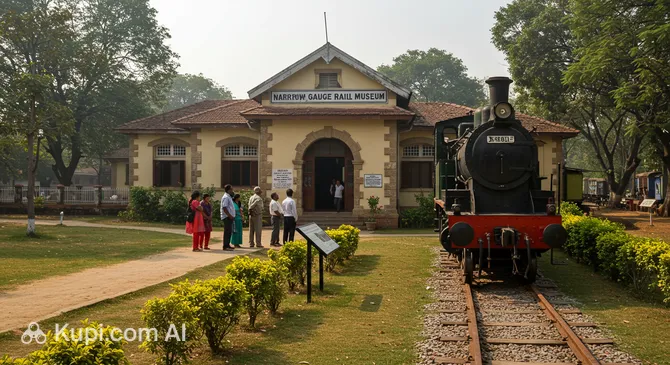
The Narrow Gauge Rail Museum in Nagpur is a unique place where the history of India's steel arteries comes to life. Located in the state of Maharashtra, this museum complex sits right next to an active locomotive depot, which gives it a special atmosphere of industrial romance.
Narrow Gauge Rail Museum. Illustration.
Source: Kupi.com AI
Traveler photos:
The museum's exhibition is divided into two parts: indoor halls featuring rare artifacts, documents, and historical photographs, and an extensive open-air area. Here, an impressive collection of railway equipment is gathered—machinery that worked on narrow-gauge tracks for decades, connecting the country's remote corners.
One of the main highlights is the opportunity to see not only museum exhibits but also the daily life of the modern depot. This juxtaposition of past and present makes the museum a significant site for anyone interested in technological progress and the history of transport in South Asia.
Contacts
For your convenience, we have prepared up-to-date contact information for the museum. You can check the official information on the railway website in advance or find the exact location on the city map.
Below is detailed information to help you plan your visit and quickly find the entrance to the museum complex.
A true immersion into the world of vintage machinery awaits you at the museum. Here, you can examine antique steam locomotives and carriages that once traversed the country in great detail. Unlike many other museums, a more relaxed atmosphere prevails here: you are often allowed not only to photograph the equipment but also to watch the craftsmen at work in the neighboring depot.
Be sure to check out the following activities:
Take a ride on the special miniature railway line that runs around the perimeter of the museum—a favorite for both children and adults.
Watch a real turntable in action, used for turning locomotives around.
Explore the rich archive of photographs and documents that tell the detailed story of how the narrow-gauge lines were built and developed.
Don't hesitate to chat with the depot staff. They are often very friendly and happy to share interesting stories or let you take a few unique shots against the backdrop of the carriages being serviced. This place offers a rare chance to see the "behind the scenes" of railway life in an informal setting.
Getting There
The museum is located north of Nagpur Central Railway Station, in the Kadbi Chowk area on Kamptee Road. Thanks to this central location, getting there is easy from any part of the city.
The most convenient way is to take a taxi or a local auto-rickshaw, which are easy to find at the station exit or in the city center. The trip will take only 10–15 minutes if there are no heavy traffic jams. For those who prefer modern transport, you can take the metro to the nearest station and walk or take a short rickshaw ride.
If you are arriving in the city by train from other regions, the museum is an excellent first stop on your itinerary, as it is located practically "next door" to the main tracks. Exact coordinates for your navigator: 21.16518° N, 79.09048° E.
Nearest city: Nagpur
History & Facts
The history of railways in India spans more than 170 years, starting from the legendary first journey in 1853. Narrow-gauge lines have always held a special place in this transport system, allowing tracks to be laid in the most inaccessible and mountainous regions where standard gauge was impossible.
The narrow gauge in Nagpur is one of the few surviving historical lines that still serves as a reminder of the technical progress of past centuries. The museum was created specifically to preserve this unique engineering heritage of the region for future generations.
Unlike India's four famous mountain tourist railways, the Nagpur line served standard transport purposes for a long time, making the exhibits in the museum especially valuable—these are the authentic "workhorses" of the Indian economy from past decades.
Visitors can trace the evolution of steam engines and carriages, learning how technology and passenger transport conditions changed over decades of railway development in the state of Maharashtra.
Time Needed
For a thoughtful tour of the entire museum collection, including both the indoor halls with historical photos and the outdoor equipment, 1–2 hours is usually sufficient. This is enough time to stroll through the grounds at a leisurely pace and take some memorable photos.
If you plan to ride the miniature railway or want to chat with the staff at the neighboring depot to get a behind-the-scenes look at how the railway works, you should budget half a day for your visit. At such a relaxed pace, visiting the museum will be a pleasant and educational experience.
Working Hours
When planning your visit, keep in mind that the museum is closed at the beginning of the week. The main visiting hours cover the afternoon and evening, which is convenient for a walk after the midday heat.
Exploring the area around the Narrow Gauge Rail Museum will help you get to know the atmosphere of this Indian city even better. Several amusement parks and nature areas are located nearby, making them a great addition to your cultural program.
For your convenience, we have compiled a list of nearby points of interest that are easy to reach after visiting the exhibition: