Support

Pushkar

About

Pushkar is an amazing oasis city, a true gem of India, located in the heart of the state of Rajasthan, just 11 kilometers from the larger city of Ajmer. It is nestled around the sacred Pushkar Lake, surrounded by picturesque hills and sand dunes, creating an atmosphere of tranquility and spiritual quest. This city is famous for its unique aura, where ancient traditions harmoniously intertwine with a measured rhythm of life.
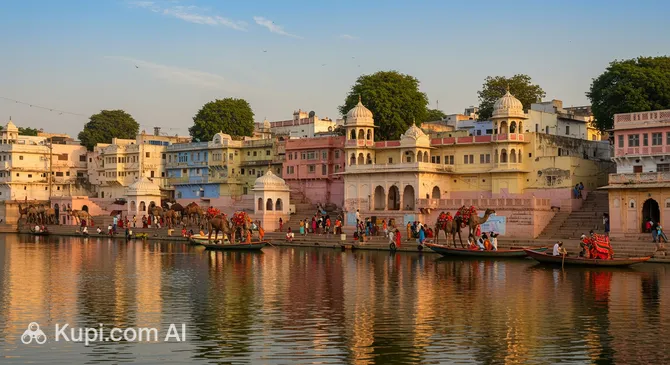
Pushkar. Illustration.
Source: Kupi.com AI

Despite its modest size — with a population of just over 21,000 people — the city plays a huge role in the cultural and religious life of the country. It is considered one of the oldest and most sacred cities in India, attracting pilgrims and travelers from all over the world who seek to touch its shrines and feel its magical energy. The climate here is typical of the desert regions of Rajasthan, with hot summers and mild winters, making the autumn and spring periods the most comfortable for visiting.

The main magnets for tourists in Pushkar are, of course, the sacred Pushkar Lake itself with its numerous ghats (steps for ritual bathing) and the world's only (or one of very few) active temples dedicated to Lord Brahma. The city's streets are filled with the sounds of prayers, the scents of incense, and the vibrant colors of local markets where you can find unique souvenirs and handmade crafts. Here, you can encounter sadhus, yogis, and pilgrims, which further immerses you in the atmosphere of spirituality.

If you are looking for a place where time seems to slow down, where you can immerse yourself in the study of ancient legends, experience authentic Indian culture, and find inner harmony, then Pushkar will be a true discovery for you. This is a city that leaves a deep mark on the soul and provides unforgettable impressions.

You can find more interesting facts on the Pushkar city history page.

Weather Overview

The weather in Pushkar is characterized by distinct seasonality. You can expect very hot summers, especially from April to June, when the average air temperature stays above 30°C, and maximum values can approach 40°C. During this period, precipitation is minimal. From July to September, the monsoon season arrives, bringing the bulk of the rainfall: in July and August, there is about 5-6 mm of rain, and the number of rainy days reaches 16-19 per month. Temperatures during this time decrease slightly, averaging 27-30°C. Winter, from December to February, in Pushkar is mild and dry, with average temperatures around 15-20°C and a virtual absence of rain. Expect hot summers with monsoon rains and comfortable, dry winters. For more detailed information on climate conditions, including monthly data, visit the Pushkar Climate page.

Average monthly temperature

Average monthly precipitation

Interesting Facts

In addition to its widely known shrines, Pushkar holds many amazing stories and unique traditions that make it one of the most colorful cities in India. Here are just a few interesting facts about this mysterious place:

  • Pushkar is famous for being home to the world's only temple dedicated to Brahma — the creator god in Hindu mythology. This temple, Jagatpita Brahma Mandir, built in the 14th century, is considered the primary place of Brahma worship on the planet, and inside is a unique four-faced statue of him.

  • According to legend, the sacred lake Pushkar appeared at the spot where Brahma himself dropped a lotus flower, and a spring of life gushed from that place. Today, the lake is surrounded by 52 ghats — stone stairways for ritual ablutions, each with its own history and dedicated to various deities or rulers.

  • A strict vegetarian regime is in force in Pushkar. Meat, eggs, and even mushrooms are completely banned in the city. This rule is observed by all residents and guests, emphasizing the sanctity and special spiritual atmosphere of the city.

  • The annual Camel Fair in Pushkar is not just one of the world's largest markets for camels and horses, but a grand cultural festival. It includes unique competitions, spirited dances, traditional music, and colorful processions, gathering thousands of participants and spectators from all over India and other countries.

  • On the streets of Pushkar, you can often meet holy ascetics (sadhus) and sages who are ready to share their stories and life philosophy with travelers, which gives the city a unique atmosphere of spiritual freedom and search.

How to Get There

You can reach the sacred city of Pushkar, located in the state of Rajasthan, India, in several ways, primarily through nearby airports followed by ground transfer. Pushkar does not have its own airport.

The closest option to Pushkar is Kishangarh Airport (KQH), located just 28.5 km away. This is a small regional airport, and a taxi ride from there to the city will take approximately 45-60 minutes. The main international transport hub for travelers heading to Pushkar is Jaipur International Airport (JAI). It is located in Jaipur, about 130-150 km from Pushkar, and offers many domestic and international flights. A taxi ride from Jaipur Airport to Pushkar takes about 2.5-3.5 hours. You can also consider Jodhpur Airport (JDH), located in Jodhpur at a distance of about 150-180 km. The road from there to Pushkar by car will take approximately 3-4 hours.

For clarity, here is summary information on the main airports through which you can reach Pushkar:

AirportPassenger trafficDistance
Kishangarh86 36129 km
Jaipur Airport6.2 mln131 km
Jodhpur Airport1.1 mln152 km
Maharana Pratap Airport1.8 mln217 km
Bikaner Airport21 288220 km

Although Pushkar itself does not have its own railway station, the nearest major railway junction — Ajmer Junction (AII) — is located just 11-15 km away. Ajmer has excellent rail connections with most major cities in India, including Delhi, Mumbai, Jaipur, and Ahmedabad. From Ajmer railway station, you can easily reach Pushkar by taxi, auto-rickshaw, or local bus. The trip usually takes 30-45 minutes.

In addition to air and rail transport, you can reach Pushkar by bus. Regular bus services connect Pushkar with Ajmer, Jaipur, and other cities in Rajasthan. This is a more budget-friendly option, although it may take more time. Hiring a taxi from nearby major cities is also always an option for a more comfortable and faster journey.

Main Attractions

Pushkar is a small but incredibly atmospheric city in the Indian state of Rajasthan, which beckons travelers and pilgrims with its rich spiritual culture and unique shrines. If you are planning a trip, here are some key attractions that are definitely worth including in your itinerary:

At the heart of Pushkar lies the sacred Pushkar Lake. Legend has it that it emerged from a tear of Lord Brahma, giving it a special sanctity. The lake is framed by 52 ghats — stone steps leading down to the water where believers perform ritual ablutions. This place is filled with special energy and is the epicenter of the city's spiritual life. Tourists can observe ancient rituals and enjoy the tranquility, especially at sunrise or sunset.

An equally significant shrine, known far beyond the borders of Pushkar, is the Brahma Temple, also known as Jagatpita Brahma Mandir. It is one of the few temples in the world dedicated to Brahma — the creator god in the Hindu pantheon. It is easily recognizable by its high red shikhara (spire). Inside the temple, the floor around the sanctuary is decorated with silver coins. Pilgrims and tourists alike flock here, seeking to get acquainted with the ancient traditions of India.

To admire breathtaking panoramic views of Pushkar, the sacred lake, and the surrounding landscapes, be sure to climb up to the Savitri Temple. The temple is dedicated to Goddess Savitri, the wife of Brahma, and majestically rises on Ratnagiri Hill. You can reach it on foot by climbing numerous steps or by using the cable car. In either case, the climb is a small adventure, the reward for which will be unforgettable views, especially at sunrise or sunset.

In addition to these main attractions, Pushkar itself charms with its narrow streets where you can discover many small temples, colorful souvenir shops, and cozy cafes. The city is also world-famous for its annual Pushkar Camel Fair — one of the largest and most colorful events of its kind, attracting thousands of visitors and turning the city into a bustling center of trade and traditional culture.

Local Cuisine

Pushkar is a true paradise for lovers of vegetarian cuisine. This sacred city offers a unique gastronomic experience, as you will not find meat or fish dishes here, and even eggs are not in favor. The basis of the local diet consists of the freshest vegetables, fruits, legumes, and, of course, an incredible variety of aromatic Indian spices, making Pushkar's cuisine especially attractive for tourists seeking authentic and healthy dishes.

Be sure to try traditional dishes that form the core of local culinary arts. These include dal — a thick and hearty lentil soup, sabzi — an aromatic vegetable stew, appetizing samosas filled with potatoes and peas, and crispy pakoras — vegetables or paneer cheese fried in chickpea flour batter. These dishes perfectly demonstrate the richness of flavors in Rajasthani vegetarian cuisine.

Those with a sweet tooth will also find plenty to enjoy in Pushkar. Definitely taste the famous Indian desserts: gulab jamun — delicate milk-based dough balls soaked in sugar syrup, rasgulla, and bright orange jalebi — crispy deep-fried spirals drizzled with syrup, often served hot. Special attention should be paid to the local sweet — Pushkar Kalakand, a delicate milk dessert.

To refresh yourself on a hot day, choose from a variety of drinks. Most popular are freshly squeezed juices from exotic fruits and, of course, lassi — a traditional Indian yogurt-based drink that can be either sweet (with fruit or sugar) or salty (with spices). Don't forget to try the aromatic masala chai, prepared with milk and spices — it is an integral part of local hospitality.

The food culture in Pushkar is closely tied to street food and local markets. At every turn, you can find stalls with various snacks, fresh chapati and puri flatbreads, as well as salads. It is on the city streets that you can feel the true spirit of local gastronomy. Farmers' markets will delight you with an abundance of exotic fruits, nuts, and spices, which are essential components of Rajasthan's cuisine. During numerous festivals and fairs, Pushkar's gastronomic scene comes alive even more, offering guests culinary workshops and an even wider selection of treats, making a visit to the city especially memorable for foodies.

Travel Tips

Welcome to Pushkar — one of the oldest and most sacred cities in India! To ensure your journey to this amazing place, located in the heart of Rajasthan, goes smoothly and leaves only the warmest memories, we have prepared some practical tips.

  1. Clothing and Essentials:

    Pushkar is in the desert region of Rajasthan, so it is hot and dry for most of the year, especially from April to June. Winters (October-March) are mild during the day, but evenings can be cool. It is recommended to bring light, breathable clothing made of natural fabrics (cotton, linen). Long sleeves and trousers or skirts will not only protect you from the sun but will also be appropriate when visiting holy sites. For winter evenings, pack a warm sweater or shawl. Since Pushkar is a holy city, when visiting temples, especially the Brahma Temple and the sacred lake, it is necessary to cover your shoulders, chest, and knees. Women should prefer modest clothing. Shoes will have to be removed before entering temples and many homes, so choose comfortable sandals or light sneakers that are easy to take off. Don't forget sunscreen, a hat, sunglasses, and a universal adapter for electronics (in India, type C, D, and M sockets are used).

  2. Transport in the City:

    Pushkar is a very compact city, and the best way to explore it is on foot. This way, you can fully enjoy its atmosphere, narrow streets, and vibrant markets. There is no public transport like a metro or trams here. For longer trips, such as to the neighboring city of Ajmer (where the nearest major railway station is located), you can use auto-rickshaws (tuk-tuks) or taxis. Always agree on the fare in advance. Renting a car for getting around Pushkar itself is impractical due to the narrow streets.

  3. Finances: All About Money:

    The local currency is the Indian Rupee (INR). You can exchange currency at banks or authorized exchange offices, but it's better to have some cash with you, especially if you are arriving from a smaller town. Credit and debit cards are accepted in some hotels, restaurants, and large shops; however, for purchases in markets, small stalls, and for paying rickshaw services, you will need cash. There are ATMs in Pushkar, but they are few, and they may not always work or have enough money, especially during festivals. It is recommended to withdraw cash in larger cities or have a reserve. Tipping in India is welcomed: in restaurants, it's usually 5-10% of the bill if service is not included. It is also customary to leave a small reward for guides and drivers.

  4. Health and Safety:

    There are pharmacies in Pushkar, but the range of medicines may be limited. It's better to bring basic medications with you. For serious medical assistance, you might have to go to clinics in Ajmer. Be sure to get travel insurance. Pushkar is generally considered safe for tourists, especially during the day. However, always follow basic precautions: keep an eye on your belongings, especially in crowded places, do not leave valuables unattended, and avoid poorly lit and deserted areas after dark. Drink only bottled or boiled water and be careful with street food, choosing well-reviewed spots.

  5. Communication and Connectivity:

    The main languages spoken in Pushkar are Hindi and Rajasthani. In tourist zones (hotels, restaurants, souvenir shops), many people speak English at a basic level. Learn a few simple Hindi phrases like "Namaste" (Hello/Goodbye), "Dhanyavad" (Thank you), "Kitna?" (How much?). It is best to purchase a local SIM card (e.g., Airtel, Jio) at the airport or a large city upon arrival in India (passport and visa required). Wi-Fi is available in many hotels, guesthouses, and cafes, but speeds can vary.

  6. Local Etiquette and Traditions:

    Residents of Pushkar are very religious, so please respect local customs. Greet people with "Namaste" by placing your palms together at your chest. Behave with restraint in public places. When visiting temples and the sacred Pushkar Lake, remove your shoes and dress modestly (covered shoulders and knees). Do not take photos of people without their permission, especially during religious rituals. The left hand in India is traditionally considered "unclean," so try to eat, give money, and handle items with your right hand.

  7. What to Avoid:

    Firstly, refrain from photographing bathing rituals and prayers on the ghats (steps) of the sacred Pushkar Lake without explicit permission. This can be seen as disrespectful. Secondly, remember that Pushkar is a strictly vegetarian city, and there is a ban on alcohol and meat products in public places and on the premises of many hotels. Disrespecting these rules can offend local residents.

  8. Special Tip – Camel Fair:

    If your trip coincides with the Kartika Purnima period (usually October-November), try to visit the famous Pushkar Camel Fair. This is an incredibly colorful and massive event that attracts thousands of pilgrims, traders, and tourists from all over the world. If you plan to travel during this time, accommodation must be booked well in advance!

We hope these tips help you better prepare for your trip and get the most out of your stay in this unique and spiritually rich city of Pushkar. Have a great journey and unforgettable impressions!

Entertainment & Nightlife

Pushkar, a sacred city in India, offers a unique evening and night entertainment experience that is very different from the noisy nightlife of megacities. Instead of buzzing clubs and bars, you will find an atmosphere of tranquility, spirituality, and cultural immersion.

Nightlife in Pushkar is centered around its main shrine — Pushkar Lake and the adjacent ghats. One of the most mesmerizing evening sights is the Aarti ceremony (fire worship), which takes place on the ghats after sunset. This colorful and spiritual event attracts both pilgrims and tourists. The main shopping street, Sadar Bazaar, also comes alive in the evenings, offering opportunities for leisurely strolls, buying souvenirs, textiles, and local handicrafts. The market usually stays open until late evening.

Instead of traditional nightclubs and bars, which are virtually non-existent in Pushkar due to its religious status and the ban on alcohol, you can enjoy a pleasant evening at one of the many rooftop restaurants and cafes. Many of them offer stunning views of the lake and the city, especially at sunset. Among the popular spots to enjoy the atmosphere and views, tourists often recommend The Laughing Buddha Cafe, known for its relaxing setting and good food selection, or Sunset Cafe, which, as the name suggests, is ideal for watching the sunset over the lake. Another establishment worth noting is Out Of The Blue, offering a diverse menu and cozy spots to relax with a panoramic view. In these and similar cafes, you can enjoy local and international cuisine in a relaxed atmosphere. The vibe in such places is usually calm and conducive to conversation. The crowd is mixed, ranging from backpackers to families. There is no specific dress code, but modest clothing that is respectful of local traditions is recommended.

Practical Tips for Evening in Pushkar:

The best time for evening walks is right after sunset when the daytime heat subsides. Most establishments and shops close relatively early, around 10:00 PM - 11:00 PM. You can get around the city in the evening on foot (the center is compact) or by auto-rickshaws, which are available even at night, though the fare may be slightly higher. Average prices in cafes and restaurants are moderate.

Safety:

Pushkar is considered quite a safe city for tourists, including in the evening, especially in the central areas around the lake and the main market. However, as with everywhere, basic precautions should be taken: keep an eye on your belongings and avoid poorly lit and deserted alleys late at night. To call a rickshaw in the evening, it's better to go to a stand or ask the staff at your hotel or restaurant for help.

Daytime Activities:

During the day, Pushkar offers many interesting things to do. Be sure to visit the famous Brahma Temple — one of the few temples in the world dedicated to this deity. Take a walk around the sacred Pushkar Lake and its 52 ghats. For a panoramic view of the city and the desert, you can climb up to the Savitri Temple on the hill (on foot or by cable car). Camel rides through the surrounding desert are also popular, especially at sunset. The city has many shops where you can purchase unique souvenirs, silver jewelry, and camel leather products.

Parks & Museums

Pushkar, this small but spiritually rich city in Rajasthan, offers its guests not only pilgrimage sites but also the opportunity to enjoy a unique atmosphere where nature and culture are closely intertwined. Although there are no traditional parks in the European sense or large museum complexes here, the city itself and its surroundings are full of charm and cultural discoveries.

The heart of the city and its main natural and spiritual attraction is the sacred Pushkar Lake. Surrounded by 52 ghats (steps for bathing) and numerous temples, the lake is the center of life and rituals. A walk around the lake, especially at sunrise or sunset, allows you not only to enjoy picturesque views but also to observe local customs. It is a place of peace and contemplation.

Pushkar is also known as the "rose garden of Rajasthan" due to the numerous rose plantations in its vicinity. Although these are mostly private farms, the scent of roses often fills the air, and rose products (water, oil, jams) are popular souvenirs. Visiting such a farm, if the opportunity arises, can be an interesting experience. The hills surrounding the city and the semi-desert landscapes also offer opportunities for hiking and getting to know the region's nature.

As for museums, in Pushkar, this role is played by the temples and historical buildings themselves, which preserve centuries of history and culture. Undoubtedly, the main such place is the Brahma Temple (Jagatpita Brahma Mandir) — one of the few temples in the world dedicated to the creator god Brahma. Its unique architecture with a characteristic red shikhara (spire) and silver coins decorating the walls attracts pilgrims and tourists from all over the world.

Another important landmark is the Savitri Temple, dedicated to Brahma's wife. It is located at the top of a hill, offering a breathtaking panoramic view of the entire city, the lake, and the surrounding desert landscapes. The climb to the temple by cable car or on foot is a small adventure in itself and is rewarded with stunning views.

Many other temples, such as the Varaha Temple with its depiction of Vishnu in his boar avatar, or the Old Rangji Temple with its South Indian architectural influence, are also important cultural and historical sites telling the story of Pushkar's rich heritage.

For a more authentic experience, take a stroll through the narrow streets of the bazaar, where you can find many shops with traditional Rajasthani crafts, textiles, jewelry, and religious items. It is also worth paying attention to the smaller, lesser-known ghats around the lake — there you can find more solitude and observe the daily life of local residents.

Getting Around

Getting around Pushkar is quite simple given its compact size. The main part of the city, especially around the sacred lake and the market streets, is easily explored on foot. You won't find a metro, trams, or trolleybuses here; the public transport system is oriented towards more traditional and local means of movement.

The main types of transport for tourists in Pushkar are auto-rickshaws (tuk-tuks) and, to a lesser extent, cycle rickshaws. They are available everywhere and are a convenient way to get to your hotel from the bus stand or to make a trip to more distant temples and viewpoints. The cost of a rickshaw ride is almost always negotiable, so it is strongly recommended to agree on the price with the driver before starting the journey. There is no formal taxi system with meters in Pushkar as in larger cities.

Bus service in Pushkar is mainly oriented towards connecting with neighboring cities, primarily Ajmer, from where you can reach the railway station or other major transport hubs. Local buses running directly inside Pushkar on regular routes are practically non-existent. The bus stand is usually the main point of departure and arrival for intercity buses.

The fare payment system in Pushkar is very simple: almost all calculations for transport services are made in cash. Any travel cards, transport payment apps, or unified tickets for different types of transport are not common here. Always keep small bills with you for rickshaw rides. Transport is usually available from early morning until late evening, but after dark, its availability may decrease and prices may rise.

As an alternative to public transport, in addition to walking, tourists often choose to rent scooters or motorcycles. This is a popular way to independently explore the surroundings of Pushkar, including the hills, temples, and countryside. Rental points can be found in tourist areas. It's also worth mentioning that for tourist outings, camel or horse-drawn carriage rides are offered, but these are more of an attraction than regular transport.

Accommodation

In Pushkar, you will find a wide range of accommodation options catering to various budgets and preferences. The city offers everything from modest guesthouses and budget hotels, ideal for pilgrims and backpackers, to more comfortable mid-range hotels and even a few options with a claim to some luxury, often decorated in traditional Rajasthani style. Rental options for rooms or apartments are also available for those looking for a more home-like setting.

Most housing options are concentrated around the sacred Pushkar Lake and near the Main Market Road. Staying in these areas provides easy access to the main ghats, temples like the famous Brahma Temple, and numerous shops and cafes. Some hotels and guesthouses are located a bit further from the central hustle and bustle, offering a more peaceful atmosphere and perhaps better views of the surrounding hills.

When planning a trip to Pushkar, especially during the famous Camel Fair (usually in October-November) or other major Hindu festivals, it is strongly recommended to book accommodation in advance. During peak season, the demand for rooms increases sharply, and the best options are taken very quickly. At other times of the year, finding a suitable place to stay is usually not difficult.

The price range varies from very budget (a few hundred rupees per night in a simple guesthouse) to moderately high for more comfortable hotels with amenities. You can book accommodation through popular international and Indian online travel platforms, as well as by contacting hotels or guesthouses directly, which sometimes allows you to find better deals, especially for long-term stays.

Nearby Cities

For those who want to explore the surroundings, Pushkar serves as an excellent starting point for day trips to several interesting nearby places:

CityPopulationDistance
Ajmer551 10110 km
Kishangarh156 08732 km
Ratangarh71 12435 km
Beawar151 47248 km
Degana34 31550 km

These nearby destinations allow you to get a glimpse of the diverse culture and landscapes of the Rajasthan region.

Shopping & Souvenirs

Pushkar, a sacred city in India, offers tourists a unique shopping experience that is closely intertwined with its spiritual atmosphere and the vibrant culture of Rajasthan. The city is famous for its colorful bazaars where you can find traditional handicrafts, textiles, jewelry, and, of course, the famous rose products. Shopping here is not just about buying things; it's a true immersion into the local flavor.

The main place for shopping in Pushkar is the main bazaar (Sadar Bazaar), which stretches along the lake and its adjacent streets. This is a lively place where most of the shops and stalls are concentrated. Here you will find everything: from clothing and accessories to souvenirs and religious paraphernalia. Walking through this bazaar is an exciting activity in itself, allowing you to feel the pulse of the city.

In Pushkar, there are no large modern shopping centers in the usual sense. The city maintains its traditional way of life, and shopping here is concentrated mainly in street markets and small family-run shops. This gives the shopping process a special charm and authenticity.

The main market, Sadar Bazaar, is the very place where trading life is in full swing. It's not just a market, but a whole network of streets filled with stalls. Here you can find bright Rajasthani fabrics, leather goods, silver jewelry, spices, incense, and much more. The atmosphere here is very lively, with traders actively calling out to customers, and there is always an opportunity to bargain.

From Pushkar, it's worth bringing back unique souvenirs reflecting the culture of Rajasthan. Pay attention to:

  • Textiles: bright saris, shawls, bedspreads with traditional embroidery or bandhani (tie-dye) techniques.

  • Silver jewelry: chunky bracelets, rings, and necklaces in ethnic styles.

  • Leather goods: camel leather bags, belts, and shoes are especially popular.

  • Rose products: Pushkar is famous for its roses, so be sure to buy rose water, oil, rose petal jam (gulkand), or incense.

  • Miniature paintings: traditional Rajasthani miniatures on silk or paper.

  • Religious items: if you are interested, you can find statues of deities, prayer beads, and images of sacred symbols.

Shops in Pushkar are usually open from 10-11 AM and work until late evening, around 8-9 PM, especially during the tourist season. In small stalls and markets, cash payment (Indian Rupees) is preferred. Some larger shops may accept bank cards, but it's always best to have enough cash with you. Don't forget to bargain — it's an integral part of the buying process in Indian markets.

The Tax Free refund system for tourists on goods bought in the markets and small shops of Pushkar generally does not apply. This system is more characteristic of large shopping centers and brand stores in big cities.

Reached the end of the page?

That means the route is fully explored