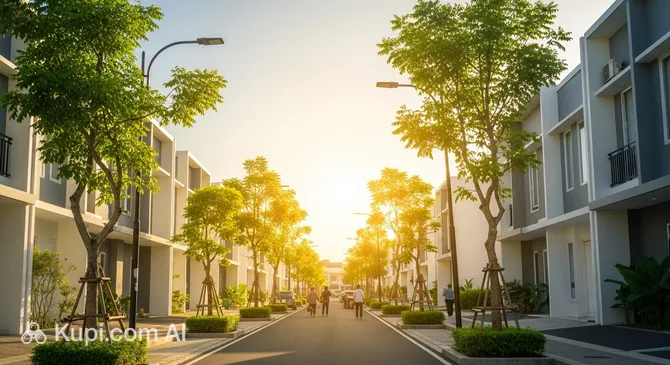
Cikupa is a dynamically developing district in the Banten province on the island of Java, part of Indonesia. Located in the western part of the Greater Jakarta metropolitan area, this city represents a unique blend of urban growth and the heritage of its agricultural past. Although primarily known as a major industrial and residential hub, it maintains the authentic atmosphere of an Indonesian suburb.
Cikupa. Illustration.
Source: Kupi.com AI
Geographically, Cikupa covers an area of over 45 square kilometers and is home to more than 207,000 people. The history of the city's development is closely tied to its transformation from an agricultural zone into an industrial hub, made possible by its strategic location near the capital. The modern landscape of the district is shaped by residential blocks, commercial zones, and industrial enterprises.
Key features of Cikupa include its administrative center in Budimulya village and the bustling commercial areas of Sukamulya and Bunder. While the city is not a typical tourist destination, it offers travelers the chance to see the real, everyday life of a modern Indonesian metropolis off the beaten path. Visiting this area is an excellent experience for those wishing to explore the industrial "heart" of Java.
Weather Overview
Cikupa is characterized by a typical tropical monsoon climate, common to the western part of Java. Throughout the year, the weather remains consistently warm and humid, with average temperatures ranging from 26°C to 32°C. When planning your trip, it is worth noting that the weather in the city is clearly divided into a rainy season and a dry period.
The hottest months usually occur from September to October, when temperatures often rise to 31–32°C. Heavy rainfall is expected from November to March, with January and February considered the wettest months. During this time, humidity reaches its peak, making the heat feel more intense. For a comfortable stay, it is recommended to choose lightweight clothing made of natural fabrics and to always carry an umbrella or raincoat.
Average monthly temperature
Average monthly precipitation
Interesting Facts
Cikupa hides several interesting details that help better understand the character of this Indonesian district:
The city's name has Sundanese roots: the prefix "Ci" means "water" or "river," and "Kupa" is the name of a local tropical fruit or plant, referring to the region's rich flora in the past.
Administratively, the district is divided into 14 subdivisions, and despite their different statuses (urban kelurahans and rural desas), they all use the same postal code — 15710.
The demographic situation in the city is unique: over the last 15 years, the population has shown a slight decrease, reflecting internal migration processes and demographic shifts within the Greater Jakarta area.
The city has made an impressive economic leap, transforming from a quiet agricultural zone into one of the region's key industrial and commercial hubs in just a few decades.
How to Get There
Cikupa's transport accessibility is due to its proximity to the Indonesian capital. The city is located approximately 30–40 kilometers west of central Jakarta, and the primary way to get here is by road. Detailed information on routes and logistics can be found in the section on how to get to Cikupa.
The nearest major air hub is Soekarno-Hatta International Airport (IATA: CGK), located about 20–30 kilometers away. A trip by taxi or ride-sharing services (such as Grab or Gojek) will take between 45 to 90 minutes, though travel time can increase during peak hours due to heavy traffic on the Trans-Java highway. There is no direct rail connection to the district itself, so travelers often use stations in neighboring Tangerang.
Intercity buses are also a popular option. Routes depart from major Jakarta terminals like Kampung Rambutan or from hubs in Tangerang. It is worth noting that road traffic in this region is extremely heavy, so it is recommended to allow extra time for potential traffic jams for any trip.
Station
Passenger traffic
Distance
Parung Panjang railway station
6
16 km
SHIA railway station
7
20 km
Lebak Bulus Bank Syariah Indonesia MRT station
6
32 km
Blok M BCA MRT station
6
33 km
Tanah Abang railway station
9
35 km
Main Attractions
Since Cikupa is predominantly an industrial and residential district, classic historical monuments are hard to find; however, the city is interesting for its urban environment. Life here is centered around major commercial zones in the Sukamulya and Bunder neighborhoods, where you can experience the true rhythm of a modern Indonesian suburb.
The central point for local residents is the administrative center in Budimulya village. This area houses government buildings and squares where local events and gatherings are held. For tourists, this location can serve as a starting point for exploring the architecture and lifestyle organization within the Tangerang Regency.
In the surrounding areas, you can find small park zones and bodies of water that serve as recreation spots for city dwellers. While they may not hold world-class attraction status, a stroll through the local markets and shopping centers allows for a deeper immersion into the everyday culture of Java and a glimpse of Indonesia without the tourist filters.
Local Cuisine
Cikupa's gastronomic scene is a vivid reflection of the culinary traditions of Banten province and West Java. The local diet is based on classic Indonesian dishes. Be sure to try Nasi Goreng (signature fried rice) and Soto—a fragrant noodle soup prepared here with a special blend of spices. Also popular are Satay skewers, served with a thick peanut sauce.
A feature of the cuisine in this region is the emphasis on seafood, thanks to the relative proximity to the coast. Locals often eat at small family-run eateries called warungs, where the food is always fresh and affordable. In the shopping centers of the Sukamulya and Bunder districts, you can find more modern cafes offering fusion menus and popular chain dishes.
Among drinks, favorites include various types of local coffee (kopi) and traditional herbal teas. On a hot day, Es Cendol—a refreshing dessert drink with coconut milk and rice flour jelly—is a perfect savior. The dining atmosphere here is simple and relaxed, focused on honest flavor and hospitality.
Travel Tips
Cikupa is a place where you can see the real Indonesia, and a few practical tips will help make your stay here comfortable and safe.
Clothing and Essentials: Choose lightweight, breathable cotton clothing. Since there are many mosques in the region, it is better to adhere to a modest dress code when visiting residential areas. A light raincoat is essential during the rainy season.
Transport: The best way to get around is using the Grab or Gojek apps. It is reliable and eliminates the need to haggle. For short trips, you can use local minivans called angkots.
Finances: The official currency is the Indonesian Rupiah (IDR). Major shopping centers accept cards, but always keep cash on hand for markets and warungs. ATMs are easy to find in commercial zones.
Health: Drink only bottled water. During the rainy season, use mosquito repellent to protect yourself from tropical fevers.
Communication: The main language is Indonesian. English is understood in large stores, but knowing a few phrases (for example, "Terima kasih" — thank you) will go a long way in communication. It is best to buy a SIM card at official outlets in shopping malls.
Local Etiquette: Indonesians are very friendly. Greet people with a slight nod or a smile. Try not to use your left hand for passing money or food, as it is considered impolite.
What to Avoid: Walking alone in poorly lit rural outskirts (desas) late at night is not recommended. Also, avoid consuming ice at questionable street stalls unless you are sure it is made from purified water.
Extra Tip: Plan your trips to Jakarta or Tangerang in advance, taking into account "rush hour"—traffic jams can delay you for 2–3 hours.
Following these simple rules will allow you to enjoy the flavor of Java and experience true Indonesian hospitality!
Entertainment & Nightlife
In Cikupa, you won't find noisy nightclubs or large-scale concert venues, as the city lives at a calm industrial-residential pace. Evening life here is mainly centered around food courts and cafes in the shopping centers of the Sukamulya district. Locals prefer to spend their time having dinner in cozy warungs or taking family walks through evening markets.
For those looking for more active entertainment such as karaoke, modern cinemas, or bars, the best option is a trip to neighboring Tangerang (about 15 km away) or Serpong. The nightlife there is more diverse and geared toward young people and expats. The easiest way to get there in the evening is by taxi via official mobile apps.
Daytime leisure in Cikupa includes visiting local parks or relaxing by small lakes in the adjacent Tangerang-Cikupa areas. These are great spots for leisurely relaxation. Despite the absence of big entertainment brands, the city's atmosphere is captivating in its sincerity and the opportunity to see everyday life without the tourist polish.
Parks & Museums
Cikupa is primarily the industrial heart of the region, so there are no classic world-class museums or galleries here. The main focus is on small green areas and squares located near administrative buildings. These places serve residents as islands of tranquility amidst the dense urban development.
The greenery of the district is represented mainly by roadside plantings and local parks maintained by local communities. For more large-scale natural sites and botanical gardens, travelers usually head to neighboring districts such as Tangerang or Jakarta.
The lack of major cultural institutions within the district itself is compensated by the opportunity to study the industrial architecture and layout of modern Indonesian settlements. For nature lovers, the bodies of water in the surrounding areas, used for local recreation and fishing, may be of interest.
Getting Around
Cikupa's transport system is geared toward the needs of local residents and workers. The backbone of public transport consists of angkots—brightly colored minibuses that run on specific routes between neighborhoods. The fare is minimal (usually a few thousand Rupiah), and payment is made in cash to the driver upon exiting.
For more comfortable trips, tourists and expats most often use ride-sharing services like Grab and Gojek. This allows you to call a car or motorbike taxi via a mobile app, where the fare is immediately visible. Scooters and motorcycles are also extremely popular means of transport among locals due to their maneuverability in traffic jams.
Pedestrian infrastructure in the district is unevenly developed: there are sidewalks in the commercial centers of Sukamulya, but in more rural parts of the city (desas), walking may be inconvenient. When planning trips to Jakarta, it is best to use intercity buses that regularly depart from local transport hubs.
Accommodation
Accommodation options in Cikupa are specific and mainly geared toward business travelers and those visiting the district for industrial purposes. The area is dominated by guesthouses, budget hotels, and long-stay apartments concentrated in the Sukamulya and Bunder districts. Prices for a standard room typically range from 200,000 to 500,000 Indonesian Rupiah per night.
For short-term stays, decent motels can be found along the main roads, or options on platforms like Airbnb in modern residential complexes. There are no luxury five-star hotels directly in Cikupa—for high-level service and a full range of amenities, it is better to look at hotels in Tangerang or Serpong.
When searching for accommodation, it is recommended to pay attention to proximity to transport interchanges and main commercial zones to minimize travel time. It is best to book options in advance via popular international services, especially if your trip coincides with major local holidays.
Nearby Cities
Cikupa's location makes it a convenient starting point for exploring the western part of Java. Neighboring cities offer many opportunities for shopping, cultural leisure, and entertainment, all easily accessible as part of a day trip.
Just 15 kilometers away is the bustling Tangerang, home to modern shopping centers and developed urban infrastructure. For those interested in the region's administrative structure, it would be curious to visit Tigaraksa, the regency center located only 6 kilometers away. Additionally, Jakarta can be reached in 1–2 hours (depending on traffic) to see the capital's museums and monuments.
Exploring the surroundings of Cikupa will allow you to see the contrast between industrial zones and Indonesia's developing urban centers. Don't miss the chance to visit Pasarkemis or Kresek to feel the spirit of Banten province.
Shopping & Souvenirs
Shopping in Cikupa is practical and centered in modern shopping malls and traditional markets. Main commercial activities hum in the Sukamulya and Bunder zones. Here you will find local malls where you can purchase everyday clothing, electronics, and household goods at very reasonable prices.
For those seeking an authentic experience, the street markets are a must-visit. You can always find the freshest tropical fruits, local spices, and produce there. It is a great chance to see how the people of Indonesia shop and to try local delicacies right on the spot.
Regarding souvenirs, in Cikupa, it is worth looking at batik products or traditional Indonesian sauces and seasonings. Shops usually operate from 10:00 to 21:00 or 22:00. Major outlets accept bank cards, but you will definitely need cash Rupiah for small markets.