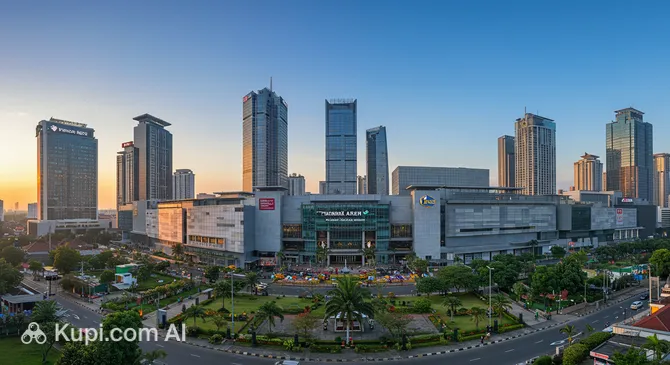
Pondok Aren is a dynamically developing district within the city of South Tangerang, located on the picturesque island of Java in Indonesia. Although formally an administrative unit (kecamatan), its scale and infrastructure resemble an independent city. With a population of about 295,000 people, this place harmoniously combines the coziness of quiet residential neighborhoods with the modern rhythm of suburban life.
Geographically, Pondok Aren adjacent to the southwestern outskirts of Jakarta, making it a popular choice for the middle class and expats. The foundation of the district is the ambitious Bintaro Jaya project — an organized residential area that stands out from the chaotic development of many other Indonesian megacities with its thoughtful sector planning and abundance of greenery.
Pondok Aren. Illustration.
Source: Kupi.com AI
A careful study of the history of this place shows that the district began to grow actively in 1981, gradually transforming from an agricultural periphery into a prestigious residential cluster. Today, it is home to international schools, modern medical centers, and shopping platforms that create an atmosphere of comfort and safety. Visiting Pondok Aren is a great opportunity to see a "different" Indonesia: organized, modern, and focused on a high quality of life.
Weather Overview
The climate in Pondok Aren is typical for the tropical zone of Java: it is summer all year round. The temperature is stable — the thermometer usually fluctuates between 24–32°C. High humidity gives the heat a specific character, so it is better to plan active walks for the morning or evening hours.
The main feature of the local climate is the clear division into two seasons. The rainy season lasts from November to March; heavy downpours are possible during this time, which sometimes lead to localized flooding in lowlands. The dry season arrives in May and lasts until September — this is the best time to visit, when the weather in Pondok Aren pleases with clear skies and cleaner air.
It is worth considering that due to its proximity to Jakarta and heavy traffic, air quality may decline during the dry months. However, the abundance of greenery in Bintaro Jaya residential complexes partially mitigates this effect, creating a more pleasant microclimate compared to the central districts of the metropolis.
Average monthly temperature
Average monthly precipitation
Interesting Facts
Official Status: The Pondok Aren district was officially established as an independent administrative unit in 1981, separating from the Ciledug district.
Garden City: Most of the district's territory is occupied by the Bintaro Jaya project, which was planned as an "eco-friendly city" with a clear division between residential and commercial sectors.
Educational Hub: Pondok Aren is home to two of the region's largest international schools — the British School and the Japanese School, which accounts for the high number of foreign residents.
Stable Growth: The district's population has remained at around 300,000 for over ten years, indicating a reached balance in urban development.
Complex Structure: Administratively, the district is divided into 11 units (kelurahans), each with its own unique postal code and development character.
How to Get There
Pondok Aren is conveniently located on the southwestern border of Jakarta, providing good transport connectivity with the capital and other cities on the island of Java. Most travelers arrive here from the major transport hubs of Tangerang and Jakarta. You can find more details about the routes in the section describing how to get to the city.
The nearest major air hub is Soekarno-Hatta International Airport (CGK), located in Tangerang. It is the country's main air gateway, receiving flights from all over the world. The journey from the airport to Pondok Aren by taxi takes from 45 to 90 minutes depending on traffic density, which can be quite intense in this region.
For those who prefer rail transport, the Commuter Line Rangkasbitung passes through the district. The rail link connects Pondok Aren with the central areas of Jakarta, but it is worth noting that trains can be very crowded during morning and evening rush hours. An expansion of the MRT system is planned for the future, which will make the trip even more comfortable.
Station
Passenger traffic
Distance
Lebak Bulus Bank Syariah Indonesia MRT station
6
10 km
Blok M BCA MRT station
6
12 km
SHIA railway station
7
15 km
Tanah Abang railway station
9
16 km
BNI City railway station
6
16 km
Main Attractions
Pondok Aren is not a classic tourist center with ancient ruins, but it offers a unique look at modern Southeast Asian urbanism. The main "attraction" here is the Bintaro Jaya district itself. It is a large-scale integrated development project where you can see how Indonesia strives to create a comfortable urban environment with wide sidewalks and organized traffic.
For those interested in architecture and social infrastructure, the buildings of international schools such as the British School Jakarta and Jakarta Japanese School serve as landmarks. These educational campuses are important hubs for the international community and set a high standard for land improvement in the area.
Modern shopping and entertainment complexes and world-class medical centers, such as Premier Bintaro Hospital, serve as centers of attraction for residents and visitors alike. Although these are functional facilities, their modern design and level of service reflect Pondok Aren's status as a prestigious suburb. It is pleasant to simply stroll along the shopping galleries, observing the steady daily life of the Indonesian middle class.
Local Cuisine
The gastronomic culture of Pondok Aren is a true kaleidoscope of flavors, where traditional Javanese dishes coexist with popular international fast food. Throughout the streets of the district, you will encounter small stalls and pushcarts offering Indonesian classics: fragrant nasi goreng (fried rice) and delicate soto ayam (spiced chicken soup).
Be sure to try the local satay — miniature skewers served with a thick peanut sauce, and martabak — hearty pancakes that can be either sweet or savory. The street food culture here is very well-developed: locals often buy ready-made meals on their way home, allowing you to enjoy authentic flavors for very little money.
For those who prefer a more formal setting, there are many modern cafes and restaurants in the shopping centers of Pondok Aren. You can find everything from exquisite sushi to classic steaks. Popular drinks include traditional strong coffee and various versions of sweet iced tea, which are perfect for escaping the tropical heat.
Travel Tips
Pondok Aren is a comfortable and safe suburb, visiting which requires minimal preparation, but knowing a few nuances will make your trip much more pleasant.
Clothing and Essentials: Choose light clothing made from natural fabrics, as the region is hot and humid year-round. In shopping centers and on public transport, air conditioners work at full power, so a light wrap or sweater will not be superfluous. When visiting official institutions or religious sites, try to cover your shoulders and knees.
Transport: The most convenient way to get around is using the Grab or Gojek apps. Install them in advance and link a card. Motorcycle taxis are a great option for short trips if you want to save time in traffic jams.
Finances: The official currency is the Indonesian rupiah. Large malls and chain supermarkets accept cards, but for markets and street food, always have small denomination cash with you. ATMs are found at every turn in the district.
Health: Drink only bottled water. Some of the best hospitals in the country (e.g., Premier Bintaro) are located in Pondok Aren, so high-quality medical care is nearby if needed.
Communication: The main language is Indonesian (Bahasa Indonesia). In the service sector and among young people, English is common enough. Buy a local SIM card at any Telkomsel or Indosat branch for stable internet.
Etiquette: Indonesians are very friendly and value politeness. Always use your right hand for passing money or food, as the left is considered "unclean." A smile will help resolve most contentious situations.
What to Avoid: Do not engage in political disputes and avoid public displays of intense affection. It is also not recommended to walk alone in unlit outskirts at night.
Best Time: Try to plan your visit for the dry season (May–September) to avoid heavy rains and possible localized flooding in low-lying areas.
Enjoy the peaceful rhythm of life in Pondok Aren and its modern hospitality!
Entertainment & Nightlife
Nightlife in Pondok Aren is of a quiet, family nature and is concentrated around modern shopping malls and dining areas. There are no noisy nightclubs typical of central Jakarta, but there is an abundance of cozy cafes and restaurants open until late in the evening. The main audience consists of local families and young professionals who prefer to spend time socializing over delicious food.
The atmosphere of the district in the evening is very relaxed: establishments in shopping centers are usually open until 21:00–22:00. For those looking for more active nighttime entertainment, such as bars with live music or dance floors, it is recommended to head to the neighboring districts of South Jakarta or Tangerang, which are easily accessible by taxi. Traveling at night is safe, especially when using official ride-hailing services.
Daytime entertainment in the city includes modern cinemas located in major malls and sports grounds. On weekends, many Pondok Aren residents visit local park areas for jogging or outdoor yoga. This place is ideal for those who value peaceful relaxation and a comfortable urban environment without the excessive hustle and bustle of a metropolis.
Parks & Museums
Greenery is one of the strengths of Pondok Aren. Thanks to the systematic development of the Bintaro Jaya district, there is much more open space and greenery here than in the densely built-up center of Jakarta. Squares and small park areas are integrated directly into residential blocks, creating a pleasant atmosphere for walks in the shade of tropical trees.
While there are no major state museums in the district itself, its cultural value lies in demonstrating the modern Indonesian lifestyle. For nature lovers, well-maintained recreation areas around local ponds and sports clusters, which serve as gathering places for active citizens, may be of interest.
If your goal is a deep immersion into history and art, you can take a short trip to the neighboring districts of South Jakarta, which house contemporary art galleries and private collections. Pondok Aren itself remains a place for quiet contemplation of modern urban life and relaxation surrounded by well-tended green landscapes.
Getting Around
The transport system of Pondok Aren is oriented towards the daily needs of residents, connecting residential sectors with the business centers of Jakarta and Tangerang. The backbone of public transport consists of minibuses known as angkots. They run on fixed routes but do not have a strict schedule; payment is made in cash to the driver upon exiting.
A crucial element of movement is the Commuter Line railway. Stations in this district allow for quick travel to the capital's center, bypassing the famous traffic jams. However, tourists should remember the high volume of passengers during peak hours (from 7 to 9 AM and from 5 to 7 PM). For train fare, rechargeable cards are used, which can be purchased at the stations.
The most comfortable and predictable way for visitors to get around is by using ride-hailing apps such as Grab or Gojek. You can call either a regular car or a motorcycle taxi, which navigates through congestion much faster. Prices for such services in Indonesia remain very democratic, and the ability to track the route in the app adds safety to your journey.
Accommodation
Accommodation options in Pondok Aren are primarily oriented towards those planning a long-term stay or a business visit. There are few traditional tourist hotels, but the sector of serviced apartments and condominiums is well-developed. This is an excellent choice for travelers who value home comfort, the presence of a kitchen, and access to swimming pools or fitness rooms within residential complexes.
The most popular areas to search for housing are the sectors of the Bintaro Jaya project. Here you can find modern apartments that are often rented through popular online booking services. Prices for high-quality middle-class housing usually range between 30–60 dollars per night, making the area attractive in terms of price-quality ratio compared to central Jakarta.
If you are planning a short-term visit to see the sights of the capital, you might want to consider hotels in South Jakarta. However, for those who want to immerse themselves in the atmosphere of a modern Indonesian suburb and enjoy the peace and quiet, apartments in Pondok Aren are an ideal option. It is recommended to book accommodation in advance, especially if your visit coincides with major holidays or the start of the school year at international schools.
Nearby Cities
Thanks to its location on the border of metropolises, Pondok Aren serves as an excellent starting point for exploring the surroundings of West Java. Neighboring cities offer both modern entertainment and cultural discoveries, all reachable within an hour.
Just a few kilometers away is Ciputat, known for its lively markets and local flavor. If you head west, you will reach the major city of Tangerang, where large-scale shopping hubs and industrial centers are concentrated. Also perfect for a day trip is Cisauk, where you can observe the development of Indonesia's new urban spaces.
Don't miss the opportunity to visit central Jakarta to see the National Monument and the historic district of Kota Tua. Traveling around Pondok Aren will allow you to fully experience the scale and diversity of the capital region, moving from quiet residential sectors to glittering skyscrapers.
Shopping & Souvenirs
Shopping in Pondok Aren is about convenience and modernity. Most commercial activity is concentrated along major thoroughfares such as Jalan Bintaro Raya. The district is famous for its shopping centers, which serve not only as stores but also as social hubs where people meet, dine, and spend time with their families.
Large complexes, such as Bintaro Jaya Xchange (located nearby), offer a wide range of international and local brands, electronics, and home goods. For those seeking a more traditional experience, local markets — pasar — are available. There you can purchase fresh tropical fruits, spices, and locally produced goods at very attractive prices.
As souvenirs from Pondok Aren, it is worth bringing back high-quality Indonesian textiles or batik items, which are often found in specialized departments of shopping centers. Most stores are open from 10:00 to 21:00 or 22:00. Major outlets readily accept international bank cards, but at small markets, you will definitely need cash in Indonesian rupiah.