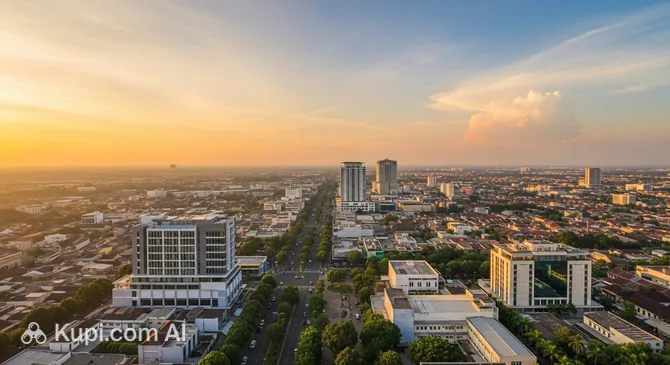
Located in the northern part of West Java province, Cimanggis is a dynamically developing district that is part of the Greater Jakarta metropolitan area. As part of Indonesia, this place harmoniously combines the features of a bustling commercial center and a cozy residential suburb. Geographically, Cimanggis is located just a few kilometers south of the capital, which leaves a special mark on its rhythm of life and atmosphere.
Cimanggis. Illustration.
Source: Kupi.com AI
The population of the district exceeds 250,000 people, making it a significant administrative hub of the city of Depok. Although Cimanggis is not a classic tourist resort, it attracts travelers with its authentic local flavor and the opportunity to see the daily life of modern Indonesians away from the glossy guidebooks. Here, you can explore the multifaceted history of the region, which has its roots in the colonial era.
Among the key features of the district, it is worth highlighting Rumah Cimanggis — a majestic 18th-century villa recognized as a cultural heritage site. Nature lovers will appreciate the tranquility of Lake Situ Gunung and the freshness of local green zones. A visit to Cimanggis is a wonderful chance to get to know the real Java, feel its energy and hospitality, while remaining in close proximity to the country's main transport arteries.
Weather Overview
In Cimanggis, a classic tropical climate typical of Java island prevails. High temperatures persist throughout the year, averaging around 26°C. During the day, the thermometer often rises to 30-31°C, while the night brings a pleasant coolness around 22-23°C. This stability makes the area accessible for visiting at any time, but it is important to consider the seasonality of precipitation.
The year is divided into wet and dry seasons. The period from November to March is characterized by frequent and heavy showers, which usually occur in the afternoon. The driest and sunniest time is considered to be August, when the amount of rain is minimal. Before the trip, it is recommended to check the current weather forecast for Cimanggis to properly plan your outdoor activities.
High air humidity is a constant companion in this region, which should be taken into account when choosing your wardrobe. Despite frequent precipitation in the winter months, rains are usually short-lived and are replaced by bright sun. When planning a visit, look forward to nature's warm welcome: it is always summer here, seasoned with the scents of tropical greenery and freshness after the rain.
Average monthly temperature
Average monthly precipitation
Interesting Facts
The name Cimanggis has a Sundanese origin: the prefix "Ci-" means water or river, and "manggis" is the famous tropical fruit, the mangosteen. Thus, the name can be translated as "Mangosteen River."
The historical villa Rumah Cimanggis was nearly demolished to build a university campus, but thanks to the efforts of the public and authorities, it was granted cultural heritage status in 2018.
An important transport artery passes through the district — the Cimanggis–Cibitung toll road, which is part of Jakarta's second outer ring road and helps relieve the main highways of Java island.
Despite dense development, Cimanggis preserves green pockets like Lake Situ Gunung, which serve as natural "lungs" for this busy suburb.
The district is famous for its markets, where you can find rare varieties of tropical fruits and traditional Indonesian crafts that rarely make it to the shelves of large capital stores.
How to Get There
The transport accessibility of Cimanggis is due to its strategic position between the major cities of Jakarta and Bogor. The main way to get here is by car or taxi, thanks to a developed network of expressways, including Jakarta-Cikampek and Jagorawi. A trip from the capital center usually takes 30 to 60 minutes, although you should allow extra time for potential congestion during rush hours. Learn more about the most convenient routes and types of transport in the section on how to get to Cimanggis.
The nearest major international air hub is Soekarno-Hatta Airport (CGK) in Jakarta. It handles flights from all over the world and is connected to the district by a direct highway. A trip from the airport to Cimanggis by taxi or transfer will take about an hour, depending on traffic intensity. For a more budget-friendly trip, you can use shuttle buses running to the nearest transport terminals.
Railway communication also plays an important role in the region's logistics. Although there are no major stations in the district itself, the nearest commuter train stations (KRL Commuterline) are located in Depok. From these stations, you can quickly reach the center of Cimanggis by taxi or local minibuses. This is a convenient option for those who want to avoid traffic jams on the highways.
Station
Passenger traffic
Distance
Bogor railway station
8
13 km
Lebak Bulus Bank Syariah Indonesia MRT station
6
21 km
Pasar Minggu railway station
7
22 km
Blok M BCA MRT station
6
26 km
Halim railway station
6
27 km
Main Attractions
While Cimanggis is primarily known as a residential and business district, it hides several gems that can interest a curious tourist. The main historical attraction is Rumah Cimanggis. This old villa, built in the 18th century for the family of a Dutch governor, is a rare example of colonial architecture. Today, it is officially recognized as a cultural heritage site, serving as a reminder of the region's important historical past.
For those seeking outdoor recreation, a visit to Lake Situ Gunung is an excellent choice. This picturesque spot is perfect for leisurely walks, picnics, and observing local nature. The water surface surrounded by tropical greenery creates a pleasant contrast to the city bustle. Another natural site is Curug Cimanggis — a small waterfall hidden in a forested area, which offers cool relief on a hot Indonesian day.
The cultural life of the district is centered around its vibrant markets and religious buildings. Local mosques impress with their architecture and reflect the deep spiritual traditions of the residents. Exploring Cimanggis, you won't encounter crowds of tourists, allowing you to fully enjoy the peaceful atmosphere and the sincere hospitality of the locals, for whom these places are part of everyday life.
Local Cuisine
A gastronomic journey through Cimanggis is an introduction to the rich and spicy cuisine of West Java. Traditional Indonesian dishes form the basis of the local diet and can be found literally at every step. You should definitely try the classic Nasi Goreng (aromatic fried rice) and Sate — small meat skewers cooked over charcoal and served with a thick peanut sauce. These dishes are the hallmark of the region and are loved by both locals and guests.
Special attention should be given to Gado-Gado — a hearty and healthy vegetable salad with peanut sauce, which is prepared with special skill in Cimanggis. The food culture here is inextricably linked to warungs — small family restaurants where the food is always fresh and the atmosphere is as relaxed as possible. Street food at local markets also deserves attention: here you can find unique snacks such as fried tofu with fillings or sweet rice desserts.
For drinks, locals prefer freshly squeezed tropical fruit juices or traditional sweet tea. Don't forget to try fresh mangosteen, after which, according to one version, the district is named. This fruit is considered one of the most exquisite in Indonesia. The overall character of the Cimanggis gastro scene is accessibility, authenticity, and an abundance of spices that create the unique taste of Javanese cuisine.
Travel Tips
A trip to Cimanggis will be a pleasant and comfortable experience if you take into account a few practical nuances characteristic of this region of West Java.
Clothing and Essentials: Choose light clothing made from natural fabrics, as high humidity and warmth persist in the region year-round. For visiting mosques or official places, be sure to have clothes that cover your shoulders and knees. Don't forget comfortable walking shoes and an umbrella in case of a sudden tropical downpour.
Transport: To save time and avoid traffic jams, use the Gojek or Grab apps. Motorcycle taxis are an excellent choice for short trips during rush hours. If you plan to rent a car, remember the left-hand traffic and intense congestion.
Finance: The main currency is the Indonesian Rupiah (IDR). Large stores accept cards, but in markets and small warungs, you will definitely need cash. ATMs are easily found in shopping centers and at gas stations.
Health: Drink only bottled water and avoid ice in street drinks. It is recommended to have mosquito repellent with you, especially when walking near the lake or waterfall.
Communication: The official language is Indonesian. Basic English is sufficient in hotels and malls, but a few phrases in the local language ("Terima kasih" — thank you, "Halo" — hello) will help you win over the residents.
Local Etiquette: Greet people with a slight nod or a smile. Try to use your right hand to pass money or objects, as using the left hand is considered somewhat impolite in the local culture.
Things to Avoid: Do not point at people with your finger and avoid loud arguments in public places — Indonesians value calmness and politeness in communication.
Connectivity: A local SIM card with a data package can be purchased at the airport or specialized kiosks; Wi-Fi is available in most cafes and hotels.
Observing these simple rules will help you feel at home in Cimanggis and enjoy every minute of your stay in this colorful corner of Indonesia.
Entertainment & Nightlife
The entertainment scene in Cimanggis is primarily oriented towards local residents, which makes it particularly cozy and authentic. You won't find noisy nightclubs or large-scale concert venues here; however, the evening can be spent wonderfully in local cafes and traditional establishments — warungs. This is where city residents gather after sunset to enjoy the cool air and conversation.
The center of social life in the evening is the night markets (Pasar Malam). This is a unique spectacle where you can not only shop but also try a variety of street foods while watching the hustle and bustle of local trade. The atmosphere at such markets is always lively, and the friendliness of the sellers creates a festive feeling. For more familiar forms of recreation, such as cinemas or modern gaming zones, residents often head to the large shopping centers in neighboring Depok.
Daytime entertainment in the area involves walking in parks and visiting cultural sites. Safety in the district is at a good level, allowing for comfortable walks in the central blocks even after dark. If you crave a more boisterous nightlife with bars and dance floors, the proximity to major highways allows you to reach the southern districts of Jakarta in just 30–60 minutes by taxi.
Parks & Museums
The green zones of Cimanggis serve as a wonderful place to relax from the urban rhythm. One of the most popular natural sites is Lake Situ Gunung. This place attracts both lovers of silence and active travelers: here you can take a walk along the shore or have a picnic under the shade of tropical trees. The lake is an important part of the district's ecosystem and a favorite place for morning jogs among locals.
Another natural corner worth noting is the area around Curug Cimanggis. This small waterfall, surrounded by lush vegetation, gives a sense of privacy and freshness. Although the district is actively urbanizing, such places help maintain a balance and provide an opportunity for ecological tourism within the metropolitan area. Local parks scattered throughout residential areas, though small in size, are always well-maintained and welcoming.
As for cultural sites, the historical villa Rumah Cimanggis plays the role of a museum here. Being part of the international Islamic university campus, this building is an outdoor exhibit in its own right. Its architecture and preserved interior details tell the story of Indonesia during the colonial period better than any textbook. Visiting this site is a mandatory part of the program for those interested in the cultural heritage of the region.
Getting Around
The public transport system in Cimanggis is well integrated into the overall Greater Jakarta network, which makes moving around the district quite convenient for tourists. The basis is formed by TransJakarta bus routes and local buses connecting the district with key hubs in Depok and the capital. To pay for fare in municipal transport, special contactless cards are used, which can be purchased and topped up at terminals or minimarkets.
The most flexible and popular way to get around is through ride-sharing services such as Gojek and Grab. Through mobile applications, you can call both a regular taxi and a faster motorcycle taxi (ojek), which easily maneuvers in heavy traffic. This is the most reliable way to get to your destination in Cimanggis at any time of day, and the cost of the trip is known in advance.
Traditional minibuses — angkots — also run in residential blocks. They follow specific routes but do not have fixed stops: to enter or exit, just signal the driver. Although this type of transport requires some knowledge of local landmarks, it remains the cheapest way to get around. Walking along the main streets is possible, but you should take into account the tropical heat and high humidity.
Accommodation
Accommodation options in Cimanggis reflect its status as a business and residential suburb. Modern apartments and guesthouses predominate here, often chosen by expats and travelers planning a long stay in the region. Most of these properties are located near shopping centers and major transport interchanges, providing convenient access to infrastructure.
For tourists seeking classic hotel service, mid-range hotels are available, offering comfortable rooms with air conditioning and Wi-Fi access. If you prefer a more authentic experience, it is worth paying attention to family guest houses, where you can get a closer look at the local way of life. Housing prices here are significantly lower than in the center of Jakarta, making the district attractive for budget travelers.
When planning a trip, it is recommended to book accommodation in advance, especially if you plan to visit during national holidays, when the demand for quality placement options increases. The main booking methods include popular international services and local Indonesian platforms, which often offer favorable discounts on apartment stays.
Nearby Cities
Thanks to its location at the intersection of key roads, Cimanggis is an excellent starting point for exploring neighboring regions of West Java. There are many interesting places in the immediate vicinity that are ideal for day trips and allow you to see Indonesia from different perspectives.
Just a few kilometers away is Depok — a major educational and cultural center, famous for its universities and lively shopping streets. It is also worth visiting Cibinong, which attracts travelers with its sports facilities and developed infrastructure. For those who want to change the setting to a more peaceful one, a trip to Sawangan, known for its green landscapes, would be an excellent option.
Exploring the surroundings of Cimanggis allows you to travel from ultra-modern urban blocks to quiet natural corners in a single day. The developed public transport network and availability of taxis make such trips easy and pleasant, enriching your travel experience with new impressions.
Shopping & Souvenirs
Shopping in Cimanggis is a fascinating immersion into local life, where modern retail formats coexist with colorful traditional markets. For large-scale purchases and visiting brand boutiques, residents usually head to large shopping centers located nearby, but the district itself has enough places for a pleasant pastime among the stalls.
The heart of local trade is the traditional markets (Pasar). Here you can always find the freshest tropical fruits, including the famous mangosteen, as well as the variety of spices for which Indonesia is so famous. The markets of Cimanggis are the best place to buy authentic souvenirs, such as batik items or handmade wooden crafts, which will serve as a great reminder of the trip.
Shops in the area usually operate from early morning until late evening. For market purchases, it is best to have cash in local currency (Indonesian Rupiah), while supermarkets and large retail outlets readily accept bank cards. A walk through the shopping rows of Cimanggis will allow you not only to purchase the things you need but also to feel the vibrant energy of this dynamic Indonesian suburb.